
What your geopolitical briefings are missing
A new generation of scenario-monitoring tools such as the Iran Conflict Scenario Monitor can bring structure, transparency, and continuous updating to expert assessments. ...
by David Bach, Julia Binder, Arturo Bris, Frédéric Dalsace, Simon J. Evenett, Florian Hoos , Jennifer Jordan, Sara Ratti, Karl Schmedders, Sarah E. Toms, Ginka Toegel Published January 23, 2026 in Geopolitics • 14 min read
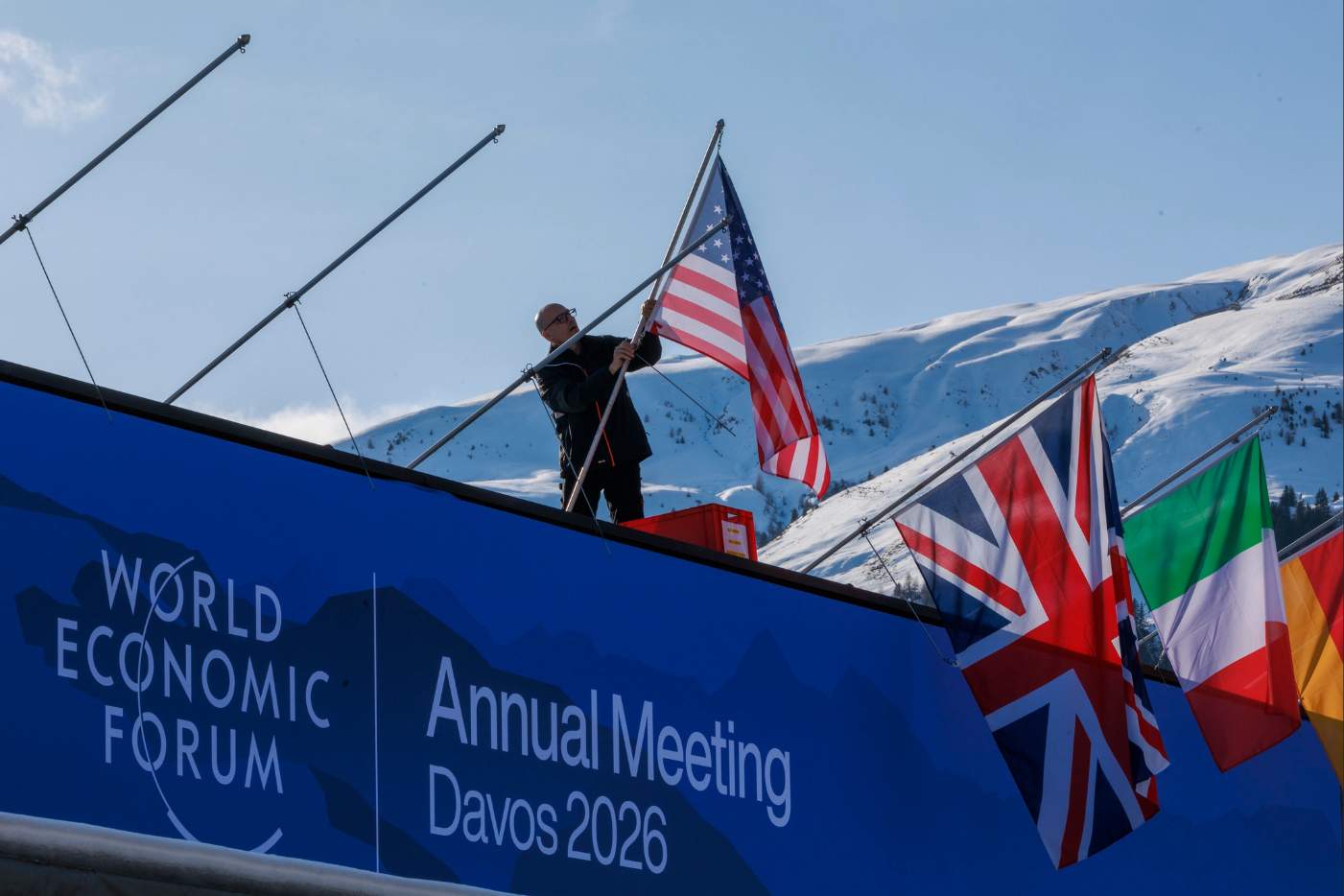
Storm Trump blew through Davos this week. While the US President caused less disruption than many had feared, the deep fissures in transatlantic relations remain. Confronting them will require both a reassessment of the partnership and the courage to embrace values-based pragmatism.
Trump’s decision to step back, for now, from threats over Greenland brought an initial sense of relief. Yet European political and business leaders recognize that his continued disregard for multilateral norms and the rules-based system will remain a source of uncertainty. Navigating this environment will require countries to rethink relationships and build new forms of cooperation and resilience.
While Greenland and geopolitics dominated the limelight, artificial intelligence was a close second. The topic featured prominently both inside the Congress Center and across the storefronts taken over by Big Tech and AI firms along the promenade. Executives repeatedly returned to the same questions: how to translate massive AI investment into measurable value, and how the technology will reshape organizations, workflows, and the employee experience.
Although sustainability and inclusion were pushed off the main stage, conversations elsewhere within the Congress Center and around Davos underscored that they are still present, reframing these priorities through the lens of business strategy, performance, and long-term economic value.
Read on for key takeaways from IMD professors and senior leaders.
For some time, it has been clear that the previous international order was gone, yet I didn’t really have a sense of what could replace it. Davos brought greater clarity on the two competing visions now taking shape. One is a world defined primarily by power, in which the strongest actors do as they wish and everyone else acquiesces. The alternative, articulated by several leaders, is what has been described as values-based realism or principled pragmatism. Taken together, this can be understood as values-based pragmatism.
This approach offers a potential blueprint for how states may engage with one another in the foreseeable future. It calls for the pursuit of values while remaining clear-eyed about the distribution and limits of power. Importantly, it also provides guidance for how companies can navigate an increasingly complex and contested global environment.
This moment does not signal the end of purpose. On the contrary, purpose remains essential for motivating people and anchoring organizations in their communities. What is required now is the ability to combine purpose with pragmatism. Values-based pragmatism offers a way forward for policymakers and business leaders alike as they seek to operate effectively in a world shaped by uncertainty, competition, and constraint.

“There was consensus about the need to invest more in Europe; our innovations are people-centric and built for broad prosperity, not just the interests of a minority.”Arturo Bris
President Trump’s rambling speech left me questioning the quality of our leadership on Wednesday. But my spirits were lifted by two excellent speeches given the day before by Canadian Prime Minister Mark Carney and French President Emmanuel Macron, respectively.
The former emphasized the importance of the rule of law and reassured listeners that countries upholding it will succeed, while President Macron highlighted the importance and strength of Europe as a region because it remains prosperous, stable, predictable, and competitive.
Much of the spotlight was on Europe, and its need to up its game. In the panel I spoke on, there was an urgent call for action from Europe’s corporate leaders as much as its politicians. It was noted that the European private sector must be more optimistic, highlighting our potential more and our weaknesses less.
There was consensus about the need to invest more in Europe; our innovations are people-centric and built for broad prosperity, not just the interests of a minority. And it was made blatantly clear that Europe needs to speak up more, part of which means corporate leaders collaborating with policymakers to shape the rules that make markets work better. As Juvencio Maeztu, CEO of IKEA, said: “We need to focus on the how, not the why [of regulation].”
I came away from Davos wondering if all this (albeit necessary) focus on Europe was detracting from what the US needs to do. Its leader not only lacks diplomacy (with multiple consequences) but has taken actions that have fundamentally destroyed the US mechanism of checks and balances.
AI is too often discussed as a single, uniform phenomenon, when in reality it is a diverse and highly nuanced landscape.
Conversations with leaders at Davos revealed a shared recognition that AI remains an imperfect technology. While it promises significant value, many organizations are grappling with unmet expectations and the practical challenge of making it work in real business settings. At the same time, leaders feel pressure to embrace AI to signal innovation, even as their understanding of its capabilities and limitations remains uneven.
Despite these tensions, there is clear cause for optimism. I was encouraged by discussions with leaders such as Ginny Badenes, who leads Microsoft’s Tech for Society team, and the fact that a massive tech company is taking responsible AI seriously. Yet concerns remain that current approaches to responsible AI do not go far enough. In particular, they often fail to fully address issues of inclusion and the human cost embedded in the development of these systems.
Looking ahead, it is clear that this is a transitional moment. A year from now, many of today’s leaders will have greater awareness, stronger technical skills, and more confidence in how to implement and leverage AI to create new forms of value. For now, however, those capabilities are still developing, and the gap between AI’s potential and organizations’ readiness remains significant.
Another recurring theme was unevenness. AI is too often discussed as a single, uniform phenomenon, when in reality it is a diverse and highly nuanced landscape. Adoption patterns vary widely, with women currently less likely to use AI tools, and a broader distrust among men and women. The 2025 Edelman Trust Barometer found that trust of AI is lower in Western countries like the US, the UK, and Germany than it is in Brazil and China, leading to widening adoption gaps. Yet this moment of uncertainty is also a moment of learning. Leaders are actively testing AI’s strengths and weaknesses while seeking to use it in ethical and responsible ways. The quality of these conversations, and the care with which many participants are approaching the technology, left me cautiously optimistic. There is real potential for constructive dialogue across industries and for shaping a more thoughtful and inclusive future for AI.

At Davos, one message became unmistakably clear: geopolitics, AI, and energy are no longer parallel conversations. They are structurally interdependent. None of these domains can be meaningfully addressed in isolation anymore, and leadership strategies that still treat them as separate silos are already outdated.
Equally clear is that the sustainability conversation is not disappearing. It is evolving. What once sat under a clearly labeled “sustainability” agenda is now being reframed through the language of resilience, resource efficiency, security of supply, and material transformation. What we previously described as “quiet corporate activism” is now playing out in real time, embedded in strategy rather than branding. Sustainability has moved from moral positioning to operational necessity.
Paradoxically, the headwinds of recent years have strengthened this evolution. I see that the sustainability conversation has matured. It is more strategic, more grounded in risk, competitiveness, and long-term value creation. While some leaders, activists, and academics critically remarked on fewer “pure” sustainability sessions on the program, the reality is more nuanced: the discussion is not retreating; it is diffusing. It is becoming much more embedded across energy, security, AI, industrial transformation, supply chains, and economic resilience, which reinforces the very interdependence shaping today’s global agenda.
One notable gap remains from my perspective; Circularity and the circular economy continue to sit at the margins of the mainstream Davos discourse. This is surprising, given their direct relevance to central themes like resource dependencies and material constraints. Even more so, given that many global companies are now investing seriously in circular models, material innovation, and closed-loop systems.
So, the signals I get from Davos are not that sustainability is losing relevance. It is that it is being redefined. The leaders who will shape the next decade will be those who understand sustainability not as a standalone agenda, but as a core driver of resilience, competitiveness, and strategic autonomy.
People said the WEF is no longer about sustainability and inclusion but instead about AI and geopolitical conflict. Yet China Vice Premier He Lifeng “broke the Davos hush on Climate” as Bloomberg wrote by reemphasizing the country’s world vision with green development at the center.
The IMD & Reward Value session at InTent at Davos, “The Good, The Bad, and The Ugly of the First Year of CSRD Reporting,” showed that concerns about sustainability remain important to leaders. Put differently, the hush on climate might have been present at the main venue with the global leaders, but in off-site sessions, climate concerns remain front and center.
Mandatory sustainability reporting across Europe and beyond has fundamentally reshaped leaders’ perception of sustainability. Issues such as climate change, biodiversity, workforce well-being, and broader societal impacts are no longer peripheral disclosures; they now sit at the heart of annual reports. This visibility, and the data that was used to create it, matter.
At the same time, for many organizations, sustainability reporting remains primarily a compliance exercise, with limited direct impact on strategy or executive remuneration. Yet the act of measuring, collecting, and disclosing sustainability data is proving to be a catalyst in itself. It is generating new insights, revealing previously unseen risks and opportunities, and prompting a growing number of companies to rethink how they operate and compete.
As several corporate leaders now argue, once the compliance infrastructure is in place, the real work begins. The next phase is business transformation: harnessing the unprecedented volume of sustainability data to drive innovation, resilience, and competitive advantage. Artificial intelligence will be central to this shift, enabling companies to translate data into foresight and action. Those that move decisively – from reporting to reinvention – will be the companies that lead in the next era of sustainable growth.
Davos 2026 shows that sustainability is undergoing a major transformation. The first wave of corporate sustainability framed it as a moral imperative; an effort “to save the planet.” Over time, however, it has become clear that this approach is itself unsustainable. Confronted with growing uncertainty and economic pressures, an increasing number of senior executives now view sustainability as a core driver of competitiveness and innovation.
CEOs at companies such as Ecolab, GEA, and Holcim, along with Chief Sustainability Officers at firms like L’Oréal and Unilever, are integrating sustainability directly into corporate strategy and embedding it into both short and long-term innovation agendas. Sustainability is no longer an end in itself; it has become an additional innovation tool to create value for customers.
At GEA – which designs machinery for the food, beverage, and pharmaceutical industries – sustainability-driven innovation has delivered tangible operational benefits. As CEO Stefan Klebert noted, one new product line generated such dramatic energy savings that a customer’s energy supplier contacted them to check whether a failure had occurred in their production process.
Similarly, L’Oréal has used sustainability as a platform for resilience and innovation, launching an open accelerator program for entrepreneurs worldwide. The initiative drew more than 1,000 applications from 101 countries, underscoring both the global relevance of sustainability challenges and the company’s pivot toward open, innovation-led approaches. Beyond those discussed at Davos, more cases appear in our forthcoming book with Goutam Challagalla, Clean Winners. Sustainability Strategy That Puts Customers First.
Paradoxically, this shift is good news for sustainability: when sustainable products and services win in the marketplace, sustainability scales.

Davos renewed my optimism that diversity and inclusion remain meaningful priorities for many senior leaders and organizations, even amid political pushback and shifting public narratives. While the language around diversity and inclusion is becoming more cautious, it is also becoming more strategic. The underlying commitment has not disappeared. Instead, it is increasingly being reframed through the lenses of performance, governance quality, and long-term value creation.
This shift was reinforced by an insight I heard from an executive search firm on what they now prioritize for board roles. Beyond experience and credibility, there is a growing emphasis on leaders who are willing to challenge constructively, capable of integrating diverse perspectives, and adept at navigating complexity and uncertainty. Inclusion is no longer positioned as a “nice to have,” but as a capability closely tied to board effectiveness.
Despite this optimism, there are reasons for concern. The growing emphasis on “performance culture” raises questions about where psychological health, inclusivity, and work–life balance ultimately sit in organizational priorities. As companies intensify their focus on speed, accountability, and results, the space for care and sustainability at work is not always clearly defined.
This tension points to a deeper and more uncomfortable question. If machines do not experience burnout, exclusion, or work–life conflict, at least for now, will organizations increasingly favor AI-driven solutions simply because they are easier to manage than people? How leaders resolve this trade-off will say a great deal about the future of work and about the values organizations ultimately choose to protect.
I leave Davos with three insights from business leaders looking ahead to 2026.
First, inclusion is becoming a performance issue, not a moral side project.
Leaders who can link inclusive practices to stronger decision-making, better risk management, and sustained performance will carry more influence than those who rely on values-based arguments alone.
Second, power dynamics matter as much as representation.
Whether in boardrooms or executive teams, increasing diversity without addressing how influence is exercised will limit impact. Leaders must pay close attention to who sets agendas, whose voices carry weight, and how dissent is treated.
Third, the hardest leadership challenge ahead is integration.
The leaders who will stand out in 2026 are those who can integrate performance and care, technology and judgment, efficiency and humanity, rather than choosing one at the expense of the other.
At Davos, progress for women at work was no longer framed in aspirational terms, but in practical ones. Gender equity surfaced repeatedly as a business issue tied to growth, innovation, and resilience, rather than as a “nice to have.” This shift raises expectations for companies. By 2026, leaders will be expected to show tangible results, such as more women in leadership roles, real access to fast-growing fields like AI, and credible investment in reskilling. The emphasis has moved away from promises and toward whether change is felt in everyday working lives.
One of the more unexpected insights was that inclusion efforts rarely fail because they go too far. More often, they fall short because they stop too early or remain too surface-level. Many organizations invest in visible signals such as statements, training, or targets, but hesitate to change the systems that truly shape careers, including sponsorship, performance evaluation, and daily managerial decisions. When inclusion efforts feel symbolic rather than structural, they can provoke backlash, not because equity lacks support, but because people recognize the gap between rhetoric and reality.
Looking ahead to 2026, several unresolved questions remain. How can organizations sustain progress amid growing pushback against diversity and inclusion? How can flexibility and caregiving support be designed without quietly penalizing women over time? Will AI narrow or widen gender gaps? How should progress be measured in ways that truly matter? And can gender equality withstand economic downturns?
For leaders shaping diversity and strategies in 2026, several priorities stand out. First, focus less on labels and more on outcomes that people can see and trust. Second, embed accountability into everyday decisions rather than treating equity as a separate initiative. Third, recognize that inclusion has become a leadership and performance issue. Quieter promises, clearer responsibility, and consistent follow-through will matter far more than bold declarations. The real test of progress in 2026 will not be what organizations say, but whether women experience meaningful change in how work and opportunity are distributed.

President of IMD and Nestlé Professor of Strategy and Political Economy
David Bach is President of IMD and Nestlé Professor of Strategy and Political Economy. He assumed the Presidency of IMD on 1 September 2024. He is working to broaden and deepen IMD’s global impact through learning innovation, excellence in degree- and executive programs, and applied thought leadership. Recognized globally as an innovator in management education, Bach previously served as IMD’s Dean of Innovation and Programs.

Professor of Business Transformation at IMD
Julia Katharina Binder, Professor of Business Transformation, is a renowned thought leader recognized on the 2022 Thinkers50 Radar list for her work at the intersection of sustainability and innovation. As Director of IMD’s Center for Sustainable and Inclusive Business, Binder is dedicated to leveraging IMD’s diverse expertise on sustainability topics to guide business leaders in discovering innovative solutions to contemporary challenges. At IMD, Binder serves as Program Director for Creating Value in the Circular Economy and teaches in key open programs including Transition to Business Leadership (TBL), and Leading Sustainable Business Transformation (LSBT). She is involved in the school’s EMBA and MBA programs, and contributes to IMD’s custom programs, crafting transformative learning journeys for clients globally.
Professor of Finance at IMD
Arturo Bris is Douglas Geertz IMEDE 1988 Professor in Geopolitics and Business and Professor of Finance at IMD. Since January 2014, he has led the world-renowned IMD World Competitiveness Center. At IMD, Bris directs the Boards and Risks program and Blockchain and the Future of Finance program. He also previously directed the flagship Advanced Strategic Management program between 2009 and 2013.

Professor of Marketing and Strategy at IMD
Frédéric Dalsace focuses on B2B issues sustainability, inclusive business models, and alleviating poverty. Prior to IMD, he spent 16 years as a Professor at HEC Paris where he held the Social Business / Enterprise and Poverty Chair presided by Nobel Laureate Professor Muhammad Yunus. Prior to his academic life, Frédéric accumulated more than 10 years of experience in the business world, both with industrial companies (Michelin and CarnaudMetalbox) and as a strategy consultant with McKinsey & Company. At IMD, he is Director of the Integrating Sustainability into Strategy program.

Professor of Geopolitics and Strategy at IMD
Simon J. Evenett is Professor of Geopolitics and Strategy at IMD and a leading expert on trade, investment, and global business dynamics. With nearly 30 years of experience, he has advised executives and guided students in navigating significant shifts in the global economy. In 2023, he was appointed Co-Chair of the World Economic Forum’s Global Future Council on Trade and Investment.
Evenett founded the St Gallen Endowment for Prosperity Through Trade, which oversees key initiatives like the Global Trade Alert and Digital Policy Alert. His research focuses on trade policy, geopolitical rivalry, and industrial policy, with over 250 publications. He has held academic positions at the University of St. Gallen, Oxford University, and Johns Hopkins University.

Professor of Sustainability and Accounting
Florian Hoos is Professor of Sustainability and Accounting, Program Director of Managing and Measuring Sustainability Impact, and served as IMD’s Managing Director of the Enterprise for Society Center (E4S) from 2022-2026.

Social psychologist and Professor of Leadership and Organizational Behavior at IMD
Jennifer Jordan is a social psychologist and Professor of Leadership and Organizational Behavior at IMD. Jennifer’s teaching, research, and consulting focus on the areas of digital leadership, ethics, influence, and power. She has received specialized training and certifications in lie and truthfulness detection, as well as in conflict resolution within organizations. She is Program Director of the Women on Boards and the Leadership Essentials program, and co-Director of the Leading Digital Execution program.

Researcher at IMD
Sara Ratti is a researcher at IMD. She explores how companies can effectively implement their sustainability strategies through rigorous impact measurement and management tools. Her mission is to make sustainability understandable, actionable, and at the core of what truly matters in business.

Professor of Finance at IMD
Karl Schmedders is a Professor of Finance, with research and teaching centered on sustainability and the economics of climate change. He directs the Strategic Finance (SF) program and teaches in the Executive MBA programs. Passionate about sustainable finance, Schmedders believes that more attention needs to be paid to on the social (S) and governance (G) aspects of ESG to ensure a fair transition and tackle inequality.
Chief Innovation Officer
Sarah Toms is Chief Innovation Officer at IMD. She leads information technology, learning innovation, Strategic Talent Solutions, and the AI Strategy. A demonstrated thought leader in education innovation, Sarah is passionate about amplifying IMD’s mission to drive positive impact for individuals, organizations, and society.
She previously co-founded Wharton Interactive, an initiative at the Wharton School that has scaled globally. Sarah has been on the Executive Committee of Reimagine Education for almost a decade, and was one of the ten globally to be selected as an AWS Education Champion. Her other great passion is supporting organizations who work to attract and promote women and girls into STEM.
She has spent nearly three decades working at the bleeding edge of technology, and was an entrepreneur for over a decade, founding companies that built global CRM, product development, productivity management, and financial systems. Sarah is also coauthor of The Customer Centricity Playbook, the Digital Book Awards 2019 Best Business Book.

Professor of Organizational Behavior and Leadership at IMD
Ginka Toegel is a teacher, facilitator, and researcher in the areas of leadership and human behavior. Specialized in providing one-to-one leadership coaching and team-building workshops to top management teams in both the public and private sector, her major research focuses on leadership development, team dynamics, and coaching. She is also Director of the Strategies for Leadership program and the Mobilizing People program.
March 18, 2026 • by Simon J. Evenett, Johannes Fritz in Geopolitics
A new generation of scenario-monitoring tools such as the Iran Conflict Scenario Monitor can bring structure, transparency, and continuous updating to expert assessments. ...

February 11, 2026 • by Simon J. Evenett in Geopolitics
The great-power rivalry between China and the US is structural, not an aberration: zero-sum thinking, tech rivalry, and weaponized trade will outlast leaders and reshape business. ...
February 10, 2026 • by Winter Nie, Yunfei Feng in Geopolitics
China's economy shows contradictory signals – macro headwinds yet surging innovation investment and competitive intensity. To decode this evolving reality, here are the nine key trends global businesses must understand about operating...
February 2, 2026 • by David Bach, Huda Al Hashimi in Geopolitics
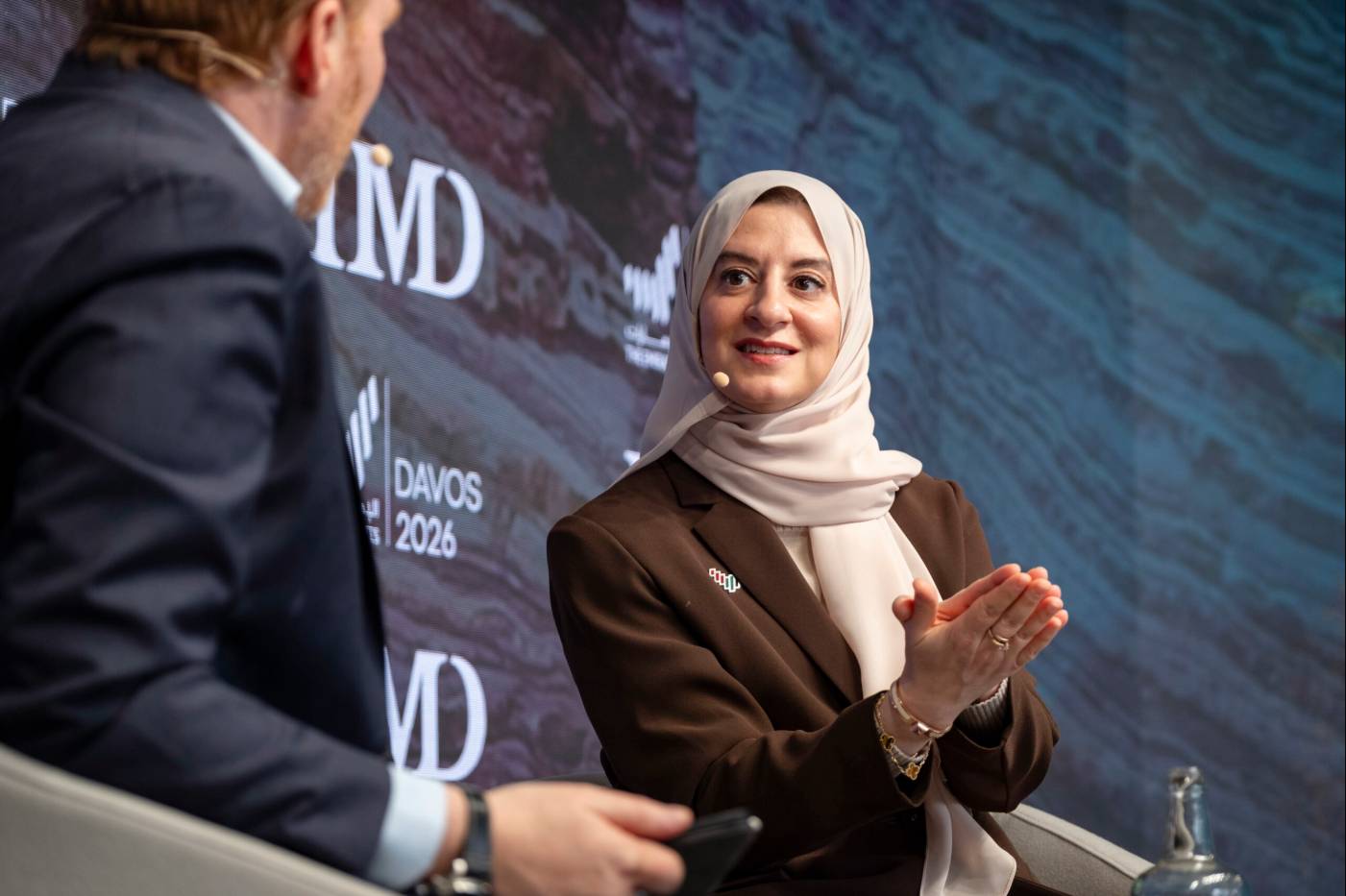
Countries building ecosystems where government vision, business innovation, and investor confidence reinforce each other to gain competitive advantage through strategic optimism. ...
Explore first person business intelligence from top minds curated for a global executive audience