In recent years, our world has experienced a global pandemic, rising geopolitical tensions, energy crises, rampant inflation, the rapid advancement of artificial intelligence, and extreme weather events. These challenges, coupled with an increase in anxiety and a decrease in mental health, have made it impossible to ignore the pressing need for change in both the way we lead and the way we live. To do this, we must work on our individual and collective awareness, accountability, and action.
In a recent LiTT webinar, I shared the importance of acknowledging these issues and outlined some steps we can take to co-create the conditions where individuals and organizations can thrive.
Unfortunately, united global action has been slow. For example, there’s been an alarming lack of progress in achieving the 17 United Nations’ Sustainable Development Goals (SDGs). As well as the ongoing effects of climate change, the rapid growth of generative AI, such as ChatGPT, generates substantial emissions and threatens to exacerbate societal divides. So it’s hardly surprising people are struggling with all that’s happening today as they experience the loss of the assumptive world.
Several psychological barriers hinder positive action, though, including confirmation bias (seeking information that aligns with our existing beliefs), cognitive dissonance (the idea that it’s easier to change reality than to change beliefs), denial (when it’s easier to reject uncomfortable truths), motivated reasoning (the tendency to find arguments that support our existing attitudes) and the bystander effect (when the likelihood of helping decreases as passive bystanders are present in an emergency).
It is, therefore, important to move from a mindset — something fixed, judgmental, and focused on polarities — to a mind shift, where we are constantly learning, evolving, and curious. A fixed mindset is both natural and conditioned. A growth mind shift takes practice – it is an everyday choice in asking ourselves: Am I coming from a place of fear or am I coming from a place of love?
As part of that shift, we need to challenge several leadership myths, such as the notion that it’s lonely at the top that emotions have no place in business, or that people can’t be trusted to work remotely. There’s been a significant shift towards more humane leadership, where personal and professional lives can coexist, and leaders no longer feel the pressure to have all the answers – the “hero myth”.
In recent years, I’ve also seen a massive acceleration in the understanding of the inextricable interconnection between business, society, and the living system that is planet Earth. This challenges the traditional perspective that business operates in a vacuum and has a sole responsibility to maximize profits for shareholders.
Such shifts in leadership mindsets are critical because many executives report that they are operating primarily from a place of either “survival” or “burnout”. Awareness is critical; we have to be very conscious of how we are leading people in today’s world — and then hold ourselves accountable to act in co-creating the conditions that support good health and well-being.
In that vein, humans have two fundamental psychological needs: acceptance and achievement. When both are met, we feel grounded and able to fulfill our potential. On the other hand, our corresponding fears of rejection and failure often hinder change and personal growth. To overcome that, it is important to create psychological safety through “secure base-leadership”, where individuals, teams, and organizations “play to thrive” (involving both connection and challenge, releasing productive energy in a courageous way so innovation, creativity, and curiosity abound).
Leaders can contribute to creating a secure base space with a growth mind shift by practicing five simple steps daily.
- First, cultivate curiosity, by asking open-ended questions (such as who, what, why, where, when, how?) and encouraging others to share their thoughts and feelings.
- Second, practice active listening, by showing your interest in others and giving them your undivided attention.
- Third, express gratitude by reminding yourself daily how you are blessed and how fortunate you are.
- Fourth, learn to learn, as our brain can grow and strengthen itself — called neuroplasticity. Most of us are the habitual hamsters running on the wheel; we need to have the awareness to step off and notice ourselves on that wheel.
- Fifth, schedule a short daily reflection and get into the habit of asking yourself and those around you some simple questions, such as: When did I/we have a fixed mindset today, and why? Or when did I/we have a growth mind shift, and why?
In a world facing multiple crises and uncertainties, it is imperative to focus on how individuals and organizations can not only survive but thrive. By acknowledging that we are part of a living Earth, rather than apart from it, and by practicing a growth mind shift, as well as creating a secure base space and a psychologically safe environment, together we can find ways to co-create a more sustainable future for all.

 September 8, 2023 • by Susan Goldsworthy in Leading in Turbulent Times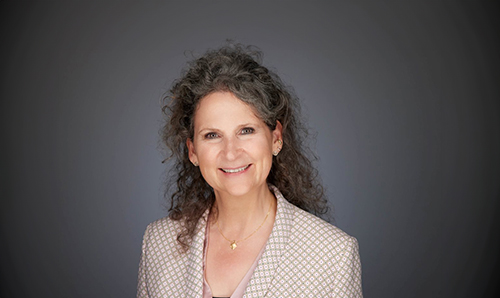







 Share
Share YouTube