Geopolitics dominates Davos: Values-based pragmatism as a blueprint for action
From Trump and transatlantic tensions to AI’s reality check and sustainability’s reinvention, Davos 2026 signals a shift toward values-based pragmatism....
by Matthijs Büchli, Susan Goldsworthy Published January 27, 2026 in Leadership • 12 min read
Longevity is one of the great enablers of high performance. Rather than focusing on short-term wins, staying in the game for as long as possible gives you the chance to grow year after year and outperform through consistent progress. From both a well-being and performance perspective, the pursuit of longevity requires an integrated, systemic approach. How might you, as a leader, design a way of working and living that allows you to stay healthy, happy, influential, and sustainably high performing for years to come?
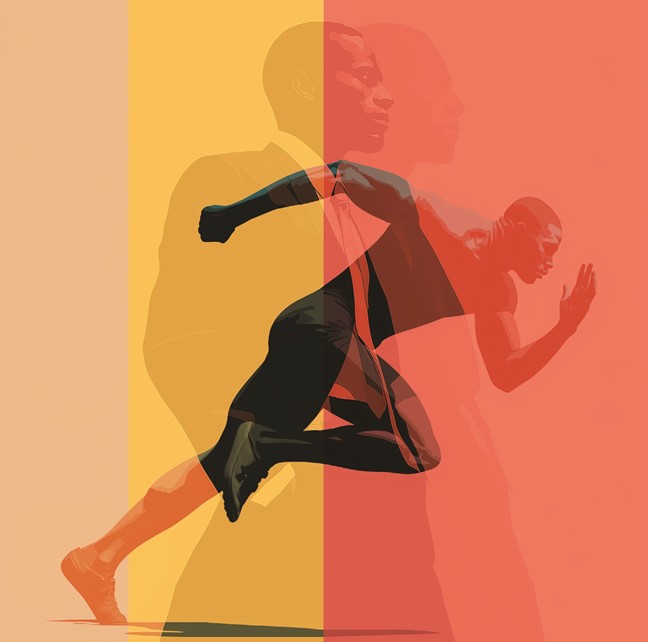
Here, we explore how the principles behind long-term athletic success can help leaders build sustainable careers and lead for decades without sacrificing their well-being or performance. We focus on three essential elements drawn from elite sport that can underpin leadership longevity: self-management, designing your environment, and the continuous curiosity to evolve and adapt. Using examples from the world of sport, we show how these principles can be applied to leadership, offering practical insights that you can use to lead more sustainably, starting today.
Athletes know there is only one path to longevity and high performance – balance. Without it, how can you sustain a demanding schedule year after year, keep on delivering, and avoid burnout (or overtraining, as athletes call it)? A core element of attaining balance is self-management.
They also know that the most important instrument they own is themselves. Sustainable results require a holistic approach focusing on a healthy mind, body, and spirit. Leaders often focus on their work, their company, and their people, while neglecting the most important person, pushing their own needs to the bottom of the list. But this is unsustainable. Instead, leaders must intentionally put their own needs first. This might sound counterintuitive, but it is essential – and it is partly temporary.
Self-management is not a one-time intervention, but a lifelong skill. The habits and routines that support you now will not serve you forever. It isn’t only about forming new habits, but also about challenging the old ones. Every few years, it’s essential to pause, reflect, and ask yourself whether your way of working and living supports both your well-being and performance. In a world that is constantly evolving, and with you evolving as well, it makes little sense to stay rigid in your old ways. You need the courage to become “consciously incompetent” to learn anew.
A personal cost–benefit analysis of how you work and live can be a simple and powerful starting point. If the balance is tilted too far toward the cost side, it’s not sustainable. Most of us can maintain unhealthy routines for years, especially when they deliver short-term results. But if you want to lead sustainably for decades, at some point you need to take a moment to reflect: are you still satisfied with the cost–benefit balance of your own routines?
Take an Olympic gymnast who had performed well for years but started to feel that things no longer added up. The medals kept coming, but the joy and energy were fading. She began to ask herself whether the way she was living was still what she wanted and needed to perform at her best.
She listed all the costs: 5am wake-up calls to train in the gym before public opening hours, early nights that meant missing dinners with friends, the relentless pressure to perform, and the lack of family and personal time because she was often traveling for competitions and camps. She realized that a few years earlier, she had not seen them as costs at all.
On the flip side, the benefits had diminished over time. The medals, recognition, and pride were still there, but the joy and fulfillment were less so. Together with her coach, she restructured her season, competing in fewer competitions and traveling less. She replaced some indoor gym training with outdoor training on her own schedule and spent more time with her family. In addition, she set new personal goals outside of gymnastics to relieve the pressure.
Critics accused her of no longer giving her all to gymnastics, but that was precisely what allowed her to stay in the game. As her balance improved, so did her performance. Her career not only lasted longer, but it also became more meaningful.
This kind of self-reflection, followed by action, can equally apply to business leaders. For example, it could mean taking steps to break a cycle of constant availability, weak boundaries, and overcommitment that so often dilutes impact.
The next step is to reflect on what truly matters. This might include work, time spent on hobbies or socializing, or more time with family. Are you spending enough time on each of these? If not, begin by identifying how you allocate your time. Maybe you’re spending too much of your day on digital distractions, side projects, unnecessary networking, or traveling. Athletes call these “energy leaks”. They don’t support your goals, so you need to eliminate them wherever possible.
Understanding where your time goes will help you protect and create space for what matters. Managing boundaries is essential. If your way of working and living doesn’t align with what’s important to you, then commit to changing course by a fixed deadline. Redesign the way you work by reinforcing what works well and ditching what doesn’t. Once your new habits carry the weight, you can return your full attention to your company. This time better equipped to do what matters most to you: lead with impact.
Self-management is the foundation on which leadership longevity is built. You can lead for longer if you take care of yourself, constantly adapting to your changing circumstances. That’s how you stay in the game – sustainably, successfully, and on your terms.
What is one thing all athletes have? Coaches. And the most successful ones? The biggest champions? Yes, they still have coaches. Even at the top, even later in their careers. Why? Because we cannot “see” ourselves. Coaches help us improve in the areas that matter most, whether it’s mental, technical, or life coaching. How many business leaders have a coach? Few make the time for it or even dare seek it out. Yet it’s one of the smartest investments you can make. According to the International Coaching Federation, 86% of organizations that invest in coaching report a return on their investment, and 70% of executives who have worked with a coach report improved work performance and leadership effectiveness.
Secure base coaching, for example, provides perspective, support, and challenge. It helps you uncover blind spots, stay connected to your values, and keep growing in ways that matter. It’s a transformative and practical approach for leaders and coaches to apply to individuals, teams, and organizations to unleash potential. Swiss energy producer and trader, ALPIQ, is among several companies to adopt this approach. “We firmly believe that our company culture is our competitive advantage,” says the company’s CEO, Antje Kanngiesser. “By both ‘caring’ and ‘daring’, we nurture an environment ripe for perpetual learning and growing and forge secure bases for constructive dialogue and daring decisions.”
However, there’s more to designing your environment. You must intentionally surround yourself with people who help you grow and perform over time. Coaching is vital in this regard, but so is other support.
Take a professional cyclist. Fifteen years ago, performance in cycling was largely seen as the result of training, eating, and resting. The support team around a cyclist consisted of a coach, a race director, and a massage therapist. Today, preparing for a race looks very different. A psychologist fine-tunes the cyclist’s mindset, a nutritionist prescribes pickle juice and sodium bicarbonate for performance, a physiotherapist aims to prevent injuries before they need treatment, and an aerodynamics expert studies which socks will make them fastest to the line. In addition, a scientist calculates the ideal tire pressure based on weather, circuit, and rider characteristics, while a recovery specialist ensures that the hotel mattress and pillow are replaced with the rider’s preferred ones. It’s impossible to manage this alone. The athlete delegates and focuses on what they alone can do: train, eat, and sleep.
Many leaders struggle with delegating, but it is essential if you want to last. You need to build a strong environment around you with a great “right hand”, strong team members, and a trusted assistant. These are people you can rely on, so that when you delegate, you know things will be handled well. Invest in the people around you, as they are a vital part of your long-term success. By being a secure base, someone who is interested and vested in their development and growth, you co-create the conditions where you can all “play to thrive” even amid uncertainty.
You should also surround yourself with secure bases – people who are genuinely interested in your growth and development, and who may have been where you are or are navigating similar waters now. Reach out to someone who has led for decades and ask if they would be willing to share their experience and insights. You are never too old to find secure bases in the form of a mentor, a guide, or a friend.
In sport, improvement doesn’t just come from working hard. It comes from the right balance between training stress and recovery, from constant evolution, and, most importantly, from adaptation.
In sport, improvement doesn’t just come from working hard. It comes from the right balance between training stress and recovery, from constant evolution, and, most importantly, from adaptation. That final step is what truly creates progress. It’s often misunderstood, even by athletes. In business, it’s almost always overlooked.
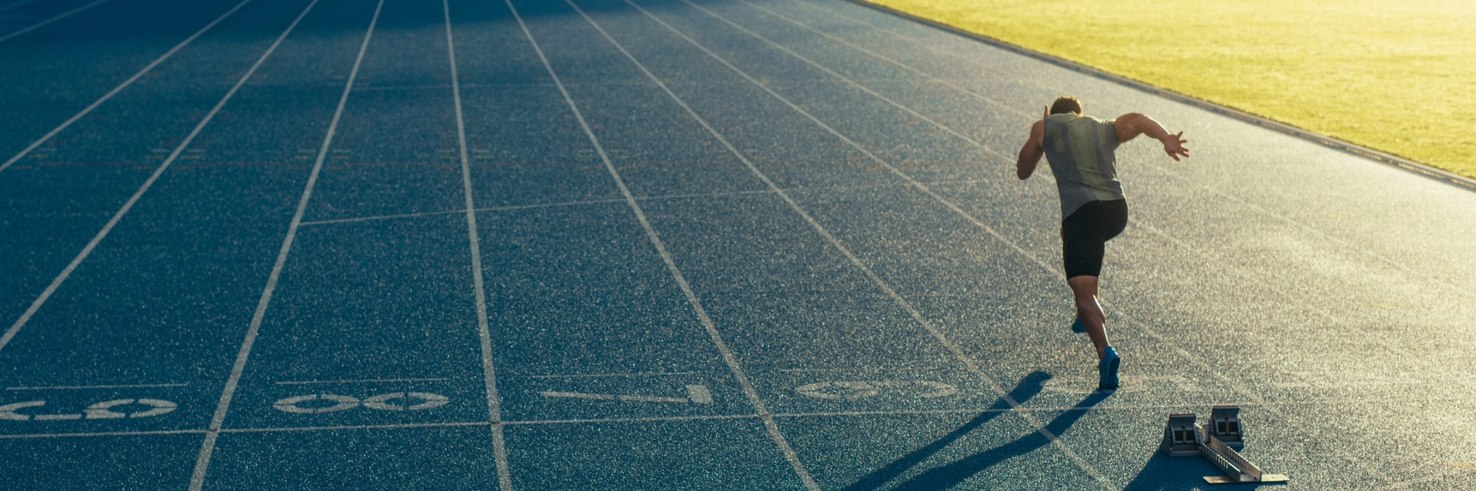
Imagine a sprinter who is training to break the 10-second barrier in the 100 meters. Suppose he consistently runs 10.05. Each week, he trains intensely, accumulating training stress and fatigue, making him slower in the short term. Then comes recovery. With rest and the right nutrition, he returns to his baseline, 10.05. That is recovery. He is no longer tired, but not yet faster. Adaptation is where the real improvement happens. The body doesn’t just bounce back; it changes and rebuilds stronger. Now, the athlete runs 10.00. And, with repeated cycles of training, recovery, and adaptation, the next level of 9.9 becomes reachable.
How do athletes ensure their bodies adapt after a training period, instead of just recovering? By accumulating enough training and recovery, week after week. When that is done over a long enough timeframe, training adaptation occurs, and the athlete becomes physically stronger. However, at some point, that’s not enough. Even if the athlete trains consistently and recovers well, progress eventually stalls. Why? Because the body has adapted to that specific type of training. What used to be a challenge is now routine and no longer a growth stimulus. The athlete needs something new.
Maybe the sprinter needs to shift from strength to speed work, add plyometrics, or consider changing coaches. The point is that to grow further, you sometimes need to introduce fresh stimuli – things your system is not yet good at. That’s when the learning curve steepens again. Not because you’re working harder, but because you’re working differently.
Top athletes also profit from micro and macro breaks. Most Olympic athletes structure their careers around a four-year cycle, training toward one major goal: the Olympic Games. It’s a long-term journey of focus, hard work, setbacks, and progression.
What happens after the Games is just as important. Once the pressure lifts, athletes go through a crucial post-Olympic phase. They rest and decompress, but, crucially, they also reflect and reset. They evaluate the previous cycle, draw lessons, and take time off to mentally and physically recharge. This isn’t just recovery; it’s a macro adaptation. It’s the time, space, and reflection needed to start the next cycle stronger, smarter, and more self-aware. They do this individually, but also with their teams.
Compare that with business leaders. Most leaders work hard. They set goals, get work done, and accumulate stress and experience. The years fly by, and there may be time off and the odd vacation, but rarely is there a deliberate pause for reflection and decompression. They recover enough to keep going, but not enough to truly evolve, decade after decade. That’s recovery without adaptation. And without adaptation, there’s no real progress.
Developing, growing, and evolving are essential for every leader striving for longevity. Personal growth is one of the biggest drivers of motivation and long-term fulfillment, keeping the internal flame alive long into your career.
What elite athletes show us is that when, over time, growth no longer comes easily, you have to actively seek it out. New stimuli, intentional recovery, and deep reflection become essential. Just like athletes, leaders have five main levers for sustainable improvement:
For leadership longevity, executives owe it to themselves to incorporate the five steps outlined above. It’s the way to co-create the conditions that enable you to continue leading at the highest level for decades to come.
Olympic Champion & High-Performance Strategist
Matthijs Büchli OLY is an Olympic champion and business professional who combines a performance-driven mindset with strategic analysis. He translates elite sport principles into performance improvement and strategic growth, with a keen eye for detail.
Affiliate Professor of Leadership, Communications and Organizational Change at IMD
Susan Goldsworthy OLY is an Affiliate Professor of Leadership, Communications and Organizational Change at IMD. Co-author of three award-winning books, she is also an Olympic swimmer. She is a highly qualified executive coach and is trained in numerous psychometric assessments. She is Director of the IMD Executive Coaching Certificate and Program Director of the Leading Sustainable Change program.
January 23, 2026 • by David Bach, Julia Binder, Arturo Bris, Frédéric Dalsace, Simon J. Evenett, Florian Hoos , Jennifer Jordan, Sara Ratti, Karl Schmedders, Sarah E. Toms, Ginka Toegel in Leadership
From Trump and transatlantic tensions to AI’s reality check and sustainability’s reinvention, Davos 2026 signals a shift toward values-based pragmatism....
January 21, 2026 • by Rupa Dash in Leadership
As women live longer, society must rethink careers and leadership to unlock a longevity-equality dividend that enables women to contribute and lead at every life stage....
January 15, 2026 • by Michael D. Watkins in Leadership
CEO successions rarely fail because of poor selection – they fail in execution. As Sergio Ermotti prepares to step down, UBS has the opportunity to turn leadership transition from a risk-management exercise...
January 14, 2026 • by John Kay in Leadership
The average S&P 500 company now lasts under 20 years. Shareholder-value thinking has led to a short-term focus; longevity can be achieved only by investing in people, innovation, and stewardship. ...
Explore first person business intelligence from top minds curated for a global executive audience