
Europe AI teardown: strengths, adequacies and dangerous gaps
Discover Europe's AI strengths across voice, translation, video, and defense—and the critical gaps slowing adoption and sovereignty....
by Mark J. Greeven Published June 18, 2026 in Innovation • 8 min read
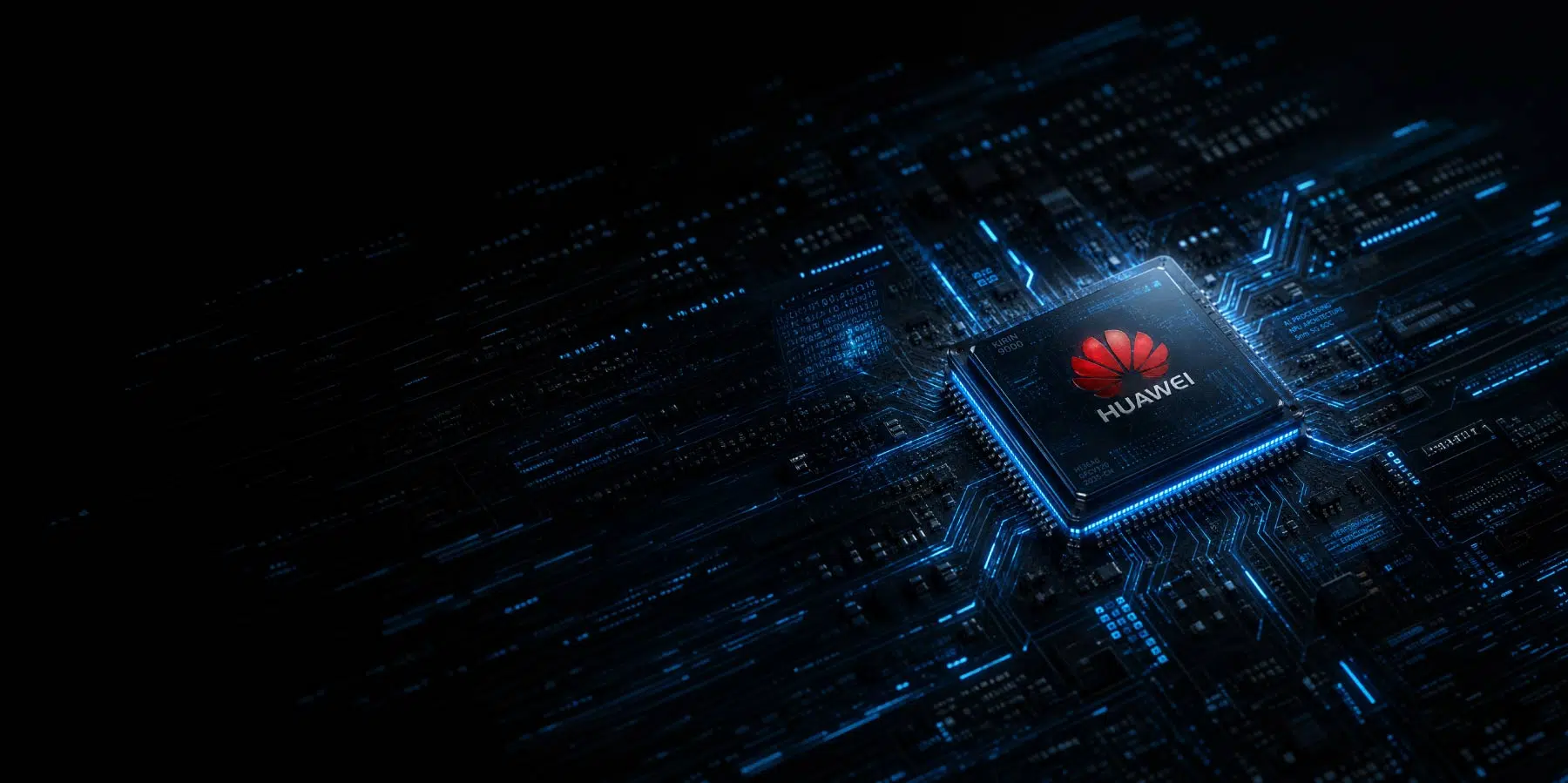
The global semiconductor industry is splitting in two. On one side, Elon Musk is reportedly planning Terafab, a vertically integrated mega-fab for Tesla, SpaceX, and xAI that would bring logic chips, memory, lithography, packaging, and testing under one roof, all aimed at AI, robotics, and space compute. On the other, Huawei has unveiled its Tau Scaling Law, an approach designed to route around large parts of the Western semiconductor equipment stack.
Both projects share a surface logic of vertical integration, internal capability, and reduced dependency. But they rest on different assumptions about what access is available and what must be built from scratch.
That gap is the real strategic lesson. Terafab, for all its ambition, still sits inside the Western semiconductor ecosystem. Any frontier fabrication facility, Musk’s included, continues to require ASML’s extreme ultraviolet lithography (EUV) tools, the central constraint shaping the industry. Huawei, by contrast, cannot access that infrastructure. Export controls have blocked China from EUV technology and forced it toward architectural and systems-level workarounds rather than parity with TSMC or ASML-enabled manufacturing.
Terafab would add another potential mega-customer for ASML at a moment when its 2026 revenue guidance already stands at €36–40bn ($41bn–47bn), driven by rising AI-related demand from existing clients. The bottleneck for ASML is not demand but capacity, and a Musk mega-fab would only deepen it.
What this pairing shows is not two versions of the same strategy, but two distinct responses to constraint: one aimed at expanding control within an existing system, the other at adapting to partial exclusion from it.
The lesson this holds for executives is not that Huawei has beaten the constraint, because it has not. It is that when an established performance metric becomes inaccessible, the first move worth making is to question whether that metric was the right one to begin with.
For decades, Moore’s Law organized the semiconductor industry’s ambitions, investment cycles, and competitive logic. Shrinking transistors meant more performance; more performance meant competitive advantage. That model is reaching its limits. Making transistors smaller has become tougher, more costly, and is delivering ever-diminishing returns.
Huawei’s response has been to redefine what performance means. Its Tau Scaling Law shifts focus from transistor size to latency, specifically the time it takes data to move through a chip. Instead of competing directly on process nodes it cannot access, the company is pursuing performance gains through system-level efficiency: reducing delay, shortening pathways, and coordinating across the system.
One senior semiconductor industry source told Beijing-based media group Caixin that the Tau approach is the inevitable direction for the global industry as Moore’s Law slows, and that China has simply been forced into it prematurely. The account that has circulated most widely describes how He Tingbo, Chair of the Huawei Scientist Committee, ITMT Director, and President of the Semiconductor Business Department, who drove the project, found her inspiration not in a laboratory but in the Dujiangyan irrigation system in Sichuan province, a 2,000-year-old engineering marvel built without electricity or modern machinery to solve an enormous resource-allocation problem. The ancient builders solved massive challenges with limited means. The conclusion she drew was that Huawei needed to do the same.
The lesson this holds for executives is not that Huawei has beaten the constraint, because it has not. It is that when an established performance metric becomes inaccessible, the first move worth making is to question whether that metric was the right one to begin with. Most organizations inherit their benchmarks from dominant suppliers, industry associations, or competitors, and rarely ask who defined them or whether they still serve the organization’s interests.

The distinctive element of Huawei’s approach, and the one drawing most of the attention, sits inside the chip at the design stage. That shift in where the work happens also shifts where the bottleneck sits. The binding constraint is less about lithography tools alone and more about access to the electronic design automation software, dominated by Cadence and Synopsys, that chip designers rely on to do this kind of work. Jensen Huang, speaking to reporters in Taipei, acknowledged that increasing transistor density without shrinking the process node is a solid approach, while noting that TSMC has built a decade of foundation in related stacking and packaging techniques. This is best understood as an orchestration capability.
Huawei has combined known techniques, co-designed hardware and software around a shared latency objective, and, according to He Tingbo, has already applied these principles across at least 381 chips now in mass production, spanning smartphone processors, data center silicon, and automotive applications. That is a different kind of capability from inventing a new component. It is an organizational capability: the ability to align engineering teams, supply chains, and product development around a shared performance goal and execute against it at scale.
This distinction points to where the real scarcity lies. Component innovation can often be acquired through hiring, licensing, or purchasing. Organizational integration is much harder to buy. It accumulates through deliberate structural choices about how teams are organized, how incentives are aligned, and how trade-offs are resolved. Huawei built those capabilities over years, partly by design and partly because its circumstances left no alternative. Firms that innovate primarily from a position of abundance, with access to the best suppliers, the deepest talent pools, and the most advanced external technologies, may be building product capability while quietly eroding organizational integration. The sourcing efficiency that works well in stable conditions tends to produce fragility when conditions change.
This organizational capability is also not something Huawei frames as a solo achievement. He, addressing the same conference, argued that surpassing the limits Moore’s Law eventually imposes is not a problem any single company can solve alone, and called for collaboration across the global semiconductor industry, from equipment makers to chipmakers to the broader scientific community. Read in that light, Huawei’s position is less “we solved this ourselves” than “we hit this wall earlier than others will and would rather face what comes next together than alone.”
Huawei’s vertical integration has a different character entirely.
The contrast between Terafab and Huawei makes this concrete. Both represent ambitious bets on vertical integration, but they are integrating into very different positions.
Musk’s proposed mega-fab, if realized, would deepen integration within an existing ecosystem, pulling more of the semiconductor value chain inside his firms’ organizational boundaries while maintaining reliance on the equipment infrastructure that the Western semiconductor industry has spent decades building. The terawatt-scale compute ambitions are highly aspirational and not yet industrially proven, but the architecture of the bet is clear: more of the stack inside the firm, on top of shared foundational infrastructure.
Huawei’s vertical integration has a different character entirely. The company has been forced to build capabilities that most organizations source externally, not by strategic preference but because external sourcing was denied. It has deepened in-house chip design, tightened hardware–software coordination, and aligned engineering, supply chains, and product development around shared goals out of necessity. The result is an organization that has developed genuine integration capability under sustained duress, which is a rather different thing from an organization that has chosen to integrate in a favorable environment.

Transform your career and business with next-generation AI and digital skills
The broader consequence of Huawei’s trajectory is not Chinese technological dominance.
The broader consequence of Huawei’s trajectory is not Chinese technological dominance. The gap with TSMC, ASML, and Nvidia remains material. Tau Scaling Law is already credible as a system-level innovation. Whether it also becomes a manufacturing breakthrough at consumer scale is a question the market should be able to answer soon. Huawei is expected to ship a new Kirin chip built on these principles in its Mate smartphone line in the second half of 2026, a launch that will function as a real-world test of how far the approach has traveled from lab to mass production. The claim that related principles could reach 1.4nm-equivalent transistor density by 2031 remains, for now, a forward-looking target rather than a demonstrated result. The strategic consequence is structural bifurcation: two AI compute ecosystems, increasingly separate, built on different technology foundations, different supply chains, and different geopolitical dependencies.
The Western ecosystem runs on ASML lithography, TSMC manufacturing, Nvidia silicon, and the dense network of suppliers, standards, and relationships built around them over decades. The Chinese ecosystem, still trailing but improving faster than most predicted, is assembling an alternative stack that is less capable today but not standing still. For executives managing global businesses with AI infrastructure decisions ahead, this bifurcation is not a background condition to monitor. It is a strategic variable that requires a position. Which ecosystem does your AI compute roadmap depend on? What would it cost to operate across both, or to switch? Where in your supply chain are you exposed to a choice you have not yet consciously made?

Huawei’s story is ultimately not about a different way to build chips. It is about how organizations innovate when the old rules no longer apply, and what that demands from leadership before the constraint arrives rather than after.
Three questions follow:
While it remains to be seen whether Huawei’s chips will ultimately close the gap with the best that TSMC and Nvidia can produce, what is less uncertain is that the organization behind them has developed something harder to replicate than any single transistor: a demonstrated capacity to integrate, improvise, and improve under conditions of sustained constraint. Whether that constitutes durable competitive advantage depends on the world we are moving into. And that world, on current evidence, is splitting.

Professor of Management Innovation
Mark Greeven is Professor of Management Innovation at IMD, where he co-directs the Building Digital Ecosystems and Strategy for Future Readiness programs. Drawing on two decades of experience in research, teaching, and consulting in China, he explores how to organize innovation in a turbulent world. Greeven is a founding member of the Business Ecosystem Alliance. He is ranked on the Thinkers50 list of global management thinkers (2025, 2023).
October 14, 2026 • by Michael R. Wade in Innovation
Discover Europe's AI strengths across voice, translation, video, and defense—and the critical gaps slowing adoption and sovereignty....

October 13, 2026 • by Michael R. Wade, Konstantinos Trantopoulos , Mark J. Greeven in Innovation
Uncover what truly drives value in digital ecosystems: debunk myths and learn governance, data practices, and collaboration strategies...

September 30, 2026 • by Dorotea Brandin in Innovation
Use the AAA framework to assess tasks and projects: 1–10 scores per criterion guide smarter, calmer workplace decisions....

September 22, 2026 • by Michael Yaziji in Innovation
Question central planning: why a unit-focused hybrid approach may outperform both centralized control and chaotic AI adoption....
Explore first person business intelligence from top minds curated for a global executive audience