
Wasting time? Diagnose yourself
Diagnose time poverty with a practical leadership checklist that helps you decide what not to do and refocus on what truly matters....

by Andrew Sharman, Yoshinori Fujikawa, Naomi Haefner, Howard H. Yu, Tim Quigley Published July 15, 2026 in Wellness • 9 min read

Real questions invite people to share what they see, know, and need. They create connection before correction. In doing so, they give leaders access to the local intelligence that formal reporting lines, dashboards, and carefully managed meetings often miss.
Edgar H Schein and Peter A Schein
In a BANI world – brittle, anxious, nonlinear, and often incomprehensible – the reflex of leadership is usually to provide answers quickly. We want to reassure, direct, and restore certainty. Edgar Schein, my late mentor and one of the most influential thinkers in organizational culture, offers a quieter and more demanding alternative: ask before you tell.
Humble Inquiry is a concise book with an ambitious proposition. Better relationships, safer decisions, and more adaptive organizations begin when we become genuinely curious about another person’s experience – especially when hierarchy, expertise, or urgency tempt us to assume that we already know.
Schein distinguishes genuine inquiry from the familiar managerial habit of asking questions that conceal advice, judgment, or a preferred answer. The difference matters. Real questions invite people to share what they see, know, and need. They create connection before correction. In doing so, they give leaders access to the local intelligence that formal reporting lines, dashboards, and carefully managed meetings often miss.
In this revised third edition, the ideas are extended to remote and hybrid work. That makes the book newly relevant: technology may make contact frictionless, but it does not automatically make conversation meaningful.
This is not a book of clever coaching questions or a script for performative listening. Its message is more fundamental. Humility is an operating discipline: the willingness to recognise that another person may know something essential that you do not.
For anyone engaging with others – whether teaching, supporting, coordinating, advising, managing, or simply trying to have better conversations – Humble Inquiry is essential reading. Its challenge is beautifully simple: when the pressure is on, can you resist the urge to supply the answer, and instead create the space for another person’s experience, insight, or concern to be heard?
Andrew Sharman, Adjunct Professor of Risk, Resilience, and Safety Culture

As AI makes it easier than ever to generate answers, our competitive advantage increasingly lies in asking better questions, challenging our assumptions, and remaining open to new
perspectives.
Gerald Zaltman
Some books teach you new ideas. Others permanently change the way you see the world. Dare to Think Differently belongs in the latter category.
Gerald Zaltman opens the book with a simple question: Why do some decision makers consistently out-innovate, out-manage, and outperform their peers? His answer is equally simple: because they have open minds.
We often hear about the importance of open-mindedness and treat it as a desirable mindset or personality trait. What makes this book different is that Zaltman asks a more practical question: What do open-minded leaders actually do? Drawing on decades of pioneering research into the creative power of the unconscious, he presents six habits of thinking – serious playfulness, befriending ignorance, asking better questions, pursuing curiosity, panoramic thinking, and embracing ambiguity – that anyone can begin to practice.
Open-mindedness, he argues, is not something you either have or don’t have; it is something you cultivate through deliberate action. That message feels especially timely today. As AI makes it easier than ever to generate answers, our competitive advantage increasingly lies in asking better questions, challenging our assumptions, and remaining open to new perspectives.
I also appreciate the humility with which Zaltman concludes the book. He writes that helping people improve their thinking is like teaching someone to swim, ride a bicycle, whistle, or blow a bubble with bubble gum. An author can explain the principles, but ultimately it is up to each of us to put them into practice.
I first encountered Jerry’s ideas as a doctoral student at Harvard Business School, later worked with him at Olson Zaltman Associates, and recently had the privilege of contributing an endorsement for the back cover of this book. Almost 30 years later, his work continues to shape how I approach research, teaching, and leadership.
Yoshinori Fujikawa, Affiliate Professor of Strategy and Marketing

We often talk about intelligence as though it exists on a single scale, but Other Minds reminds us that intelligence can take many forms.
Peter Godfrey-Smith
I picked up Other Minds in late 2016 after reading a review by my study abroad classmate Nick Romeo. Coincidentally, it was around the same time that I first became aware that something interesting was happening in AI. I remember Google Translate suddenly becoming dramatically better thanks to machine learning. It was one of the first moments that made me pay attention to what was happening in AI.
The book is not about AI. It is about octopuses, consciousness, and the evolution of intelligence. What stayed with me was the idea that intelligence emerged along radically different evolutionary paths. Humans and octopuses diverged hundreds of millions of years ago, yet both evolved remarkably sophisticated forms of intelligence.
I still find myself returning to that idea. We often talk about intelligence as though it exists on a single scale, but Other Minds reminds us that intelligence can take many forms. Instead of debating whether something is intelligent or not, the better questions might be: what kind of intelligence is it, and what is it good at?
Naomi Haefner, Professor of Artificial Intelligence and Innovation

We import cheap things, we use them briefly, and then we ship the remains back to the country that made them. The trick is one word: "away." It lets us believe away is a real place. It isn't.
Alexander Clapp
Container ships arrived in America full of dog toys and phone chargers. They sailed back to China full of garbage. By the early 2000s, the single biggest thing America exported to China was the stuff Americans threw out.
This fact captures the whole loop of our throwaway economy. We import cheap things, we use them briefly, and then we ship the remains back to the country that made them. The trick is one word: “away.” It lets us believe away is a real place. It isn’t.
Less than 10% of the world’s plastic is actually recycled. The rest is buried, burned, or shipped. A large share of what we rinse and sort goes onto container ships and travels thousands of miles, burning fuel, to become someone else’s problem. Then, in 2018, China stopped taking it.
The trade moved. To Turkey – about one dump truck of foreign garbage every six minutes. To Malaysia. To Indonesia. Germany kept hitting its recycling targets, but Clapp calls it a “filthy secret.” Much of the plastic was never processed at home. And in the places that received it, there are no robots. There are human hands. People pry bales open, strip labels, sort grades, and breathe the dust.
When a cruise liner reaches end of life, it is run aground at full speed onto a beach in Bangladesh or India and taken apart by hand. Men stand in the surf with blowtorches. Before someone climbs inside the hull, they drop a live chicken in first. If the chicken comes out alive, the air is judged safe enough for a person. Some of these men die at work. Others die years later from what they breathed.
Almost nothing is wasted, because these are some of the poorest people on earth and they cannot afford to waste it. The steel becomes rebar. The mattresses and mini-fridges and soft-serve machines get sold in a bazaar down the beach.
We did not invent a way to make our trash disappear. We invented a throwaway planet. Dog toys in, garbage out, and the cost paid by hands we never have to see.
Howard Yu, LEGO® Professor of Management and Innovation

Our creative range is built from whatever we've been exposed to, much of it accumulated before we knew it
mattered.
Malcolm Gladwell and Bruce Headlam
Imagine peering inside the process of a master practicing their craft. Whether you’re a fan of Simon’s music or just curious about the creative process and want to know how one of the greatest does it, this book is for you. Gladwell and Headlam recorded many hours of conversation with Simon and largely let him tell the story. I should also say that this is an audiobook, because a physical book wouldn’t be able to capture all it has to offer. Simon frequently interrupts – or, more accurately, augments – the story by picking up his guitar to demonstrate a point. In one of the more memorable parts, he demonstrates being stuck while writing a song and then explains how he got unstuck. I suppose this could be a physical book, but then you would miss some of the best parts.
I use pieces of this book in my teaching, particularly around innovation. Gladwell builds a chapter around the economist David Galenson’s distinction between conceptual innovators, who know what they want to make before they start versus experimental innovators, who discover what they’re making as they go. Picasso painted Les Demoiselles d’Avignon from a series of more than 400 preparatory sketches while Cézanne worked and reworked the same canvas until its purpose was revealed. Simon is the latter. He starts with a sound or rhythm he can’t explain his attraction to and follows it without knowing where it will lead. He’ll travel to far-flung locations to play with unique musicians just to see what happens. Sometimes you get nothing; other times you get Graceland. Listening to him describe that process, with all its dead ends, weird twists, and unpredictable combinations that he somehow makes work, is a useful reframing for anyone who thinks real work begins with a clear plan.
The chapter I enjoyed most, though, is “The Gift of Queens.” The core influences on Simon’s music can often be traced back to what happened to be around him as a kid: his father’s work as a musician, the powerful influence of the street corner music from different neighborhoods and ethnic cultures around his home in Queens, NY, and, of course, the broadly popular music of that time. It wasn’t curated for him. Rather, it was simply the raw material he absorbed, and later became the substrate he drew from. Our creative range is built from whatever we’ve been exposed to, much of it accumulated before we knew it mattered.
What Simon shows, across six decades of writing music, and what all of us can take away, is that the substrate isn’t fixed at childhood. Graceland began with a mixtape of South African street music he couldn’t stop listening to. He didn’t even know where it was from or what it was for but eventually it spurred him to fly to Johannesburg, a controversial move that flouted a UN cultural boycott at the height of apartheid, to find the musicians who made it. The willingness to keep feeding the creative substrate, long after most people have settled into what they already know, may be the most generalizable idea in the book.
That’s the lesson I’d offer leaders taking a break to reflect during summer. Exposure to new and interesting things compounds in ways you can’t see at the time. Wander into an unfamiliar section of the bookstore; take in a new style of art or music; or experience a meal from a culture that stretches your limits. You won’t know what it’s for yet, but neither did Paul Simon and we certainly can’t argue with the results.
Tim Quigley, Professor of Strategic Leadership and Governance

Adjunct Professor of Organizational Behavior and Culture
Andrew Sharman is Adjunct Professor of Organizational Behavior and Culture at IMD. He explores risk and safety culture, highlighting the positive impact of leadership. His executive education covers leadership and organizational behavior, from stress and resilience to safety culture. His approach is practical and high-impact. Sharman holds master’s degrees in international health and safety law & environmental law, and occupational psychology & organizational behavior, plus a doctorate in leadership and culture transformation.

Affiliate Professor of Strategy and Marketing
Yoshi Fujikawa is Affiliate Professor of Strategy and Marketing. His research and teaching focus on the intersection of strategy, marketing, and service management, reframing service not as an industry sector, but as a fundamental logic of value creation and value capture across industries. His work highlights the leadership challenge of shifting lenses from firm-centric, one-way models of value creation toward more collaborative co-creation with customers and stakeholders, particularly in ecosystems shaped by digital platforms and AI.

Professor of Artificial Intelligence and Innovation
Naomi Haefner is Professor of Artificial Intelligence and Innovation. Her research examines how artificial intelligence is reshaping innovation strategy, organizational design, and leadership decision-making.
Her work bridges rigorous academic insight with practical application. As a researcher, educator, and advisor, she designs and delivers executive education programs for board members, senior leaders, and public-sector innovators navigating complex technological change. Her approach integrates frameworks that equip leaders to respond to fast-moving developments with structure and impact.
LEGO® Professor of Management and Innovation
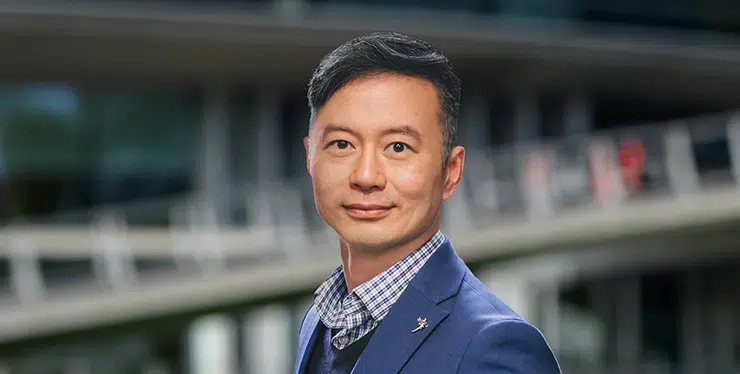
Howard Yu, hailing from Hong Kong, holds the title of LEGO® Professor of Management and Innovation at IMD. He leads the Center for Future Readiness, founded in 2020 with support from the LEGO Brand Group, to guide companies through strategic transformation. Recognized globally for his expertise, he was honored in 2023 with the Thinkers50 Strategy Award, recognizing his substantial contributions to management strategy and future readiness. At IMD, Howard Yu co-directs the Strategy for Future Readiness program and the Future-Ready Enterprise program, which is jointly offered with MIT.

Professor of Strategic Leadership and Governance
Timothy J. Quigley is Professor of Strategic Leadership and Governance at IMD. His research focuses on corporate governance, CEO succession, executive decision-making, and the factors that shape leadership effectiveness. Quigley helps leaders navigate uncertainty by improving decision processes and addressing the cognitive biases that influence judgment. His work has been published in leading journals, including Strategic Management Journal, Academy of Management Journal, and Organization Science, and featured in major media outlets such as the Financial Times and The Washington Post. Before entering academia, he built a career in consulting and technology, helping organizations leverage emerging digital technologies.
October 21, 2026 • by Tim Quigley, Nele Dael in Wellness
Diagnose time poverty with a practical leadership checklist that helps you decide what not to do and refocus on what truly matters....

October 20, 2026 • by Francesca-Giulia Mereu in Wellness
Learn to recognize when negative bias distorts judgment and use targeted strategies to balance signals at work....

October 15, 2026 • by Andrew Sharman in Wellness
When leaders confuse availability with impact, argues Andrew Sharman, they create a culture of permanent activation where everyone looks busy, but genuine value creation and efficiency fall away....
 Audio available
August 25, 2026 • by Alyson Meister in Wellness
Leaders can sustain performance and make better decisions by managing their cognitive energy as deliberately as they manage their time, writes Alyson Meister....
Explore first person business intelligence from top minds curated for a global executive audience