Lessons in digital transformation from aerospace engineering
Aerospace veteran Mike Ambrose shares his insights on pulling off a successful digital transformation in one of the world's most complex industries....
YouTube
December 4, 2025 • by Zhike Lei in The Interview
Former Novo Nordisk CSO Marcus Schindler shares insights on pharma R&D, scientific innovation, AI integration and global talent development...

When Marcus Schindler joined Novo Nordisk in 2018, he didn’t just take the helm of research and early development; he set out to reimagine it. Over the next seven years, as Executive Vice President and Chief Scientific Officer, he led more than 2,500 scientists across a global network, steering the company’s innovation engine into a future shaped by complexity, opportunity, and urgent health challenges.
If he had to capture that journey in a single word, it would be “exploration.”
“For me, exploration symbolizes going into the unknown,” Schindler said. “That, for me, is and was, a big theme. From a scientific world where we were extremely good at solving problems we could articulate, like making better insulin molecules or better treatments for obesity, to a world where less is known.”
But for Schindler, discovery must be anchored in delivery. “First, and fundamentally, I would say as any leader, to gain trust and credibility, you need to have your house in order. Because that is also the ticket to ride into the future. If there is no today, there won’t be a tomorrow.”
His approach is as strategic as it is scientific: “It becomes an ‘and,’ with capital letters – that you both execute or exploit, AND explore,” he said.
Novo Nordisk, long recognized as the world’s largest producer of insulin, has a legacy that stretches back a century in diabetes care. In recent years, it has achieved global recognition for its semaglutide-based obesity drugs Wegovy and Ozempic, repositioning the company as a leader in chronic disease care.
Now, one of Europe’s most valuable pharmaceutical firms – with a market capitalization of around $307bn – Novo Nordisk is expanding its R&D focus beyond diabetes and obesity into cardiometabolic, renal, and rare diseases – leveraging new technologies and strategic global partnerships.

“The company’s research footprint was firmly rooted in Denmark. But to build the innovation engine of the future, the company needed to expand geographically. It has since built research sites in the US – in Boston and the Bay Area, as well as in Oxfordshire in the UK.”
When Schindler began his role at Novo Nordisk, which has more than 77,000 employees worldwide, the company’s research footprint was firmly rooted in Denmark. But to build the innovation engine of the future, the company needed to expand geographically. It has since built research sites in the US – in Boston and the Bay Area, as well as in Oxfordshire in the UK, and, in early 2024, announced plans to open an AI research facility in London.
These weren’t arbitrary choices, but a deliberate effort to determine where breakthrough developments are most likely to emerge today and in the near future, Schindler said.
Boston, he noted, quickly rose to the top. “It not only has outstandingly good academic research that is incredibly networked, but also a strong entrepreneurial spirit,” he explained. “Nearly everybody at Harvard or MIT is also an entrepreneur. They work not only with science, but with a purpose. And that is important for us.”
Throughout the conversation, Schindler emphasized truth-seeking as central to Novo Nordisk’s innovation philosophy, noting that while science involves testing hypotheses that may prove right or wrong, commercial entities must ultimately achieve success.
But science with integrity isn’t at odds with business. Those who bias their research only towards favorable results or milestone achievements, overlooking important side effects, eventually come unstuck. “In our business, nature will prevail. Those things will come back to haunt you,” he said.
With this in mind, he encouraged his team to employ a structured decision-making approach by establishing upfront criteria that defined success, failure, and uncertain outcomes requiring further consideration. The key, he noted, was maintaining accountability to these predetermined standards when it was time to make decisions.
We knew we could not predict the future, but what we could do was be prepared. There are futures and multiverses, depending on which door we open, that will unfold.
In a world of accelerating digitalization and AI, Schindler has long believed that preparing people for what comes next is just as important as any scientific breakthrough. Before stepping down, he and his team were already exploring the core skills that would be needed for the future.
“We knew we could not predict the future, but what we could do was be prepared. There are futures and multiverses, depending on which door we open, that will unfold. It is really important, then, when we talk about capabilities – leadership capabilities, as well as the capabilities of the people in the lab and in the workforce – for those futures,” Schindler noted.
“We wanted to move to what we called a multilingual, or at least bilingual, model of our workforce,” he added. “It was no longer sufficient to be a great scientist. You also needed to be digitally savvy. And, in some cases, even trilingual: digital, science, and entrepreneurship.”
This required investment in training, hiring, and culture. “We sent thousands of our people through education and training as well as hiring new people into our organization,” he said. “Most of them joined us because of the purpose. They wanted to put their skills to work to make medicines and to serve people.”
Schindler is clear that innovation depends on diversity of thought – and that leaders must be intentional in cultivating it. “Diverse teams are more innovative. There’s data for this,” he said. “But sometimes they’re also harder to lead because there are diverse opinions in there. You need to integrate those.”
This, he says, starts with a core belief. “You get to better innovation levels and make better products by integrating diversity of thought, experience, and background.”
This continues with action. “With my own leadership team, I went through a learning journey on diversity and inclusion,” he recalled. “We learned about our own personal biases, our privileges, and our actions. I had a reverse mentor who reflected on what he saw from me. It was sometimes uncomfortable, but for each team member, it was a major stepping stone.”
Reflecting on his personal leadership journey, one theme stood out for Schindler: trust.
“Before Novo Nordisk, which is foundation-owned but still on the stock market, I had worked in a family-owned pharmaceutical company and a Nasdaq-listed biotech,” he said. “Each of those required different dynamics, but trying to be myself and be authentic in how I showed up was always the same.”
Schindler has also had to evolve. “It’s not enough to say things once, particularly as you’re leading large organizations,” he said. “You need to say it over and over again – and be clear on your intent.”
He notes that in a role leading the leaders of leaders, the work becomes far more about clarity than control. “You need to unlearn the temptation to tell them how to do things. But also know when to step in.”
On what advice he would offer to the next generation of scientific leaders, Schindler said maintaining curiosity was key. “Many of us scientists are driven by curiosity and fascination, and it’s really important not to lose this,” he said. “At the same time, absorb the business around you. Do science with the purpose to do something greater and better.”
But the most powerful insight, perhaps, was about leadership itself:
“One of the greatest gifts I have experienced is when you’re not just leading the organization that reports to you, but you create followership – people who actually like to follow you because you have a compelling value story and they trust you.”
That, I believe, is leadership by design and discovery.

Former Executive Vice President & Chief Scientific Officer, Novo Nordisk
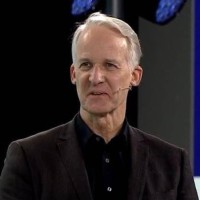
Marcus Schindler is the former Executive Vice President and Chief Scientific Officer of Novo Nordisk, where he led more than 2,500 scientists across the company’s global research and early development organization. During his seven-year tenure, he helped expand Novo Nordisk’s innovation footprint, drive scientific rigor, and shape the company’s strategic shift toward new therapies and emerging technologies. A passionate advocate for purpose-driven leadership, Schindler champions curiosity, integrity, and the development of future-ready scientific talent.

Professor of Leadership and Organizational Behavior, IMD
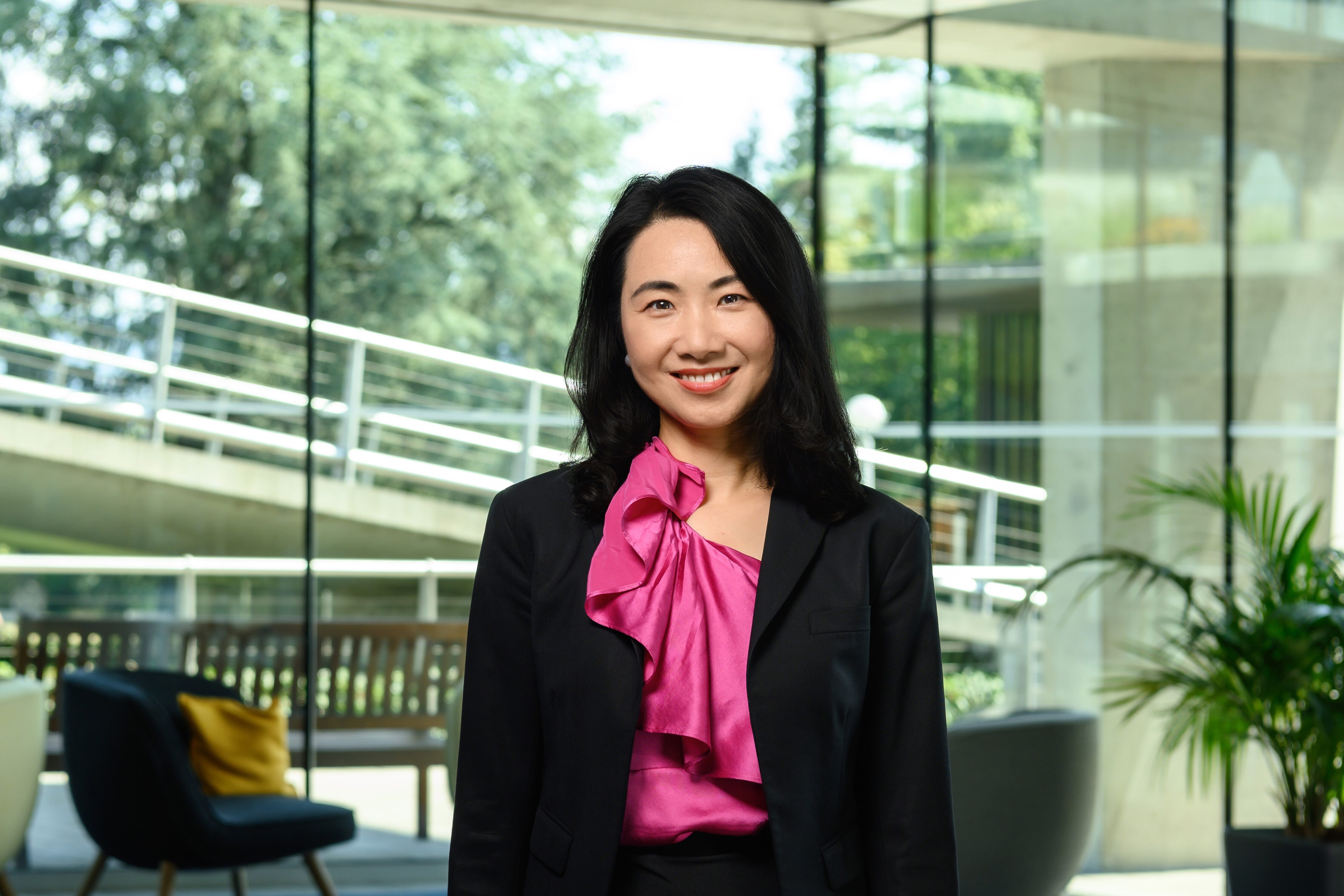
Zhike Lei is Professor of Leadership and Organizational Behavior. She is an award-winning organizational scholar and an expert on psychological safety, team dynamics, organizational learning, error management, and patient safety. Lei studies how organizations, teams, and employees adapt and learn in complex, time-pressured, consequence-laden environments. As a global management educator, she has taught executives and PhD, DBA, EMBA, and MBA candidates, as well as undergraduates, and has won numerous teaching awards and recognitions.
October 1, 2024 • by Didier Bonnet in The Interview • 7 min read
Aerospace veteran Mike Ambrose shares his insights on pulling off a successful digital transformation in one of the world's most complex industries....
September 26, 2024 • by Stéphane J. G. Girod in The Interview • 7 min read
Chief Commercial Officer Jan Huckfeldt talks to Stéphane JG Girod about why organizations need to take urgent action to reduce and remove carbon emissions....
September 17, 2024 • by Albrecht Enders in The Interview • 6 min read
Lena Hök, Executive Vice President for Sustainability and Innovation at Skanska, explains how being a forerunner on sustainability has helped it set industry standards and win customers....
August 6, 2024 • by Michael R. Wade in The Interview • 7 min read
Michael Wade interviews Hamilton Mann, a top executive at European defense group Thales....
July 2, 2024 • by David Bach in The Interview • 13 min read
Finance professional Jason Price discusses the potential for art to transform underserved communities, with David Bach....
June 11, 2024 • by Misiek Piskorski in The Interview • 8 min read
Ralph Herbst, Chief Strategy Officer at gene therapy company AskBio (an independently operated subsidiary of Bayer), tells Misiek Piskorski how he has stayed focused on a long-term quest to push the boundaries...
June 4, 2024 • by Alyson Meister in The Interview • 9 min read
Marc Maurer, Co-CEO of On, tells Alyson Meister how the company’s unique culture – defined by five ‘Spirits’ – is helping chart its path to becoming the world’s most premium sportswear brand....
April 16, 2024 • by Amit M. Joshi in The Interview • 12 min read
Chris Tung is President of Strategic Development at Chinese e-commerce multinational Alibaba Group. He tells Amit Joshi how the company is integrating AI to optimize its customer experience....
April 2, 2024 • by Marleen Dieleman in The Interview • 8 min read
Fourth-generation family members Dato’ Yong Yoon Li, the Managing Director, and Chen Tien Yue, the Executive Director, explain how drafting a ‘family charter’ and creating opportunities for social bonding has helped Royal...
December 19, 2023 • by Alyson Meister in The Interview • 8 min read • Podcast available
Morra Aarons-Mele, author and host of the Anxious Achiever podcast, discusses the strategies to help turn anxiety into a leadership superpower....
Explore first person business intelligence from top minds curated for a global executive audience