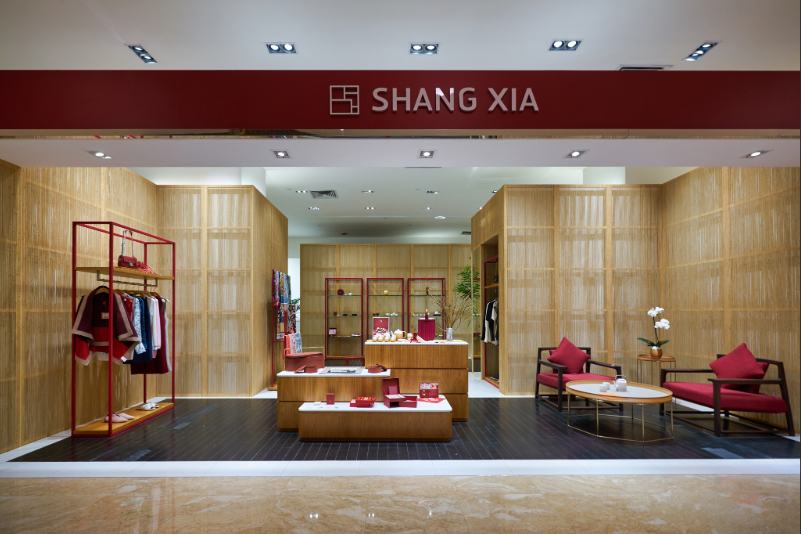
For Luxury and China, will the next decade be âback to the futureâ?
The next decade will bring significant changes for China's luxury sector. But to see where it's heading, we need to understand where it's been....

by Ralf W. Seifert, Anna Timonina-Farkas, Richard Markoff Published May 26, 2022 in Luxury âą 5 min read
Itâs the best challenge a supply chain manager can have: a wildly successful product launch that exceeds the demand projections. This is what Swatch is facing with its launch of 11 âMoonSwatchesâ in a first ever in-house collaboration with Omega, a luxury brand in the same consolidated company. Since the introduction of the watches in late March, lines began forming in front of the select Swatch stores that carry the new collection. Â
While the MoonSwatch is a co-branded product, the execution of the supply chain is being handled by Swatch, not Omega. Though both brands are parts of the same company, the supply chains function independently to better segment between the distribution of luxury Omegas and the more consumer-oriented Swatch brand channel. For official Swatch retailers that are allowed to carry and sell MoonSwatches, this means irregular deliveries of small batches which have sold out completely.Â
Swatch quickly deployed a one-per-customer policy scheduled to last until inventory position normalizes. Because the launch is exclusively in Swatch offline stores, the policy should not have been difficult to implement; nonetheless, it has proven challenging. Without recording customer personal data to ensure compliance, the rule has been enforced sporadically. Furthermore, the policy has apparently been unclear to some retailers, with different branches applying the one-per-customer rule variously by day, week or month. The result is a robust secondary market, with MoonSwatches now fetching four times the prices at online sellers like Ebay. Â
Importantly, in the absence of resellers, the backlog of customers would clearly be optimal for products of Omega x Swatch collaborations due to the ability to return people to stores because of their willingness to purchase the budget watch with luxury branding on it. However, because of the rising secondary market, the risk that the backlog transforms into lost opportunity for cross-selling remains for Swatch.Â
The choice to sell MoonSwatches exclusively in select retail outlets, and not online, has been a huge success in driving new loyal and non-loyal customers through the doors to discover the broader Swatch product offer. Â

We asked Swatch if the company had any way to measure the increased demand for this product, and the reply may seem surprising. Reaction within the company to the MoonSwatches was overwhelmingly positive, with many (of course, unfulfilled) requests from employees to purchase watches. This âinternal marketing researchâ is uncannily prescient, per the Swatch supply chain manager we spoke to. Combined with the reactions provided by influencers, Swatch has become adept at hearing demand sensing signals for product launches.Â
Swatch has planned MoonSwatch as an unlimited product with an affordable price tag. While Swatch watches are produced in Switzerland, a handful of components are sourced from China. Many have seen the images of the backlog of ships at the port of Shanghai caused by strict COVID lockdowns. Supply chains with global footprints are struggling to keep up, and air cargo capacity is also hard to come by. In the case of China, this problem has just been exacerbated by the recently introduced general travel restrictions for Chinese citizens.Â
As the Swatch manager explained, there was no time to build up safety stock on components for the MoonSwatches before the launch. The supply chain is working with vendors to expedite orders on a product whose supply chain did not have agility as a priority. On top of this, one of the suppliers is wrestling with a perceived quality issue, with blue color needed for one of the SKUs. So, despite the productâs popularity, scaling up production is impossible: it would be hard to imagine more challenging times to expedite such a critical increase in production unless the availability is to remain very low.Â
Finding the tradeoff between safety stocks, working capital and agility is a difficult balance to maintain. Swatchâs position â having immediate visibility into launch performance through a vertically controlled downstream supply chain and domestic in-house production – is a powerful one. However, with a handful of components sourced globally, realigning and ramping up production in the face of unprecedented success is a big challenge.  Â
Holding a sufficiently high safety stock would have supported Swatch during the times of demand peaks. Now, cooling down secondary markets by providing high service levels to customers should be Swatchâs priority in face of an unlimited production run. Â
Because of supply chain issues with components, the strategy to sell MoonSwatches offline, reducing the number of flagship stores and increasing the shipments per point of sale is one option. This appears to be the current tactic, as the Swatch website shows only selected stores carry the product. Another option would be to hold the inventory of MoonSwatches for some time, instead of selling them immediately, and then to release this inventory all at once, sending a strong signal to the secondary market. If the signal reaches the audience successfully, the backlog situation will be normalized. If the signal is not strong enough, the backlog may take an upward trend again. Nevertheless, in both cases and even during the times with no in-store inventory, loyal and non-loyal customers will be attracted to stores.Â
The introduction of the MoonSwatch collection has been a tremendous success for Swatch. Reaping the learning of this production introduction on the supply chain side will prove as important as capturing the marketing opportunities and will become a reference point for Swatch and other companies facing uncertainties in supply and demand.Â

Professor of Operations Management at IMD
Ralf W. Seifert is Professor of Operations Management at IMD and co-author of The Digital Supply Chain Challenge: Breaking Through. He directs IMDâs Strategic Supply Chain Leadership (SSCL) program, which addresses both traditional supply chain strategy and implementation issues as well as digitalization trends and the impact of new technologies.

Scientific Researcher at Ăcole Polytechnique FĂ©dĂ©rale de Lausanne
Anna Timonina-Farkas is a research professor focusing on topics on decision-making under uncertainty for operations and supply chain management. With multiple years of experience, her work explores optimization strategies in environments characterized by scarce data and extreme events.

Supply chain researcher, consultant, coach and lecturer
Richard Markoff is a supply chain researcher, consultant, coach, and lecturer. He has worked in supply chain for LâOrĂ©al for 22 years, in Canada, the US and France, spanning the entire value chain from manufacturing to customer collaboration. He is also Co-founder and Operating Partner of the venture capital firm Innovobot.

February 13, 2026 ⹠by Stéphane J. G. Girod in Luxury
The next decade will bring significant changes for China's luxury sector. But to see where it's heading, we need to understand where it's been....

January 30, 2025 ⹠by Stéphane J. G. Girod in Luxury
CEO Manuel Reman blends Krugâs tradition with innovation, fostering deeper connections with global audiences and emphasizing authenticity to keep the champagne house relevant amid shifting tastes and sustainability challenges....

December 30, 2024 ⹠by Stéphane J. G. Girod in Luxury
At Swarovski, CEO Alexis Nasard's leadership is a master class in how to establish brand attractiveness and provide clarity. He has maintained Swarovski's relevance, freshness, and solid position as a contemporary luxury...

October 8, 2024 ⹠by Vanessa Signorini, Stéphane J. G. Girod in Luxury
Alexis Mourot, CEO of la Maison Christian Louboutin since 2007, tells Stéphane JG Girod and Vanessa Signorini how the Parisian shoe specialist became an iconic global brand....
Explore first person business intelligence from top minds curated for a global executive audience