Share
Facebook Facebook icon Twitter Twitter icon LinkedIn LinkedIn icon Email

Leadership

How Lalique sculpts its independence in a world of luxury giants

Published July 6, 2026 in Leadership • 8 min read

Lalique CEO Nina Müller on turning the French crystal maker’s disruptive artistic heritage into a platform for the future – and why, in luxury’s new era, independence may be its greatest asset.

Rapid read:

  • Cultural relevance beyond the object. Known for individual objects, Lalique’s strategy is built on carrying forward its founder’s audacity and creative spirit firmly rooted in lifestyle and interior design.
  • Human craftsmanship is becoming a source of competitive advantage. As luxury consumers increasingly seek authenticity, provenance, and meaning, the value of time, skill, and human creation continues to rise.
  • Distinctiveness matters more than scale. In a market increasingly driven by experiences and specialization, independent maisons can turn selectivity, focus, and cultural relevance into strategic strengths.

The future of luxury may depend on something increasingly rare: human time.

In an industry often associated with scale, speed, and constant novelty, French crystal maker Lalique is betting on a different future – one built on craftsmanship, authenticity, and experiences that cannot be replicated at the touch of a button.

“All these qualities matter more today, more now, and not less,” said Nina Müller, CEO of Lalique Group. “Especially to the younger generation. The question of where something is coming from, who made it, and whether it is real is becoming really central.”

For Müller, that shift is more than a consumer trend. It is a strategic opportunity. In a world of instant access and infinite replication, Lalique is betting that authenticity, craftsmanship, and experiences rooted in human creation will become luxury’s ultimate differentiators.

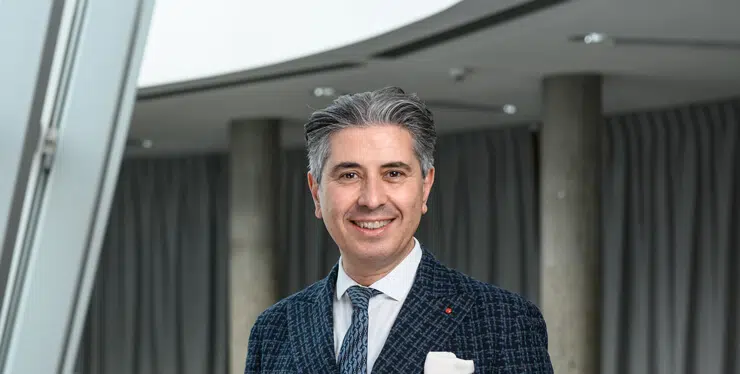
Nina Muller
When Müller stepped into the CEO role at Lalique Group nearly two and a half years ago, she resisted the urge to arrive with a blueprint for change

Protecting the craft and its people

When Müller stepped into the CEO role at Lalique Group nearly two and a half years ago, she resisted the urge to arrive with a blueprint for change. Instead, she spent her first months listening – immersing herself in the business, its history, and its manufacturing center in Wingen-sur-Moder in Alsace, which she describes as “the heart of Lalique.”

“When you take on a Maison with so much history, the first mistake would have been to come and arrive with concrete answers,” said Müller, whose background spans more than three decades of experience across retail, jewelry, watches, and fashion.

What emerged was a clear strategic priority: protect the craftsmanship and savoir-faire at the center of the Maison while rethinking how the brand engages with the world.

From those workshops came a clear strategic logic: “I protected craft and the people who carry it, but what I challenged is how we bring our brand to the outside world,” said Müller, at a recent Luxury 2050 Forum C-Suite Talk.

Today, Lalique’s universe spans crystal creations, jewelry, perfume, interior design, hospitality, and fine art collaborations. The brand operates around 20 of its own stores and concessions and works with approximately 350 wholesale partners worldwide.

Yet despite its global footprint, Müller believes one of Lalique’s greatest strengths is its independence.

Bain also found that specialist brands generally outperformed larger diversified players, suggesting that focus and distinctiveness may increasingly matter more than scale alone.

Luxury’s new era

The timing of that conviction matters. The latest study from Bain-Altagamma estimated the personal luxury goods market totaled €358bn (approximately $415.3bn) in 2025, broadly flat at constant exchange rates, as the sector continues to stabilize following the post-COVID boom.

Beneath that apparent stability, a structural shift is underway. Since 2023, experiences have been the primary driver of growth in luxury spending, while segments such as luxury hospitality and contract projects have continued to perform strongly even as broader retail demand remained muted.

Bain also found that specialist brands generally outperformed larger diversified players, suggesting that focus and distinctiveness may increasingly matter more than scale alone.

That artistic foundation continues to distinguish Lalique today.

The obligation of audacity

To look to its future, Lalique is drawing on its past, particularly its founder René Lalique’s willingness to challenge traditional conventions.

Known as one of the key contributors to the Art Nouveau and Art Deco movements, René Lalique revolutionized the decorative arts by blurring the boundaries between art, nature, design, craftsmanship, and industry, creating dream-inspiring works that ranged from jewelry and perfume bottles to interiors for the Orient Express and luxury ocean liners. He was even able to turn low-value materials into luxury objects, a precious lesson for the more sustainable future that lies ahead. “He was not just a genius, he was disruptive and daring,” Müller said. “The heritage that we need to hold up is not just the objects or the history, but his audacity.”

That artistic foundation continues to distinguish Lalique today. More than a century later, the Maison remains rooted in the idea that craftsmanship serves creativity – not the other way around.

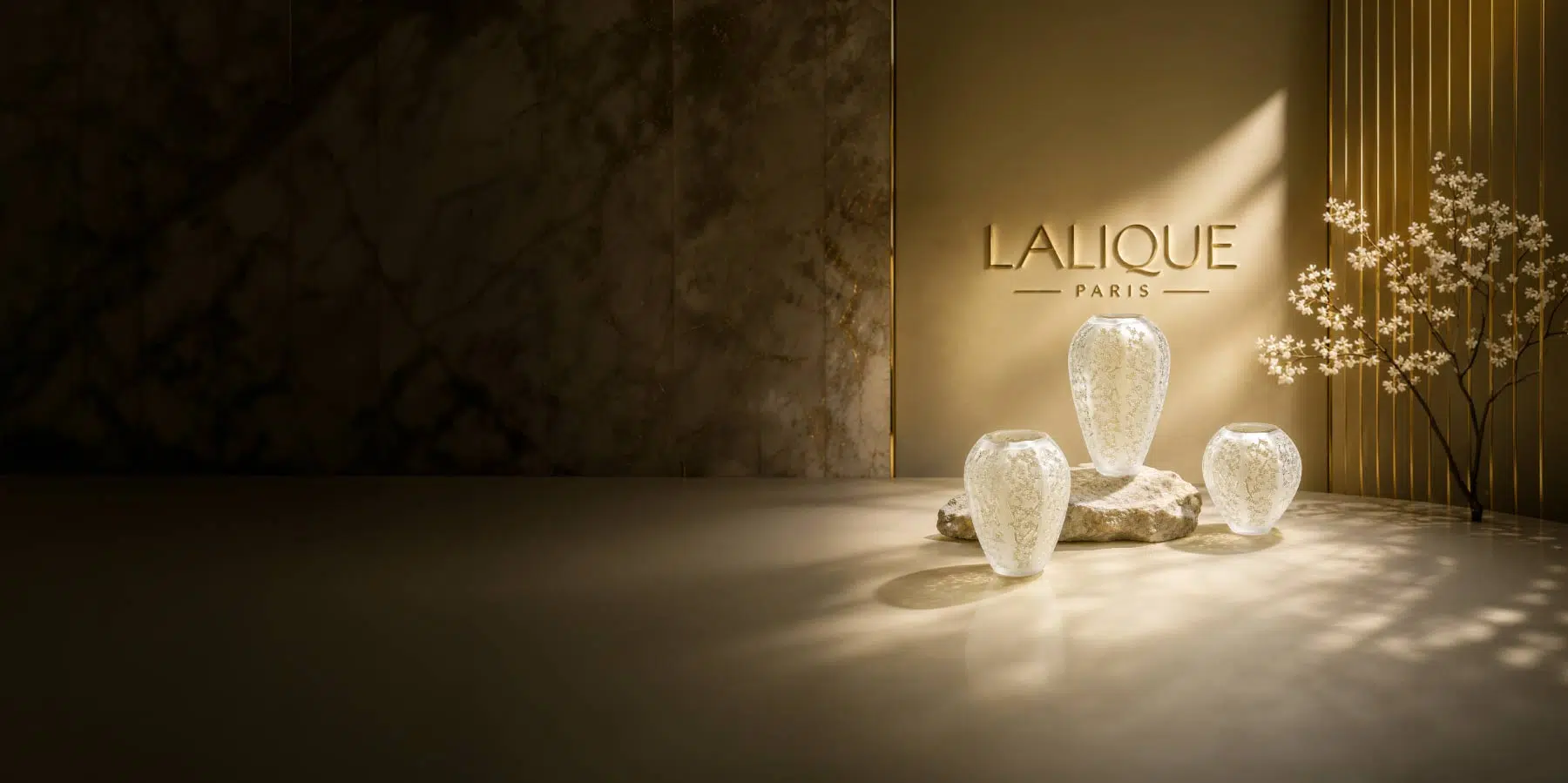
The challenge is not simply to preserve Lalique’s heritage, but to reinterpret it for a new era. That philosophy is shaping not only the products Lalique creates, but also how it presents itself to the world. One example is the Maison’s new logo. Where four swallows were once enclosed within a circle, they are now set free.

Rather than encountering Lalique’s creations in isolation, guests experience it as part of a broader aesthetic and cultural universe.

Cultural relevance beyond the object

That philosophy extends far beyond crystal.

Today, Lalique plays across multiple categories, which Müller views not as extensions but as expressions of the same creative universe, united by a simple test: authenticity to the Maison’s heritage and identity.

Hospitality plays a particularly important role in that vision. At Villa René Lalique in Alsace and the soon-to-reopen Villa Florhof in Zurich, visitors can interact with the brand not as a collection of objects but as a living environment.

Rather than encountering Lalique’s creations in isolation, guests experience it as part of a broader aesthetic and cultural universe. In that sense, hospitality functions not simply as a branding exercise, but as a way of deepening engagement with the Maison and bringing its creative vision to life.

“An object can be beautiful, can be admired, but it’s rarely the object that creates a lived memory,” Müller said. “Experience is lived and engages people at every level.”

For Müller, those experiences ultimately lead back to the same source: the people and craftsmanship behind the objects themselves.

Reach new heights in leadership

Leadership programs

Develop key leadership capabilities and accelerate your impact as a leader
Explore the program

Why slowness is the sharpest edge

Preserving that craft is a long-term commitment. Lalique works with crystal schools, supports the Meilleur Ouvrier de France (MOF), and pairs newcomers with master craftspeople who have spent decades at its Wingen manufacture.

“We need to protect the savoir faire and we need to protect the people that are creating these beautiful objects,” Müller said. Without them, she argues, Lalique risks losing the authenticity that defines it. Encouragingly, young people continue to be drawn to the profession despite its challenges.

The same principle governs Lalique’s approach to collaboration: protect the brand’s integrity while remaining open to the unexpected.

Living up to René Lalique’s legacy means pursuing “exciting, daring projects” and partnerships that may seem surprising on the surface but share the Maison’s values and culture, Müller said. An unlikely collaboration with rapper 50 Cent illustrates the point. Despite the contrast between their worlds, he proved to be “a total lover of our crystal manufacture.”

For Müller, authenticity remains the ultimate filter. Rather than chasing trends, Lalique seeks collaborations that bring new perspectives while remaining true to the brand’s identity.

It makes me proud that we can be found in auctions and at art collectors, because it shows that what we have been doing is something that is lasting, and worth keeping, or passing on, or searching for.
- Nina Müller, Lalique CEO

The case for staying small

Remaining selective about where Lalique expands is central to the strategy. Rather than pursuing scale for its own sake, the Maison is focused on preserving the craftsmanship, authenticity, and collectability that define its appeal.

The regular appearance of Lalique pieces at auctions and among serious collectors reflects the enduring value of objects created to last rather than chase volume.

“It makes me proud that we can be found in auctions and at art collectors, because it shows that what we have been doing is something that is lasting, and worth keeping, or passing on, or searching for,” said Müller. Of all high-end brands, it is one of the few left that is still strongly rooted in the arts. And that, in itself, can lead to the question of whether it is actually playing in the luxury space or in something even more valuable.

If she is right, the brands that thrive in luxury’s next chapter may not be the biggest, but those that offer something increasingly rare: authenticity, craftsmanship, and a human touch. Their roots in artistic creation may also prove an advantage as environmental pressures intensify over the coming decades, providing a source of cultural legitimacy that extends beyond consumption alone.

Expert

Nina Muller

Nina Müller

CEO, Lalique Group

Nina Müller is CEO of Lalique Group, where she is leading the evolution of the luxury house by combining its artistic heritage with a modern growth strategy grounded in craftsmanship, authenticity, and customer experience. With more than three decades of international experience across luxury, jewelry, fashion, and retail, she has held senior leadership roles at Swarovski, Christ, Jelmoli, and Swiss Prime Site. Müller is known for her people-centered leadership philosophy and her belief that culture, creativity, and craftsmanship are enduring sources of competitive advantage in a rapidly changing world.

Authors

Yuki Iida

Yuki Iida

Global Head of Product Portfolio Strategy, Marketing & Merchandising for Watches, Writing Instruments & Accessories at SWAROVSKI

Yuki Iida is a strategic and results-driven leader with experience across product and brand management, strategy, merchandising, communications, and consulting. Having worked across Europe, North America, and Asia, she has built a strong track record in premium and luxury consumer goods as well as sustainability-focused industries. Passionate about creating meaningful value, Yuki thrives at the intersection of business growth, customer experience, and environmental impact.

Related

Learn Brain Circuits

Join us for daily exercises focusing on issues from team building to developing an actionable sustainability plan to personal development. Go on - they only take five minutes.
 
Read more 

Explore Leadership

What makes a great leader? Do you need charisma? How do you inspire your team? Our experts offer actionable insights through first-person narratives, behind-the-scenes interviews and The Help Desk.
 
Read more

Join Membership

Log in here to join in the conversation with the I by IMD community. Your subscription grants you access to the quarterly magazine plus daily articles, videos, podcasts and learning exercises.
 
Sign up

Log in or register to enjoy the full experience

Explore first person business intelligence from top minds curated for a global executive audience