
Is your social media costing you? A trust test
With AI making it harder to tell what is real, leaders face growing skepticism. Here’s how to check whether people believe what you say about yourself and the organization. ...

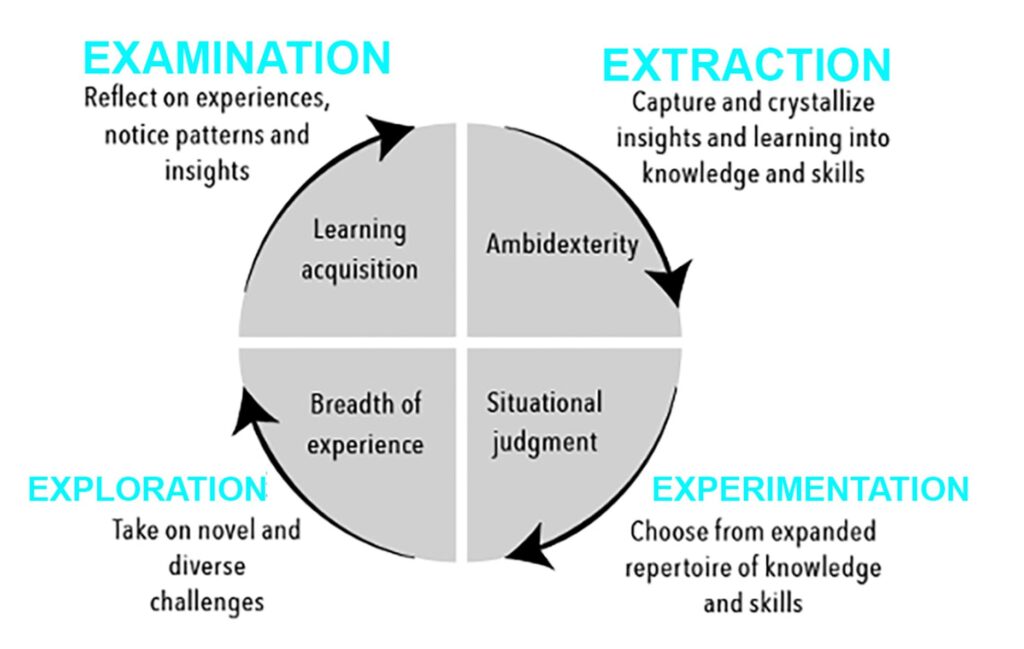
Leaders at more senior levels tend to take on more demanding challenges and gravitate toward more complex assignments. They also have more curiosity about the world around them.
Learning occurs mainly through thinking and reflecting on experience. High-fliers leverage strong cognitive ability to interpret and encode information in complex, uncertain environments.
Top performers are able to crystallize insights and learning into knowledge and skills, which means they acquire more job knowledge faster and resolve hard questions better. This reflects the essence of learning agility – the “meta-competency” that enables the acquisition of other competencies and knowledge.
The most successful leaders are able to choose the knowledge and skills to facilitate long-term performance, even when that means sacrificing short-term results. The capacity to select behaviors to match the specific demands of situations and people is reflected in the high predictiveness of emotional intelligence as a marker of potential – especially self-control.
Given the above desiderata, ask yourself the following questions to identify the right talent:
How quickly can the individual translate their experiences into knowledge and skills?
What experiences do they have that span functions, types of challenges (start-up, turn-around, etc.), and countries?
Have they acquired key areas of expertise, and can they harness current capabilities to drive profitability while establishing new sources of value?
Have they cultivated the executive functions (cognitive, strategic, and behavioral flexibility) to respond effectively to dynamic, novel, and challenging situations?
It encompasses the critical drivers of potential for senior leadership roles in a dynamic and complex environment.
It does not rely on information of past performance, allowing for the possibility that what drove success in the past may not address new challenges.
It incorporates innovative assessment mechanisms that rely less on self-assessment and offer a more objective and robust view of potential.


With AI making it harder to tell what is real, leaders face growing skepticism. Here’s how to check whether people believe what you say about yourself and the organization. ...

AI can make existing organizational norms harder to see by “flattening” them. Here’s how to stop it producing a more homogenous culture, instead of a more inclusive one....

Protect your pipeline: actionable steps to develop leaders from entry-level roles as AI transforms junior work tasks....

The role of the Chief Experience Officer (CXO) is undergoing a profound transformation in the age of AI. Here are the tools and strategies to lead this transformation effectively....
Explore first person business intelligence from top minds curated for a global executive audience