How China’s innovation system really works
As debate grows over whether China is winning the technology race, executives should focus instead on how its innovation system is designed – and what that means for competition....

by Mark J. Greeven Published February 7, 2024 in Asian hub • 6 min read
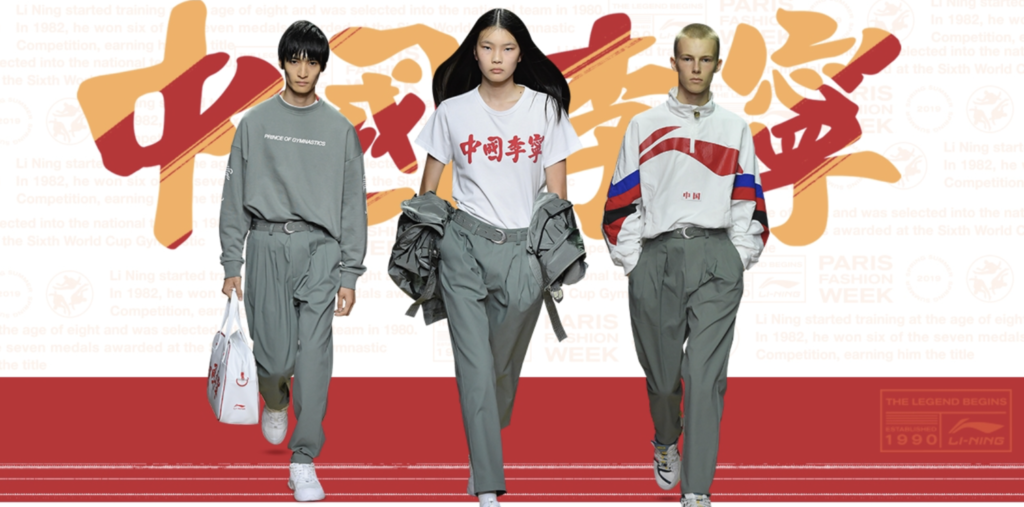
Established in 2023, ’Guochao,’ a term that translates to ’national wave,’ refers to a movement in China where consumers, particularly Millennials and Generation Z, show a strong preference for domestic brands and products that incorporate traditional Chinese culture and style. Chinese companies like Anta and Li-Ning, which have capitalized on the ’Guochao’ trend, represent a shift in consumer preferences that is challenging Nike’s market position in China, but not fundamentally.
In IMD’s 2023 China Company Transformation Indicator (CCTI), we investigated the top 23 apparel companies in China – 13 of which are foreign multinational corporations (MNCs) like Nike and Lululemon – across eight factors with 45 variables. The undisputed top performer in China’s apparel world is Nike. While Anta is the giant in terms of revenues, Nike is leading across all indicators — from business success and investors’ expectations to innovations brought to the Chinese market and ESG initiatives.
The roots of Nike’s success are deep and include a hyper-localized presence with a specific focus on targeting Gen-Z consumers. They have augmented this by creating direct-to-consumer channels and a smart strategy to integrate digital sales and marketing with offline retail experiences. Nike China is perhaps the global best practice in creating true omnichannel experiences for consumers.

Of course, this was only possible due to a strong emphasis on digital in the pre-COVID years, and which paid off immediately afterward. The company has been highly effective in utilizing digital platforms like its official website, Tmall, its SNKRS app, and its WeChat Store to reach and engage with its audience with the result that digital sales now comprise a substantial part of its overall sales in China. Nevertheless, change may be on the way.
As bringing early innovation to the Chinese market may have the most significant influence on our indicator results, followed by customer engagement and R&D effort, Anta and Li Ning are also top scorers. Moreover, Nike has faced a temporary backlash from local consumers due to its stand against Xinjiang-made cotton, leading to a decline in sales growth. Conversely, Chinese rivals have taken up the slack and achieved significant sales growth, leveraging local consumer preferences and nationalistic sentiments.
Anta has become the first Chinese sportswear brand to lead the domestic market in over a decade, overtaking Nike in terms of sales, partly because of its effective multi-brand strategy, which has enabled the company to target different segments of the market more effectively. Its acquisition of Fila – as well as the incorporation of other brands like Descente and Kolon Sport – has enabled it to appeal to a broader consumer base with diverse preferences. Anta also succeeded in the high-end market by accelerating the prosperity of Arc’teryx, a more recent acquisition.

Anta has also been able to capitalize on the growing ‘Guochao’ trend by recognizing the increasing preference of Chinese consumers for home-grown brands. The company has taken the Nike playbook and expanded its retail presence with a large number of stores – including highly diversified experience stores, similar to Nike – across China, and a strong focus on digital channels. This has made its products more accessible to consumers and contributed to its revenue growth. In many ways, Anta is a fast follower and not to be underestimated in the future.
Li Ning is named after the legendary Chinese Olympian and is a huge commercial success by an athlete-led company that has certainly benefited from the ‘Guochao’ trend. Initially, this preference for Chinese brands was not immediately obvious, as this sentiment was appealing to a new target consumer group. The company’s strategic marketing efforts, including its participation as a Chinese brand in international events like New York Fashion Week, have helped to re-position Li Ning as a trendy and nationalistic label. This has attracted younger, more fashion-conscious Gen-Z consumers.
While Li Ning has been expanding its omnichannel strategy, it is far from Nike and Anta in terms of implementation. Li Ning seized opportunities arising from national events and controversies to align its brand with local consumer sentiments. While this led to a temporary spike in popularity and pricing, it also highlighted the brand’s agility in responding to market dynamics.
Sensitivity to local consumers has never been as important as it is now. While Nike has deep roots in China, leveraging a true omnichannel strategy may not keep the company afloat forever. Local sentiments may increasingly favor local brands, which in turn have been investing in innovation and are increasingly leveraging marketing and branding to get close to consumers.
The Chinese consumer has also become more sophisticated, rationally assessing quality and cost; Li Ning and Anta meet this demand by providing excellent products at competitive prices.

The research for the China Company Transformation Indicator (CCTI) was carried out by Wei Wei and Kunjian Li at IMD’s research hub in Shenzhen, China, under the supervision of research director Mark Greeven, Professor of Innovation and Strategy at IMD. For more insights on China’s business landscape, explore the first article in our China Company Transformation Indicator 2024 series, focusing on global pharmaceutical investments in China.

Professor of Management Innovation and Dean of Asia, IMD
Mark Greeven is Professor of Management Innovation and Dean of Asia at IMD, where he co-directs the Building Digital Ecosystems program and the Strategy for Future Readiness program, and the Future-Ready Enterprise program, which is jointly offered with MIT. Drawing on two decades of experience in research, teaching, and consulting in China, he explores how to organize innovation in a turbulent world. Greeven is responsible for the school’s activities and outreach across Asia and is a founding member of the Business Ecosystem Alliance. He is ranked on the Thinkers50 list of global management thinkers (2025, 2023).

February 16, 2026 • by Mark J. Greeven in China
As debate grows over whether China is winning the technology race, executives should focus instead on how its innovation system is designed – and what that means for competition....

February 16, 2026 • by Howard H. Yu, Jialu Shan, Lawrence Tempel in China
BYD overtook Tesla’s EV annual market share in 2025 as it mastered unglamorous fundamentals and built capabilities sequentially while competitors chased disruption and moonshots....

February 16, 2026 • by Zhike Lei in China
Some of China’s most profitable companies have thrived by piling pressure on workers – sometimes with tragic results. Zhike Lei outlines how multinationals can design work that avoids burnout and exploitation. ...

February 13, 2026 • by Stéphane J. G. Girod in China
The next decade will bring significant changes for China's luxury sector. But to see where it's heading, we need to understand where it's been....
Explore first person business intelligence from top minds curated for a global executive audience