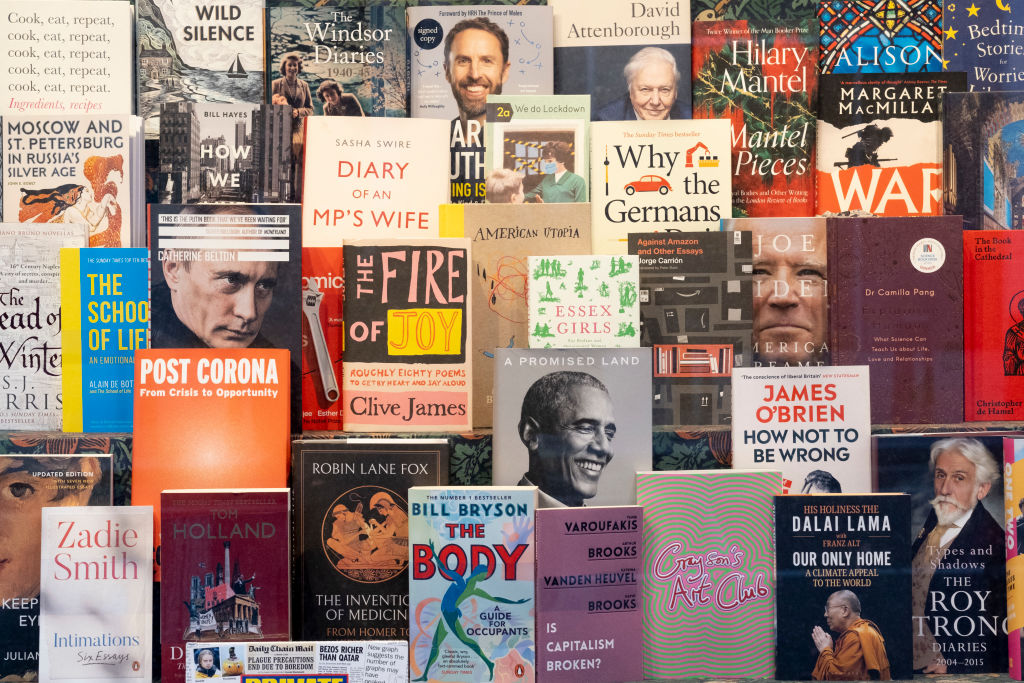
Books to inspire, inform and entertain
From dealing with burnout and bullsh*t to the joys of friendship and climbing mountains, IMD professors offer a varied choice of summer reading material...
January 6, 2026 • by Peter Vogel in Family business
Melisa Sabancı Tapan, in conversation with IMD’s Peter Vogel, discusses creating empowered communities, bringing the wisdom of the past to new generations through AI, and staying human in a digital world. ...
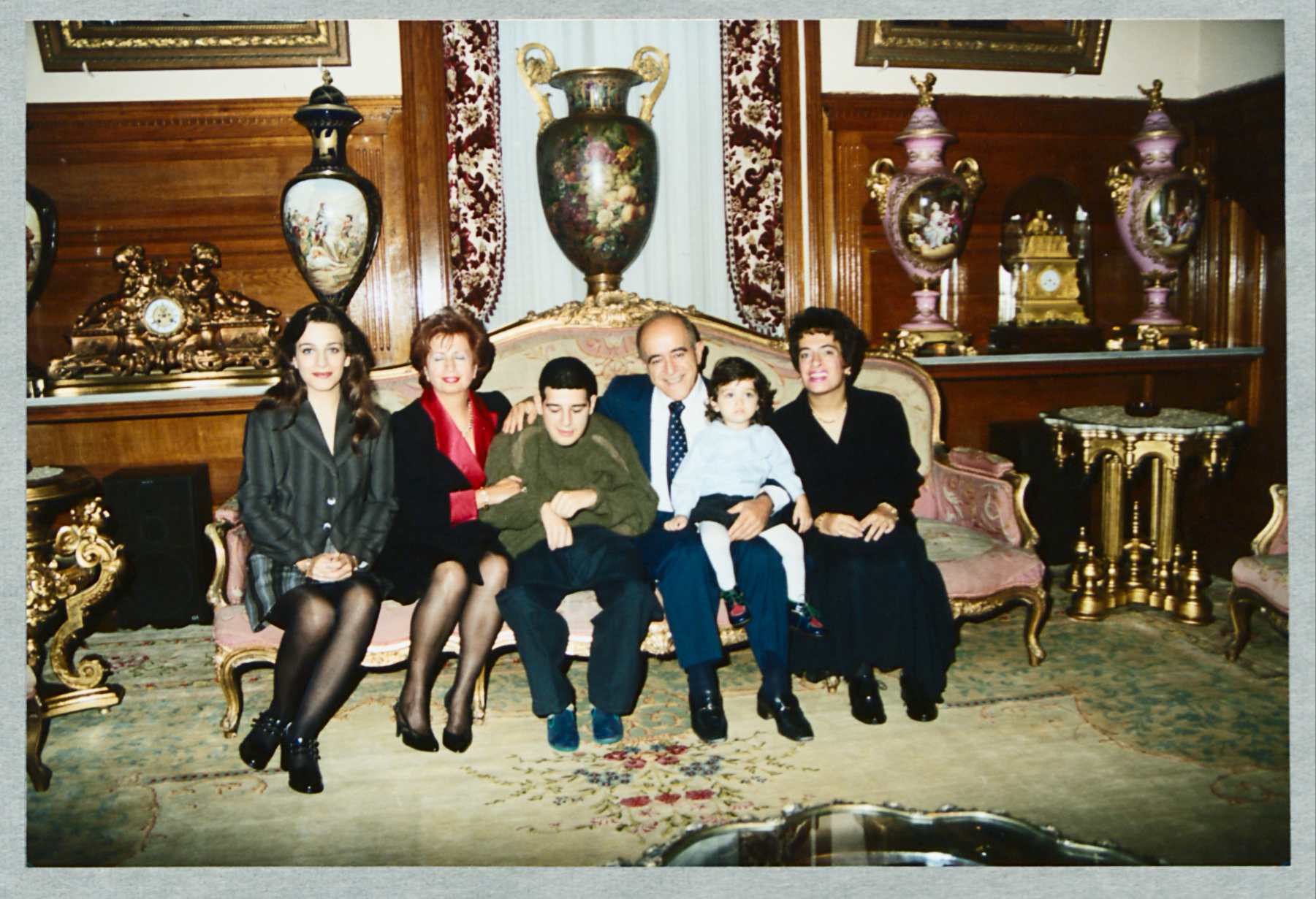
A lot of business families find the juxtaposition of tradition and innovation a difficult one, but for our family, it’s ingrained into our philosophy, which is to rethink, unlearn, and redefine your values for each generation. This not only ensures our survival as a business but keeps our family thriving year after year.- Melisa Sabancı Tapan

For every family, there comes a point in time when you question how you can retain the wisdom, values, and traditions of your predecessors while innovating – both to survive as a business and appeal to new generations. For the Sabancı family, that question was more specifically, how can the third generation retain the knowledge of their great-grandfather and bring it into today’s world?
Hacı Ömer Sabancı was born in 1906 in the Akçakaya village of Kayseri, Türkiye. He lost his father when he was just five years old and, at 14, left with his brother to try their fortune in the Adana cotton region, travelling the entire distance of 450km on foot. Sabancı Holding was founded in 1925. Over the next century, it evolved into an international organization comprising six business partners, 17 countries, and 60,000 employees. Sabancı sits at the heart of the business through his passionate belief in giving, which he instilled in his six sons; several of whom decided to institutionalize his vision – turning his belief into a family enterprise ecosystem that still impacts thousands of lives every year.
Third-generation family member Melisa Sabancı Tapan is a member of the Board of Directors at Sabancı Holding and a board member of Sabancı University, as well as the founder of Gate 27 – an artist residency where artists, thinkers, and institutions come together to explore regenerative futures towards a more sustainable and humane future. She joined me recently to discuss her family’s remarkable philanthropic journey and unique philosophy that keeps each generation as engaged as the last.
“My great-grandfather had a saying which in English translates to ‘Sharing what we have earned from this land with its people’,” she said. “He was a great philanthropist, but his giving lacked a structure. His sons, having been raised with this principle, decided to make it their life’s work to professionalize their father’s legacy – institutionalizing his values of giving and making a greater, more far-reaching impact. When the idea of establishing a structured foundation was presented to their mother, my great-grandmother Sadıka Sabancı, she chose to donate her entire wealth during her lifetime to bring the Foundation into being. That’s how our story began.”
Starting with providing scholarship opportunities for students and the construction of schools, community centers, and student dormitories, before moving into NGOs – creating local funds and mentorship programs that gave visibility to important causes – the family created a community where, Sabancı Tapan recalls, ’the empowered empower’, which inspired her to join them.
In line with the Sabancı Foundation’s new strategy, launched after its 50th anniversary in 2024, the Foundation is structured around four pillars: quality and inclusive education, gender equality, participation in social and cultural life, and climate emergency and disaster response. Reliable and transparent equality data and strengthening civil society serve as cross-cutting themes, supporting all pillars through evidence-based action, accountability, and sustainable impact across the ecosystem.
In the Sakıp Sabancı family, every family member has been given the space and flexibility to create their own passion within the wider family ecosystem.
While first-generation wealth creator Hacı Ömer Sabancı collected archaeological works and furniture, his son, Melisa Sabancı Tapan’s grandfather, was interested in calligraphy and early Turkish paintings. Leaning on the family’s values, with the freedom to follow his own path, he created the museum in the family home, redefining the Sabancı family values and serving as a perfect illustration of their family legacy.
Sabancı Tapan’s aunt, Dilek Sabancı, was passionate about disability inclusion and became the family advocate in bringing the Paralympics to Turkey, while her mother, Sevil Sabancı, loved contemporary art, so she focused on the family museum, creating her own collection while also becoming an athlete, going on to support the equestrian ecosystem in the country. The family museum is a testament to this reinterpretation of values.
“My journey took a different path,” explained Sabancı Tapan. “Through Gate 27, we intentionally design slow, process-driven spaces where meaningful, long-term change can emerge. We work with a careful selection process and have developed our own impact measurement framework, inspired by Social Value International, while adapting it to reflect the deeper, less visible layers of change. Our approach combines quantitative, qualitative, and psychological analysis – because impact must also tell a coherent story. We don’t think in terms of standalone projects, but in multi-layered journeys that evolve, deepen, and leave a lasting imprint.
“In our family, values are passed not as rigid inheritance, but as a space for personal interpretation. We encourage our members to take responsibility while contributing to society, listen, embrace collective wisdom, lead compassionately, and reinterpret our family vision with their own tools. Strength comes not from sameness, but from how we complete each other.
“Wealth owners need to think of the rising generation a lot like seeds. If we put them in a chest in a bid to protect them, they will die, but if we plant them in soil, they will thrive – adapting, transforming, and growing – as can everything else around them. It’s a mindset we apply to our growth as a family, where even the youngest voice matters, and what I hope to achieve.”
Wealth owners need to think of the rising generation a lot like seeds. If we put them in a chest in a bid to protect them, they will die, but if we plant them in soil, they will thrive.
How do you protect your narrative in such a strong family? For Sabancı Tapan, the answer lay in having the space to discover yourself and the ability to question your family values – not necessarily criticizing, but asking which values still make sense in a modern world and which can be redefined to allow you to balance tradition and innovation in a remarkable way.
“This adjustment can also be temporary, something we learned ourselves during the coronavirus pandemic,” Sabancı Tapan continued. “It taught us to be resilient, and the changes we were forced to make are now translating to overall efficiency. Of course, there are some values we cannot exist without. These include loving one another, always having compassion, and being responsible wealth owners. However, these values need narratives and to be aligned with a modern world. It is our responsibility to create the narratives of our inherited stories. Questioning, unlearning, and redefining values is the most supportive way of bringing the next generation with you on the journey.
“Our greatest legacy is the will to remain human. In this changing world, we have to be thoughtful about our values, we need to be careful, we need to be considerate, and we also need to live, adapt, exist, and sow our heirloom seeds into the soil.”
The Sabancı family is a remarkable example of innovation and tradition coming together to keep the family legacy alive. Watch the full video interview above.

Professor of Family Business and Entrepreneurship at IMD
Peter Vogel is Professor of Family Business and Entrepreneurship, Director of the Global Family Business Center (GFBC), and Debiopharm Chair for Family Philanthropy at IMD, where he leads the Leading the Family Business, Leading the Family Office, and Lean Intrapreneurship programs. He is recognized globally as one of the foremost family business educators, advisors, and academics, and has received numerous awards and distinctions. He is the author of the award-winning books Family Philanthropy Navigator and Family Office Navigator.

Member of the Board of Directors at Sabancı Holding and founder of Gate 27
July 1, 2022 • by Anand Narasimhan, Stefan Michel, Karl Schmedders, Robert Hooijberg, Susan Goldsworthy, Alyson Meister, Katharina Lange, Shlomo Ben-Hur in I by IMD Book Club • 7 min read
From dealing with burnout and bullsh*t to the joys of friendship and climbing mountains, IMD professors offer a varied choice of summer reading material...
May 20, 2022 • by Stéphane J. G. Girod in I by IMD Book Club • 5 min read
Any company that wants to last needs to learn the art of agility, best understood as creating flexibility and fostering entrepreneurship at the strategic, organizational and management levels....
April 29, 2022 • by Arturo Bris, Philip Rosenzweig in I by IMD Book Club • 7 min read
To boost company performance, executives must support the competitiveness of their countries and embrace public-private collaboration to help articulate and implement national strategy, say IMD Professors Arturo Bris and Phil Rosenzweig....
February 25, 2022 • by Salvatore Cantale in I by IMD Book Club • 8 min read
An award-winning book on business model innovation helps leaders engineer their way to success by reframing their businesses in today’s virtual setting...
February 1, 2022 in I by IMD Book Club • 6 min read
Our first four books look at topics we believe are relevant for executives right now - from China's retail revolution to how to innovate your business model, supply chain strategy management and...
November 24, 2021 • by Shlomo Ben-Hur, Susan Goldsworthy in I by IMD Book Club • 5 min read
In this interactive webinar, Shlomo Ben-Hur discusses his book "Leadership OS" with Susan Goldsworthy....
September 24, 2021 • by Knut Haanaes, Martin Reeves in I by IMD Book Club • 6 min read
In this interactive webinar, Martin Reeves, Chairman of Boston Consulting Group's Henderson Institute, discusses his book The Imagination Machine with Knut Haanaes....
August 26, 2021 • by Philip Rosenzweig, Arturo Bris in I by IMD Book Club • 5 min read
In this interactive webinar, Phil Rosenzweig and Arturo Bris debate the value of “The Value of Everything”. It’s a homage to the many people doing important things, who are not being “valued”...
June 24, 2021 • by Philip Rosenzweig in I by IMD Book Club • 1 min read
Rather than a long volume on one country or another, this book provides what The Wall Street Journal calls “a valuable and thoroughly researched analysis.” This selection will not only be highly...
June 1, 2021 • by Philip Rosenzweig in I by IMD Book Club • 8 min read
Our book for May is a very important book that has received considerable attention and praise, all fully justified. It speaks to business, of course – work design, product design – but...
Explore first person business intelligence from top minds curated for a global executive audience