
Competitive identity: Your hidden lever in a transition
Considering a career transition? Begin by identifying your unique values and strengths. Sophi Hazi and Arturo Pasquel guide you through the process....

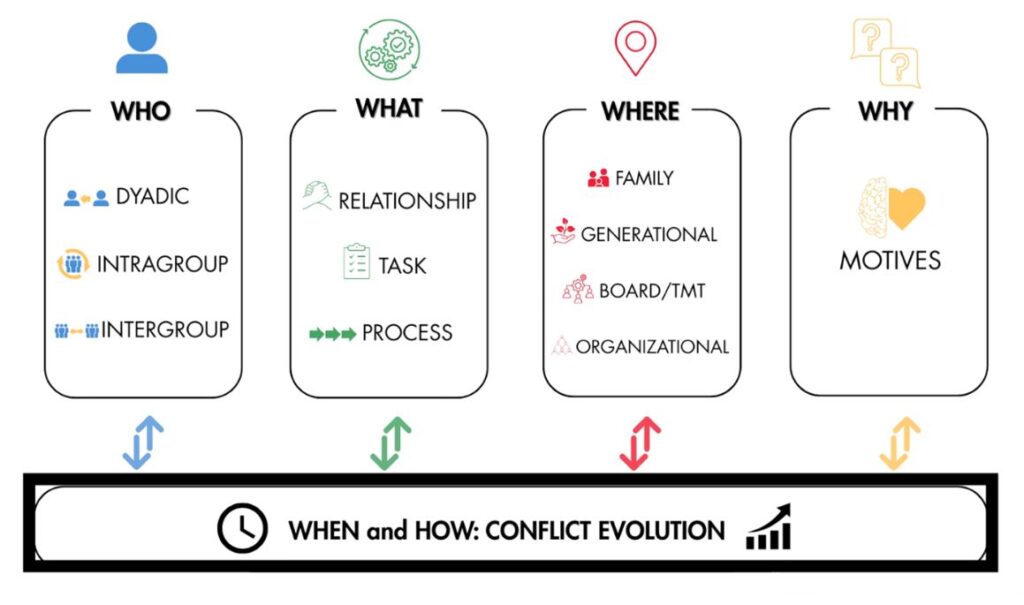
Relationship conflict refers primarily to interpersonal incompatibilities and often leads to negative emotions, such as suspicion, annoyance, worry, and anger. It also fosters perceptions of interpersonal resentment, aversion, and hostility.
This denotes disagreement about the content of the tasks being performed or the processes used to perform a task, including different viewpoints, ideas, and opinions. In contrast to relationship breakdown, this type of conflict can be beneficial, as it can improve decision-making by generating new insights and diverse perspectives.
This distinction is particularly valuable because it identifies where conflict occurs while considering the unique context in family firms. For example, a task conflict between two family members may occur during a board meeting, while a conflict originating in the family domain may manifest not only in the workplace but also in more personal settings, such as the home.
Understanding the “why” of a conflict is about uncovering its underlying motives or causes. This is critical to improving your ability to manage and prevent destructive arguments while fostering productive discussion.
Conflict is not static. It evolves through processes that can lead to escalation, spillover effects, or eventual resolution. This evolution is often triggered by significant events such as children reaching adulthood and the complexity of the succession process. Conflict may also shift from one situation to another; for example, a conflict that begins at home may be brought into the business due to family dynamics.

Considering a career transition? Begin by identifying your unique values and strengths. Sophi Hazi and Arturo Pasquel guide you through the process....

Of the many biases humans are prey to – such as anchoring bias, loss-aversion bias, status quo bias, and recency bias – confirmation bias can be most evident in the boardroom. But...

As workforces age, organizations must confront a critical question: how will extended lifespans reshape leadership, organizational strategy, and the very concept of a career? Anna Erat identifies four focus areas to sustain...

To transition into the boardroom, you need a brand, a unique board proposition, and a governance mindset - but you also need to consider the value you add and the cultural fit...
Explore first person business intelligence from top minds curated for a global executive audience