Movement, nutrition, and mindfulness: A longevity blueprint for leaders
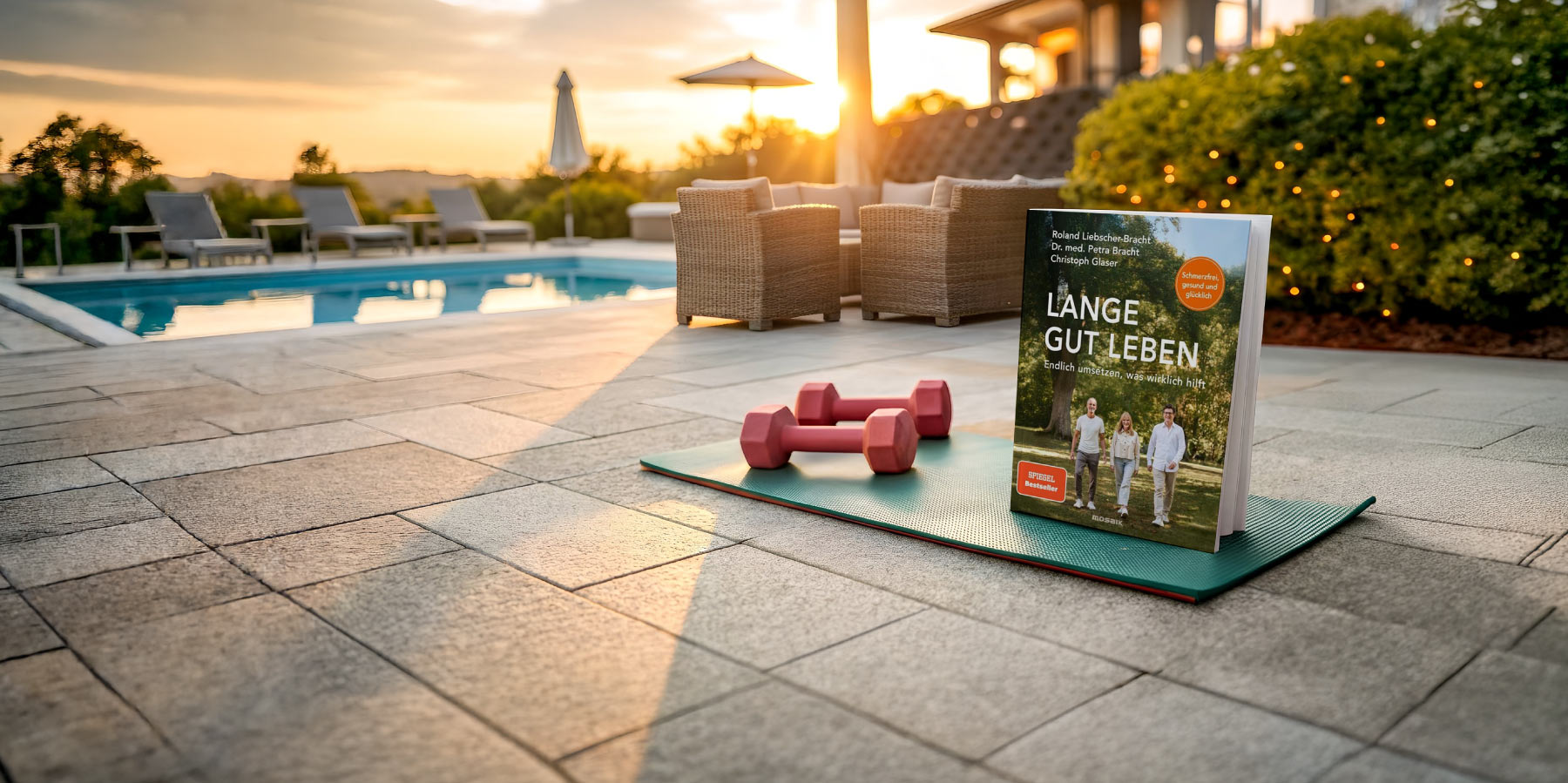
Roland Liebscher-Bracht, Petra Bracht and Christoph Glaser share a three-part formula for daily leadership practice....

by Kayla Barnes-Lentz Published January 6, 2026 in Wellness • 7 min read • Audio available
When it comes to metrics, most leaders track their businesses with precision, yet few examine their own biology with the same discipline. I began measuring mine for a straightforward reason: I wanted to feel better and understand my health at a deeper level. As I ran thousands of tests and made my data transparent, my goal was to uncover what genuinely improves energy, sleep, and well-being – the basics that quietly determine how we show up in every part of our lives, including leadership.
What started as a personal effort to improve my health evolved into something broader. I wanted to understand what allows a human being to perform at a high level, not just at 35, but at 55, 75, and beyond.
For executives, this isn’t an abstract question. I’ve learned that my biology shapes how clearly I think, how steadily I can sustain energy, and how resiliently I respond to pressure. Supporting it directly affects how effectively I can work – and how well I’ll be able to lead a decade from now.
Growing up in the US, my early diet was the typical American one. When I began studying nutrition in college, I made small changes because they helped me feel better and think more clearly. As an entrepreneur, that mattered. Feeling better meant performing better.
My perspective emerged through testing and refinement. Over time, I learned to design my daily habits to support my health, energy, and long-term capacity. Today, my routine is the practical expression of everything I’ve learned. Here is how that translates into a typical day.
I wake naturally around 4.30 or 5. I begin with my oral care routine and hydration, then use health optimization tools like pulsed electromagnetic field therapy (PEMF) and Nanovi that support cellular function as I meditate or do breathwork, which is set up around my desk to increase my productivity. At sunrise, around 6.30, I take a long walk in nature with my husband.
Afterwards, I have a protein coffee before I train: VOâ‚‚ max work, zone two cardio, strength training, mobility, flexibility, and balance. I follow this with heat therapy in my home sauna, which has integrated red light for the whole body to increase my productivity, and I add cold therapy during my follicular phase. After showering, I have another protein coffee and breakfast, take my morning supplements, and begin my first focused work block.
Around midday, I use my hyperbaric oxygen chamber as part of scheduled loading and maintenance phases, followed by lymphatic drainage. On Mondays, I complete at-home diagnostics: grip strength, VOâ‚‚ max, lung function, muscle mass, body composition, and arterial flexibility. I monitor my sleep using multiple devices.
I prepare dinner at 2.30, we eat by three, then take another long walk. After sunset, we transition to red light and avoid screens before winding down for bed.
From the outside, it may look intense, but for me, it feels completely natural, and I genuinely enjoy it. I feel better – cognitively, emotionally, and physically – than I ever have. My focus is sharper, my energy is steadier, and my sleep quality remains consistently high, even when I travel. That immediate positive feedback loop is what keeps me committed. It isn’t discipline for its own sake; it’s something I look forward to because it works.
And the impact is measurable. Feeling better changed how I work, think, and lead – not because I try harder, but because my body consistently supports the level of performance my role requires.
The most meaningful longevity gains don’t come from advanced protocols. They come from mastering the basics – the things we all know but rarely execute consistently: high-quality sleep, consistent movement, daily walking, deep social connection, stress reduction, and nutrient-dense whole foods. These aren’t wellness trends; they are the biological levers that determine how well your brain and body function.Â
Everything improves when I take care of my biology. I’ve seen how much more effective I am when my physiology is supported, and how quickly performance declines when it isn’t. For leaders, that connection is essential. How you feel physically directly influences how you show up professionally.Â
The data makes this clear. Cardiovascular age, metabolic age, telomere length, and VOâ‚‚ max (maximal aerobic capacity) – these markers are far more responsive than we tend to assume. When I focused on VOâ‚‚ max training, my cardiovascular age improved from negative six years to negative eleven and a half. When I temporarily lost access to my treadmill after moving from Los Angeles to Austin, Texas, that marker moved in the opposite direction: optimal health is dynamic. Â
This adaptability is part of what makes longevity such an important concept for anyone in a demanding role. Your trajectory is not fixed. Even under intense pressure, you can influence your capacity to perform.Â
When I work with founders and high performers, their concerns are remarkably consistent. They want more mental clarity, more sustained energy, greater stamina, and greater confidence that their health will support the future they are building. They want to feel their best today while protecting their ability to perform decades from now.Â
Data is invaluable. When you measure biomarkers in depth, you can identify risks long before they manifest, make changes early, and prevent issues rather than having to react to them.Â
Well-being is widely discussed inside organizations, but the practices that genuinely support sustainable performance are often missing. True performance cultures will be built by leaders who model a different approach – one rooted in biological sustainability.Â
This doesn’t require installing specialized equipment. It does require shifting from “performative” wellness to practices that have an actual impact: walking meetings in natural light, focusing on output rather than hours, access to diagnostics, and environments where recovery is understood as a driver of performance.Â
In my own company, I focus heavily on output. I finish work early because I design my days to be effective rather than long. My team also benefits from that model. We integrate real health practices into the work environment, from recovery tools to supportive routines. The result? Better well-being and performance.Â
My advice to leaders looking to future-proof their capacity is to master the basics with consistency and incorporate diagnostics at least once or twice a year. Biology responds to attention. The earlier you understand your body’s signals, the more effectively you can shape your trajectory.Â
Longevity isn’t about living forever; it’s about having the clarity and energy to keep doing meaningful work for as long as you choose to. For any leader, that’s worth protecting.Â
Â

Wake naturally around 4.30–5.00am. Check recovery data from Oura, WHOOP, and Eight Sleep mattress to assess sleep quality, HRV, cardiovascular age, VO₂ max, and readiness for the day.
Begin with brushing, flossing, tongue scraping, and weekly ozone oil pulling. Use red light therapy inside the mouth to support gum health and reduce inflammation.
Use PEMF and NanoVi (bio-markers) to support cellular function and reduce oxidative stress while meditating, praying, or doing breathwork.
At sunrise, take a long walk in nature, aiming for 10,000–15,000 steps over the course of the day.
Before training, have a protein coffee made with collagen, creatine, colostrum, and a small amount of protein powder.
Strength training five days a week, VOâ‚‚ max sessions twice a week, and one longer endurance session weekly. Include mobility and stretching. Follow training with infrared heat therapy and whole-body red light. Add cold exposure during the follicular phase.
Eat a protein-rich breakfast and take morning supplements.
Work in 90-minute blocks. Take walking calls outdoors or on an under-desk treadmill.
In the early afternoon, use the hyperbaric oxygen chamber according to structured loading and maintenance phases, followed by lymphatic drainage.
On Mondays, measure grip strength, VOâ‚‚ max, lung function, muscle mass, body composition, and arterial flexibility. Track sleep daily using multiple devices.
Prepare dinner in the afternoon and eat early. Meals typically include high-quality protein, a large salad, cruciferous vegetables, herbs, and spices, targeting a wide variety of plant species each week. After dinner, take a second long walk.
Shift the house to red light after sunset. Avoid screens for the last hour before bed; phone switches to red-light mode only. Finish supplements, do light breathwork, reading, or meditation, and wind down before sleep. I also test around 800 biomarkers per quarter, including total tox testing, gut health, advanced lip panels, oxidative stress, hormones, inflammation, and thyroid health.

Longevity practitioner, entrepreneur, and podcaster
Kayla Barnes-Lentz is a longevity practitioner, entrepreneur, and podcaster. She is the founder of The Female Longevity Protocol, co-founder of the Health Optimization Fund, and the co-owner of Heavenly Heat Saunas.

January 19, 2026 • by Roland Liebscher-Bracht, Petra Bracht, Christoph Glaser in Wellness
Roland Liebscher-Bracht, Petra Bracht and Christoph Glaser share a three-part formula for daily leadership practice....

January 12, 2026 • by Iana Kouris, Mark Abraham in Wellness
Research by the Boston Consulting Group exposes an inconvenient truth about longevity: awareness has never been higher, but action lags far behind. Here's how to turn aspirations into reality....

January 2, 2026 • by Damien Ng in Wellness
Increasing longevity is forcing a rethink of public policy, individual lifestyles, and private finances. Yet it is crucial not to overreact or grow unduly alarmed about shifting population dynamics....

December 17, 2025 • by Nele Dael, Alyson Meister in Wellness
The idea of a three-stage life – school, work, retirement – is rapidly being pensioned off. Here we explore the options for a world where people will routinely live in good health...
Explore first person business intelligence from top minds curated for a global executive audience