Sober serious: alcohol-free drinks go mainstream
Warnings about alcoholâs harms by medical experts are nothing new. But the drinks industry is now taking sobriety seriously by investing in a growing range of alternative products....

by Simon J. Evenett Published January 10, 2025 in Strategy âą 5 min read
Predictions abound at the start of every year â newspapers, business magazines, and podcasts are full of them. Which corporate executive wouldnât like to âpeek around the cornerâ as we brace ourselves for a potentially tumultuous year? The problem is that the market for new year predictions is broken â but it can be fixed.
Like many readers, by now I have read dozens of prognoses for 2025. For sure, there have been lots of informative charts, but from a corporate point of view, so what? How much of what Iâve read is little more than eye candy? Take prognoses on a possible truce in the Ukraine conflict. How many of these analysts have scaled the commercial opportunities to rebuild Ukraineâs infrastructure?
What about the implications of any security guarantees to Ukraine for European rearmament? Last year, senior British and German officials floated the need for younger citizens to take on greater mandatory military obligations. How many chief talent officers have considered the fallout of other European nations adopting Swedenâs 2017 selective conscription measures, for example? How many CTOs have considered how Swiss firms manage national service? Simply put, corporate decision-makers arenât getting the most out of forecasts for 2025.
The fundamental problem is that what most prediction purveyors prize is not what corporate decision-makers need to read. By and large, forecasters want to be judged by their accuracy in predicting events. The desire to be seen to be often âon targetâ largely confines forecasting to outcomes that lots of interested parties can see. A leading example is the career-defining predictions of Nate Silver during the US presidential elections of 2008 and 2012.
Other prognosticators prefer to chart the future course of factors that may be very important but donât make it onto the radar screen of the C-suite. Some of those factors â such as the long-term path for crop yields driven by climate change â can be desperately important from a societal point of view. But if the factor is immaterial in the near term â possibly because the drivers are too slow-burning, the consequences apparently second-order, or the processes involved too difficult to understand â then only the most forward-looking executive will take heed.
What executives really want to know is what actions they should start taking, stop taking, or keep taking in response to a new year prognosis, or how to devise plans to take if certain contingencies arise.
For sure, some corporate readers of forecasts are very curious, not just about likely outcomes but also about what it takes to make consistently accurate forecasts. However, interest in forecasts that help make better corporate decisions is much larger. What executives really want to know is what actions they should start taking, stop taking, or keep taking in response to a new year prognosis, or how to devise plans to take if certain contingencies arise.
Unless a forecaster can show how their prognosis affects or confirms the calculus surrounding at least one key corporate decision, then expect little impact on senior management. Going further, the way to unlock serious corporate interest is to demonstrate how acting on a forecast provides a firm with a competitive edge over its rivals. Ultimately, influence on decision-making drives the corporate demand side of the corporate market for prognosis.
Put the demand and supply sides together and you can see why the market for turn-of-year prognoses is largely broken. Without enough information or insight into an organizationâs circumstances, an external forecaster is at a severe disadvantage. Their forecasts may be accurate, even interesting, but chances are they will be ignored because there isnât sufficient factual understanding to draw clear implications for corporate decision-makers. In short, accurate forecasts arenât necessarily meaningful ones.
So why donât forecasters invest in learning more about their readersâ corporate circumstances? Probably for three reasons: in some cases, due to lack of interest â and, where interest exists, such investments are costly and take time. Unless many firms are facing similar circumstances, the market for tailored forecasts is limited and aspiring celebrity forecasters donât find this an attractive proposition.
This also explains why market- and sector-specific turn-of-year forecasts get â at best â low-profile columns in leading media outlets. The best real estate in publishing terms is held over to new year prognoses that are sweeping in range, but these tend to lack the specificity needed by corporate decision-makers. Apart from vague terms like âyear of elections,â can you remember many (any?) predictions from the start of 2024?
There are two fixes for this problem and neither comes free. First, to the extent that external forecasters address factors relevant to a firm but canât discern their implications for decision-making calculi, then internal expertise may be able to do so. Of course, not every high-profile external forecast may be directly commercially relevant so the job here is to filter the signal from the noise and to persuasively communicate the distinction.
The corporate strategy function may be well-placed to perform this filtering and translation function, but for certain corporate decisions (such as those to do with sourcing) then certain operational units may be able to contribute. Board members may know enough to draw the right corporate implications too. What matters is that the filtering and translating function is done systematically.
The second approach is to build internal expertise that can undertake the types of new year prognoses required or that can commission the needed forecasts from external providers which must be trusted enough to share relevant corporate context. Such external providers may be thin on the ground, not least because conflict of interest considerations should prevent them from working for more than one significant player in each sector.
Whether the approach taken is to filter and translate (option one) or to make or buy (the second option), valuable new year prognoses donât come for free. The bottom line is that if seeing around corners offers the promise of a firm creating and capturing substantial value then it requires proper resourcing. A gift horse is rarely a thoroughbred.


Professor of Geopolitics and Strategy at IMD
Simon J. Evenett is Professor of Geopolitics and Strategy at IMD and a leading expert on trade, investment, and global business dynamics. With nearly 30 years of experience, he has advised executives and guided students in navigating significant shifts in the global economy. In 2023, he was appointed Co-Chair of the World Economic Forumâs Global Future Council on Trade and Investment.
Evenett founded the St Gallen Endowment for Prosperity Through Trade, which oversees key initiatives like the Global Trade Alert and Digital Policy Alert. His research focuses on trade policy, geopolitical rivalry, and industrial policy, with over 250 publications. He has held academic positions at the University of St. Gallen, Oxford University, and Johns Hopkins University.

February 3, 2025 âą by Natalia Olynec in 2025 Trends
Warnings about alcoholâs harms by medical experts are nothing new. But the drinks industry is now taking sobriety seriously by investing in a growing range of alternative products....

January 24, 2025 âą by David Bach, Simon J. Evenett, ĂykĂŒ IĆık, Arturo Bris, Julia Binder, Knut Haanaes, Sophie Bacq, Jennifer Jordan, Sarah E. Toms, Natalia Olynec in 2025 Trends
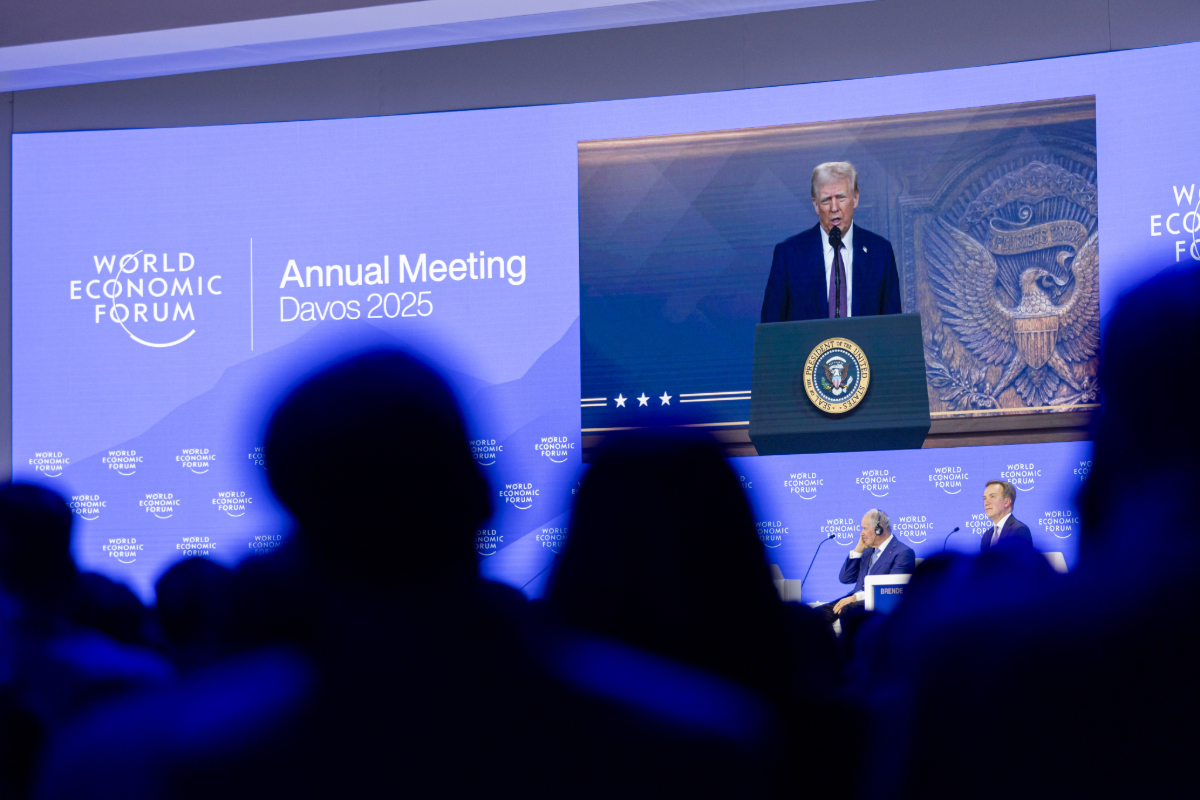
Business leaders at this yearâs World Economic Forum sought to block out the political noise and focus on whatâs happening in the real economy....

January 13, 2025 âą by Julia Binder, Robert Hooijberg, Alyson Meister, Michael D. Watkins, John R. Weeks, Stefan Michel, Howard H. Yu in 2025 Trends
Thinking about a career change? Keen to move industry or transition into a new role? IMD professors share the best advice they have received or gleaned over their careers....

January 8, 2025 âą by Tania Lennon in 2025 Trends
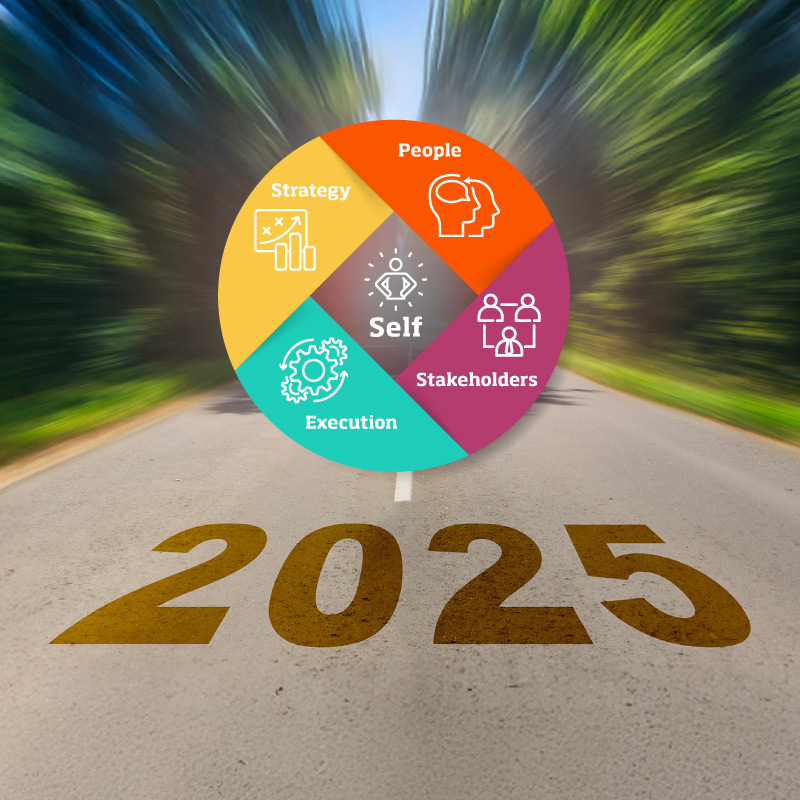
The increasing pace of disruption and change means leaders need to cultivate behaviors that support their sustained success. From building strategic flexibility to broadening stakeholder connections, here is our expert guide to...
Explore first person business intelligence from top minds curated for a global executive audience