
Europe AI teardown: strengths, adequacies and dangerous gaps
Discover Europe's AI strengths across voice, translation, video, and defense—and the critical gaps slowing adoption and sovereignty....
by Howard H. Yu Published June 17, 2026 in Artificial Intelligence • 8 min read •  Audio available
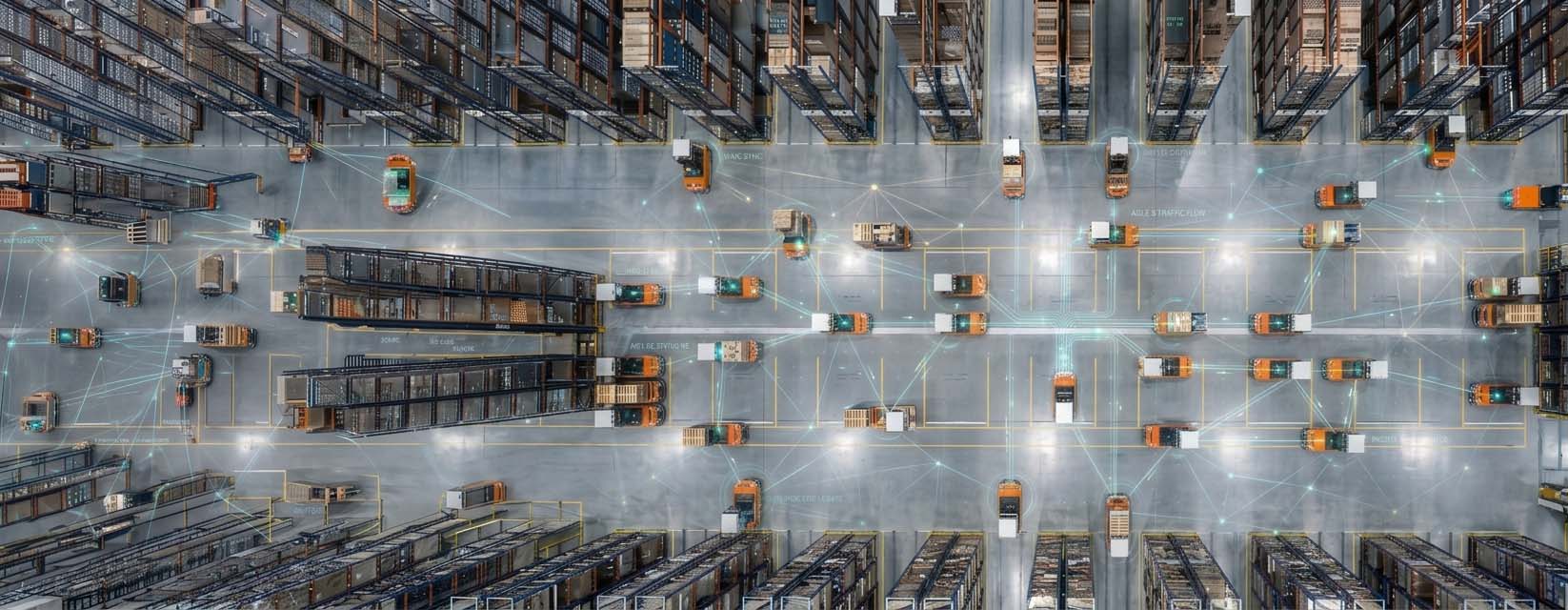
By March of this year, 60 new warehouses had sprung up across Europe. In a fulfillment center outside London, nearly 200 robots glided across 3,000 square meters of concrete floor, each picking and sorting more than 300 items an hour. In Germany, during a blizzard that shut down highways and grounded courier services, a new delivery fleet kept moving. The company behind it was Joybuy, the European arm of China’s largest retailer JD.com. Available in six countries (the UK, Germany, France, the Netherlands, Belgium, and Luxembourg), JoyBuy buys inventory, stocks it in European warehouses, and delivers via its own fleet. It sells Apple, Samsung, L’Oreal, you name it. JD.com is also acquiring Germany’s consumer electronics retailer Ceconomy, the parent company of MediaMarkt and Saturn, seeking to gain over 1,000 stores and 50,000 employees across 11 countries.
No other Chinese company has entered the European retail space at this scale, but JD.com is not improvising on the fly. In China, it operates over 1,600 warehouses and delivers 90% of orders within 24 hours. (For comparison, Amazon runs roughly 600 fulfillment centers in the US.) Its infrastructure was not scaled by hiring more people, but by embedding AI into every link of the supply chain until the technology could no longer be distinguished from the operation.
Today, two AI races are running simultaneously. In San Francisco, the race is about frontier intelligence: making the model smarter, pushing benchmark scores higher, spending tens of billions of dollars on training runs. In Shenzhen, Guangzhou, and Hangzhou, the race is about deployment: taking AI that is good enough and embedding it so deeply into logistics, payments, manufacturing, and consumer interfaces that it becomes invisible and omnipresent. WeChat runs four million mini programs that handle trillions of dollars in annual transactions in China.
How do organizations and leaders compete when one side of the world is still building the brain while the other side has already wired the body? I spent months chasing an answer across boardrooms and executive classrooms. Then, a conversation with one thinker finally brought the whole picture into sharp focus.
Losers typically lose because they get really good at execution on a game that is no longer relevant.
I’d followed Sangeet Paul Choudary since his first book on platform businesses. But his latest book, Reshuffle, offered a new lens. Via Zoom, I called Choudary in his sunlit office in Dubai. What he said changed the way I thought about AI.
“Losers typically lose because they get really good at execution on a game that is no longer relevant,” he said. Companies are executing brilliantly, executing fast, but executing the wrong thing.
“TikTok did not beat Instagram by becoming a better Instagram,” said Choudary, who then explained how it broke the logic of the social graph entirely. Most people see AI as a faster way to get things done. They see automation, but Choudary sees coordination. He walked me through what he calls the “atomic unit of work”.
Every business, he explained, is organized around a basic building block: something that gets designed, produced, tested, and shipped. For traditional fashion houses, that unit is the seasonal collection. For Adobe, it is the file. The companies that win during technological shifts break the atomic unit into something smaller. He pointed out that Shein did not just speed up fashion; it dismantled the monolithic role of the designer.
Designers at traditional fashion houses create a cohesive seasonal collection. They manage the constraints of fabric, budget, manufacturing timelines, and trend forecasting. Their power comes from holding all of those threads together. Their judgment is the product. But Shein’s algorithm now holds those threads.
“Shein doesn’t test a full collection,” Choudary said. “It unbundles each of those monolithic pieces. The design brief is broken into micro-tasks, and the pre-production batch is tiny. The fashion catalog is now a micro-style that can be tested instantly.” These micro-tasks are dispatched to an on-demand network that commands hundreds of fragmented factories in Guangzhou. The cycle is instantaneous. The designer still exists, but they only fill one small box.
Next, Choudary described how Figma gutted Adobe. Adobe had better rendering tools and decades of technical supremacy, but Figma realized that design was no longer about rendering a perfect pixel. It was about coordinating 50 people looking at the same elements simultaneously across different time zones. Figma redefined the unit of work. Adobe treated cloud as storage, while Figma treated cloud as a shared workspace, eliminating the translation cost – the effort of converting one team’s output into another team’s usable input. When translation costs drop, a disjointed set of actors can suddenly move together.
By the time Adobe noticed, the architecture of design work had moved on. Adobe tried to acquire Figma, but regulators effectively blocked it. The old game could not buy its way into the new one. “Once you can break knowledge work into micro-tasks and have AI coordinate them, you commoditize expertise,” Choudary explained.
From this angle, China’s deployment advantage is obvious: its supply chains and ecosystems are already in place. When I visited Tencent’s Shenzhen headquarters earlier this year, a visitor held up a medicine package. I was expecting a product description or a price comparison. With one scan, WeChat pulled up her medical history, linked her appointments, and generated a personalized dosage regimen. No app download. No fumbling with passwords. The AI knew the context of her life. Last July, in San Francisco, ChatGPT agent launched to four million weekly users. Within months, that number reportedly fell below one million: brilliant agent design, but no ecosystem to plug into.
Zero money is to be made from doing the same tasks faster. The lasting value comes from using AI to dissolve the walls between functions.
After the call with Choudary, it suddenly hit me: the corporate response was inadequate. Executives have proudly shown me their new internal tools. They had run a pilot, appointed a head of AI, were using advanced language models to summarize PDF reports, and auto-generating responses to customer complaints. Everything was faster and more efficient, and the board was delighted. But they were automating the past.
Functional deployment is dead. Zero money is to be made from doing the same tasks faster. Choudary and his co-authors at BCG’s Henderson Institute mapped job roles to work activities across 800 public firms. They looked for a connection between a sector’s AI automation potential and its profit margins since the launch of ChatGPT. The sectors with the highest potential – finance, tech, and the media – saw margins stagnate or fall. The productivity gains were real, but they were “competed” away almost immediately. The correlation between automation potential and profit growth was zero because the lasting value sits elsewhere. It comes from using AI to dissolve the walls between functions: end-to-end coordination and cross-boundary reimagination. Not writing marketing copy faster, but rethinking how market sensing, product design, supply chain, and customer feedback connect in a continuous loop.
This raises a design principle most companies are ignoring: if AI’s value comes from recombining functions across boundaries, then locking into a single vendor’s ecosystem is a strategic malpractice. You must become “vendor agnostic”. Your data infrastructure, API layers, and workflow orchestration must let you swap models, combine Chinese and American AI, and reconfigure as the landscape shifts. Use China’s DeepSeek when you need rapid, cheap, deployment-ready reasoning across a million daily transactions. Use America’s Claude when you need deep, nuanced synthesis for a strategic board memo. Plug in and play!
This is already happening. My IMD colleagues Amit Joshi and Mark Greeven have documented it: Nestlé uses Western LLMs for logistics, but relies on Chinese AI for consumer analytics in the Chinese market; Procter & Gamble partnered with Douyin to co-create products through live-streaming feedback loops, using algorithmic recommendations and impulse-driven discovery that Western e-commerce simply does not offer.
Europe will never build a frontier model to rival OpenAI or Claude, but it has the industrial expertise and regulatory authority to set terms. The winning play is to become the world’s best orchestrator of US and Chinese technology, and to own that coordination layer as the continent’s most durable competitive advantage. Your company must wrestle with the question: “Which combinations of different AI models can unlock capabilities we couldn’t access before?”

The personal leadership mandate mirrors the corporate one: you cannot rely on a single lens. When I sit at my desk late at night, the monitor’s glow illuminates four browser tabs. Claude gives me elegant strategic synthesis; DeepSeek maps competitive landscapes in China that Claude does not see; Grok reads the unfiltered panic and joy of the timeline on X and Reddit; and Gemini checks whether my topics match search volume trends globally.
I use them simultaneously, bouncing the output of one against the logic of another. I asked all four the same question about a competitor’s positioning in Southeast Asia. Three models agreed; one didn’t. The dissenting voice turned out to be right. If you are only using the single enterprise tool your IT department installed on your laptop, you are willfully blinding yourself. You are fighting a modern war with a musket.
AI is not a pocket calculator. It contains a set of distinct, biased, powerful lenses. To use them effectively, you have to build the habit of switching rapidly between ecosystems: the model trained on Reddit will give you a different worldview than the one trained on Baidu.
Take a question you would normally ask your default AI tool. Ask three different models. Notice where the answers converge, but more importantly, notice where they diverge. The difference will surprise you. That gap is your edge. The dual AI race, the frontier intelligence of America and the deployed intelligence of China, will keep accelerating. Don’t pick a side or root for one team; leverage both at once.
LEGO® Professor of Management and Innovation
Howard Yu, hailing from Hong Kong, holds the title of LEGO® Professor of Management and Innovation at IMD. He leads the Center for Future Readiness, founded in 2020 with support from the LEGO Brand Group, to guide companies through strategic transformation. Recognized globally for his expertise, he was honored in 2023 with the Thinkers50 Strategy Award, recognizing his substantial contributions to management strategy and future readiness. At IMD, Howard Yu co-directs the Strategy for Future Readiness program and the Future-Ready Enterprise program, which is jointly offered with MIT.
October 14, 2026 • by Michael R. Wade in Artificial Intelligence
Discover Europe's AI strengths across voice, translation, video, and defense—and the critical gaps slowing adoption and sovereignty....

October 5, 2026 • by Esteban Mezzano, Konstantinos Trantopoulos , Michael R. Wade in Artificial Intelligence
Once primarily the guardian of traditional and well-established legal systems, today the CLO is becoming the architect of enterprise artificial intelligence (AI) governance, helping to identify and manage AI risks and opportunities...

September 30, 2026 • by Goutam Challagalla in Artificial Intelligence
The Austrian bank’s award-winning Risk Assistant demonstrates how artificial intelligence helps improve not just the speed but also the quality and accuracy of financial reporting, finds Goutam Challagalla....
 Audio available
September 28, 2026 • by Stefan Michel in Artificial Intelligence
Too many leaders ask how GenAI will impact their businesses and products. Instead, they should ask: How can AI change our customers’ motivations, abilities, and opportunities?...
Audio availableExplore first person business intelligence from top minds curated for a global executive audience