Are you a corporate shock absorber?
Middle managers shield teams from brutal leadership. Learn to stop buffering, translate conflict, and steer strategy with clear trade-offs....

by George Kohlrieser Published October 10, 2024 in Brain Circuits • 6 min read
Â
Source article: Command and control kill creativity and fresh thinkingÂ
Psychological safety is the foundation of any creatively inclined team, where members can express their ideas without fear of ridicule. They are more likely to collaborate, take on challenges, and contribute to problem-solving, leading to higher job satisfaction and performance.

“Encourage your team to think differently to push the boundaries of what’s considered possible.  ”
The next step on the path to greater creativity is to stimulate risk-taking. Encourage your team to think differently to push the boundaries of what’s considered possible. Â
Following on from the above, encourage more risk-taking by reducing the number of rules. This eliminates complex and restrictive barriers that stop people from doing their best work. It also signals to employees that they are trusted to be themselves and make good decisions.
Teams are unlikely to come up with new ideas if members all share the same background. Interdisciplinary approaches and diverse teams that bring different ways of thinking about problems are vital to finding solutions for the challenges facing business and society.Â
This involves envisioning a future state you wish to achieve, and then working backward to see the steps to get there. Â
One approach to out-of-the-box thinking is the “future back” framework. This involves envisioning a future state you wish to achieve, and then working backward to see the steps to get there. Â
This is where you teach your team to ask open-ended and exploratory questions, such as, “I wonder if…” or “In what ways can we…?” rather than defensively shutting down new ideas by finding reasons why they won’t work.

“Creativity is impossible without failure.”
Creativity is impossible without failure. Leaders should create a culture where employees are not paralyzed by fear of making mistakes and where “failures” are seen as part of a positive learning process.Â

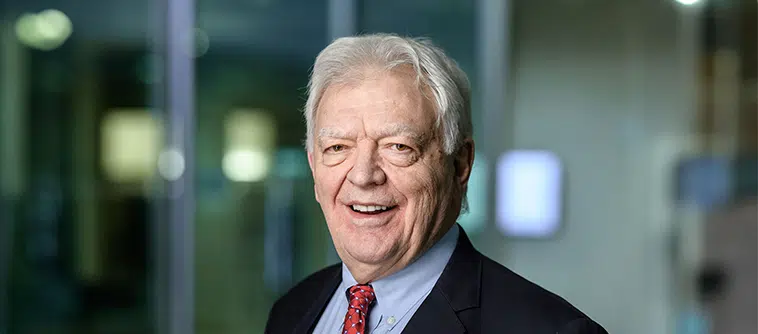
Distinguished Professor of Leadership and Organizational Behavior
Professor of Leadership and Organizational Behavior at IMD and Director of the High Performance Leadership program, the Advanced High Performance Leadership program, and the Inspirational Leadership program. He serves as a consultant to several global companies including Accenture, Amer Sports, Borealis, Cisco, Coca-Cola, HP, Hitachi, IBM, IFC, Jaeger-LeCoultre, Morgan Stanley, Motorola, NASA, Navis, Nestlé, Nokia, Pictet, Rio Tinto, Roche, Santander, Swarovski, Sara Lee, Tetra Pak, Toyota, and UBS.

July 30, 2026 • by Robert Vilkelis in Brain Circuits
Middle managers shield teams from brutal leadership. Learn to stop buffering, translate conflict, and steer strategy with clear trade-offs....

July 28, 2026 • by Mark J. Greeven in Brain Circuits
Many organizations think they have created an ecosystem, but fall well short. Answer the questions below to check whether your “ecosystem” is sustainable in the long term....

July 23, 2026 • by Francesca-Giulia Mereu in Brain Circuits
Habits form in the basal ganglia and can resist effort - discover substitution strategies that replace old routines with productive ones at work....

July 21, 2026 • by Julia Binder in Brain Circuits
The role of the chief sustainability officer (CSO) has moved from the margins to the center of corporate strategy. Here are seven ways to harness AI to embed sustainability and drive growth....
Thinking Fast and Slow by Daniel KahnemanÂ

Distinguished Professor of Leadership and Organizational Behavior
Professor of Leadership and Organizational Behavior at IMD and Director of the High Performance Leadership program, the Advanced High Performance Leadership program, and the Inspirational Leadership program. He serves as a consultant to several global companies including Accenture, Amer Sports, Borealis, Cisco, Coca-Cola, HP, Hitachi, IBM, IFC, Jaeger-LeCoultre, Morgan Stanley, Motorola, NASA, Navis, Nestlé, Nokia, Pictet, Rio Tinto, Roche, Santander, Swarovski, Sara Lee, Tetra Pak, Toyota, and UBS.

July 30, 2026 • by Robert Vilkelis in Brain Circuits
Middle managers shield teams from brutal leadership. Learn to stop buffering, translate conflict, and steer strategy with clear trade-offs....

July 28, 2026 • by Mark J. Greeven in Brain Circuits
Many organizations think they have created an ecosystem, but fall well short. Answer the questions below to check whether your “ecosystem” is sustainable in the long term....

July 23, 2026 • by Francesca-Giulia Mereu in Brain Circuits
Habits form in the basal ganglia and can resist effort - discover substitution strategies that replace old routines with productive ones at work....

July 21, 2026 • by Julia Binder in Brain Circuits
The role of the chief sustainability officer (CSO) has moved from the margins to the center of corporate strategy. Here are seven ways to harness AI to embed sustainability and drive growth....
Explore first person business intelligence from top minds curated for a global executive audience