The last few years have seen increasing hype around sustainability and ESG (Environmental, Social, and Governance) investing. We have witnessed real change – some banks have stopped the financing of new coal activities, for example – but we have also observed cases of “greenwashing”. Many financial intermediaries are simply not living up to the promises made in their colorful brochures.
This webinar with Professor of Finance Karl Schmedders reviews the reasons for the current hype, taking a critical look at both real and fake initiatives. He evaluates the current state of ESG investing and attempts to provide an outlook to “just transition” in response to recent events and policy measures.
The Paris Agreement calls explicitly to mobilize climate finance from a wide variety of sources. For sustainable finance that includes investments for climate mitigation (reducing emissions) and climate adaptation (adapting to the adverse effects and reduce the impacts of a changing climate).
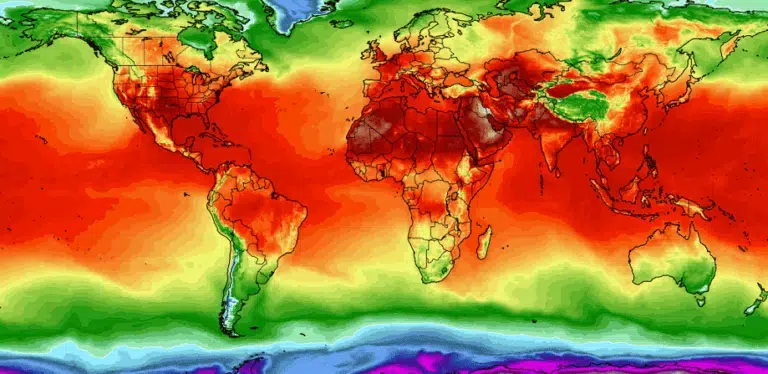
Yet since most of the world’s countries have ratified the Paris Agreement, annual total CO2 emissions have skyrocketed. As a result, temperatures are increasing, sea levels are rising, and glaciers are melting.
“Sir Nicholas Stern, economist at the London School of Economics, says climate change is a result of the greatest market failure the world has ever seen,” says Schmedders, “while researcher Richard Tol acknowledges it is the mother of all externalities.”
The economics of climate change
Focusing on the E in ESG, Schmedders says the problem with greenhouse gas (GHG) emissions is that responsible economic agents have no incentive to reduce them and do not bear the cost. Using the example of global cement production, which uses vast amounts of energy to heat limestone, he says:
“As the adverse effects of GHG are external to markets, markets do not have to account for them. And so cement production continues to increase despite its massive carbon footprint. For example, China used more cement in the three years from 2011 to 2013 (6.6 gigatons) than the US did (4.5 gigatons) in the entire 20th century.”
With the move toward less pollution, some sectors will see big shifts and higher costs of doing business.
“What we are seeing now is that policymakers, regulators, and governments are changing the incentives for the economic agents, and us – the consumer – through policies that affect market prices,” Schmedders says.
Another worry is stranded assets – investments that have already been made but can no longer earn an economic return.
“California’s almond farmers produce more than 80% of the world’s crop and are currently dealing with stranded assets as their water allowance is decreasing. They have been reduced to cutting down perfectly good trees to avoid using too much of their limited water supply,” says Schmedders.
An expert in computational economics and the effect of external factors on finance, Schmedders takes a deep dive into the transition risk – the harm done in “going green” – that is currently resulting from regulation, innovation, and evolving consumer and business preferences.
“Financial markets need to price in the effects of policy responses, accounting for externalities,” he says, noting they have been long disregarded by business as they fall outside market effects.
He believes more cooperation is needed on a global level to ensure a just transition mechanism.
“How can we take money from rich countries and help the world in the transition?” he asks. “Just transition is not just about Polish or Alsatian coalminers losing their livelihoods, but the collapse of entire industries and livelihoods all around the world.”
It is only by understanding climate change as an externality, Schmedders insists, that we can understand the physical risk and the transition risk involved in ESG investing.
More than 70% of participants agreed, voting that ESG deserves more importance and will be critical for many years to come.


 September 14, 2023 • by Knut Haanaes, Bryony Jansen van Tuyll in Sustainability • 9 min read
 Share
Share Audio available
 YouTube