Business as unusual: 4 things to do to better in your philanthropic journey
The four things successful families do to navigate the uncertainties of the modern world. ...
3 hours ago • by Jean-François Manzoni in Videos
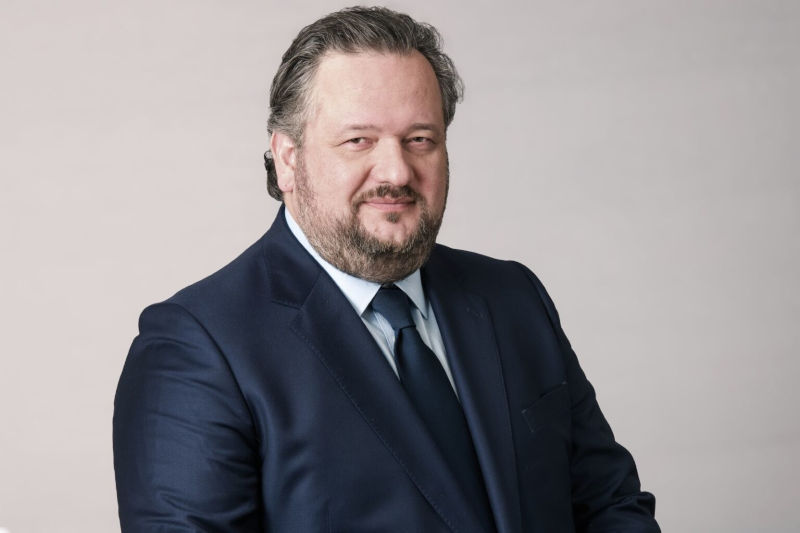
Slawomir Krupa, CEO of Societe Generale, tells Jean-François Manzoni how restoring financial discipline and protecting the bank’s capacity to innovate under pressure helped restore faith in one of Europe’s oldest institutions...
Societe Generale’s market capitalization tripled over the last three years, on three major pillars:
When Slawomir Krupa became CEO of Societe Generale in May 2023, he took the helm of one of Europe’s oldest and most storied financial institutions. Founded in 1864, Societe Generale operates in 58 countries, serves around 27 million clients, and employs about 110,000 people. The bank generated revenues of €27.3bn and net profit of €6bn in 2025, translating into a market capitalization of €55bn – marking a 300% rise under Krupa’s leadership. For years, however, the bank had struggled to convince investors of its long-term trajectory. When Krupa took office, Societe Generale’s share price was still below where it had traded 15 years earlier, in the aftermath of the 2008 global financial crisis, and it stood at a significant discount to major European peers. The institution had endured successive shocks since then, yet market confidence had remained fragile.
“Since the financial crisis, things have always been turbulent, volatile, and difficult at times,” said Krupa. His response was pragmatic. “I took it as: these are the circumstances, and I need to think about our future – the future of the bank in the circumstances that I’ve been dealt.”
For him, this was a matter of leadership responsibility.
Krupa’s early diagnosis was structural rather than cyclical. He often uses a simple analogy: “We inherited a house which had weak foundations.” For him, capital strength was not an abstract regulatory ratio but the basis of trust. “No company can thrive with weak foundations – a bank even less than any other company.”
Raising Societe Generale’s CET1 ratio – the bank’s core capital buffer relative to the risks on its balance sheet – by roughly one percentage point was equivalent to building between €4bn and €5bn of extra capital. The critical decision was how to get there. Rather than raising equity and diluting shareholders who had already endured years of underperformance, Krupa opted to rebuild internally through retained earnings, cost control, and portfolio simplification. The aim was to strengthen the bank without asking investors for another act of faith.
This shift in capital strength was not only financial; it changed the bank’s operating posture. With a stronger buffer, management could plan with a longer horizon and reduce the defensive decision-making that had characterized earlier years. Restoring credibility with regulators and investors, Krupa argued, also restored room to maneuver internally.
That logic drove a series of disposals that, while financially rational, were historically and emotionally significant. Some of the businesses sold had been part of the group for decades; one subsidiary in Morocco had been with the bank for more than a century. “We didn’t take this decision lightly,” Krupa said. “But this was, without a doubt, the right decision for the group, not only today, but in the long term.”
For him, this was a matter of leadership responsibility. “It’s the job of a CEO to make decisions.” When facing doubt, he applies a simple rule: “What’s best for the long-term success and sustainability of the company? Nine times out of 10, the answer is very easy.” At the same time, he insisted on responsible execution – avoiding fire sales, unsuitable buyers, and outcomes that would undermine the future of employees and clients.
The second pillar of Krupa’s strategy was a reduction in the cost base, anchored in a clear target: bringing the cost-to-income ratio down to 60% within three years. For Societe Generale, this represented a level not reached on a reported basis for more than a decade.
Delivering that target meant difficult choices. The bank underwent two rounds of headcount reductions: one initiated under Krupa’s predecessor and another launched in early 2024, targeting the head office. But this is unlikely to be the way forward. As Krupa explained, “I’m not a great believer in taking entire teams and getting rid of people who have experience, expertise, and cultural knowledge of the company.”
Instead, he favors a slower, more surgical approach built around attrition, internal mobility, and tighter hiring discipline. In an organization of Societe Generale’s size, natural attrition is substantial. Retirements, career changes, and geographic moves create a steady flow of departures. Using that flow deliberately, Krupa argued, will reduce disruption and preserve institutional memory.
It rarely makes sense, he said, “spending a lot of money to have a lot of people leave somewhat indiscriminately and then having to rehire a whole portion of them.” The alternative requires more management effort. “It’s more complex to operate, but in the end, you keep more of the talent, you keep more of that expertise, and it’s better for the company.”
Rebuilding the bank’s foundations was never the end goal.

Rebuilding the bank’s foundations was never the end goal. With capital rebuilt and costs under control, growth could resume selectively and sustainably. Krupa sees growth as one of the bank’s enduring strengths, citing innovation and deep client relationships. The current strategy reverses that order: discipline first, expansion second.
BoursoBank, the group’s online bank, illustrates this approach. Its rapid expansion could easily have been constrained by concerns about cannibalizing the legacy retail network. Instead, management allowed it to compete internally. “We have always had a reasonably high tolerance for internal competition,” Krupa explained. “It’s intrinsically linked to innovation.”
The coexistence of two different models for retail banking, in this case, has expanded the overall franchise rather than merely shifting it. Krupa links this tolerance for internal competition to a broader innovation mindset. “You can’t say innovation in this space is only allowed here,” he said. Attempts to confine innovation ultimately reduce the total amount of it within the firm.
In this sense, internal competition is not an accident but a management choice. Allowing new models to challenge legacy ones forces clearer performance comparisons and accelerates learning across the organization. In large institutions, innovation sometimes needs protection from the very systems designed to ensure stability.
By assuming that competitors may have advantages worth understanding, the bank avoids the complacency that often follows scale and legacy.
The same realism shapes Krupa’s view of external challengers such as Revolut. Rapid customer acquisition and strong digital engagement command his attention. “You should always start with humility,” he said. Dismissing new entrants because their models differ from traditional banks is dangerous. “That is a recipe for disaster down the road.”
Instead, he focuses on fundamentals, particularly customer satisfaction. In retail banking, he argues, sustained competitiveness rests less on rhetoric than on service quality and trust. In this framing, competition is not a threat to be denied but a discipline that forces the bank to keep improving.
This stance reinforces a culture of vigilance rather than defensiveness. By assuming that competitors may have advantages worth understanding, the bank avoids the complacency that often follows scale and legacy. Respect for challengers becomes a mechanism for internal renewal.
Krupa’s emphasis on substance over signaling is particularly visible in Societe Generale’s stance on the energy transition. The bank has reduced its exposure to fossil fuels, stopped financing new hydrocarbon exploration projects, and increased support for renewables, even as some peers have softened their commitments.
With €1.5tn of assets, the bank inevitably shapes real-world outcomes. “When you have this responsibility, you need to go back to substance.” The transition, he stressed, must be gradual and socially responsible, especially in emerging markets. He rejected the idea that supporting renewables undermines profitability. The banking sector’s ability to reallocate capital allows adjustment without destroying value. “Unlike industrial firms, we can theoretically churn our entire portfolio in four to five years,” he noted, and reallocate investments in other equally profitable directions, including renewable energy.
The fact that it was possible didn’t make it easy, however. The bank had to exit clients it had supported for three decades and had often advised on new exploration projects, including some national oil companies. “We had to make all these decisions,” Krupa said, “and we were willing to [make them] because it was the right thing to do.”
When Societe Generale unveiled its strategy in September 2023, its share price fell 12% in a single day.
When Societe Generale unveiled its strategy in September 2023, its share price fell 12% in a single day. Krupa was not surprised. The market’s reaction, he believed, reflected skepticism built up over years of missed expectations.
The only answer was delivery. “If we don’t deliver,” he said, “there’s only one person responsible for this, and it’s me.” That sense of personal accountability shapes his leadership. He sees his role as a steward, responsible for leaving the institution stronger and more credible than he found it.
Asked where his energy comes from, Krupa explained that transforming the firm, supporting clients, and contributing to a 160-year legacy give him a considerable sense of responsibility and motivation. “The buck stops with me,” he said, “and I thrive on that.”

Chief Executive Officer - Societe Generale

Professor of Leadership and Organizational Development at IMD
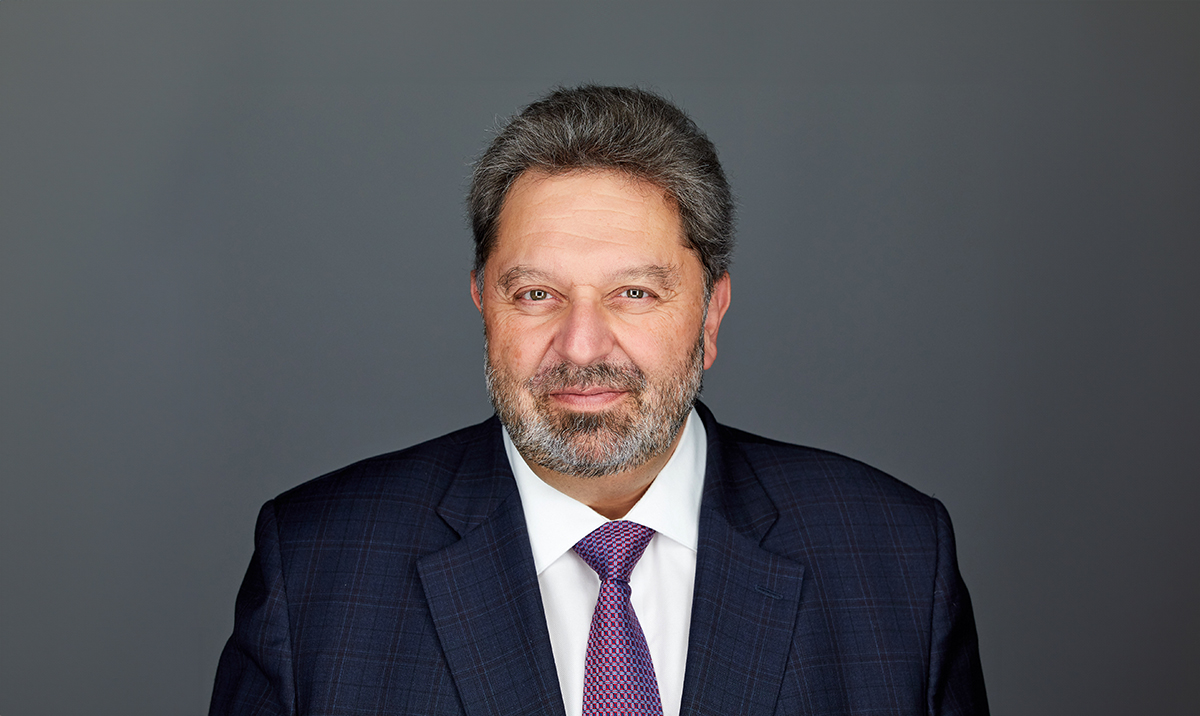
Jean-François Manzoni (JFM) is Professor of Leadership, Organizational Development and Corporate Governance at IMD, where he served as President and Nestlé Professor from 2017 to 2024. His research, teaching, and consulting activities are focused on leadership, the development of high-performance organizations and corporate governance. In recent years JFM has also been increasingly focused on finding ways to ensure leadership development interventions have lasting impact, particularly through the use of technology-mediated approaches, and on closing the growing managerial “knowing-doing gap”, i.e., the gap between what managers kind of know they should be doing and the extent to which they actually behave that way in practice.
1 day ago • by Peter Vogel, Etienne Eichenberger in Videos • 6 min read
The four things successful families do to navigate the uncertainties of the modern world. ...
February 23, 2026 • by Ginka Toegel in Videos • 9 min read
In her latest book, The Confidence Myth, IMD Professor Ginka Toegel examines why confidence is so often misinterpreted at work – and how organizational systems shape who is seen as confident and...
January 6, 2026 • by Peter Vogel in Videos • 10 min read
Melisa Sabancı Tapan, in conversation with IMD’s Peter Vogel, discusses creating empowered communities, bringing the wisdom of the past to new generations through AI, and staying human in a digital world. ...
January 6, 2026 • by Jean-François Manzoni in Videos • 10 min read
PMI CEO Jacek Olczak shares how the company’s bold shift to smoke-free products is reshaping its business, culture, and purpose for the future...
January 1, 2026 • by Arturo Bris in Videos • 5 min read
Stephane Garelli and Arturo Bris explore how global competitiveness is evolving, with nations redefining success amid changing rules and global shifts....
December 11, 2025 • by Michael R. Wade in Videos • 4 min read
Breaking down data silos and fostering trust across companies could unlock major gains in industrial efficiency. Caspar Herzberg calls this “radical collaboration.”...
December 1, 2025 • by Stefan Michel in Videos • 4 min read
Gaming has become one of the world’s most powerful consumer ecosystems. Stefan Michel explores why every company now needs a strategy for play to stay competitive. ...
November 21, 2025 in Videos • 11 min read
Sustainability can no longer be separated from geopolitics. In this webinar, our experts discuss how rising security risks, disrupted supply chains, and circularity are redefining strategy for global leaders....
November 14, 2025 • by Didier Bonnet in Videos • 6 min read
AI has evolved from skepticism to ubiquity, transforming work and productivity while exposing deep limitations in truth, reliability, and human dependence....
Explore first person business intelligence from top minds curated for a global executive audience