Share
Facebook Facebook icon Twitter Twitter icon LinkedIn LinkedIn icon Email
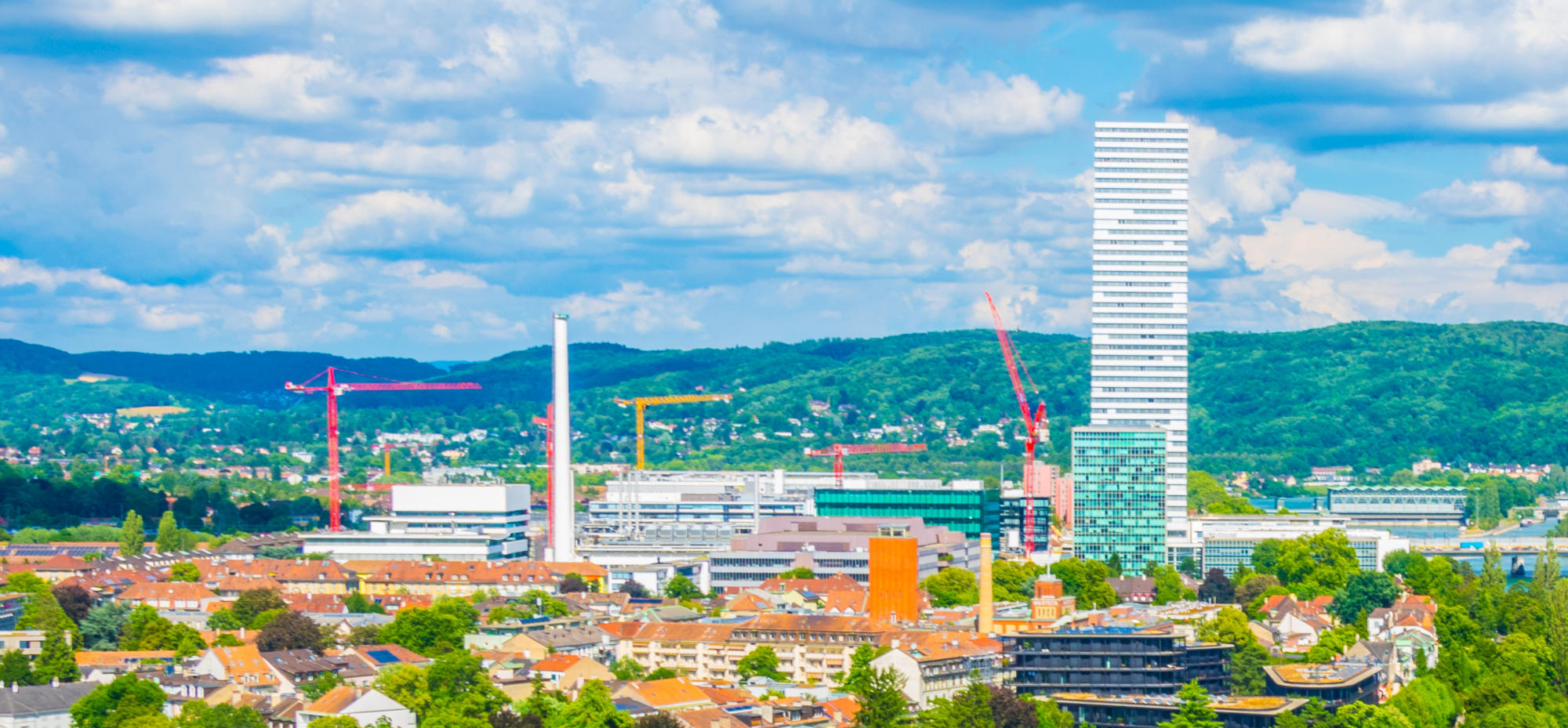
Riverside of Rhine dominated by the Roche tower in Switzerland

Sustainability

Prescribing a new future for healthcare: How Roche is rewriting what corporate leadership looks like

Published March 13, 2026 in Sustainability • 11 min read

André Hoffmann has reshaped a 125-year legacy by redefining Roche’s identity, modernizing its governance, and anchoring the company in a renewed sense of purpose.

When André Hoffmann, a member of the fourth generation of the family, walked into Roche’s boardroom in 1996, expectations for his influence were limited. Roche was financially strong and deeply attached to its governance traditions. Authority sat at the top, the company trusted its long-established ways of working, and the presence of a family representative – drawn from the founding family that retained control through voting rights – was largely met with indifference. Hoffmann felt this immediately. As he later noted, “I was born into those shares, which in some circles makes me an inappropriate board member.” He arrived without operational power, yet with a conviction that the company would eventually need to think differently about its responsibilities and its long-term role in society.

What he found was an organization that excelled scientifically but had not internalized how quickly the world around it was changing. Expectations for corporate behavior were rising. Governance standards were hardening. Societal scrutiny was intensifying. Inside Roche, these pressures were still seen as peripheral. The company believed its stability was proof of its strength and that its governance model, concentrated and insular, remained fit for purpose. When Hoffmann raised early questions about environmental impact, he was told that companies existed to make profits, not to concern themselves with nature or society. His reply was simple and would guide his work for years: “A company should give more to society than it takes.”

Over time, Hoffmann became a different kind of business leader inside Roche, one who broadened the conversations about value creation, legitimacy, and corporate purpose. He did not challenge management from the outside. He reshaped how the board interpreted its obligations from within. His influence helped move Roche from a company defined by its traditions to one capable of navigating a more demanding environment with clarity and integrity.

Yet the work that began with governance and purpose soon raised much larger questions. How could a global healthcare company honor its scientific mission while confronting rising expectations for transparency and societal contribution? How could Roche remain competitive while taking responsibility for the broader impact of its decisions? How could the company reconcile the long time-horizon of a family-controlled enterprise (a quarter for a family business is 25 years, not three months), in which ownership exercises influence primarily through governance rather than management, with the short-term pressures of global markets and being a listed company?

The answers would begin to take shape once Roche understood that its future leadership would be measured not only by the breakthroughs it delivered but by the role it chose to play in the world it served.

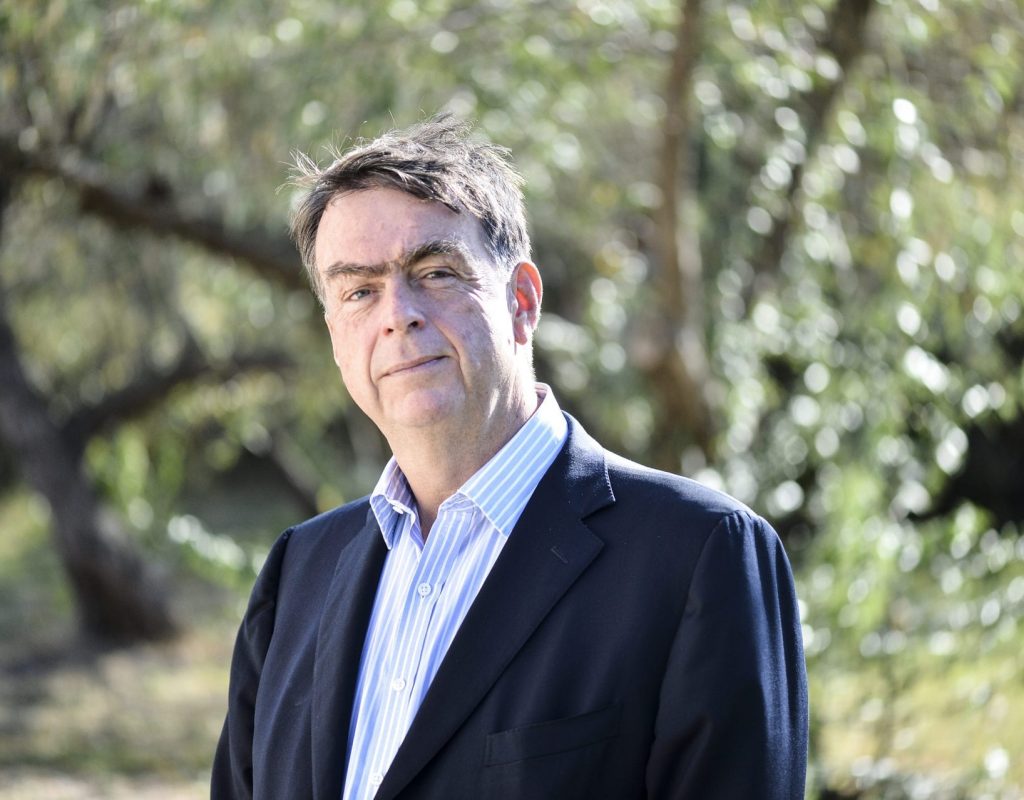
André Hoffmann
When André Hoffmann joined Roche’s board in 1996, he entered a company that outwardly looked strong and self-assured, yet was quietly exposed to a set of pressures it had not fully acknowledged

The challenge: A company confident in its traditions yet unprepared for the world ahead

When André Hoffmann joined Roche’s board in 1996, he entered a company that outwardly looked strong and self-assured, yet was quietly exposed to a set of pressures it had not fully acknowledged. Roche’s financial performance was solid, and its long history gave it a sense of continuity. But the structures that once provided stability had become constraints. Authority was concentrated at the very top under Fritz Gerber, whose dual role as Chairman and CEO created a governance model designed for decisiveness rather than scrutiny. Transparency was limited. Questions about social or environmental responsibility were seen as distractions. And in an industry becoming more global and more visible, the company had not yet understood how quickly expectations were changing.

The ownership structure – family-controlled but professionally managed – added another layer of tension. The founding families controlled most of the voting rights, yet had been absent from management for decades. Their influence was symbolic but misunderstood, and the presence of new family representatives on the board was not considered to be of great relevance. In addition, André carried a different worldview from the prevailing one inside Roche, shaped by conservation, international exposure, and a belief that companies must consider the impact they create, but he had no mandate to advance it.

External pressure began to expose Roche’s vulnerabilities in the late 1990s and early 2000s. In 2000, activist investor Martin Ebner publicly challenged the company’s governance structure and its unusual concentration of voting rights, raising concerns that had previously been dismissed inside Roche. Not long after, the company was hit by the vitamin price-fixing scandal, which unfolded in the late 1990s and culminated in record fines in 1999 and 2000. The multibillion-franc fallout revealed structural weaknesses that went far beyond a single business line. It exposed governance systems that were not robust enough to prevent misconduct and not transparent enough to detect it early. Reflecting on this period, Hoffmann noted, “If you are not well governed, you do not have the value creation you seek.” For a company that had long believed its traditions insulated it from risk, the scandal was a profound revelation.

The difficulty, however, was that Roche still saw itself as fundamentally sound. Its scientific performance remained strong. Its leadership believed in its model. Internally, the case for change was not obvious. Hoffmann’s challenge was therefore not to fix a failing enterprise but to help a proud, accomplished one see why it needed to evolve. He had to broaden the company’s sense of responsibility, strengthen governance, and prepare Roche for a world in which legitimacy would depend not just on innovation but on how the company behaved. And he had to do it from a position with influence but not power, navigating doubts about his presence while offering a perspective the company could not yet articulate for itself.

Hoffmann’s appointment as Vice Chairman in 2006 made the family’s long-term ownership role explicit within the heart of strategic dialogue.

The solution: A gradual, steady reshaping of Roche’s governance, culture, and purpose

Roche’s transformation took shape through a combination of governance reform, cultural evolution, and a persistent reframing of what the company should stand for. Hoffmann understood that change in a company with Roche’s history could not come through confrontation. It had to come from creating structures that broadened conversations and aligned decision-making with long-term responsibility.

The first major step was the creation of the Sustainability and Governance Committee in 2002, an initiative actively supported by then-CEO Franz Humer and initially chaired by Hoffmann’s cousin Andreas Oeri. This initiative offered the board a formal space to examine issues that had previously been treated as peripheral. It introduced external benchmarks like the Dow Jones Sustainability Index, pushing Roche to assess its environmental, social, and governance performance with the same rigor it applied to financial results. The committee was not transformative overnight, but it shifted the board’s field of vision. It made sustainability a recurring topic, grounded in data rather than ideology, and gave Hoffmann a legitimate platform from which to challenge assumptions.

The company then made a structural change that reshaped its internal balance of power: the separation of the Chairman and CEO roles. The aftermath of the vitamin scandal underscored the risks of concentrated authority. By redefining leadership responsibilities, Roche strengthened oversight, encouraged more open debate in the boardroom, and allowed management to operate with clearer accountability. Under Franz Humer, the company shed businesses that no longer fit its mission and committed itself more sharply to healthcare, a move that aligned strategy with identity.

Hoffmann’s appointment as Vice Chairman in 2006 made the family’s long-term ownership role explicit within the heart of strategic dialogue. He did not attempt to steer operations. Instead, he influenced the tone and framing of board discussions. In regular meetings with the Chair and CEO, he helped ensure that long-term considerations, from sustainability to societal expectations to the resilience of the business model, became integral to strategy rather than add-ons. Over time, this approach strengthened trust between the family, the board, and management, easing a tension that had shadowed Roche for decades.

When Severin Schwan became CEO in 2008, the cultural dimension of the transformation accelerated. Roche’s two major divisions – pharmaceuticals and diagnostics – operated in silos. Schwan introduced shared values – integrity, courage, and passion – that provided a common foundation across the company. More importantly, he reframed Roche’s purpose. “Doing now what patients need next” shifted the company from product orientation to patient orientation, anchoring decision-making in societal impact. This purpose offered a practical guide for tradeoffs, forcing teams to consider not only what the company could do, but what it should do.

The strength of this evolving culture became evident in moments of real pressure. When Roche’s cancer drug Herceptin reached China, affordability threatened to exclude many patients. Rather than accept this as inevitable, Roche built a tripartite financing structure with the Chinese government and Swiss Re, allowing patients, the state, and the company to share the cost. The model became part of national health policy and demonstrated that access is not simply a matter of pricing but of design.

The COVID pandemic tested the company even more profoundly. Within two weeks of the virus genome being published, Roche scientists had produced a research PCR test. By March 2020, regulators approved it. Global demand surged, and Roche faced a choice that would reveal the true depth of its transformation. Instead of raising prices during a global emergency, the company committed to equitable access and invested heavily to scale production. As Thomas Schinecker, then-CEO of Roche Diagnostics, later reflected, it was “the right thing to do,” and it was also the logical extension of years of governance, culture, and purpose work that had grounded Roche in responsibilities broader than profit alone.

Together, these developments reshaped Roche’s identity, clarifying how family ownership, professional management, and societal responsibility could reinforce one another. Hoffmann did not engineer a revolution. He created the conditions for one. By expanding the board’s focus, strengthening governance, reframing purpose and fostering trust between family, board, and management, he helped the company evolve from a tradition-bound institution into one capable of navigating global crises with clarity and integrity.
Roche’s cultural shift became real when leaders behaved consistently in moments that mattered.

Five key takeaways

Roche’s evolution under André Hoffmann offers concrete lessons for any leader seeking to modernize a company while strengthening trust, purpose, and long-term performance.

1 – Strengthen governance before performance falters

Hoffmann pushed for independent roles, tighter oversight, and a committee focused on sustainability and governance. The lesson for leaders is clear. Do not wait for a scandal or a crisis to adjust decision rights. Strong governance is preventive infrastructure, not a reactive fix.

2 – Expand the agenda to include the risks nobody is tracking yet

Hoffmann repeatedly brought environmental impact, access, and long-term reputation into board discussions. For business leaders, this means deliberately inserting emerging risks and societal expectations into strategic conversations instead of letting them sit outside the business frame.

3 – Turn customer centricity into a real decision filter

Roche’s choices on Herceptin access in China and on fair COVID test pricing came from one principle: patients first. For any company, this translates into customer centricity. Define one or two non-negotiable commitments about how you will treat customers, and let those commitments guide pricing, partnership, and crisis decisions even when short term economics push in the opposite direction.

4 – Use culture as a tool for execution, not decoration

Roche’s cultural shift became real when leaders behaved consistently in moments that mattered. Employees saw alignment between values and action, which accelerated trust and performance. Leaders can replicate this by ensuring that cultural principles show up in hiring, promotions, crisis behavior, and how executives handle tradeoffs.

5 – Treat external pressure as strategic input, not interference

Ebner’s criticism, public scrutiny, and global health expectations forced Roche to confront blind spots. Hoffmann used these pressures as signals for needed adaptation. Leaders should adopt the same stance. Stakeholder concerns often reveal market shifts early. Listening to them improves strategy and reduces long-term risk.

Roche enters its next era with structures and a sense of purpose that bear Hoffmann’s imprint, yet his role inside the company is far from symbolic.

What’s next

Roche enters its next era with structures and a sense of purpose that bear Hoffmann’s imprint, yet his role inside the company is far from symbolic. As Vice Chairman and a member of the board’s inner circle, he still acts as a steward of long-term thinking, ensuring that Roche’s decisions stay anchored in values rather than short-term pressures. He remains one of the few voices consistently pushing the company to consider patient access, societal expectations, and environmental impact not as side topics but as central to its license to operate. His influence today is quieter than during the height of the governance reforms, but it is no less consequential. In moments of strategic ambiguity, he is often the one who brings the conversation back to responsibility, resilience, and future generations.

At the same time, Hoffmann has stepped onto a much larger stage. As Co-Chair of the World Economic Forum , he sits at the intersection of business, policy, and environmental science, precisely where the next battles over value creation will be fought. The principles he championed inside Roche now meet a global audience. He is pushing the idea that economic success cannot be separated from the health of the natural systems that support it. He has become one of the most consistent advocates for integrating nature into corporate decision-making, arguing that companies must “give more to society than they take” if they want to stay relevant in the decades ahead.

This dual role creates an intriguing challenge. Inside Roche, he ensures continuity of values across generations. Outside Roche, he is helping shape the emerging rules and expectations that will govern corporate behavior worldwide, acting as a role model to other business owners and leaders, encouraging them to treat nature the way financial capital is treated today: as an asset that must be accounted for, invested in, and protected.

For executives watching this evolution, the implications are significant. How will companies adapt when nature moves from being an externality to being a boardroom agenda item? How should leaders redesign decision processes when environmental impact becomes measurable and priced? Who will gain advantage in a world where value creation is inseparable from ecological stewardship?

Hoffmann’s next chapter will unfold between Basel and Davos, between a company he helped transform and a global platform where he can ask questions that no single firm can answer alone. Whether those questions lead to another quiet revolution depends on how many leaders are willing to confront them before the world forces their hand.

Authors

Peter Voegel - IMD Professor

Peter Vogel

Professor of Family Business and Entrepreneurship at IMD

Peter Vogel is Professor of Family Business and Entrepreneurship, Director of the Global Family Business Center (GFBC), and Debiopharm Chair for Family Philanthropy at IMD, where he leads the Leading the Family Business, Leading the Family Office, and Lean Intrapreneurship programs. He is recognized globally as one of the foremost family business educators, advisors, and academics, and has received numerous awards and distinctions. He is the author of the award-winning books Family Philanthropy Navigator and Family Office Navigator. 

Julia Binder

Julia Binder

Professor of Business Transformation at IMD

Julia Katharina Binder, Professor of Business Transformation, is a renowned thought leader recognized on the 2022 Thinkers50 Radar list for her work at the intersection of sustainability and innovation. As Director of IMD’s Center for Sustainable and Inclusive Business, Binder is dedicated to leveraging IMD’s diverse expertise on sustainability topics to guide business leaders in discovering innovative solutions to contemporary challenges. At IMD, Binder serves as Program Director for Creating Value in the Circular Economy and teaches in key open programs including  Transition to Business Leadership (TBL), and Leading Sustainable Business Transformation (LSBT). She is involved in the school’s EMBA and MBA programs, and contributes to IMD’s custom programs, crafting transformative learning journeys for clients globally.

Related

Learn Brain Circuits

Join us for daily exercises focusing on issues from team building to developing an actionable sustainability plan to personal development. Go on - they only take five minutes.
 
Read more 

Explore Leadership

What makes a great leader? Do you need charisma? How do you inspire your team? Our experts offer actionable insights through first-person narratives, behind-the-scenes interviews and The Help Desk.
 
Read more

Join Membership

Log in here to join in the conversation with the I by IMD community. Your subscription grants you access to the quarterly magazine plus daily articles, videos, podcasts and learning exercises.
 
Sign up
X

Log in or register to enjoy the full experience

Explore first person business intelligence from top minds curated for a global executive audience