Slawomir Krupa, how can a 160-year-old bank reinvent itself?
Societe Generale CEO Slawomir Krupa on turnaround decisions, fintech pressure, and why long-term discipline beats short-term noise....
March 12, 2026 • by Susan Goldsworthy in Podcasts • Podcast available
Once in pole position on the grid, Atlassian Williams F1 Team is rebuilding its competitive advantage. In conversation with Susan Goldsworthy, the company’s Chief Human Resources Officer, Ann Perrins, explains how people,...
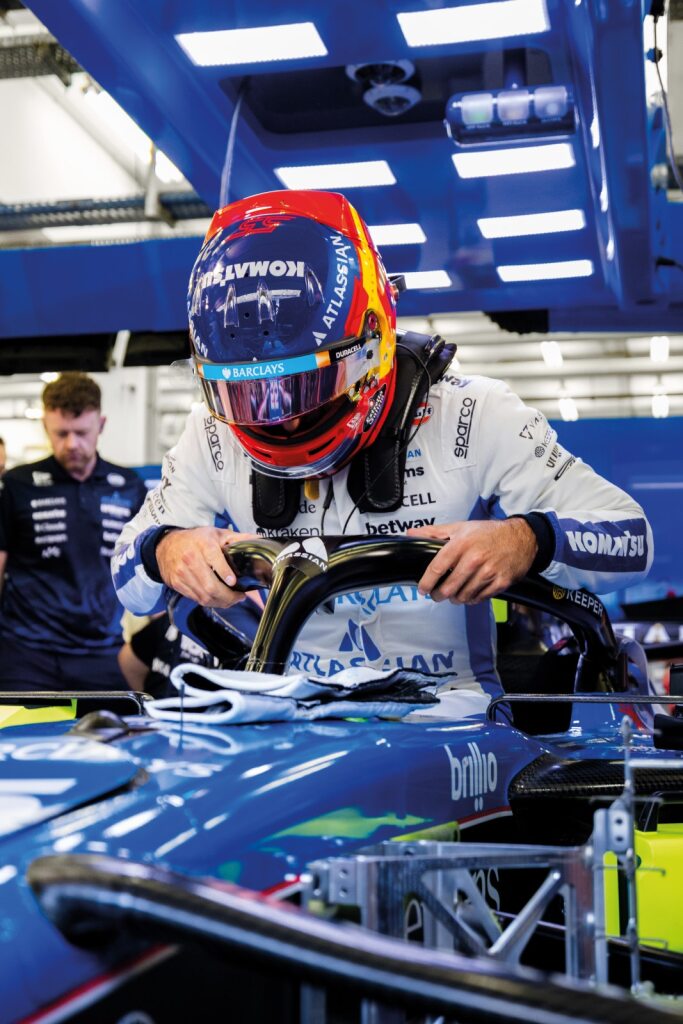
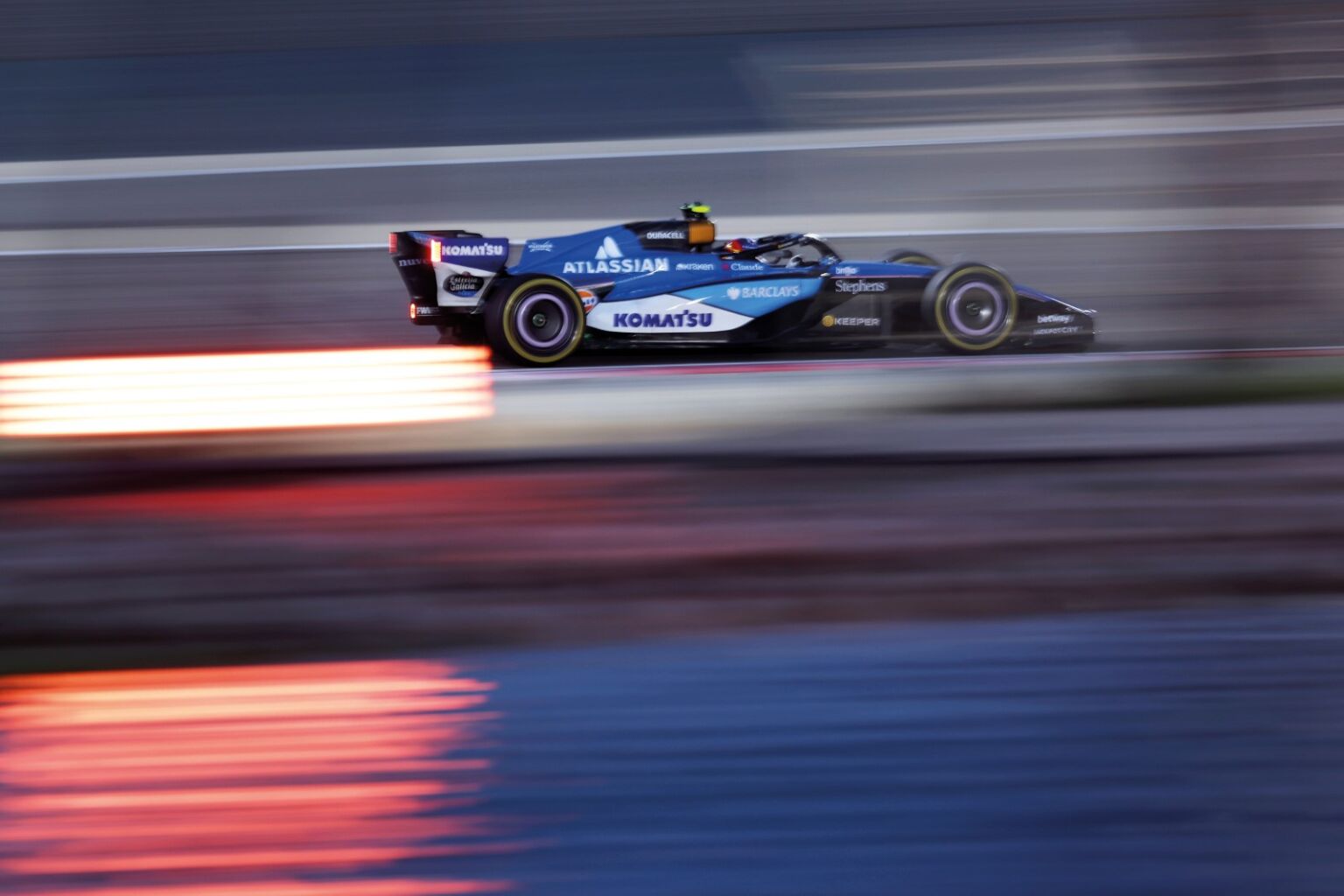
Apple SpotifyWhen the Atlassian Williams F1 Team finished fifth in the Constructors’ Championship last year, it marked its strongest season in a decade. The result was evidence of a deeper shift underway – one driven by a decision to recalibrate the team’s competitive advantage from the inside out.
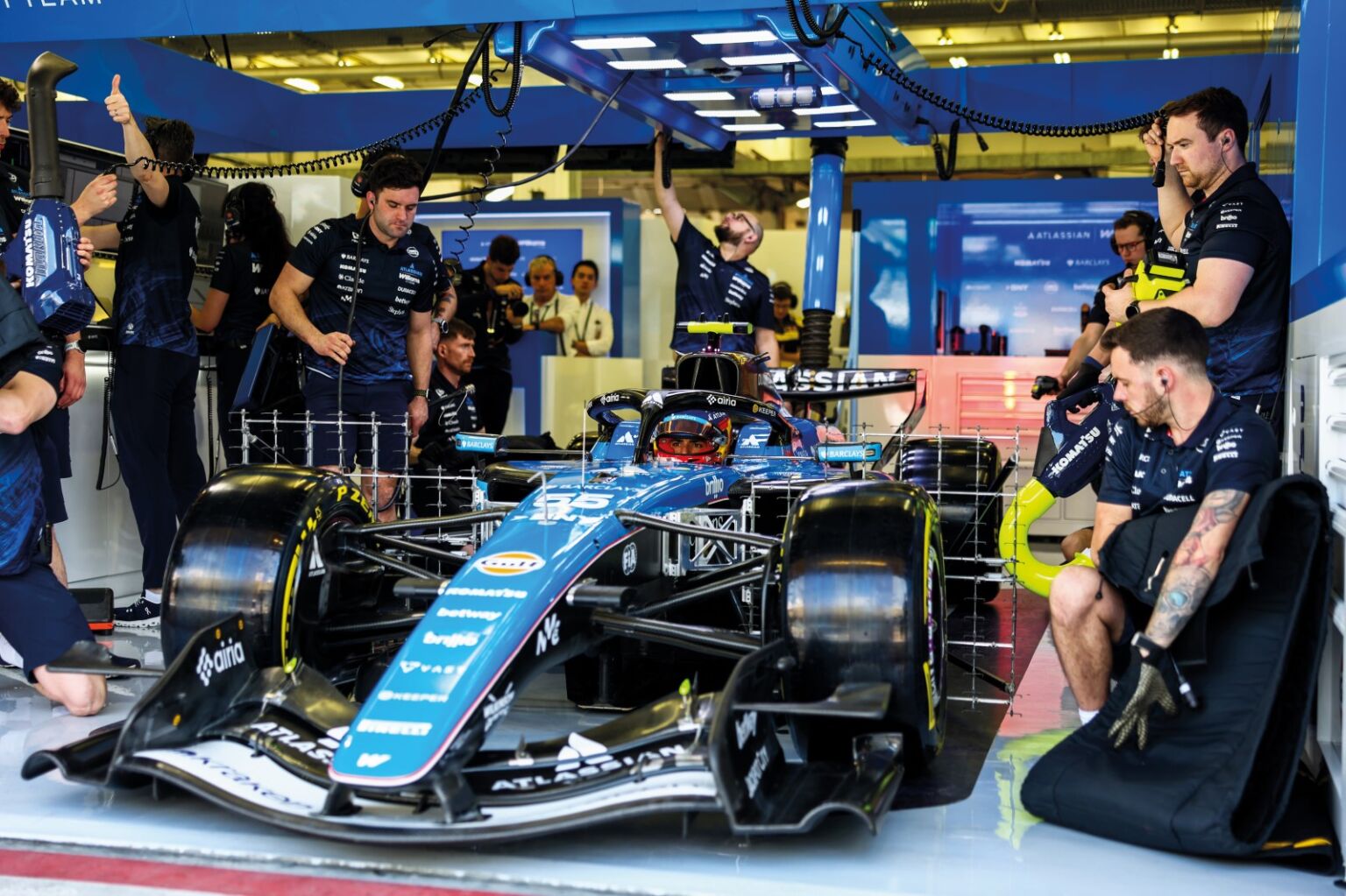
For leaders and organizations navigating volatile markets and constant disruption, the team’s experience in managing the tension between immediate results and long-term competitiveness offers valuable lessons.
Rather than chasing incremental gains in one of the world’s most unforgiving settings, Williams has embarked on a strategic reset under new Team Principal James Vowles. The focus shifted from short-term fixes toward a longer-term effort to strengthen leadership, capabilities, and culture as the foundation for future performance – reflecting the belief that success on the track is shaped long before race day.
That combination of sustained pressure and long-term intent makes Williams a compelling case study for leaders beyond sport. Founded in 1977, the team’s recent progress after a period of disappointing results is the product of a much longer and less visible transformation, one that places people and culture at the heart of the business.

A crucial part of this gear shift has been shaped by Ann Perrins, Williams’s Chief Human Resources Officer, who joined the company shortly after Vowles’s appointment in 2023. Perrins brought more than two decades of experience from global engineering, technology, and operations environments, including senior roles at BP and GKN Automotive. Despite no background in the sport, what attracted her to Formula 1 and Williams was not the spectacle, but the clarity of conviction in the team’s culture.
“The thing that really drew me in,” Perrins explained, “was a really unshakable and clear belief in the power and the criticality of the people and culture agenda. They recognized that this team can’t return to winning ways unless we get that right.”
This focus shapes how Williams defines competitiveness as it seeks to rediscover the chemistry that delivered multiple drivers’ and constructors’ titles in the 1980s and 1990s.
“It’s very easy to underestimate what it takes to drive an organization through transformation,” she said. “Yes, Formula 1 is fast, and yes, it’s a smaller organization, but the transformation journey is long, deep, and complex.”
For Perrins, culture has to show up in how leaders give feedback, how teams review performance, and how decisions are made when time is tight and the stakes are high. That kind of change does not happen quickly, particularly in a sport where weekly deadlines and public results can easily pull attention back to short-term outcomes.
When the team returns to the factory, everyone is invited to come together.
In an environment defined by intense public scrutiny and relentless pace, culture is not an abstract concept. It is an operating system. At Williams, psychological safety has emerged as a critical enabler of performance.
“Psychological safety is not about everything feeling nice and comfortable,” Perrins said. “It’s about things feeling really challenging and uncomfortable and still having the trust there that we go forward.”
One of the most telling rituals takes place after each race. When the team returns to the factory, everyone is invited to come together. Vowles walks through what happened, what was learned, what went well, and what did not.
“It’s very open, clear, transparent, and honest,” Perrins explained. “We celebrate when things go well, and we learn from our failures.”
The consistency of the ritual matters. By reviewing every race in the same open forum, the team reinforces shared accountability and accelerates learning across functions – from engineering and data to operations and support roles. Issues are surfaced quickly, successes are acknowledged openly, and lessons are absorbed collectively, rather than remaining siloed within individual teams.
These moments are reinforced by a clearly articulated framework of five values, visible to all on the factory wall: innovation, teamwork, resilience, excellence, and accountability. Those values are supported by 12 specific high-performance behaviors. This creates a shared language for feedback and accountability that is objective rather than personal.
This is not a model designed to train talent for competitors: retention is a strategic priority.
One of the clearest indications of Williams’s ambition is the scale of its investment in, and efforts to retain, talent. When Perrins joined, the team employed roughly 750 people. Just over two years later, that number has grown to about 1,200.
Early-career talent plays a central role in this strategy. Around 12% of the workforce comes through graduate programs, industrial placements, and apprenticeships. Demand is intense, with more than 20,000 applications for graduate roles alone – an investment Perrins sees as fundamental to long-term performance.
That commitment stands out in a market where early-career hiring is increasingly under pressure. According to the UK’s Institute of Student Employers, graduate recruitment fell by 8% in 2024/25 and is forecast to decline by a further 7%, with fewer than a third of employers expecting to increase their intake.
“To build future talent, you have to focus right at the start and really nurture and develop it all the way through,” said Perrins. “It comes back to building sustainable performance that goes well beyond me and my career.”
This is not a model designed to train talent for competitors: retention is a strategic priority. Rather than relying on short-term incentives, this means creating clear development pathways, embedding learning into everyday work, and building a culture where early-career employees can grow under pressure without fear of failure.
“A couple of years ago, we were losing quite a bit of our graduate talent to the competition,” Perrins acknowledged. “That has slowed significantly. We are now seen more as a destination for talent.”

Williams has also invested in a longer-term STEM pipeline, opening its doors to schoolchildren to showcase careers in engineering, science, and technology.
Last year alone, more than 13,000 children visited the team’s site in Oxfordshire, England, as part of an on-site STEM program delivered at no cost to schools. Demand has been intense, with places filling up within minutes of release. For Perrins, the aim is to spark early interest and broaden access to technical careers that underpin not just Formula 1, but the global economy.
“We want to show young people what these careers actually look like in practice,” said Perrins. “For many of them, it’s the first time they’ve seen engineering, technology, or science brought to life in this way.”
Williams’s approach to building capability extends beyond its own workforce.
Williams’s approach to building capability extends beyond its own workforce. Rather than treating partnerships as transactional or symbolic, the team works closely with its partners to integrate new tools, insights, and ways of working.
“We have more than 14 partners that we work with in very different ways,” Perrins explained. “And (software company) Atlassian has brought tremendous value and partnership to our organization with the know-how and the tools and the software to help collaboration.”
“That has allowed us to accelerate our journey in the way that the culture is working as we connect people across different functions, often working in different places at different times,” she added.
In a sport where marginal gains matter, these “learning” relationships help the team adapt faster and build capability beyond what it could develop on its own.

High performance at this level is extremely demanding, and Perrins is candid about the risks of burnout. Resilience is one of the team’s five values, and it is treated as a systemic responsibility, not an individual trait.
“A lot of the research shows that your line manager has more impact on your mental well-being than your partner at home,” she noted. “So how do we equip managers to really take that seriously?”
Structural safeguards play a role. Mandated shutdowns during the summer and over the Christmas period, enforced by the sport’s governing body, provide necessary recovery in an environment where competitive pressure would otherwise make rest impossible.
Perrins speaks openly about her own leadership discipline. “I’ve had to take this really seriously because I think it’s important as leaders that we don’t hide from the fact or pretend that it’s not hard and challenging.”
For her, resilience starts with the basics: taking sleep, movement, and nutrition seriously. It means drinking less alcohol, exercising regularly, and building healthier habits into daily life. “It’s not exciting,” she acknowledged, but in a high-performance environment, neglecting the fundamentals is not an option.
What people are willing to give,- Ann Perrins, Chief Human Resources Officer at Atlassian Williams Racing
if you get those things right, is really extraordinary,
What can other organizations learn from F1 and the Williams transformation story? Perrins highlighted two lessons that resonate far beyond the sport.
In a world where competitive advantage erodes so quickly, one universal insight shines through: winning tomorrow depends on how deliberately leaders build the human systems that perform today.

Chief Human Resources Officer at Atlassian Williams Racing

Affiliate Professor of Leadership, Communications and Organizational Change at IMD
Susan Goldsworthy OLY is an Affiliate Professor of Leadership, Communications and Organizational Change at IMD. Co-author of three award-winning books, she is also an Olympic swimmer. She is a highly qualified executive coach and is trained in numerous psychometric assessments. She is Director of the IMD Executive Coaching Certificate and Program Director of the Leading Sustainable Change program.

March 10, 2026 • by Jean-François Manzoni in Podcasts
Societe Generale CEO Slawomir Krupa on turnaround decisions, fintech pressure, and why long-term discipline beats short-term noise....

March 4, 2026 • by Michael R. Wade in Podcasts
Tech executive Katarina Bonde on scaling responsibly, navigating investor tensions, and staying pragmatic in the current AI bubble....
February 24, 2026 • by David Bach in Podcasts
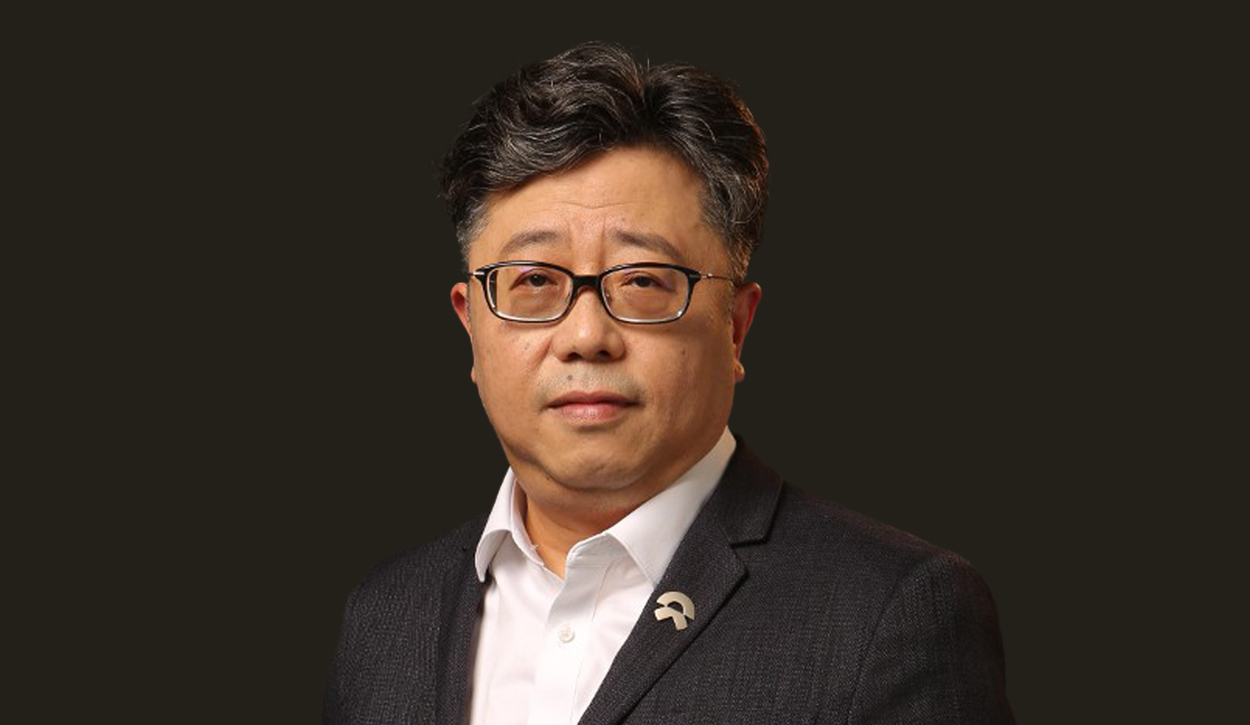
Chinese auto startup NIO went from zero to nearly a million customers in under ten years. Mark Zhou, who leads product and R&D, discusses how; and explains why community – not hardware...
February 17, 2026 • by Goutam Challagalla in Podcasts
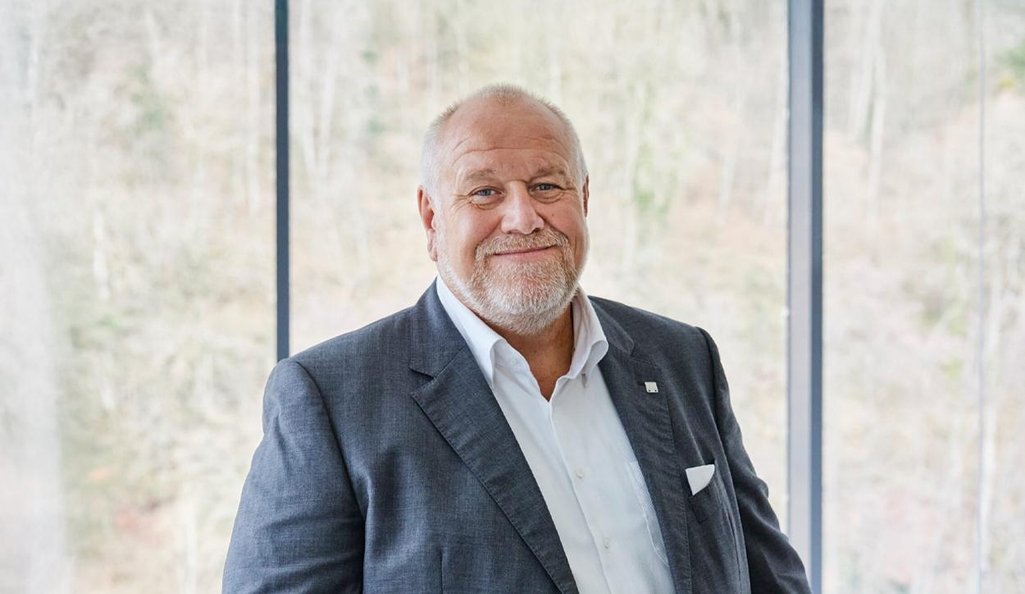
Family ownership, strategic paranoia, and integrated sustainability: Matthias Altendorf on future-proofing global market leader Endress+Hauser....
Explore first person business intelligence from top minds curated for a global executive audience