How to succeed as an enterprise co-pilot: Three priorities for the modern CFO
Schindler CFO Carla De Geyseleer explains how today’s CFO acts as a strategic co-pilot, uses sustainability to drive growth, and develops future finance leaders....

Published August 22, 2025 in CFO Horizons • 6 min read
As global trade responds to the pressure of geopolitical friction and economic uncertainty, few institutions are as well positioned to track the changes as Standard Chartered. With deep and long-standing roots in Asia, Africa, and the Middle East, the bank sits comfortably at the intersection of trade, capital flows, and wealth creation.
Standard Chartered’s CFO, Diego De Giorgi, is not cowed by the current climate of uncertainty. “First of all, I think we have an advantage in seeing what is happening on the ground across our network, firsthand, every day,” he says. “While it is obviously a very fast-moving macroeconomic environment, it’s also a broad source of opportunities.”
That dual-track response plays directly to the bank’s strengths in risk management and global connectivity.
Standard Chartered’s footprint across 54 markets provides an on-the-ground view of how clients are adapting to what De Giorgi describes as volatility compounded by uncertainty. “Markets are generally adept at dealing with volatility. But when you have policy uncertainty [as well], it’s more difficult for markets to adjust,” he explains. As a result, the bank’s clients, both corporates and investors, are adopting short-term tactics while rethinking strategy.
That dual-track response plays directly to the bank’s strengths in risk management and global connectivity. Its markets business serves as a “large flow and hedging machine” across currencies, commodities, and rates, while its network supports longer-term capital and investment flows.
De Giorgi emphasizes that Standard Chartered today is far from the trade bank in which its 170-year-old history began. “Trade contributes less than 5% of our total revenue. Instead, we are a giant facilitator of flows of capital, wealth, services, and goods,” he says.
This flow-based model has shaped the bank’s strategic priorities. De Giorgi says that Standard Chartered is determined to continue to grow cross-border corporate and investment banking (“our network business”) while doubling down on the pursuit of affluent clients (those with $500,000–$5 million in assets) in the high-growth markets it calls home. While these are not ultra-high-net-worth individuals (UHNWIs), Standard Chartered sees them as a rapidly growing and underserved segment. “The secular trend of the growth of the middle class in Asia is unstoppable,” says De Giorgi.

“Much of this hinges on technology that is impactful, but not necessarily the most eye-catching.”
These strategic goals are underpinned by significant investment in a business transformation program known as Fit for Growth. De Giorgi is one of four executive sponsors of the initiative, alongside leaders in strategy, risk, and technology. What sets the program apart, he says, is its holistic approach. “We’re trying to reform processes that cut across the organization. It’s a program that aims to make the bank an easier place in which to do business, for clients and colleagues alike.”
Much of this hinges on technology that is impactful, but not necessarily the most eye-catching. “It’s not just deploying AI at what I call the sexy end. Very often, it deploys AI in its most fundamental and hard-grafting manifestations,” says De Giorgi.
One example is the rollout of a new platform called ‘Service Bench,’ which standardizes internal tools and streamlines tech architecture across the bank. De Giorgi likens the bank’s global operations to a tree that, over the years, has developed numerous offshoots and “bumps.” The service bench platform, he says, helps “prune” the tree, bringing order, consistency, and scalability.
“It’s fundamentally a solution where you input what you are trying to do and the system will give you standardized tools based on what you are trying to execute,” he explains. For a bank such as Standard Chartered, operating across more than 50 markets, this consistency is critical. Instead of building one-off, country-specific solutions, teams use shared platforms to develop and deploy applications faster and more efficiently – that in turn are enhanced iteratively.
Even for customer-facing tools, much of the value lies in process improvements that the customer doesn’t see, such as automating compliance workflows. “Know your customer and customer due diligence are two of the areas where we are deploying Service Bench and AI very heavily,” De Giorgi says. “These are areas where automation and big data help a lot.”
By implementing such cross-sectional platforms, Fit for Growth aims to create a bank that is more standardized, simplified, and digitized.

This business fluency makes the CFO integral to transformation efforts.
In De Giorgi’s view, the CFO role in banking is fundamentally different to that in other industries. “If you try to interpret the role as someone who is just the accounting and numbers person, you’re missing a trick,” he explains. “The CFO of a bank is more of a businessperson because finance is our business.”
This business fluency makes the CFO integral to transformation efforts. But success also demands cultural leadership. “Every transformation is a cultural journey,” De Giorgi says. While the head of talent may shape the culture, the CFO ensures alignment of purpose and performance. “If there is a clash between the person that does the culture and the person that needs to deliver the results, you end up undermining the success of the transformation,” he adds.
The clearest signal of success? When transformation reaches the grassroots of the business. “We asked our people to embrace this transformation. We want to hear their ideas,” he says. The transformation program now comprises over 200 projects, with many budgeted at under $10m. De Giorgi views this as confirming they have embedded the initiative into the day-to-day rhythm of the business.
As Standard Chartered reshapes itself to deal with a more complex world, De Giorgi emphasizes a blend of financial discipline and cultural ambition. “To me, the sign of a thriving transformation is that it has been embraced,” he says. “And that embrace is shown in the sheer number of projects and the grassroots nature of the change movement we have instilled.”
It’s a model of change that’s less about top-down mandates and more about unlocking the insight and initiative that already run through the organization. That grassroots momentum is now shaping a new, more agile future for Standard Chartered. De Giorgi concludes, “We’re a high-growth business in many of the world’s highest-growth markets, so to capitalize on such an opportunity we’re creating a future where transformation is not only measurable but also tangible.”

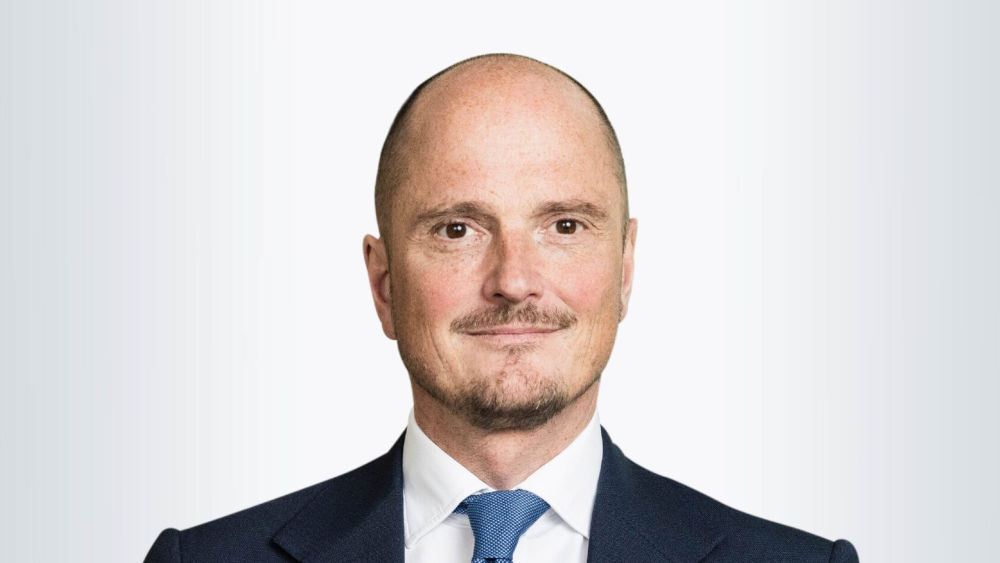
Group Chief Financial Officer at Standard Chartered.
Diego De Giorgi has more than three decades of experience in the global financial services sector. He has managed client-facing portfolios across UK, Europe, the US, Asia, the Middle East, and Africa. This has helped him build a strong understanding of the complexity of delivering results across diverse markets.

February 24, 2026 in CFO Horizons
Schindler CFO Carla De Geyseleer explains how today’s CFO acts as a strategic co-pilot, uses sustainability to drive growth, and develops future finance leaders....

January 29, 2026 in CFO Horizons
Finance cannot be perceived as a back-office function, says Swissport’s Nordics & Baltics CFO Sasa Tulikoura. CFOs must strengthen three priorities: inspiring curiosity in teams, connecting across the business, and building momentum...

January 7, 2026 • by Salvatore Cantale in CFO Horizons
At critical moments that can shape a company’s long-term future, the balance of CEO ambition, CFO vigilance, and board oversight can determine success or failure. IMD’s Salvatore Cantale outlines how CFOs can...

October 29, 2025 • by Salvatore Cantale in CFO Horizons
CFOs can turn agentic AI from experiment to enterprise value by mastering execution, autonomy, and goal-driven workflows....
Explore first person business intelligence from top minds curated for a global executive audience