
Bias in the boardroom: Good or bad?
Of the many biases humans are prey to – such as anchoring bias, loss-aversion bias, status quo bias, and recency bias – confirmation bias can be most evident in the boardroom. But...

They are not entitled: they are fearful and curious. Many Gen Zers were educated in environments that encouraged inquiry and critical thinking, yet their willingness to ask questions is often misread as entitlement.
Questioning authority isn’t arrogance, either – it’s a way of seeking safety in an uncertain world. Having come of age through two recessions, a pandemic, and ongoing sociopolitical turmoil, Gen Z has learned to ask questions as a form of self-protection.
Far from dodging responsibility, Gen Zers are taking steps to protect their long-term ability to thrive. This means work-life balance is a priority, not a perk.
Gen Z doesn’t lack loyalty – they just define it differently to previous generations. For them, loyalty is not about staying with one company for decades, but rather alignment with their personal values.
Gen Z may be the first true digital natives, but that doesn’t mean they want to live entirely online. They value technology for what it enables – connection, access, and creativity – but they’re equally vocal about the importance of real-world interaction, physical spaces, and offline authenticity.
Much has been said about Gen Z’s impact on workplace culture, from “quiet quitting” to “task masking”. But this behavior isn’t new – it’s simply naming things older generations have quietly done for decades. Gen Z is demystifying work culture, not undermining it.
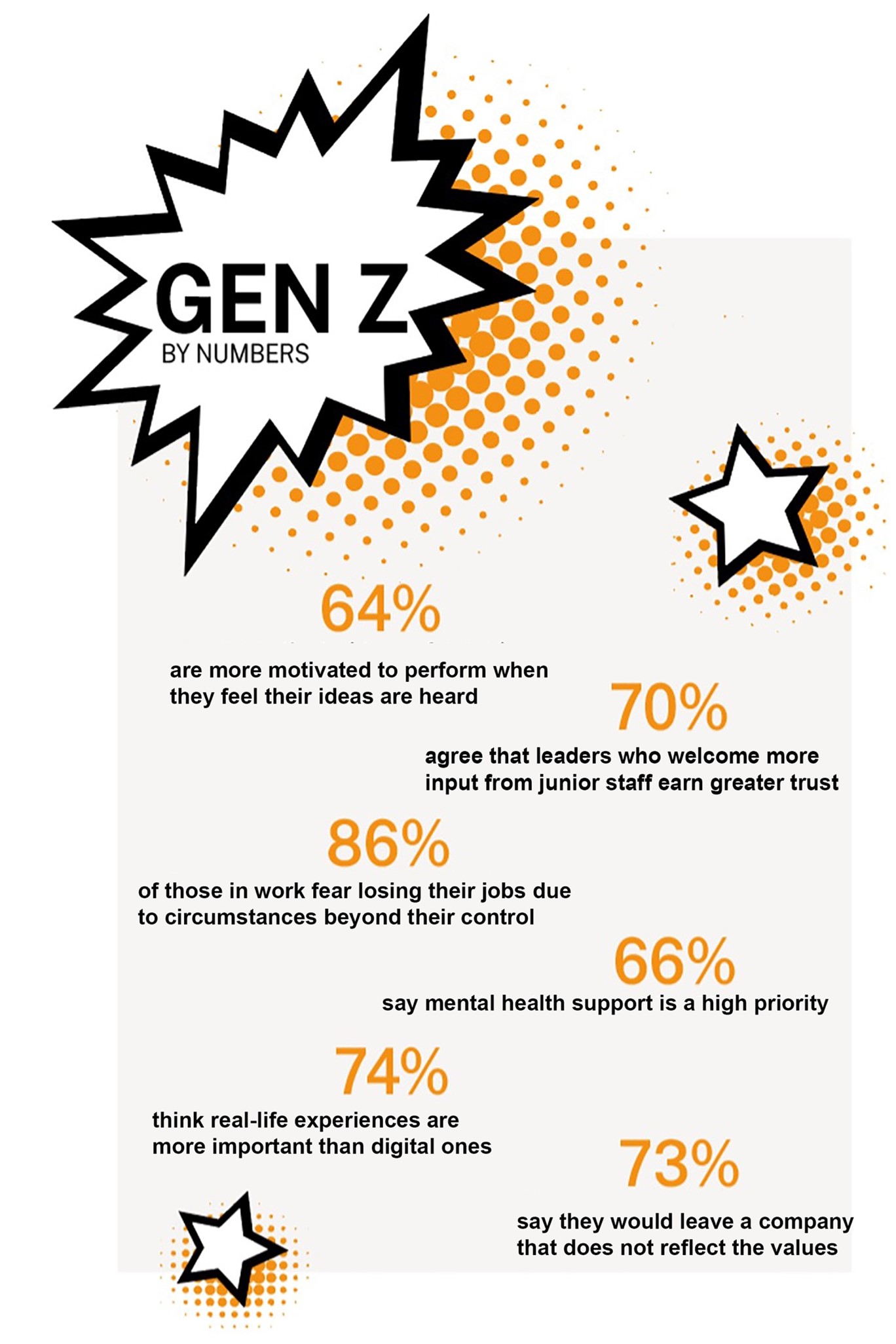
Edelman Trust research shows that the large majority of Gen Z employees are more motivated to perform well when they feel their ideas are heard.
Gen Z employees also agree that leaders who welcome input from junior staff earn more of their trust. This means Gen Z thrives in environments where curiosity is cultivated, not crushed.
Managers who treat questions as threats risk stifling innovation. Instead, leaders must foster a feedback-rich culture where questions become the starting point for better solutions.
Gen Zers want flexibility, mental health support, and authentic inclusion. For the youngest working generation, mental health support is more important than salary.
Gen Zers also want to be nurtured in their careers, with clear pathways for progression. Structured mentoring, visible career tracks, and reverse mentoring opportunities go a long way in retaining top talent.

Of the many biases humans are prey to – such as anchoring bias, loss-aversion bias, status quo bias, and recency bias – confirmation bias can be most evident in the boardroom. But...

As workforces age, organizations must confront a critical question: how will extended lifespans reshape leadership, organizational strategy, and the very concept of a career? Anna Erat identifies four focus areas to sustain...

To transition into the boardroom, you need a brand, a unique board proposition, and a governance mindset - but you also need to consider the value you add and the cultural fit...

Research indicates that 14% of companies report net positive effects from political risks that disrupted competitors, creating market openings to capitalize on temporary dislocations and long-term shifts in global trade patterns. Simon J...
Explore first person business intelligence from top minds curated for a global executive audience