I by IMD Book Club

Leadership
The biggest career barrier isn’t at the top. It’s at the first step
March 23, 2026 • by Winter Nie in I by IMD Book Club
The greatest barrier to women’s advancement emerges early in a career, not at the top. Kweilin Ellingrud examines how the first promotion to manager shapes long-term progression....
The greatest barrier to women’s advancement emerges early in a career, not at the top. Kweilin Ellingrud examines how the first promotion to manager shapes long-term progression.
Women are doing very well academically, but as soon as they enter the workforce, they begin to lose ground at the first promotion.- Kweilin Ellingrud, co-author of The Broken Rung and Director of the McKinsey Global Institute (MGI)
For years, the conversation about women’s advancement has focused on the glass ceiling – the invisible barrier that prevents women from reaching the most senior roles. It is a powerful metaphor, but it can also lead organizations to focus their attention too late in the journey.
A more revealing question, as Kweilin Ellingrud suggests, is not why women struggle to reach the top, but why they begin to fall behind much earlier.
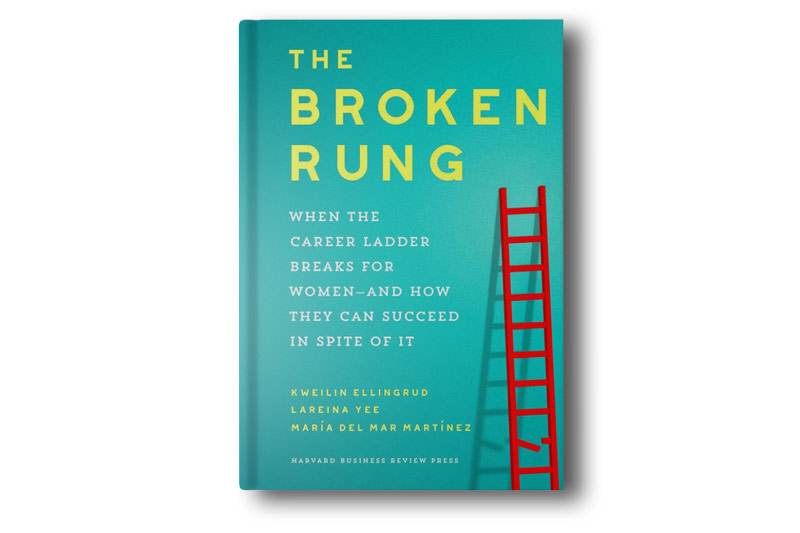
In The Broken Rung, Ellingrud, together with her co-authors Lareina Yee and María del Mar Martínez, shifts the focus to the first promotion into management – a step often treated as routine, but one that in practice shapes the trajectory of an entire career.
“Every employee across your company has to make it through that initial broken rung,” Ellingrud said during a recent I by IMD Book Club discussion.
Yet this is precisely where the divergence begins. In the US, representation starts close to parity at entry level, but drops by eight percentage points at the first promotion to manager.
What makes this particularly important is not just the size of the gap, but its timing. Once that step is missed or delayed, the effects accumulate quietly. Fewer women in early management roles means fewer candidates for the next level, and by the time organizations focus on representation at the top, the pipeline has already narrowed.
Why the first promotion matters
What makes the broken rung so consequential is that it affects everyone. Very few employees ever reach the most senior levels, but every career passes through that first promotion.
As Ellingrud noted, “If we can make that leap easier, we’ll have more women across that full talent pipeline.”
This shifts the conversation in a useful way. The issue is not only who makes it to senior leadership, but how early opportunities are distributed and how quickly individuals are able to build the experience that supports future progression.
Women are performing strongly in education and, in many countries, earning the majority of degrees.
Experience capital: the real driver of careers
One of the ideas that stood out most in the discussion is the concept of “experience capital.” We tend to think of careers as being shaped by education and the skills we bring into our first role, but the data suggests a more balanced picture. Roughly half of lifetime income is determined by those initial capabilities, while the other half is driven by what we learn on the job – the accumulation of experience, judgment, and practical know-how over time.
This helps explain a pattern that many organizations observe but do not always fully understand. Women are performing strongly in education and, in many countries, earning the majority of degrees.
However, they begin to lose ground early in their careers. The issue is not capability; it is how experience is built and how quickly that experience translates into opportunity.
“Everything that you learn on the job drives roughly half of your lifetime income,” said Ellingrud. When access to that experience is uneven, progression will inevitably be uneven as well.
How the gap takes shape
In the US, for every decade a man spends in the workforce, women spend around 8.6 years, reflecting differences in working patterns over time.
The gap in experience capital does not come from a single decision or event. It develops over time through a combination of factors that, taken individually, may seem small but together have a compounding effect.
Two in particular stand out. The first is the type of roles and opportunities individuals take on, which accounts for roughly two-thirds of the difference. The second is continuity, as women are more likely to work part-time or take career breaks, affecting how consistently experience is accumulated.
Although these are often framed as personal choices, what we see in practice is that they are closely shaped by context – by how roles are structured, what flexibility is available, and what trade-offs feel realistic at different points in life.
Organizational systems can reinforce this further in ways that are not always visible. Criteria that appear neutral may not be neutral in effect, and we continue to see differences in how potential is assessed, with women more often evaluated on track record and men on perceived future potential. Over time, this creates a reinforcing cycle in which fewer opportunities lead to less experience, which in turn limits access to future opportunities.
What is particularly interesting is that women and men make a similar number of these moves, yet the outcomes differ.
What accelerates experience
If experience capital is what drives progression, then the question becomes how it can be built more deliberately. The discussion highlighted several patterns that consistently make a difference.
The first is the broader environment in which a career develops. Organizations that invest in learning, support movement across functions, and operate with a clear strategy tend to provide stronger conditions for growth. In that sense, where you work can matter as much as what you do, particularly in the early stages of a career.
The second is the importance of what Ellingrud describes as “big, bold moves” – roles that stretch capability by requiring a significant proportion of new skills. These moves are often uncomfortable and demand learning in real time, but they are also where development accelerates most quickly. What is particularly interesting is that women and men make a similar number of these moves, yet the outcomes differ.
When women make a bold move, they are more likely to remain in the same income quintile or even move down, while men are more likely to move up, suggesting the issue is less about willingness to take risks and more about how those risks are recognized and rewarded.
A third factor is exposure to what the book refers to as the “power alley” – roles that sit close to how a business generates revenue. These roles tend to carry greater visibility and influence, and even a relatively short period in such a position can shape how an individual is perceived later in their career.
In executive classrooms, it is often immediately apparent who has had this kind of experience, not only in what they say but in how they frame decisions and approach trade-offs.
Ellingrud notes that working for the “right company” – one that invests in learning, supports mobility, and has a clear strategy – can be associated with up to 50% higher lifetime income.
Career opportunities are rarely determined by formal processes alone; they are often shaped by relationships and by individuals who are willing to support and advocate for others.
Networks, sponsorship, and access to opportunity
Another theme that emerged clearly is the role of networks. Career opportunities are rarely determined by formal processes alone; they are often shaped by relationships and by individuals who are willing to support and advocate for others. As Ellingrud noted, “bold moves are made through a network.”
At the same time, there is a persistent imbalance in how support is provided. Women are often “over mentored and under sponsored.” Mentorship offers guidance and advice, but sponsorship creates opportunity. It involves someone using their influence or “political capital” to open doors, and without it, even strong performance may not translate into progression.
What leaders need to rethink
For leaders, the implications are practical. If the most significant barrier appears at the first promotion, then that is where attention needs to be directed. This means looking closely at how early careers are shaped, how potential is identified, and how opportunities are allocated. It also requires a more deliberate approach to building experience across the organization, through rotations, stretch assignments, and more equitable access to sponsorship.
More fundamentally, it requires treating talent as something that is actively built – not something that naturally reveals itself over time.
Rebuilding the first rung, therefore, requires more than awareness.
Rebuilding the first rung
What The Broken Rung makes clear is that leadership gaps are not simply the result of who reaches the top, but of how careers are shaped along the way.
If the first step is uneven, the rest of the ladder will be too. That is not only a question of fairness – it is a question of performance. Organizations that fail to build experience early are, in effect, narrowing their future leadership pipeline before it has the chance to fully develop.
Rebuilding the first rung, therefore, requires more than awareness. It requires a shift in where leaders focus their attention, how they define potential, and how deliberately they create opportunities for people to grow.
Because leadership gaps do not suddenly appear at the top. They are built, step by step, much earlier – in the everyday decisions about who is given responsibility, who is stretched, and who is trusted to move forward.
Expert

Kweilin Ellingrud
Director of the McKinsey Global Institute
Kweilin Ellingrud is a senior partner at McKinsey & Company and one of the firm’s leading voices on gender equality, productivity, and economic mobility. A former Chief Diversity & Inclusion Officer, she has spent more than a decade researching workplace advancement dynamics and advising global organizations on how to build more inclusive leadership pipelines. The Broken Rung distills her research into a clear, practical roadmap for women seeking to accelerate their careers — and for leaders who want to fix the systems that hold them back.
Authors
Winter Nie
IMD Professor of Leadership and Change Management
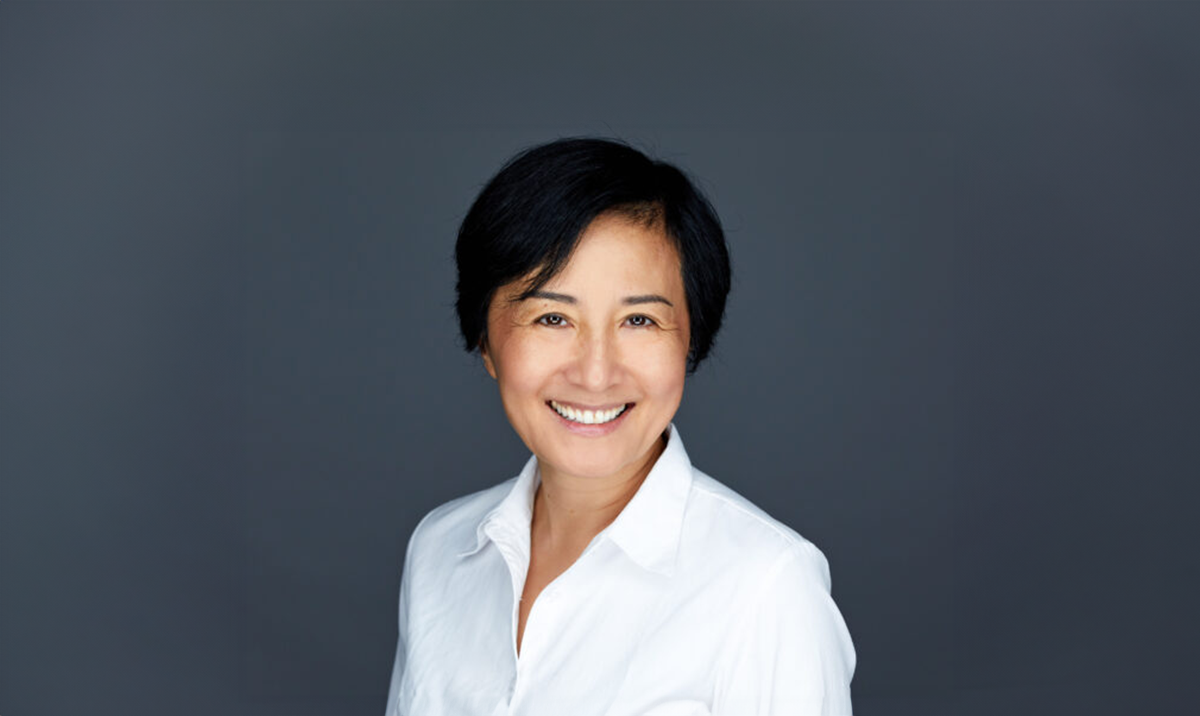
Winter Nie’s expertise lies at the intersection of leadership and change management. Her work shows that the role of leadership is not to eliminate but skillfully navigate through these tensions into the future. She works with organizations on change at the individual, team, and organizational levels, looking beyond surface rationality into the unconscious forces below that shape the direction and speed of change.