AI and the CIO: From Chief Information Officer to Chief Intelligence Officer
Facing a fundamental redefinition of their purpose in organizations, today’s CIOs need to pivot quickly. ...

by Shelley Zalis Published July 2, 2026 in Artificial Intelligence • 4 min read • Audio available
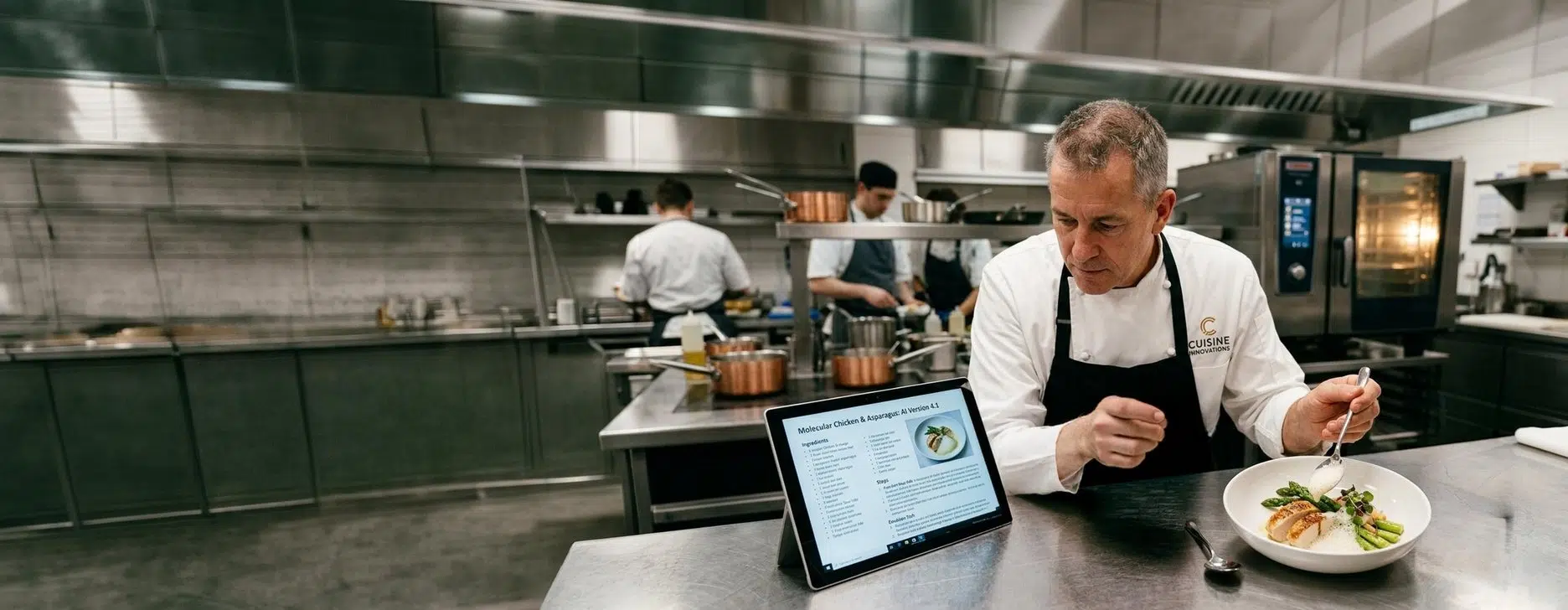
Artificial intelligence can analyze markets, optimize supply chains, generate code, draft strategy, and even design the perfect recipe. But there are things it cannot do. It cannot taste the food. It cannot feel the moment or determine what is truly worth serving. That distinction will define the next era of leadership.
We know that AI is extraordinary at processing information. It identifies patterns, predicts outcomes, and scales decisions at a speed no human can match. But leadership has never been about processing alone. It’s about context, nuance, trade-offs, and values. AI can tell you what could work, but only humans can decide what should work. In a world of infinite data, judgment becomes the scarce resource.
Every major technological shift has raised the same concern: will this replace us? When the world transitioned from horse-drawn carriages to automobiles, entire job categories disappeared. Stable hands, carriage makers, and the ecosystems built around them faded. Yet this was not the end of work; it was the beginning of a new economy. Mechanics, engineers, and infrastructure systems emerged, and productivity expanded. AI is following a similar trajectory.
Some roles will diminish, while others will be elevated, and many will be created. The leadership challenge is in designing what comes next. Organizations must move from viewing jobs as fixed roles to understanding work as a dynamic combination of human capability, machine intelligence, and continuous learning. That is not a workforce reduction strategy; it is a workforce reinvention strategy.
The most effective organizations ask how AI amplifies their people, not how it replaces them.
The companies moving ahead are not the ones experimenting the most, but the ones integrating AI into how work gets done. They treat AI as a catalyst to redesign work rather than a tool layered onto existing processes. They embed AI into workflows, invest in workforce fluency, and use it to accelerate better decisions, while keeping human judgment at the center.
As AI takes on predictable tasks, the value of distinctly human capabilities increases. Creativity, ethical reasoning, empathy, storytelling, and complex decision-making under uncertainty become more critical. For years, these were labeled soft skills. In an AI-enabled world, they are among the hardest to replicate and the most valuable to cultivate.
There is also a risk. As AI reshapes work, it will not do so evenly: gaps in access, skills, and leadership will widen. Women are underrepresented in AI development and overrepresented in roles most exposed to automation. The future of work will not just be defined by how we use AI, but by who gets to shape it.
Organizations can deploy the same technologies and achieve vastly different outcomes. The differentiator is not access to AI, but how intelligently it is applied. This is what defines AIQ: the intelligent application of artificial intelligence – the ability to combine machine intelligence with human judgment to drive better outcomes. AI is the tool, and AIQ is the advantage.
The most effective organizations ask how AI amplifies their people, not how it replaces them. AI generates options, but humans choose direction. AI accelerates analysis, but humans define meaning. AI scales execution, but humans set intention. For leaders, these actions matter:
The future of work is human with machine, not human versus machine. The companies that win will be the ones that raise their AIQ. AI may write the recipe, but humans will decide what is worth tasting, refining, and sharing.

Founder and CEO of The Female Quotient
Shelley Zalis – CEO, Founder, and “Chief Troublemaker” of The Female Quotient – is an entrepreneur, three-time movement maker, and advocate for reshaping the workplace for the modern era. She is redefining leadership and challenging outdated systems.
At The FQ, Zalis built the largest global community of women in business across 30 industries in more than 100 countries. Previously, she transformed market research by founded OTX, later selling it to Ipsos. She co-created #SeeHer, championing accurate portrayals of women and girls in media.
A LinkedIn Top Voice and contributor to TIME and Forbes, Zalis’ accolades include the Global Leaders 50 List and Fast Company’s Brands That Matter.

July 1, 2026 • by Achim Plueckebaum, Michael R. Wade, Konstantinos Trantopoulos in Artificial Intelligence
Facing a fundamental redefinition of their purpose in organizations, today’s CIOs need to pivot quickly. ...

June 29, 2026 • by Stéphane J. G. Girod, Rajashree Rane in Artificial Intelligence
The Austrian crystal company achieved over 5% contribution to digital commerce with less than 1% of digital budget by emphasizing a value-first approach, its Chief Digital and Information Officer told IMD’s Luxury...

June 26, 2026 • by Didier Bonnet in Artificial Intelligence
Hugo Travers built a 20M-strong news audience by prioritizing accessibility, trust, and transparency, offering leadership lessons for the digital age....

June 17, 2026 • by Howard Yu in Artificial Intelligence
To unlock true competitive advantage, leaders must learn to integrate the refined intelligence of American AI models with the coordinating power of China. Howard Yu explains why most Western companies are on...
Explore first person business intelligence from top minds curated for a global executive audience