The companies moving ahead are not the ones experimenting the most, but the ones integrating AI into how work gets done. They treat AI as a catalyst to redesign work rather than a tool layered onto existing processes. They embed AI into workflows, invest in workforce fluency, and use it to accelerate better decisions, while keeping human judgment at the center.
As AI takes on predictable tasks, the value of distinctly human capabilities increases. Creativity, ethical reasoning, empathy, storytelling, and complex decision-making under uncertainty become more critical. For years, these were labeled soft skills. In an AI-enabled world, they are among the hardest to replicate and the most valuable to cultivate.
There is also a risk. As AI reshapes work, it will not do so evenly: gaps in access, skills, and leadership will widen. Women are underrepresented in AI development and overrepresented in roles most exposed to automation. The future of work will not just be defined by how we use AI, but by who gets to shape it.
Organizations can deploy the same technologies and achieve vastly different outcomes. The differentiator is not access to AI, but how intelligently it is applied. This is what defines AIQ: the intelligent application of artificial intelligence – the ability to combine machine intelligence with human judgment to drive better outcomes. AI is the tool, and AIQ is the advantage.
The most effective organizations ask how AI amplifies their people, not how it replaces them. AI generates options, but humans choose direction. AI accelerates analysis, but humans define meaning. AI scales execution, but humans set intention. For leaders, these actions matter:
- Redesign work, not just tasks. Do not layer AI onto outdated workflows. Reimagine how work gets done end to end.
- Invest in workforce AI fluency. The greatest risk is not AI itself, but a workforce that does not know how to use it effectively.
- Lead with judgment, not just data. As AI generates more answers, leadership must ensure judgment, accountability, and intention remain human-led.
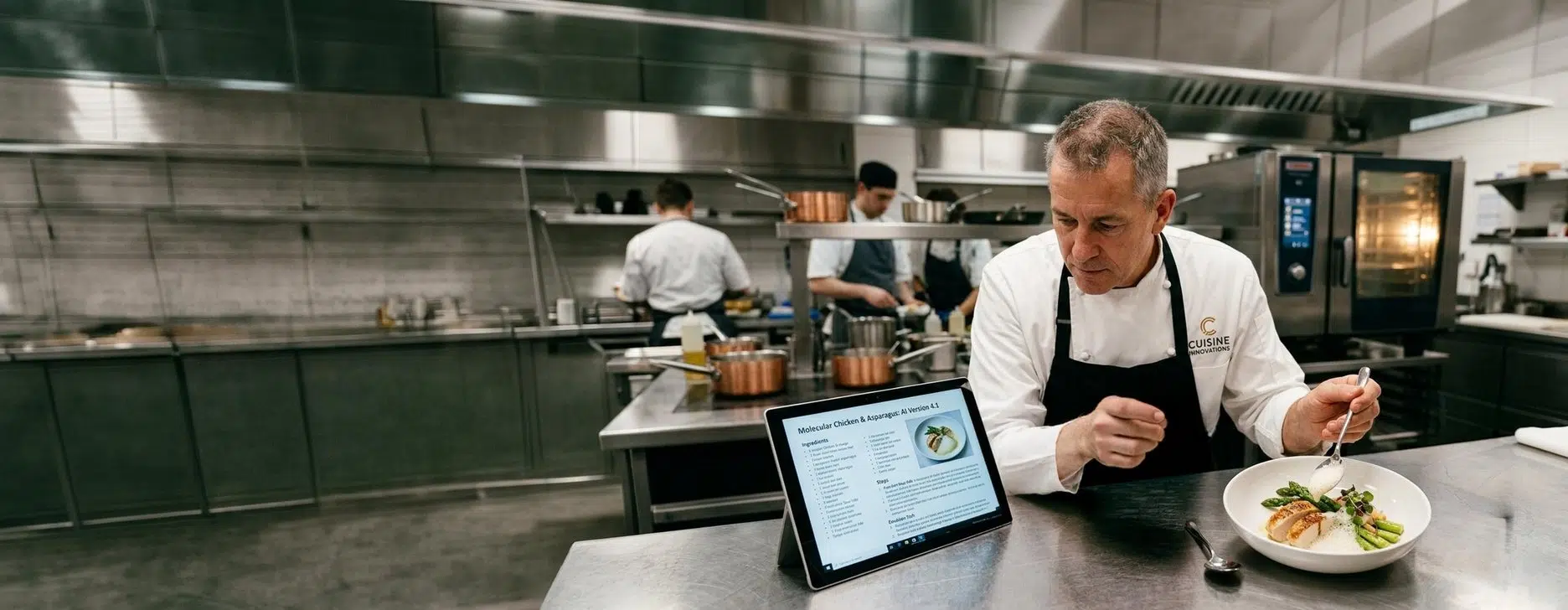
The future of work is human with machine, not human versus machine. The companies that win will be the ones that raise their AIQ. AI may write the recipe, but humans will decide what is worth tasting, refining, and sharing.
 Audio available


 Audio available
