Are you failing the happiness test?
Answer the questions below to check whether your organization is in danger of overlooking happiness when it comes to leadership resilience and team performance, and check out the four dimensions of workplace...
by Julia Binder, Knut Haanaes Published August 5, 2025 in Brain Circuits • 3 min read
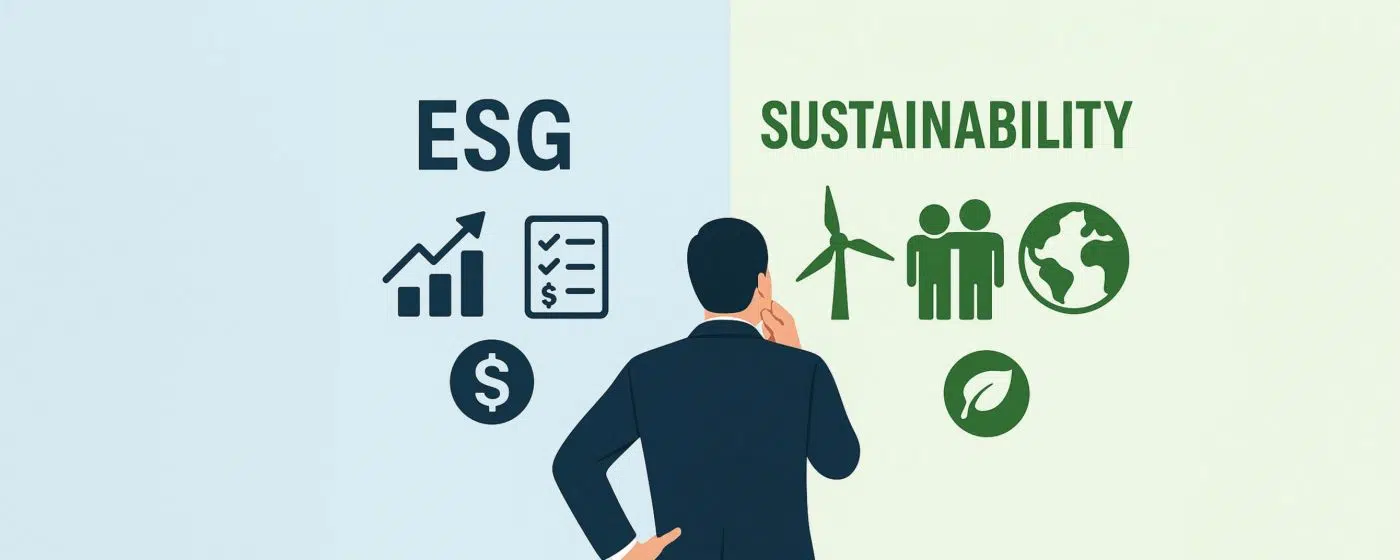
Answer: (b). ESG is fundamentally an “outside-in” approach, where the goal is to assess how external environmental, social, and governance issues could affect a company’s financial performance.
Answer: (a). Sustainability focuses on the effect that a company’s operations have on the environment and society; hence, it could be said to take an “inside-out” approach.
Answer: (b). ESG identifies and manages the financial risks associated with environmental, social, and governance factors.
“ESG is about protecting the company's value by minimizing these risks, it is aligned with traditional financial management practices.”
ESG concerns investment criteria: investors evaluate a company’s risk profile and financial performance based on environmental, social, and governance factors; hence, it serves as a framework to identify and manage the financial risks associated with these factors.
And because ESG is about protecting the company’s value by minimizing these risks, it is aligned with traditional financial management practices – risk mitigation and ensuring that the company remains a sound investment.
Issues include:
Instead of focusing on financial returns, sustainable businesses consider the social and environmental value they create.
Sustainability, by contrast, focuses on the effect that a company has on the environment and society – it’s about how company operations affect the world. This people- and planet-centric approach goes beyond risk management to consider the broad implications of business decisions. True sustainability aims not only to minimize harm but to create positive impact – whether through reducing environmental footprints, enhancing social equity, or driving economic inclusivity.
Sustainability is also about redefining value creation. Instead of focusing on financial returns, sustainable businesses consider the social and environmental value they create.
Issues include:
Business leaders must recognize that while ESG considerations are essential, they should not be the end goal: focusing on ESG can lead to a “tick-box” mentality, emphasizing compliance rather than transforming the business for long-term sustainability.
True sustainability requires going beyond risk management by actively seeking opportunities for positive impact. This might mean decisions that are costly in the short term but that target value-creation and contribute to a more sustainable and inclusive future.
Professor of Business Transformation at IMD
Julia Katharina Binder, Professor of Business Transformation, is a renowned thought leader recognized on the 2022 Thinkers50 Radar list for her work at the intersection of sustainability and innovation. As Director of IMD’s Center for Sustainable and Inclusive Business, Binder is dedicated to leveraging IMD’s diverse expertise on sustainability topics to guide business leaders in discovering innovative solutions to contemporary challenges. At IMD, Binder serves as Program Director for Creating Value in the Circular Economy and teaches in key open programs including Transition to Business Leadership (TBL), and Leading Sustainable Business Transformation (LSBT). She is involved in the school’s EMBA and MBA programs, and contributes to IMD’s custom programs, crafting transformative learning journeys for clients globally.
Lundin Chair Professor of Sustainability at IMD
Knut Haanaes is a former Dean of the Global Leadership Institute at the World Economic Forum. He was previously a Senior Partner at the Boston Consulting Group and founded their first sustainability practice. At IMD he teaches in many of the key programs, including the MBA, and is Co-Director of the Leading Sustainable Business Transformation program (LSBT) and the Driving Sustainability from the Boardroom (DSB) program. His research interests are related to strategy, digital transformation, and sustainability.
1 day ago • by Bülent Gögdün in Brain Circuits
Answer the questions below to check whether your organization is in danger of overlooking happiness when it comes to leadership resilience and team performance, and check out the four dimensions of workplace...
January 14, 2026 • by José Parra Moyano, Karl Schmedders, Maximilian Ulrich Werner in Brain Circuits
A collaborative approach to training AI models can yield better results, but it requires finding partners with data that complements your own. José Parra-Moyano, Karl Schmedders, and Maximilian Werner set out the...
January 13, 2026 • by Claudius A. Hildebrand, Robert J. Stark in Brain Circuits
CEOs can turn early wins into lasting success by recalibrating strategy, aligning teams, and focusing on sustainable growth and performance metrics....
January 13, 2026 • by Winter Nie in Brain Circuits
For leaders, giving performance feedback can feel uncomfortable and awkward. Here are the first three prerequisites. ...
Explore first person business intelligence from top minds curated for a global executive audience