Creating a smoke-free future: How PMI is stubbing out cigarettes
PMI CEO Jacek Olczak shares how the company’s bold shift to smoke-free products is reshaping its business, culture, and purpose for the future...
November 11, 2025 • by Jean-François Manzoni in CEO Dialogue Series
Christophe Fouquet, CEO of ASML, tells Jean-François Manzoni how the world’s only EUV lithography machine maker became Europe’s most indispensable company – and what comes next. ...
Few companies can claim to sit at the center of modern technological progress. ASML is one of them. The Dutch multinational is the only company in the world capable of producing extreme ultraviolet (EUV) lithography machines – the technology behind the smallest, fastest, and most powerful semiconductor chips. Without ASML, the world’s most advanced computing systems, from AI data centers to smartphones, simply would not exist.
Founded in 1984 in Veldhoven, ASML employs more than 44,000 people worldwide and generated €28.3bn ($33.1bn) in net sales in 2024. Its current market capitalization of over €350bn ($406bn) makes it Europe’s most valuable company, but its rise to global indispensability was anything but inevitable.
For more than a decade, ASML poured billions into developing EUV, an effort requiring breakthroughs across physics, optics, and materials science. Progress was uncertain, and many doubted it could be done. To accelerate development and share the risk, Intel, TSMC, and Samsung made a rare decision to invest directly in ASML’s EUV program, a vote of confidence that helped turn the technology into reality.
This experience forged the mindset that permeates the company today. “Our sense of responsibility towards the industry is enormous,” said Christophe Fouquet, the now 52-year-old French engineer who became CEO in April 2024. “We understand the critical place we have, and if you are in a critical place, you need to be responsible for it.”
He is clear that leadership at the top of such a pivotal company demands long-term thinking and restraint. “Some people could say, ‘Oh yeah, we are in this critical place, so let’s abuse everyone, increase our price, and make more profit.’ This works if things don’t move. But this industry is always about going to the next step. We’re a critical element of that.”
Trust with customers, he added, is what gives ASML its long-term compass. “We discuss what will happen in 10 years, and then we work on what will happen in the next 10 years. That responsibility, the belief that I would say the best is yet to come, gives ASML a very long-term view.”
For historical reasons, we have not done that in Europe. If we look at our workforce, it’s still very localized.
ASML’s competitive advantage lies not only in its technology, but in the ecosystem it has built around it – a network of more than 5,000 suppliers, 80% of them based in Europe.
“We play a big role,” he said. “But are we the only ones driving Moore’s Law? Absolutely not. There’s a history of collaboration where many companies play a unique role. We do things no one else knows how to do, but a lot of people do things that we have no idea how to do ourselves. So, we have to do that together.”
He sees Europe as having a structural advantage in retaining know-how: unlike in California, where engineers from around the world often return home and take expertise with them, Europe’s talent base has been more locally rooted.
“For historical reasons, we have not done that in Europe. If we look at our workforce, it’s still very localized,” he said. “There are a few key factors that make lithography a far more difficult technology to reproduce. Only Japan and Europe have been able to do that.”

“ASML is a big company today, but it still feels like a family,”
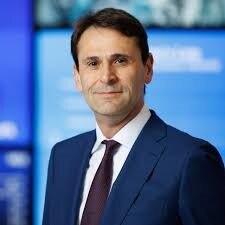
For all its technical mastery, ASML’s greatest strength may be cultural. Fouquet describes a company that has grown without losing its sense of curiosity or cohesion.
“ASML is a big company today, but it still feels like a family,” he said. “The leadership team is extremely accessible. There’s no hierarchy, no mental hierarchy. People can come and talk to anyone. This also contributes to that culture.”
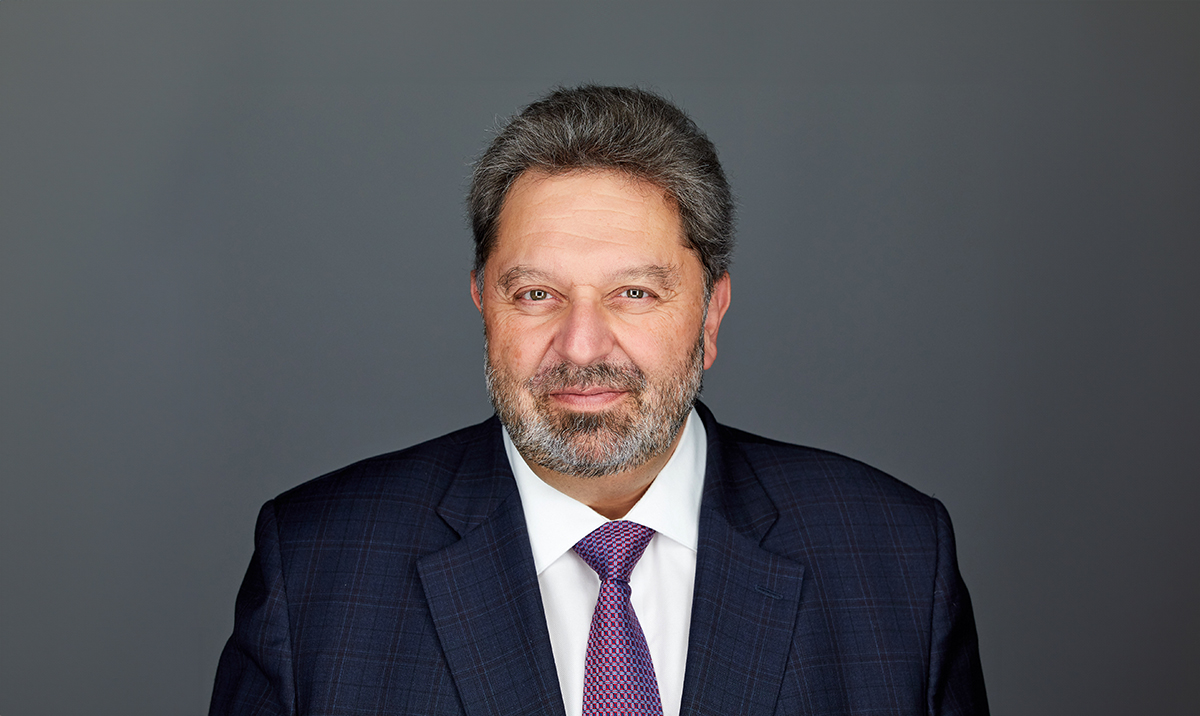
That openness, he said, is the foundation of ASML’s innovation. “Sometimes people say, ‘We don’t see politics in ASML.’ Of course, there’s politics; it’s a big organization. But what they mean is that’s not what drives the company. What drives us is the value we create for our customers.”
When you lead ASML, you realize very quickly that what you do has an impact on the world.
If innovation, collaboration, and culture have powered ASML’s success, geopolitics increasingly shapes its reality. The company sits at the crossroads of global power, with export controls, subsidies, and strategic alliances influencing its path as much as engineering breakthroughs.
“When you lead ASML, you realize very quickly that what you do has an impact on the world,” Fouquet reflected. “We are at the center of something much bigger than ourselves.”
That responsibility calls for a leadership style rooted in humility and authenticity. “I want people to feel that they can come to me, and that I will listen,” he said. “At the same time, I expect transparency and accountability.”
Humility – and disciplined focus – also become essential in an environment where technological ambition intersects with geopolitical uncertainty.
“Even as a CEO, there are things you cannot control”, Fouquet noted. “For example, we cannot control the macroeconomy or geopolitics. What we can control is having the right product, the right relationship with our customers, entering markets that will be critical moving forward. If we do that well, there may be a few storms, but the sun will always come back.”
For Fouquet, the most meaningful leadership begins once personal validation is no longer the goal. “This change of perspective is really liberating,” he said. “Because now you don’t come to work to prove something. You come with just the question: ‘Okay, what can we do differently? What can we do next?’ So you have a lot more space to create.”

President & CEO of ASML
Christophe Fouquet is President & CEO of ASML, a leading lithography supplier to the semiconductor industry. A French national, he joined ASML in 2008. He was appointed to the Board of Management in 2018 as Chief Business Officer and appointed President & Chief Executive Officer in 2024.

Professor of Leadership and Organizational Development at IMD
Jean-François Manzoni (JFM) is Professor of Leadership, Organizational Development and Corporate Governance at IMD, where he served as President and Nestlé Professor from 2017 to 2024. His research, teaching, and consulting activities are focused on leadership, the development of high-performance organizations and corporate governance. In recent years JFM has also been increasingly focused on finding ways to ensure leadership development interventions have lasting impact, particularly through the use of technology-mediated approaches, and on closing the growing managerial “knowing-doing gap”, i.e., the gap between what managers kind of know they should be doing and the extent to which they actually behave that way in practice.
January 6, 2026 • by Jean-François Manzoni in CEO Dialogue Series • 10 min read
PMI CEO Jacek Olczak shares how the company’s bold shift to smoke-free products is reshaping its business, culture, and purpose for the future...
November 11, 2025 • by Jean-François Manzoni in CEO Dialogue Series • 7 min read
Christophe Fouquet, CEO of ASML, tells Jean-François Manzoni how the world’s only EUV lithography machine maker became Europe’s most indispensable company – and what comes next. ...
October 7, 2025 • by Jean-François Manzoni in CEO Dialogue Series • 7 min read
Ester Baiget, CEO of Novonesis, discusses how the Danish biosolutions powerhouse leverages modern technology and its 'library of strengths' to transform food production and washing operations....
September 16, 2025 • by Jean-François Manzoni in CEO Dialogue Series • 9 min read
Morten Wierod, President and CEO of ABB tells Jean-François Manzoni how a leaner-and-cleaner mission, decentralized discipline, and a culture of speed are driving its transformation for the road ahead....
July 29, 2025 • by Jean-François Manzoni in CEO Dialogue Series • 8 min read
Rohit Jawa, CEO of Hindustan Unilever, outlines how he is reshaping the company’s strategy to meet the evolving needs of India’s growing middle class, leveraging digital transformation, talent development, and a future-focused...
July 3, 2025 • by Jean-François Manzoni in CEO Dialogue Series • 6 min read
Mars CEO Poul Weihrauch shares how family ownership enables long-term thinking, purpose-driven leadership, and sustainable growth across generations....
June 10, 2025 • by Jean-François Manzoni in CEO Dialogue Series • 8 min read
Loh Chin Hua, CEO of Keppel, tells Jean-François Manzoni how bold restructuring, strategic discipline, and a long-term vision transformed an industrial conglomerate into a global asset manager...
December 10, 2024 • by Jean-François Manzoni in CEO Dialogue Series • 9 min read
Dolf van den Brink, CEO of HEINEKEN talks to Jean-François Manzoni about early influences in his career that have helped him excel as a leader....
September 24, 2024 • by Jean-François Manzoni in CEO Dialogue Series • 7 min read
Rio Tinto CEO Jakob Stausholm emphasizes relationship-building and empathy to restore Rio Tinto's social license and guide its decarbonization efforts....
August 20, 2024 in CEO Dialogue Series • 6 min read
CEO of International SOS Arnaud Vaissié explains to IMD President Jean-François Manzoni how the business has survived 40 years by overcoming obstacles like COVID-19 and navigating financial crises....
Explore first person business intelligence from top minds curated for a global executive audience