
IMD AI Safety Clock moves closer to midnight
IMD’s AI Safety Clock shows tension between rapidly expanding artificial intelligence capabilities and lack of meaningful oversight, raising risk. ...

by Stéphane J. G. Girod Published December 23, 2025 in Leadership • 10 min read
Each new year invariably starts with predictions. But in 2026, the real task is not to speculate but to recognize what has already changed. The forces reshaping luxury are not new; what matters now is how brands choose to respond. This could mean returning to the early codes of luxury or reinventing the next ones altogether. The question is no longer whether growth will resume, but whether organizations are prepared to adapt fast enough to where growth is shifting.
Indeed, after more than a decade of expansion, luxury now operates in a world where relevance must be earned. Clarity of value, cultural legitimacy, and organizational adaptability matter more than scale. And, as highlighted by Bain & Company, the sector remains far above its 2019 levels despite recent volatility. The question for 2026 is no longer when demand will rebound uniformly, but where growth will come from – and which capabilities will determine who captures it.
Recent results show what this selective environment looks like. LVMH returned to 1% growth in the third quarter of 2025, signaling a potential floor after several quarters of decline. Kering posted a 10% revenue drop, though losses are narrowing. Meanwhile, Richemont delivered 5% growth in the half-year to September 2025, driven by its jewelry maisons, which continue to gain share over unbranded jewelry. These results confirm a K-shaped luxury world: resilience at the top end, fragility in aspirational tiers, and widening gaps between brands that adapted early and those still relying on old playbooks. It also reveals the deeper structural shifts now reshaping where and how value is created.

In recent years, scale and visibility powered luxury’s ascent, but today they risk undermining it. The biggest brands have been overstretched: too large, too visible, too omnipresent. The industry has seen a constant churn of creative directors, price hikes unaccompanied by real value improvements, and a retail-first mentality that prioritized footprint over desirability.
Overproduction remains a structural issue, particularly in fashion, where too many products are unwearable, impractical, or disconnected from how clients live. The obsession with icons has narrowed creative horizons rather than expanded them.
Together, these dynamics have pushed the mega-brand model close to its peak. Scale once amplified mystique; today, ubiquity erodes it. Visibility no longer guarantees desirability, and growth is increasingly governed by selectivity rather than aspiration. Luxury now competes not only on value but on values – authenticity, responsibility, and cultural depth – and the recent playbook has often weakened all three.
This is why luxury must rediscover part of its original playbook. The foundations of authentic luxury have not changed: small quantities, made on demand where possible, focused on the future rather than the archives, uncompromising in quality, discreet rather than omnipresent, and anchored in genuine craft and cultural depth. These principles provide the discipline that the sector has lost in the race for scale.
But returning to its roots is only half of the equation. Luxury must also invent the next playbook. This means embracing transparency as a source of trust rather than risk, embedding sustainability as a value driver rather than a narrative device, diversifying into new value pools such as wellness and longevity, and building cultures capable of agility and rapid adaptation.

“The next era of growth will depend on how effectively luxury can build a new playbook for its new reality.”
The next era of growth will depend on how effectively luxury can build a new playbook for its new reality. The first shift is geographic. Growth is concentrating in markets that are more culturally and operationally demanding. China requires deeper cultural relevance as domestic innovators such as NIO reset expectations for service, experience, and community. India’s fragmented retail landscape and young consumer base demand new partnership models and a more nuanced service architecture. Southeast Asia and the Gulf require far greater autonomy for regional teams, who understand client expectations better than central headquarters.
These markets are large, diverse, and fast-moving. Yet many brands remain structured for a slower, centralized world. Organizational models built for consistency struggle in markets that reward speed, sensitivity, and cultural fluency. Growth is now governed by selective demand, not elastic aspiration; brands cannot rely on reach alone.
Digital Product Passports, soon mandatory under EU regulation, will make sourcing and environmental performance visible.
The second shift concerns trust. Luxury’s historical reliance on mystique, once a powerful asset, now complicates communication. Clients want to understand what justifies price – provenance, craft, sourcing, time, technique – but many brands still resist opening the black box. Nowhere is this tension more visible than in sustainability. Because progress is inherently iterative, waiting for perfection before communicating undermines credibility at the exact moment when clients expect evidence.
Transparency will become a competitive boundary. Digital Product Passports, soon mandatory under EU regulation, will make sourcing and environmental performance visible. Early pilots show their commercial potential – Prada found that digital provenance improved conversion among younger clients – but most brands still use DPPs as storytelling tools rather than as mechanisms for demonstrating sustainability progress. The gap between regulatory intent and organizational practice reflects the deeper challenge: transparency is still treated as an accessory, not a foundation of value.

The third shift is generational. According to McKinsey, Gen Z spending is rising twice as fast as older cohorts and will surpass Boomers by 2029, driven by a $15–20tn wealth transfer. They buy luxury for creativity and exclusivity, and drive the resale market, motivated by uniqueness rather than sustainability. But their influence extends beyond their own purchases. Older generations mimic the preferences and aesthetics of younger consumers, just as they did during the digital transition.
For brands, designing for Gen Z does not dilute luxury; it sharpens it. The challenge for leaders is balancing their appetite for novelty with longstanding clients’ preferences for depth, consistency, and service. Brands must clarify what they stand for – and what they will not compromise.
The successful 2026 manager might run a department of two humans and sophisticated AI, delivering what previously required 20 people.
This model fails unless incentives change. Traditional managers maximize headcount because power and prestige are often measured that way. Federal managers, by contrast, need to be rewarded for configuration creativity – achieving better outcomes regardless of the human-AI mix.
The successful 2026 manager might run a department of two humans and sophisticated AI, delivering what previously required 20 people. That should be celebrated and rewarded, not quietly demoted for managing a “small team.”
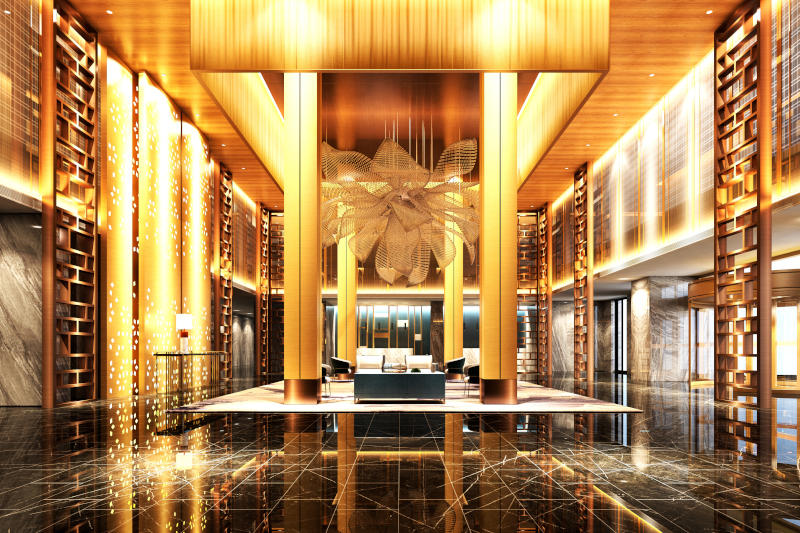
Finally, the new playbook must incorporate emerging value pools. Wellness, longevity, experiences, and distinctive craftsmanship are no longer peripheral but central to how affluent clients allocate spending. Integrating wellness does not mean opening spas; it means understanding how well-being shapes lifestyle, identity, and aspiration. For many younger clients, it is becoming a new form of status. Experiences that deliver transformation – physical, emotional, or creative – will capture disproportionate share.
Technology is also reshaping how these value pools are delivered. As Swarovski’s Chief Digital and Information Officer Lea Sonderegger explained, “AI-driven pricing and supply chain orchestration are gaining momentum and autonomous AI agents will increasingly support productivity.”
She added that the real differentiator will be “next-generation infrastructure, robust data foundations and cybersecurity for digital trust,” while cautioning that brands must avoid “over-automation that risks eroding craftsmanship and emotional connection.” Her point is clear: luxury’s future lies not in more technology, but in using technology to elevate the human experience.
The luxury hospitality sector offers a parallel lesson. As Nathalie Seiler-Hayez, Managing Director at Swiss Deluxe Hotels, observed, “Hyper-personalization will continue to define luxury hospitality. Sustainability will remain essential, and well-being and medical wellness tourism will keep growing.”
At the same time, she notes a decisive shift in expectations, adding, “Purely digital or contactless solutions are losing relevance in the luxury segment. Guests appreciate technology, but not at the expense of human connection and warm hospitality.” Her insights underscore a broader reality across luxury: technology may sit behind the scenes, but meaning is still created through people, place, and cultural authenticity.
The central task for leaders is to redesign their organizations so they can learn, adapt, and respond faster than the market shifts.
At the heart of today’s uncertainty lie organizational cultures that were built for a more predictable era. Most luxury companies still resemble one of four archetypes – chaotic, straitjacket, perfectionist, or fear-driven. Each can perform when growth is linear, and markets are stable; none is resilient in a world defined by volatility, divergent client expectations, and technological acceleration. The central task for leaders is to redesign their organizations so they can learn, adapt, and respond faster than the market shifts.
That begins with rebalancing where expertise and authority sit. Retail and craftspeople must be better paid, better trained, and better recognized as core value creators, not the periphery of the organization. Learning and development must move from tactical interventions to genuine capability-building. Leadership pipelines must diversify to reflect the cultural and creative perspectives required in global markets.
At the same time, decision-making must move closer to the client. As expectations diverge across China, India, Southeast Asia, and the Middle East, regional teams need genuine decision rights – not simply the license to execute centrally defined plans. Agility depends on devolved power, not on more coordination.
Trust will be the next competitive boundary. As TAG Heuer CEO Antoine Pin shared, there is “increasing pressure on transparency” at a time of “poor appetite for luxury goods in a tense political and economic environment.” In this context, value must be demonstrated, not assumed. Transparency can no longer be a compliance layer; it must become a strategic pillar of desirability, informing everything from sourcing disclosures to clienteling practices.
Organizations must also embed technology as infrastructure, not as a series of projects. AI must underpin planning, pricing, supply chain orchestration, and clienteling, but without diluting the human connection that defines luxury. Digital Product Passports should evolve into a trust infrastructure that narrows the gap between what brands claim and what clients expect to verify. Demand-side sustainability – overproduction, retail footprints, clienteling intensity – must be tackled with the same seriousness as supply-chain emissions.
But ultimately, the decisive factor is culture. Luxury companies must shift from rigid to adaptive, from hierarchical to empowered, from perfectionist to experimental. This means environments where cross-functional teams can iterate quickly, where psychological safety enables creativity, and where progress is valued over perfection. Experimentation, not replication, is the currency of future readiness.
In a more open, globally competitive landscape, new stars will emerge – especially from markets that reinvent luxury instead of inheriting its codes. The brands that embrace this organizational shift – marrying the discipline of the original luxury playbook with the agility and openness required today – will not simply withstand uncertainty; they will define the next era of luxury growth.
Professor of Strategy and Organizational Innovation
Stéphane J.G. Girod is Professor of Strategy and Organizational Innovation at IMD. His research, teaching and consulting interests center around agility at the strategy, organizational and leadership levels in response to disruption. At IMD, he is also Program Director of Reinventing Luxury Lab and Program Co-Director of Leading Digital Execution.
March 16, 2026 • by Michael R. Wade, Konstantinos Trantopoulos in Consumer Goods
IMD’s AI Safety Clock shows tension between rapidly expanding artificial intelligence capabilities and lack of meaningful oversight, raising risk. ...

February 17, 2026 • by Julia Binder in Consumer Goods
CSOs should harness artificial intelligence to embed sustainability at the center of strategy and growth. We explore how the most successful companies are already doing this. ...
February 13, 2026 • by Stéphane J. G. Girod in Consumer Goods
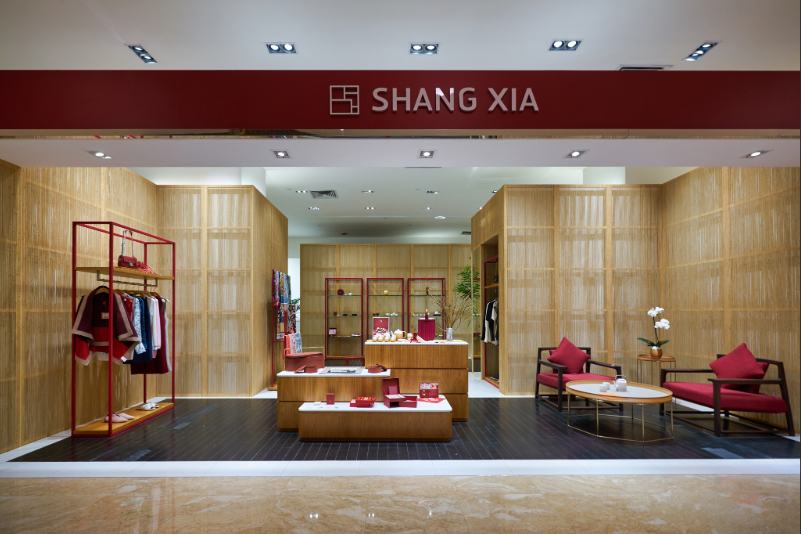
The next decade will bring significant changes for China's luxury sector. But to see where it's heading, we need to understand where it's been....

January 23, 2026 • by Michael R. Wade, Konstantinos Trantopoulos in Consumer Goods
To create the best customer experience, CXOs should leverage AI to build dynamic systems that adapt in real time to customer needs. We explore how leading companies are using this approach today....
Explore first person business intelligence from top minds curated for a global executive audience