Two paths, two outcomes
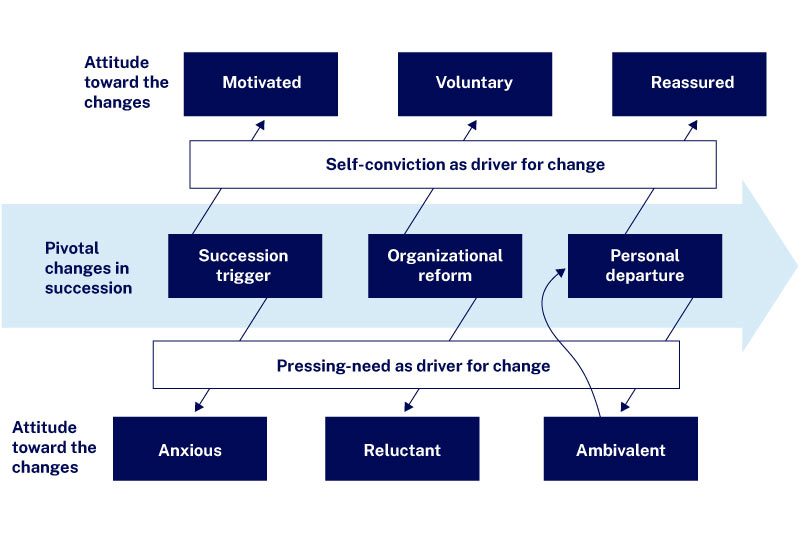
Our findings highlight two distinct ways in which retirement unfolds: one is driven by pressing need, the other by self-conviction.
When succession is triggered by pressing need, owner-managers often feel anxious, reluctant, or ambivalent. Conversations start too late, power remains blurred, and organizational reforms stall. Even after stepping down, many stay psychologically attached, clinging to influence. The result is uncertainty for employees, weakened legitimacy for successors, and growing instability for the firm.
When retirement is chosen with self-conviction, the psychological tone is different. Owners feel reassured and motivated. They begin to share power earlier, introduce clearer decision-making structures, and prepare successors with greater transparency. Many anchor themselves in new projects, be they personal, civic, or entrepreneurial, that make departure voluntary and meaningful. In this path, successors gain authority, organizations renew, and founders leave with confidence.
The choice of path matters because it shapes not only the organizational outcome but also the leader’s personal experience. Pressing-need retirements often activate attachment defenses, fueling anxiety and reversals. Self-conviction retirements enable detachment, fostering continuity, renewal, and peace of mind.







 Audio available