
How China’s innovation system really works
As debate grows over whether China is winning the technology race, executives should focus instead on how its innovation system is designed – and what that means for competition....
by Stéphane J. G. Girod Published February 13, 2026 in Luxury • 19 min read
Between 2016 and 2019 alone, the CAGR of personal luxury goods in mainland China reached 48%, as the country doubled its share of the global market.
Between 2010 and 2020, China’s luxury boom reshaped all nine sectors that fall under the “luxury” umbrella. This unprecedented boom of luxury consumption was the most transformative evolution since LVMH invented the contemporary luxury playbook in the late 1980s. Today, you pay nearly three times as much for luxury goods in Paris or New York as you did in 2010. This is in large part thanks to the Chinese growth story.
Between 2016 and 2019 alone, the CAGR of personal luxury goods in mainland China reached 48%, as the country doubled its share of the global market.
The integration of China into the global economy accelerated with its accession to the World Trade Organization in 2001. Free trade and the entrepreneurial genius of the Chinese have generated wealth at a scale and speed that had no precedent in history. Today, an upper class of very wealthy individuals and families accounts for 7–8% of the population, which represents approximately 125 million people. The aspirational middle class comprises around 400 million consumers. These proportions are roughly similar to those in the OECD, but the sheer volumes are unique.
While everyone keeps talking of the current slowdown or maturity stage of the market since COVID, the truth is that a bedrock of circa 500 million people can still afford luxury offerings, albeit with some variation. Even if double-digit annual consumption growth rates are a thing of the past, China’s consumption and influence have changed these sectors forever and will continue to do so.
How so? Answering the question requires consideration of what happened before and after COVID, taking the pandemic as a juncture period. In the recent past, luxury brands changed China, and reciprocally, the Chinese market changed luxury brands. Looking ahead, a new period emerges whereby China may well dictate new competitive rules, although it is not fully clear whether those will be mostly felt in China or internationally, and with some variation across sectors.
In this first period, Chinese, European, and American luxury brands all benefited from a phase of exceptionally rapid growth in China and the broader luxury sector.
In the late 2000s, Western luxury brands captivated the country’s hearts and minds. Emerging from the tragic poverty of the Cultural Revolution, affluent Chinese people and their would-be followers aspired to treat themselves to beautiful things to show their success. As Winter Nie and Yunfei Feng explain in this article on the nine strategic shifts that redefined China in the decade to 2025, while status signaling was driving increasing consumption, luxury brands were also bringing beauty and elegance, just as the Chinese started to see a bright future. So, aesthetics, optimism, and a bet on the future – not just signaling – played a role in the booming interest for luxury offerings.
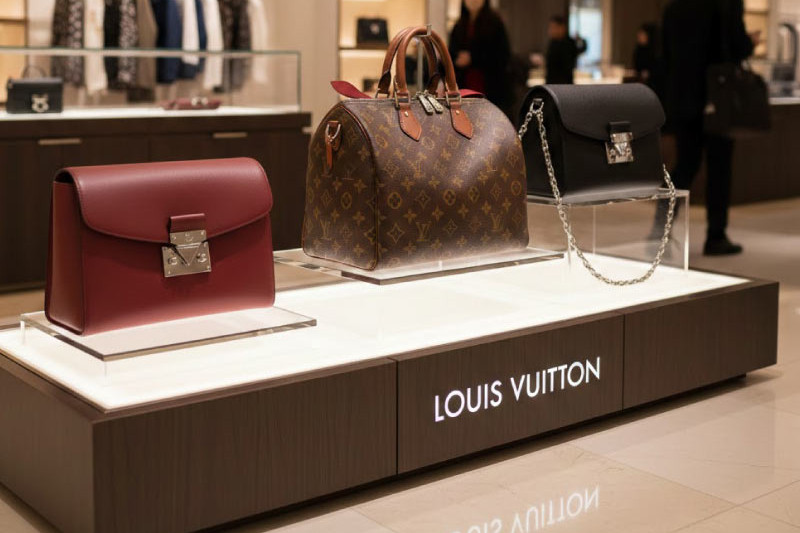
The determination to join this positive movement explained why, at some point, even modestly paid secretaries were saving for months to buy their first Louis Vuitton handbag.
Luxury brands made massive investments to satisfy this appetite. The largest luxury brands opened networks of up to 50 to 70 stores each, not just in Tier 1 cities but beyond, occupying the most prestigious malls in a concentration that was rare even in America. They had to do this as the Chinese had little trust in online channels due to the high incidence of counterfeits. Brands also started to organize the most extraordinary exhibitions and events for storytelling and to educate Chinese consumers about their products. One memorable example was the Chaumet exhibition at the Forbidden City, where the brand celebrated its roots in the Napoleonic years. Culturally, during this period, there was a wide openness to foreign ideas and products in China.
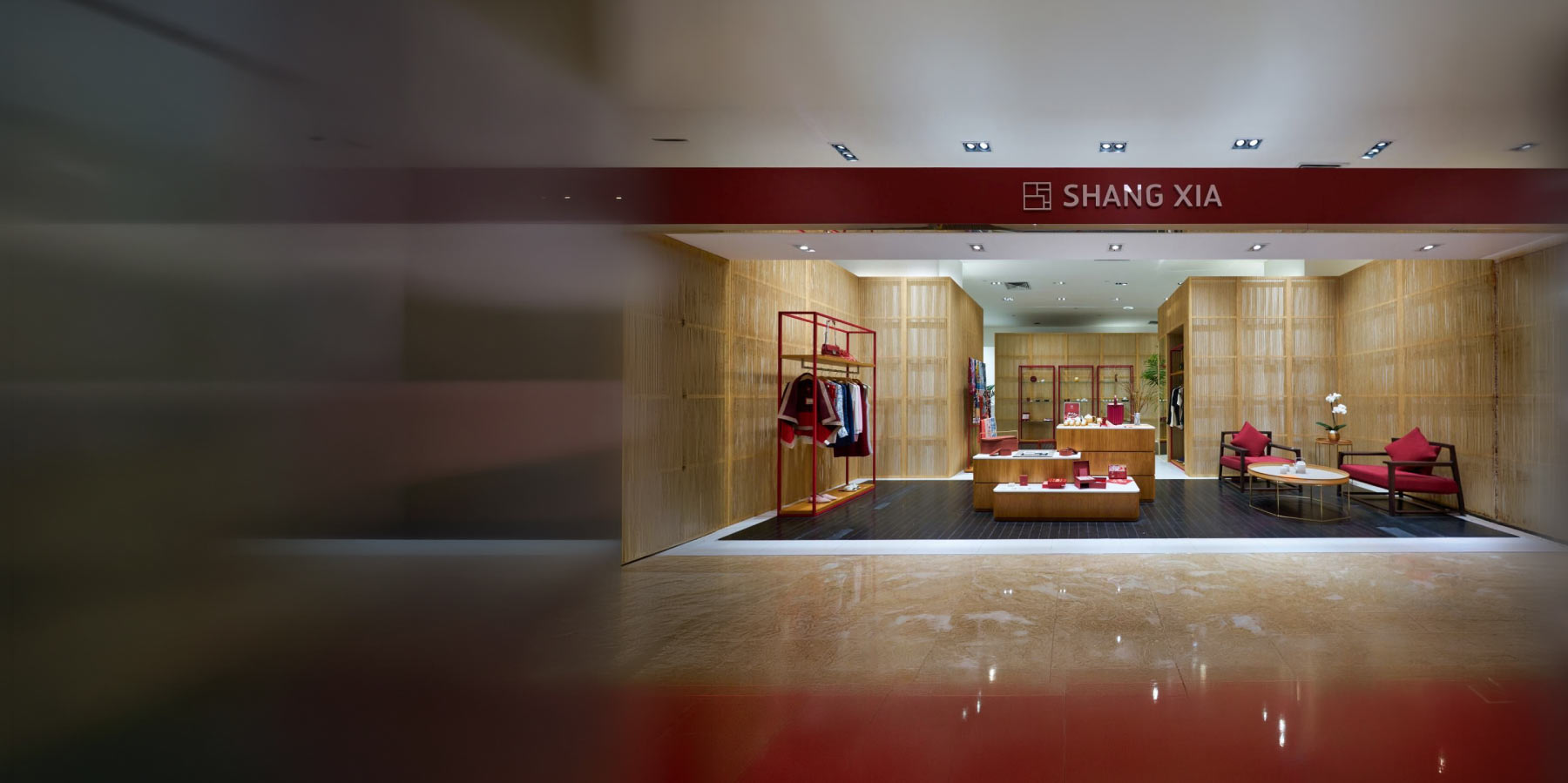
Second, some luxury brands invested in young local brands, thereby resurrecting Chinese ancestral traditions. For example, Hermès and later Exor, the Agnelli family holding company that also controls Ferrari, invested in Shang Xia.
Third, luxury brands also transformed China through their inward foreign direct investments. In the automobile sector, while Lamborghini and Ferrari never started to produce in China, Mercedes and BMW did, thereby transferring key technologies that helped the local supply chain to move up over the years and leapfrog, for example, by taking the lead in electric vehicles. In fashion, where companies like Zegna and Armani started to manufacture cashmere knitwear, luxury brands contributed to the country’s fast industrialization.
Fourth, luxury brands, whose longevity depends on their brand equity, have a vested interest in the protection of intellectual property (IP). Together with other local players and Western multinationals from consumer electronics and pharmaceuticals, they have contributed to the change in the lax attitude of the Chinese authorities toward the tightening of IP regulation and its enforcement. Luxury constituted such great business that online giants like Alibaba cleaned up their act and rooted out counterfeits in luxury-dedicated portals like the Luxury Pavilion on Tmall to keep the brands on the platform.
Finally, luxury brands became a great conduit for young people’s training and education, particularly at the boutique level, offering countless new job opportunities.
“The sheer attractiveness of the Chinese market and the Chinese digitally advanced consumer journey forced luxury brands to shift from customer awareness to more customer-centricity.”
China, reciprocally, changed luxury brands, leading them to adapt all four compartments of their marketing mix and even their culture and organizational models.
As they gained traction, they started to discover that the Chinese also liked to see references to their aesthetics and lifestyles. Until then, all products and collection designs were centralized at headquarters with little to no local adaptation. But by 2015, most watchmakers were launching capsule collections that changed each Lunar New Year. In fashion and accessories, logos became larger and increasingly omnipresent as status signaling became a key driver of demand. Product designs for China became the norm in high-end automobiles. Mercedes launched long-wheelbase versions of several models in China and for China, and introduced new features developed with local partners.
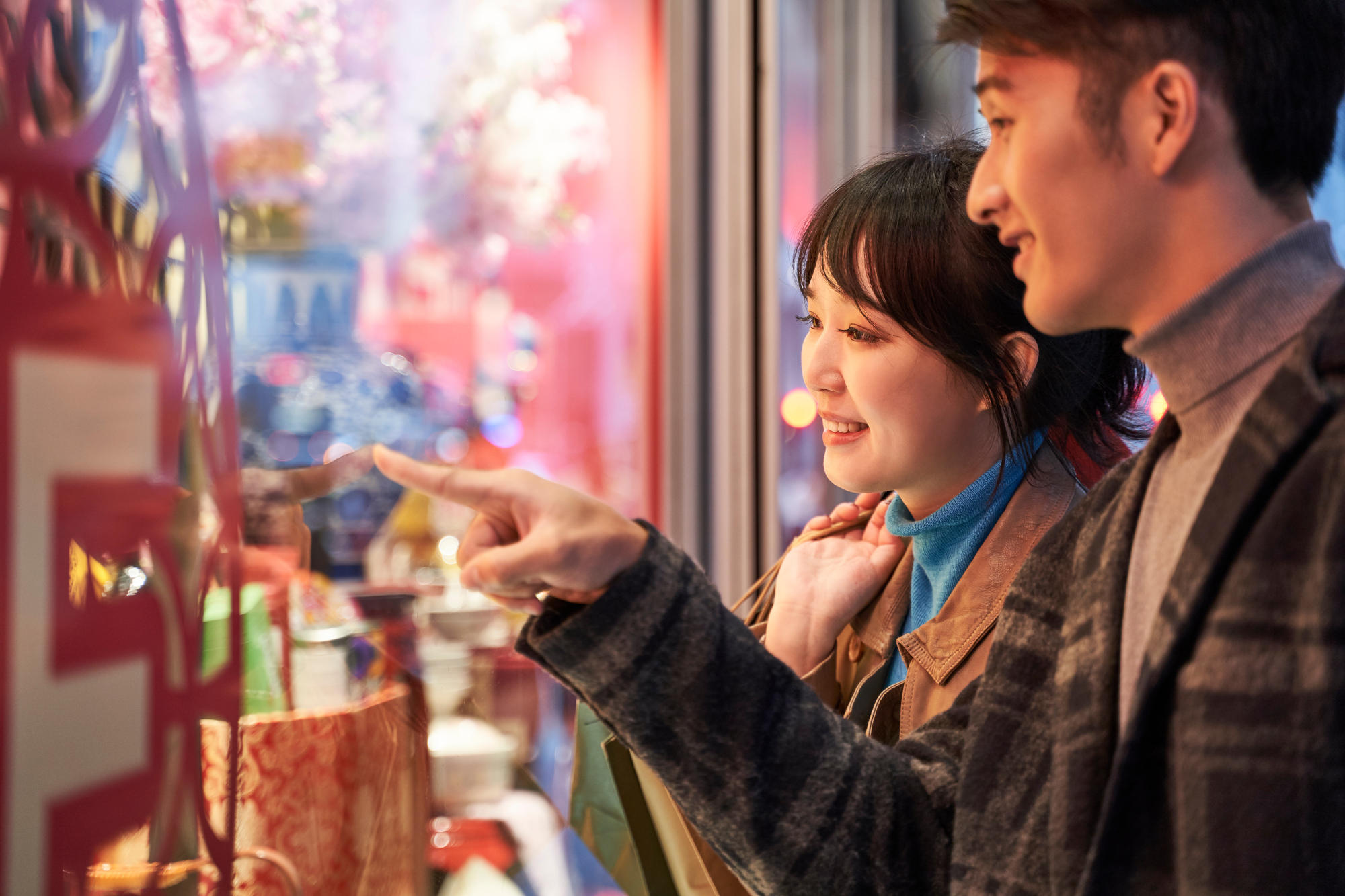
The sheer attractiveness of the Chinese market and the Chinese digitally advanced consumer journey forced luxury brands to shift from customer awareness to more customer-centricity. Until 2020, around 80% of Chinese purchases were made abroad, largely due to the tariffs China was imposing at home, a policy that was reversed in 2020. Chinese travelers were also the most digitally savvy consumers. Suddenly, brands had to deal with travelers who wanted to prepare trips in minute detail, compare prices, and consume locally relevant content rather than rely on Western ambassadors and marketing. They expected to book appointments in advance when traveling, to interact with Mandarin speakers in the stores, and to pay via WeChat or Alipay.
The Chinese were also buying in bulk and then reselling on daigou websites, fueling the grey market. In terms of pricing and control, this created real headaches for luxury brands. Not only did they have to master new digital capabilities, but suddenly they had to orchestrate knowledge-sharing across countries and give more autonomy to their Chinese operations. This is also why they decided to massively increase their prices to close the gap with mainland China. For career progression in luxury houses, working in China became a must.
Leading Western brands gained agility by adapting, particularly since 2016, when they had to start treating China as a standalone market with a dedicated China strategy. Their internal teams started to collaborate more across borders. Knowledge-sharing to anticipate and serve Chinese travelers became more common, digital proficiency increased, and Chinese talents started to get a greater role in organizations – including in senior leadership positions, diluting the grip of national expats in all senior roles. Take, for example, Ming Ming Dou Wang. Educated in a French university and fluent in the language, she has been Richemont’s China Affairs and Strategy Director for several years. She is part of the senior management echelon. Her role is to build relationships with China’s “highly important customers,” develop competitive intelligence on market shifts, and facilitate knowledge sharing about China across Maisons.
However, fast-forward to today, these evolutions have had three unintended consequences that may handicap luxury brands over the longer term. In the traditional playbook, luxury is all about rarity, but at that time, the Chinese were not prepared to pay high prices for brands that hardly anyone knew. So, in a face-saving culture, they went for famous brands that everyone else would recognize. In response, many of these brands increased production, volumes, and visibility – perhaps deteriorating their cachet in the longer run, especially when the market went down from late 2023 onward. Like a hangover, the Chinese boom left many brands with overproduction and brand dilution issues that negatively affect their sustainability ambitions.
Jockeying for early competitive dominance, many brands also started to accelerate the creation pace to drive ever-more visibility on social media. By chasing speed, luxury brands started to violate a second tenet of luxury management – patience.
Lastly, the phenomenal price hikes of the last 15 years have also priced out many consumers outside China, exposing brands to criticisms such as greed and polarization, and creating more scrutiny for unethical behaviors. In 2026, they are scrambling to find new growth opportunities, but finding that the Chinese growth engine is harder to replace than they anticipated.
The COVID-19 pandemic marked a turning point.
The COVID-19 pandemic marked a turning point. Since then, this impressive luxury consumption trajectory has ended abruptly for political, social, and economic reasons. According to Bain, in 2024, Chinese luxury markets contracted by 24% to return to their 2020 level. By contrast, in the rest of the world, personal luxury goods sales had increased, jumping by 20% in 2022 alone.
The protracted lockdowns until January 2023, the collapse of the real estate market whereby middle-class properties have lost 20% of their value, skyrocketing youth unemployment at 16.5%, and rising saving rates in the face of economic uncertainty have all taken their toll. Currently, the bottom of the middle-class group is getting poorer, not richer, and the social elevator has stalled for the groups below.
The tightening of the political narrative in China has also taken its toll. While China is posting record high trade surpluses – Jack Ma’s alleged detention, disappearance, and reappearance in Japan had on the entrepreneurial elite in China. Many of the wealthiest Chinese moved their families to Singapore and the Emirates as a result. The veneration for the private sector has dimmed, and the state economy has been reasserting its authority.
The successive anti-graft campaigns and the recent push by the Chinese Communist Party for a more harmonious society have reminded people that conspicuous consumption is risky. Furthermore, China is in a wave of rising nationalism felt in all domains, including the growing propensity to consume Chinese products and services first.
As former Tag Heuer CEO Antoine Pin told me, what we are witnessing is therefore a split between the behaviors of the economic elite who continue to have significant means, travel internationally, and remain open to the trends of the world (but may have reached a saturation point in terms of luxury goods ownership), and the gradual shift of the Chinese middle classes towards rising Chinese brands or non-luxury consumption modes as they feel their future is more uncertain than it was five years ago.
Hospitality is a case in point. Although China is currently witnessing a boom in domestic travel, chains like InterContinental, Hyatt, and Marriott have cut ties with several upscale hotels in China as the Chinese are looking for cheaper deals. These international operators are also under increasing pressure from rapidly growing domestic chains that focus on “just enough luxury,” offering a selection of services that customers could expect from the very high-end chains. As Nie & Feng highlighted in their article, even for luxury brands, the risks of marginalization are real.
Under cost pressures and in need of reallocating capital to new opportunities, personal luxury brands have been closing stores in lower-tier cities and prefer instead to deliver better experiences in their flagship stores. Consider Louis Vuitton: it has just opened its most spectacular flagship in the world: a massive ship-shaped multi-level store with café, called the Louis. It is designed as a homage to the port of Shanghai and the origin of the brand linked to travel. These evolutions are also a positive sign: among the Chinese, brand awareness is now real, and the quality of e-commerce channels and their associated infrastructure is high.
How much they will redefine the rules of the competitive game around the world is unclear.
Along with the maturity of the Chinese who want to consume nationally, the emergence of highly innovative and competitive local brands is the highlight of the opening decade.
How much they will redefine the rules of the competitive game around the world is unclear. But in China, they are already disrupting, and perhaps to the fullest in the high-end automobile category.
China has been the home to some luxury brands for quite some time: Mandarin Oriental has been, for decades, a truly respected player in high-end hospitality. Chow Tai Fook has been the dominant jewelry distributor and creator in China for two decades. In fine spirits, Kweichow Moutai’s reputation is undisputed. Groups like Fosun, through its ownership of Lanvin, have also expanded internationally but not necessarily with great success. Qeelin, owned by Kering, has operated in the high-end jewelry space, but mostly targeting the Chinese super-rich and the diaspora around strictly determined codes of Chinese aesthetics.
So, what exactly is changing, and what does it mean for legacy luxury brands?
What’s tantalizing about the new generation of Chinese brands is their embracing of the traditional luxury playbook combined with a resolute desire to innovate in the technology area and/or the business model. Their approach to creation does not seem to be just for Chinese tastes.
Take Documents, a fragrance creator. Its line of perfumes is poetic, connected to the Chinese culture but without clichés, so it could also appeal to a more international customer base. The company has shifted toward more mass-facing positioning in recent years. Most products are now priced around RMB 600–1,000 ($90–150). While prices may be higher in Western markets due to premiums and taxes, the brand has clearly softened its former ultra-luxury approach. Documents is exceptional because each store is unique, and the brand completely shies away from shopping festivals, discounts, and livestreaming.
Of course, rarity, individuality, and price consistency are traditional cards of the luxury playbook. But paradoxically, many brands in China, including the luxury ones, have forgotten those rules. According to Pablo Mauron, Managing Partner China and Board Member DLG (Digital Luxury Group), it is not uncommon to find high-end brands competing on prices and discounts, and relying on influencers who might sell, say, a Western luxury-brand lipstick while they are eating chicken during livestreams.
In automobiles, consider Li Auto, a 100% premium electric car company founded in 2015, whose flagship models, the Li Mega and the Li i6 SUV, could become iconic designs. At an average $50,000 price point, the company is not just challenging Western companies on design; it’s leapfrogging in technology and service, fundamentally changing the value equation. Li has brought the living room to personal cars with massaging seats, onboard refrigerators, suspensions at the level of a Maybach, and total silence when driving. AI onboard can also help children do their homework. Moreover, these are already fully autonomous cars, allowing drivers to entertain their family while they are on the road. Western brands, even the most prestigious ones, seem stuck in the middle as the value they offer can no longer justify their high prices. Brands like Li Auto and NIO, also in the automobile industry, are leapfrogging because they have innovated on customer pain points their Western luxury counterparts ignored. In China, it’s about customer intimacy first, product pushing second, and this is the opposite of the traditional luxury approach.
In the jewelry category, Laopu has emerged as a phenomenon, with some analysts even asking whether it could become the Cartier of China? Operating in a space where it mixes traditional Chinese craftsmanship and contemporary modernity, with high product versatility and functionality, the brand is still selling gold by the weight, as Chow Tai Fook and others have mostly done, but at a much higher premium described as a “processing fee.” The pricing structure is central to its value proposition for challenging Western brands like Cartier, because it offers more transparency to value-conscious consumers. But for instance, it stays away from livestreaming. Its positioning is for the urban middle classes, so Laopu does not compete against the top-end international names, who might be tempted to relativize its success. But according to a report, it was set to surpass Richemont’s jewelry sales in China in 2025.

It’s unclear whether the emerging brands will reach a customer base beyond China. The ambivalent image of China on the international stage might not help its brands to reach a wide audience. But one (untenable) option is denial. A false sense of comfort might emerge in two ways. The first is a supposed lack of legitimacy for China in the luxury space. This way of thinking would be primitive. Already in Roman times, China was the only supplier of silks. Until the 18th century, China was the dominant purveyor of luxury goods in the world, concentrating a unique set of savoir-faires in porcelain, lacquer, and silks. China has legitimacy in those spaces. The second way is to think that China follows such cut-throat competition that the new brands just mentioned will come and go. This thinking would be folly. Brands might come and go, but in the process, they have changed the market – and consumers’ tastes – forever.
A much safer route for legacy brands is to learn and adapt while concentrating on what is essential.
Western brands are now caught between a rock and a hard place. In a polarized world, when luxury sales have been, on average, declining since late 2023, the LVMH management handbook of the late 1980s is slowly but steadily eroding. Brands doing well are doubling down on rarity, exclusivity, and discretion in the public domain with careful attention to value, which includes pricing considerations. The model – based on all the time, everywhere, 24/7 with big volumes and marketing machines – has reached exhaustion. Emerging Chinese brands seem to focus on more traditional elements.
So, what is China teaching legacy brands? Here are (at least) five lessons:
Legacy brands might want to incubate and grow Chinese-born luxury brands. In fact, it is not just Chinese luxury brands that are emerging. Newcomers also appear in South Korea. Attention to cultural identity and local meaning is growing and acts as a counterforce to globalization around the world. In this instance, a brand portfolio approach could be useful, not least to anticipate growing environmental pressures that require less international transport and more localized supply chains. A portfolio approach would also help brands to observe and learn what is happening in China. One success factor in this case would be for legacy brands’ international executives to step down from their pedestal and truly embrace the opportunities and the talent potential in those ventures.
In China, as the market matures, firms “stuck in the middle” will disappear.
In China, as the market matures, firms “stuck in the middle” will disappear. International brands like Hermès and Audemars Piguet will continue to do well by focusing on rarity, exclusivity, discretion, and the investment in products that are meant to keep and increase value over time. Others like Prada will thrive by doubling down on the forward-looking creation. At the other end of the spectrum, brands offering creativity at affordable prices will also do well. In essence, being extra clear about your brand value proposition is essential. Most consumers in China and internationally are no longer duped by fancy emotional messages only. What they want is real value based on true functionality and quality, coupled with concepts that can make them dream. The current success of Longchamp just proves it. Emerging Chinese brands are bringing both functionality and quality, plus a creativity in service that no one else offers, except for the super-rich. It is such a paradox to be writing about price for an industry where the word is taboo, but a more complex and mature reality is imposing itself on actors. It is not inconceivable that, sooner or later, even brands like Ferrari and Lamborghini could lose the value battle, as is already the case with Porsche. The bottom line: it is not about lowering prices necessarily; it is about making sure your brand truly brings differentiated value, not fast-fading emotions.
In a maturing market, speed and first-mover advantage are much less relevant. Acquiring customers is costlier, so what is required is to retain and build relationships with customers for the long term. The development of NIO House in the automobile sector, or Bottega Veneta’s reading clubs in China designed to nurture ongoing customer engagement, are illustrating just that. In China, the Little Red Book, an equivalent of Instagram, is an opportunity for brands to make more with user-generated content and embrace community models, as Pablo Mauron explained. Legacy brands continue to favor a content push, top-down customer approach. Although it is crucial for luxury brands to lead, not just to follow, knowing and embracing what consumers tell them when they write and comment on brands not only gives them more intelligence, but makes them appear more authentic, especially as Gen Z wants meaningful connections. Communities are a special form of customer relations, which can go beyond clienteling for only the very wealthy. NIO again has created multiple peer-to-peer communities of interest that create learning and opportunities for the car owners, and makes NIO not just a product purveyor in their minds.
There have been several reports of protests against air and water pollution in China over the years; it’s a fact, therefore, that the Chinese are not indifferent to these topics.
We talked about value, but values will increasingly help luxury brands win the hearts of consumers if they are truly sincere about environmental and societal protection. A quick analysis of what emerging Chinese brands are doing – and a more in-depth review of two Chinese behemoths for my forthcoming book Purposeful Luxury (Wiley, 2026) – suggests only a vague commitment to environmental protection, regeneration, and circularity (and I’m afraid even shifting to electric vehicles is no guarantee of positive impacts). Legacy brands have at least started this journey. While they hate to talk about it because they fear it cheapens their brand and makes luxury consumers feel uncomfortable. But a place to start would be some communication about how brands contribute to the development of Chinese society and its environment. There have been several reports of protests against air and water pollution in China over the years; it’s a fact, therefore, that the Chinese are not indifferent to these topics. Linking rarity to value creation and durability over time will also, of course, swing decision-making.
As luxury slows down, not just in China but globally, brands need to find new ways of saving money to reinvest in their transformation. For legacy brands, the operational excellence imperative is more pressing than ever. Deploying AI where it makes sense without compromising the meaning of luxury will help boost productivity and informed decision-making for better customer insights and opportunities. Culturally, many brands will have to step down from their pedestal and foster cultures of excellence, where testing, trying, learning, upskilling, rotating, and collaborating cross-functionally in an agile way is the norm. Too often, hierarchy and the fear of not being perfect stifle creativity. To breathe life into the values of sustainability, brands will also have to let courageous leaders emerge. Promoting and rotating talents in and from China will also be key.
China is reconnecting with its luxury and creative past, but it’s not back to the future.
China is reconnecting with its luxury and creative past, but it’s not back to the future. Thus, legacy luxury brands are facing, perhaps for the first time, a serious wave of competition from outside the inner circle. They will continue to thrive if they embrace this as an opportunity.
Professor of Strategy and Organizational Innovation
Stéphane J.G. Girod is Professor of Strategy and Organizational Innovation at IMD. His research, teaching and consulting interests center around agility at the strategy, organizational and leadership levels in response to disruption. At IMD, he is also Program Director of Reinventing Luxury Lab and Program Co-Director of Leading Digital Execution.
February 16, 2026 • by Mark J. Greeven in CNY 2026
As debate grows over whether China is winning the technology race, executives should focus instead on how its innovation system is designed – and what that means for competition....
February 16, 2026 • by Howard H. Yu, Jialu Shan, Lawrence Tempel in CNY 2026
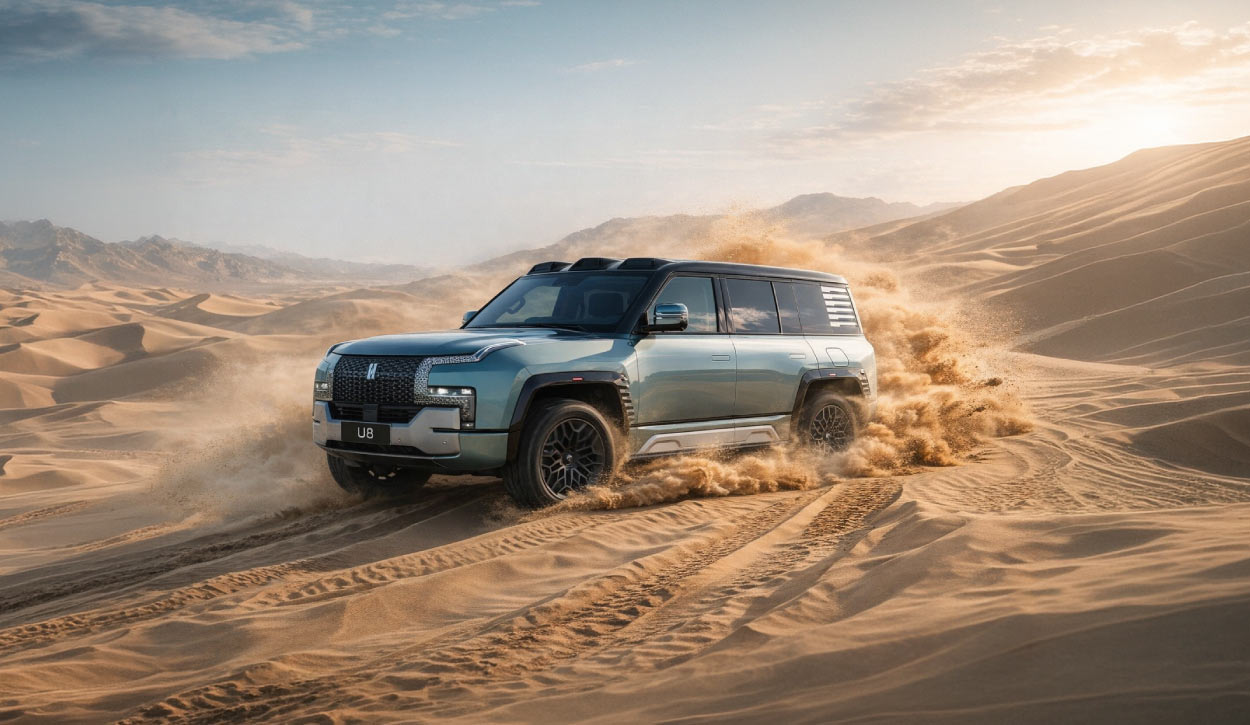
BYD overtook Tesla’s EV annual market share in 2025 as it mastered unglamorous fundamentals and built capabilities sequentially while competitors chased disruption and moonshots....

February 16, 2026 • by Zhike Lei in CNY 2026
Some of China’s most profitable companies have thrived by piling pressure on workers – sometimes with tragic results. Zhike Lei outlines how multinationals can design work that avoids burnout and exploitation. ...

February 11, 2026 • by Simon J. Evenett in CNY 2026
The great-power rivalry between China and the US is structural, not an aberration: zero-sum thinking, tech rivalry, and weaponized trade will outlast leaders and reshape business. ...
Explore first person business intelligence from top minds curated for a global executive audience