Creating a smoke-free future: How PMI is stubbing out cigarettes
PMI CEO Jacek Olczak shares how the company’s bold shift to smoke-free products is reshaping its business, culture, and purpose for the future...
July 28, 2021 • by Robert Hooijberg in Videos
Julius Baer CEO explains how to manage in the new normal to optimize operational readiness....
How we return to work, what work we do there and how, as leaders, we manage those around us, are starting to loom large as companies grapple with a post-pandemic “new normal”.
Most obviously, working out the right balance between colleagues being in the office and working from home is top of mind for many people, even as there is not yet broad consensus on what that balance looks like. Wall Street banks have recently made clear that they expect staff to be in the office most, if not all, the time, whereas in Europe banks are adopting a range of approaches.
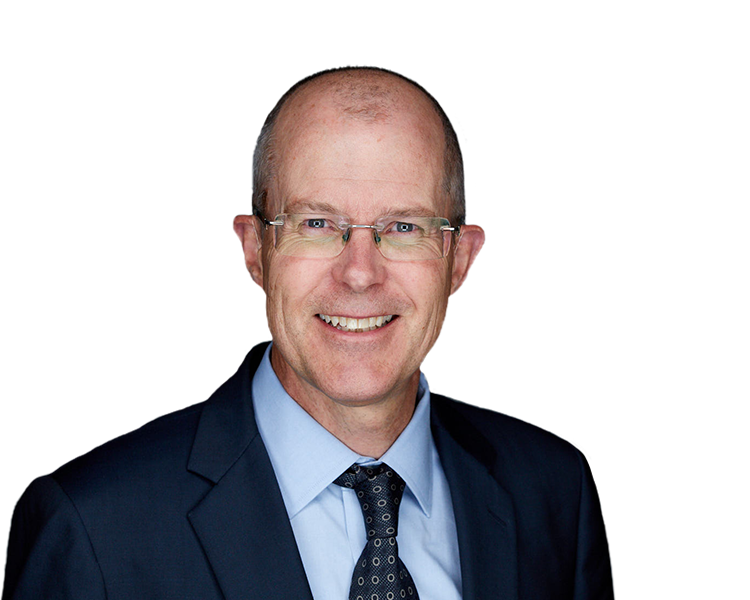
For Julius Baer, the leading Swiss wealth management group, COVID-19 threw up the same challenges. But Philipp Rickenbacher, who has been chief executive since 2019, says what has been really striking is the lesson in management and organizational behaviour that has come out of the experience. Specifically, how the group quickly learned to “self-organize” in order to maintain “full operational readiness” in a remote working setup.
“When you are running an organization, you’re obviously relying on an ‘org chart’, the regular meetings, and on-the-floor design that brings certain functions together. And this is how things have been running for many years; you almost can’t imagine that differently,” he said in a recent interview with IMD in Zurich.
“But then you throw people into a completely different environment and you find that, actually, the organisation starts to self-organize and does that almost [immediately]. We’ve learned how resilient we are as a company and we’ve learned how flexible our people are and how well they can manage in different situations.”
Managing people in this shifting work dynamic was made easier by the culture, or DNA, of Julius Baer, which is characterized by individuals taking responsibility and roles being “complex and interwoven”, rather than designed to tick functional boxes.
We’ve learned how resilient we are as a company and we’ve learned how flexible our people are and how well they can manage in different situations.
So, what does all this mean for striking a balance between office and remote working? “Frankly, I don’t have the answers yet,” Rickenbacher says. “But we are working hard to find the right new normal”.
He is clear that this is unlikely to involve a return to the previous status quo. Moreover, it is a leader’s role, he believes, to “set the parameters in a way that it’s not possible to gravitate back to the ‘old normal’”, including by giving people a degree of flexibility on where they work.
“I think it’s going to be a journey along which the organization will discover what to make of the new freedoms, what to embrace and what not to embrace — maybe even to further develop the tools that we have now started to discover,” Rickenbacher explains.
Having the culture that he describes is clearly a benefit, and shows the value of organizations having invested in building the right culture in the pre-pandemic era. Rigid hierarchies, in which employees are waiting for orders from above, are unlikely to have fared so well.
The other element that Rickenbacher highlights is trust. “We are also a company where people know each other and this made it easier with that element of trust woven through the organization,” he says.
From a business development perspective, that has also helped the bank attract more client funds, in part as a result of a noticeable rise in word-of-mouth personal referrals. Assets under management (AuM) rose to CHF 470 billion at the end of April 2021, a year-to-date increase of 8 percent, driven by an annualised 4 percent rise in continued net new money inflows.
Meanwhile, Julius Baer is working on implementing an “agile” strategy that aims to “get [us] out of functional silos and put the people who really need to get things done ‘end-to-end’ in a room, ideally with the clients, and then let them find the way – and do that at a much faster pace,” explains Rickenbacher, who spent seven years at consultancy McKinsey before joining the group in 2004.
Doing this at a time when some people may not be prepared for transformational change is often a challenge. But he argues that, when change happens, it’s important to bring in people who can drive that change, to “show and lead the way”, as well as create an environment in which people can make mistakes and be coached.
“But you also have to apply a degree of force to the system and tell people you have no choice, this is the direction in which we are going,” Rickenbacher says. “You might lose some people along the way, and as a company you have to accept it.”
As for personal lessons from the pandemic, he returns to trust. “I have probably reinforced my trust in people in that period. I have discovered new horizons that are possible which, if I’d stayed within my hamster wheel, I wouldn’t have tried to discover.”
“Human beings often value things when they miss them. For me, I think it was also realising how much I missed some of the finer elements, some of the personal interactions, the finer signs beyond language when you communicate with someone personally.”

Professor of Organizational Behaviour at IMD
Robert Hooijberg is Professor of Organizational Behavior at IMD. His areas of special interest are leadership, negotiations, team building, digital transformation, and organizational culture. Before joining IMD in September 2000, Professor Hooijberg taught at Rutgers University in their MBA and Executive MBA programs in New Jersey, Singapore, and Beijing. He is Program Director of the Breakthrough Program for Senior Executives and the Negotiating for Value Creation course.
January 6, 2026 • by Jean-François Manzoni in CEO Dialogue Series • 10 min read
PMI CEO Jacek Olczak shares how the company’s bold shift to smoke-free products is reshaping its business, culture, and purpose for the future...
November 11, 2025 • by Jean-François Manzoni in CEO Dialogue Series • 7 min read
Christophe Fouquet, CEO of ASML, tells Jean-François Manzoni how the world’s only EUV lithography machine maker became Europe’s most indispensable company – and what comes next. ...
October 7, 2025 • by Jean-François Manzoni in CEO Dialogue Series • 7 min read
Ester Baiget, CEO of Novonesis, discusses how the Danish biosolutions powerhouse leverages modern technology and its 'library of strengths' to transform food production and washing operations....
September 16, 2025 • by Jean-François Manzoni in CEO Dialogue Series • 9 min read
Morten Wierod, President and CEO of ABB tells Jean-François Manzoni how a leaner-and-cleaner mission, decentralized discipline, and a culture of speed are driving its transformation for the road ahead....
July 29, 2025 • by Jean-François Manzoni in CEO Dialogue Series • 8 min read
Rohit Jawa, CEO of Hindustan Unilever, outlines how he is reshaping the company’s strategy to meet the evolving needs of India’s growing middle class, leveraging digital transformation, talent development, and a future-focused...
July 3, 2025 • by Jean-François Manzoni in CEO Dialogue Series • 6 min read
Mars CEO Poul Weihrauch shares how family ownership enables long-term thinking, purpose-driven leadership, and sustainable growth across generations....
June 10, 2025 • by Jean-François Manzoni in CEO Dialogue Series • 8 min read
Loh Chin Hua, CEO of Keppel, tells Jean-François Manzoni how bold restructuring, strategic discipline, and a long-term vision transformed an industrial conglomerate into a global asset manager...
December 10, 2024 • by Jean-François Manzoni in CEO Dialogue Series • 9 min read
Dolf van den Brink, CEO of HEINEKEN talks to Jean-François Manzoni about early influences in his career that have helped him excel as a leader....
September 24, 2024 • by Jean-François Manzoni in CEO Dialogue Series • 7 min read
Rio Tinto CEO Jakob Stausholm emphasizes relationship-building and empathy to restore Rio Tinto's social license and guide its decarbonization efforts....
August 20, 2024 in CEO Dialogue Series • 6 min read
CEO of International SOS Arnaud Vaissié explains to IMD President Jean-François Manzoni how the business has survived 40 years by overcoming obstacles like COVID-19 and navigating financial crises....
Explore first person business intelligence from top minds curated for a global executive audience