A world turning inward
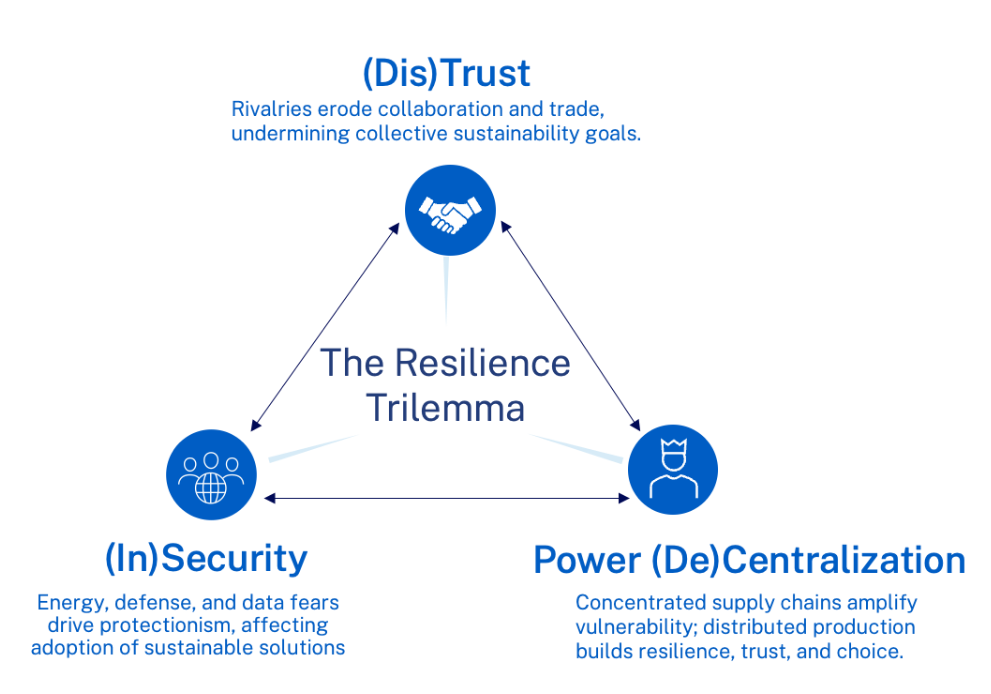
If the environmental picture was sobering, Evenett’s geopolitical assessment was equally urgent. Major powers, he argued, are retreating from multilateral cooperation and recalibrating their strategies around national security and domestic control.
“The United States has fundamentally changed its view of globalization,” he said. Once a champion of open markets, it now sees interdependence as a vulnerability, especially where it benefits China. This reassessment has led to a pullback from clean energy commitments, the imposition of hefty reciprocal tariffs, and greater readiness to weaponize market access.
Europe is also feeling the strain. Elections and shifting public sentiment have weakened political support for the green transition and triggered calls to scale back or simplify key sustainability regulations. Meanwhile, a growing coalition of autocratic states openly challenges the US-led global order, forming new alliances and competing spheres of influence.
“When trust collapses between major powers, cross-border sustainability efforts become very difficult—and in some cases impossible,” Evenett said.
The consequences are profound: markets fragment, supply chains are disrupted, and the cost of capital rises as governments boost defense spending and run larger deficits. The old global business anchor (open markets, low inflation, cheap capital) no longer holds.
“We are now in a security-driven economic environment,” he said. “And businesses must adjust.”




 Share
Share YouTube