Sustainability has stopped being a differentiator: Here’s how CFOs can stay ahead
CFO Raphael Savalle explores how finance leaders can unite sustainability, AI, and human leadership to drive strategy in a fast-changing world....

by Ismaël Otsmani Published March 18, 2026 in Finance • 9 min read
Europe faces a persistent challenge: how to channel its household capital into productive investment. Households sit on vast savings while innovation, defense, climate transition, and pension systems go underfunded. Former European Central Bank President Mario Draghi highlighted this: to boost its competitiveness, the EU would require an additional €750–800bn per year – around 4.4–4.7% of EU GDP in 2023.
Market fragmentation and complex investing channels for households have left capital aside. Decades of initiatives delivered limited results. Policymakers often treat financial literacy as a classroom subject: teach compound interest, risk diversification, and citizens will invest.
Sweden’s experience suggests another model. “Sweden now has the deepest capital markets in Europe,” said William Wright, co-founder of markets think-tank New Financial. Recognized for its deep capital markets and high retail participation, Sweden built an equity culture not through education campaigns, but by making investing simple, attractive, and unavoidable.
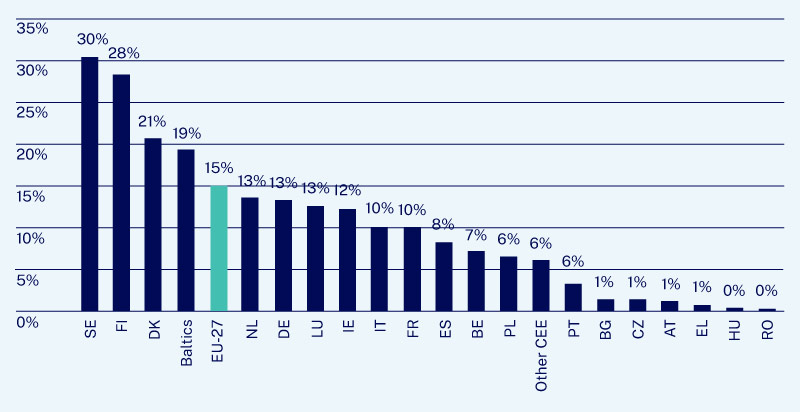
Over the past four decades, Sweden has become a nation of equity holders. Today, around 40% of the population holds tax-advantaged investment accounts (ISK), and all Swedish workers participate in the premium pension scheme, both channeling household savings into equities. Home to Nasdaq’s European headquarters, Sweden has built a deep pool of domestic capital. As a result, Nasdaq Stockholm has been described by the Financial Times as “the envy of Europe.”
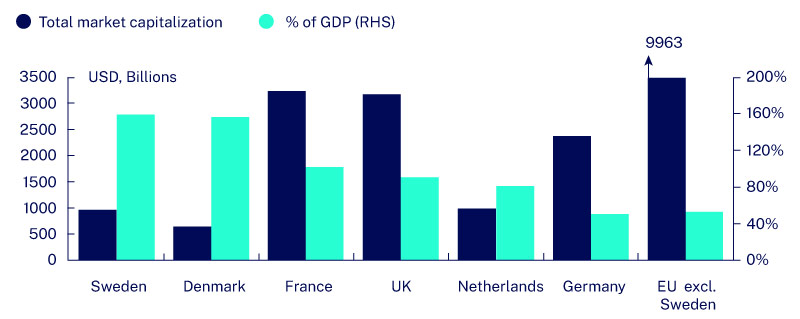
The numbers are striking; Sweden’s public equity markets have the highest number of listed companies in the EU, with a market capitalization at 159% of GDP. In the past decade, more than 500 companies have been listed in Sweden, more than in France, Germany, Spain, and the Netherlands combined. Returns on the domestic market have been among the strongest in the world and consistently outperformed major international indices.

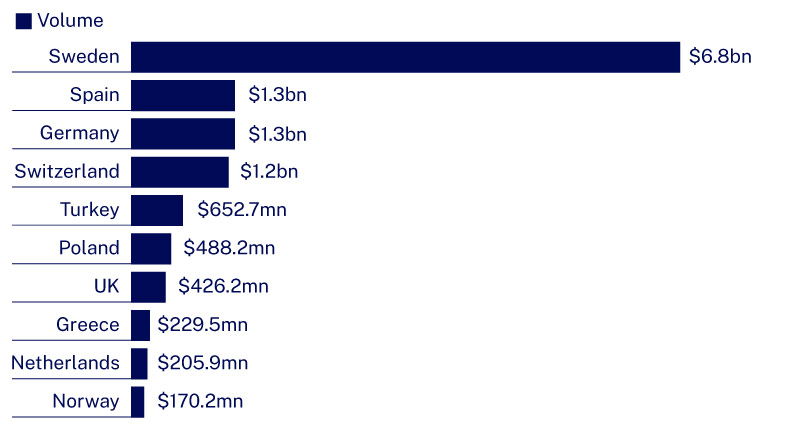
By October 2025, the Stockholm Stock Exchange had raised $6.8bn in IPO proceeds – the highest in Europe. Switzerland-based Verisure launched Europe’s largest IPO since 2022 in Stockholm, raising approximately $3.6bn and attracting more than 60,000 new shareholders, mostly retail investors.

Stockholm has once again solidified its position as the most attractive listing market in Europe.Erik Skog, Head of Investment Banking Sweden at ABG Sundal Collier.
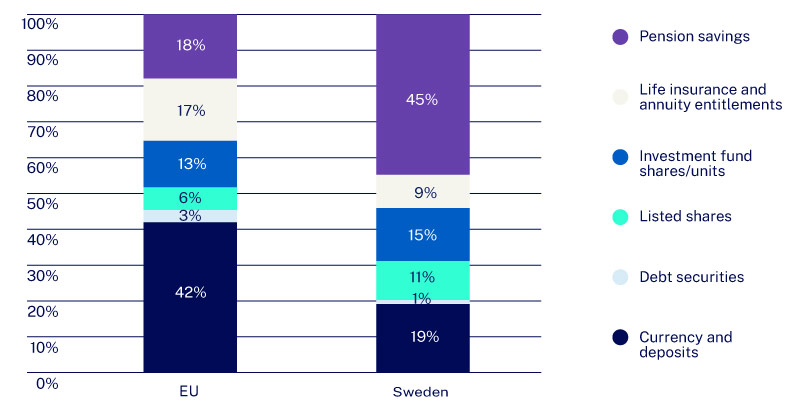
Decades ago, the country’s capital markets were far more closed and regulated, and Swedish households were very conservative, keeping most of their financial assets 80–90% in bank deposits and life insurance or pension entitlements. The country had to carry out major reforms.
The breakthrough came in 1978 with the introduction of tax-advantaged savings accounts (Skattesparande), designed to encourage households to invest in equities and investment funds. These were replaced in 1984 by the “Allemansfonder” (“funds for everyone”), which offered tax-free returns. By 1990, 1.7 million Swedes, around 20% of the population, had opened accounts.
| Year | Development |
|---|---|
| 1958 | The first Swedish mutual fund created. |
| 1974 | First legislation on fund savings comes into force (aktiefondlagen). |
| 1978 | Introduction of tax-advantaged savings account (skattesparande). |
| 1984 | Launch of allemansfonder (equity funds with tax benefits) to widen retail participation. |
| 1990 | Introduction of fund insurance enabling capital and pension-linked savings. |
| 1991 | Imposition of a 20% tax on fund returns, ending previous exemptions. |
| 1994 | Launch of Individual Pension Savings (IPS) to promote private retirement saving. |
| 1996 | Sweden's first hedge fund established. |
| 1997 | Tax-subsidised savings liberalised to allow foreign investments. |
| 2000 | Introduction of the Premium Pension System: 2.5% of wages were invested into individual accounts. |
| 2004 | Launch of MinPension, a pension dashboard and tracking system jointly financed by the government and the insurance industry. |
| 2005 | Inheritance and gift tax abolished. |
| 2007 | Wealth tax abolished. |
| 2012 | Introduction of ISK (Investment Savings Account – Investeringssparkonto) with simplified flat-tax treatment. |
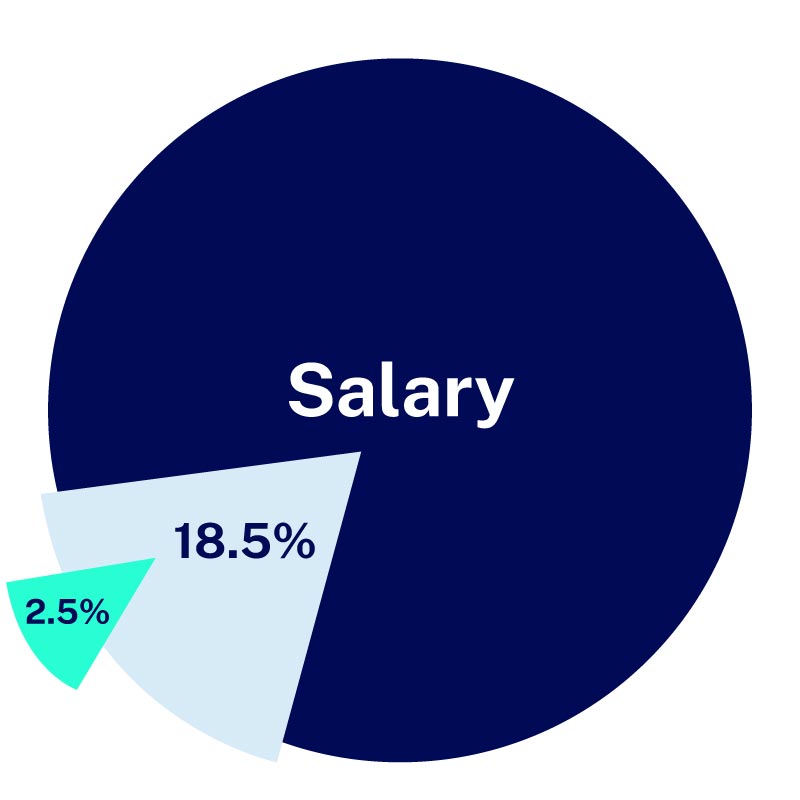
The Swedish pension system is considered one of the most robust in the world, according to the Mercer CFA Institute Global Pension Index 2025. It consists of the public pension (Pillar 1), the occupational pension (Pillar 2), and voluntary private pension savings (Pillar 3). Sweden Pillar 1 is a unique model in Europe, financed by an 18.5% salary contribution, of which 16% is allocated to the income-based pension and 2.5% to the Premium Pension.
The 16% income-based pension operates as a pay-as-you-go notional accounts system, funding current retirees. When contributions exceed payouts, the surpluses are transferred to the AP Funds, which act as long-term buffers, investing across public and private markets to stabilize the system, secure benefits for pensioners, and mitigate potential deficits. At the end of 2024, the AP Funds (AP1, AP2, AP3, AP4) managed a total of SEK 2,053bn ($230bn) in assets.
The Premium Pension, introduced in 2000, established a mandatory funded pension system with 2.5% of salary invested in funds, either chosen or placed in the default fund AP7 Såfa. AP7 is the largest fund in the system, managing SEK 1,440bn (~$160bn). The total assets under management in the Premium Pension system were approximately SEK 2,829bn (~$315bn) as of October 2025.

Then came the ISK (Investeringssparkonto) in 2012, Sweden’s transformative move. It made investing in funds and other securities simple, with no tax on dividends or gains, and money can be withdrawn at any time. The government applies a small annual flat-rate tax on the total account value, which the bank automatically calculates.
ISK accounts are tax‑free up to SEK 150,000 (~$16,870) in 2025, rising to SEK 300,000 (~$33,740) in 2026. By way of illustration, someone who has invested SEK 950,000 (~$106,400) in 2025 would pay around SEK 7,104 (~$795) in tax.
Today, nearly four million Swedes, about 40% of the population, hold ISK accounts, with a total wealth estimated at SEK 1,665bn (~$186.5bn) in 2023.
Regulation came first, and culture followed. “I think it starts with the regulation, and that then drives the culture,” explains Kasper Dichow of Nordea. Sweden’s equity culture developed after the regulations laid the foundation. Strategic policies encouraged investment, while institutions, channels, and economic incentives made investing mainstream. As a result, pension, endowment insurance, and tax-advantaged investment accounts directed domestic capital into equities, and the abolition of inheritance, gift, and wealth taxes removed barriers to long-term wealth accumulation.

Today, 69% of Swedish investment funds are allocated to equities, the highest share in Europe, while fixed-income holdings remain among the lowest. Around 20% of Swedish equity fund assets are purely in Swedish stocks, reflecting a positive “home bias.” However, this share is declining as funds gradually increase their exposure to the US. At the same time, fund ownership costs are comparatively low. Equity fund fees in Sweden average 0.89%, compared with 1.40% across the EU. This trend has been reinforced by major fund providers competing alongside pricing pressure generated through the Premium Pension system.
Moreover, household capital flows extend beyond public markets. Public institutions, including the Swedish Growth Agency, ALMI Invest, and the Swedish National Pension Funds (AP Funds), deploy capital alongside Sweden’s robust private markets ecosystem of venture capital, private equity, and angel investors. This public–private model ensures a flow of capital to startups and SMEs, often culminating in public listings. Recent examples include the 2025 Nasdaq Stockholm IPOs of Nordic Capital-backed NOBA Bank and EQT-backed Enity, where strong retail participation has complemented institutional demand.

Organizational theory tells us that when variance is high, and change is faster than planning cycles, adaptation beats optimization every time.
Finally, institutions reinforced Sweden’s equity culture through educational and association initiatives. Associations such as the Swedish Shareholders’ Association (Aktiespararna) represent retail investors at hundreds of annual general meetings. At the same time, finance professionals and institutions invest in the next generation through initiatives such as Ung Privatekonomi and Unga Aktiesparare which strengthen Sweden’s high financial literacy and financial health.
“Firstly, individuals need to be better informed about the importance of long-term savings products to secure an adequate income in retirement. Secondly, governments should provide sufficient tax incentives to encourage retirement savings, helping people overcome the natural tendency to prioritize short-term needs. Thirdly, member states should learn from best practices in other countries, such as automatic enrollment for occupational pensions and life-cycling strategies that gradually increase the proportion of pension savings invested in higher-yielding assets,” commented Bernard Delbecque, Senior Director at the European Fund and Asset Management Association (EFAMA), which represents the European investment management industry.
The Swedish experience suggests that the path forward for Europe is enablement. Sweden’s success was deliberate: simplicity, participation, and action.
European policymakers face real constraints due to diverse national contexts, varying institutions, and different starting points. Not every Swedish policy will translate. However, the underlying principles may be applicable. By making investing simple and accessible, European countries could unlock the capital currently sitting on the sidelines.

Management consultant
Ismaël Otsmani is a management consultant advising financial institutions across wealth and asset management and banking and capital markets. Beyond consulting, he actively contributes to the Global Shapers, an initiative of the World Economic Forum, and AI for Good’s Young AI Leaders Community.

March 9, 2026 in Finance
CFO Raphael Savalle explores how finance leaders can unite sustainability, AI, and human leadership to drive strategy in a fast-changing world....

February 24, 2026 in Finance
Schindler CFO Carla De Geyseleer explains how today’s CFO acts as a strategic co-pilot, uses sustainability to drive growth, and develops future finance leaders....

February 11, 2026 • by Catherine Agamis, Hischam El-Agamy in Finance
How banks can position themselves across multiple futures to deliver on sustainability commitments while maintaining financial performance...

January 9, 2026 • by Jerry Davis in Finance
The US President is gouging out chunks of America’s long-established economic data apparatus because he doesn’t like what he sees. It’s unlikely to end well....
Explore first person business intelligence from top minds curated for a global executive audience