
Why you need to agree to disagree
Elizabeth faces a career crossroads and works with a coach to clarify her ambitions, negotiate her future, and harness the power of constructive disagreement...

 As a leader, you face complex and intricate challenges every day. At times it can be hard to pinpoint or even articulate these challenges. But until you can fully address and resolve them, they have the potential to stall your professional and personal growth, your career, and your team’s success. This is where professional coaching comes in.
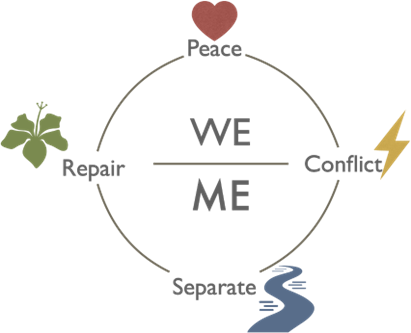
Peace: The state of mutual respect, care, and shared purpose.
Conflict: The surfacing of tension and friction; the signal that something needs to shift.
Separation: A time out, cooling-off phase – temporary distance to regain perspective.
Repair: The act of reconnection, willingness to understand, and curiosity to learn.
David realizes he has been skipping some seasons. The more he cleaves to “peace,” the more he suppresses the other necessary phases of the cycle. The same is true of his boss: on the surface, both seem composed, but they are both suppressing frustration, anger, and resolution.
To modify the fear associated with conflict, David’s coach invites him to reflect on the way a thunderstorm clears blocked energy and makes space for renewal. This is a turning point for David. Conflict is not an end in itself, but an opportunity to repair and refresh. David has been hanging on to the fear of a cliff-edge without seeing the horizons beyond. Prompted by his coach, he begins to realize that this is a function of his childhood, during which he witnessed the conflict between his parents that led to their divorce. In his formative years, he missed the opportunity to witness and experience repair, reconnection, and renewal.
To recalibrate his understanding of conflict and position it positively as a season within the cycle of renewal, David also has to understand that repair is possible – but that getting to repair requires a meaningful break through time out; and the courage to embrace honesty.
First, he explores the importance of meaningful timeout with his coach as an opportunity to calm the panic reaction within the threatened, instinctive brain, and to make space to reconnect.
His coach also invites him to examine his internal conflicts – between his values of honesty and courage, and his fears of losing his job, losing connection, and not being liked. His “homework” is to begin making reparations with himself and acknowledging the parts that want safety and those that want truth, giving both a voice. This is the first step toward being honest with himself.
David commits to leaning into conflict—inner and outer conflict – and to orient towards repair; to master the four-season cycle of renewal.

“For David, the thunderstorm has arrived and passed, leaving the sky clearer than before.”

Elizabeth faces a career crossroads and works with a coach to clarify her ambitions, negotiate her future, and harness the power of constructive disagreement...

Striving to be a superhero has backfired professionally and personally for ambitious Frances. It’s time to ease her foot off the gas, says Qi Zhang...
 Audio available
Hard-working Francine is good at what she does, but risk-averse. By exploring what’s holding her back, she learns to drive herself and her organization to greater heights....
Audio available
Here are four ways to emerge unscathed and even empowered from difficult performance reviews....
Audio availableExplore first person business intelligence from top minds curated for a global executive audience