
Competitive identity: Your hidden lever in a transition
Considering a career transition? Begin by identifying your unique values and strengths. Sophi Hazi and Arturo Pasquel guide you through the process....

Meeting frequency has increased dramatically in recent years. Research shows some startling statistics:
In many organizations, the communication landscape is now a dense mix of back-to-back virtual meetings, overflowing email inboxes, and an ever-expanding number of constantly pinging messaging platforms – each with its own norms, rhythms, and expectations. Meetings have become the default communication channel.
Leaders struggle to find time to reflect, prepare, and make thoughtful strategic decisions. Contributors feel constant pressure as real work gets squeezed between calls. Attention is fragmented, and energy drains. A paradox emerges: the purpose of meetings is to create alignment and connection, yet when overused, they result in “unpresence”: people are there, but not fully present.
The Remote Communication Matrix (RCM) offers a practical way to escape meeting madness. Instead of defaulting to meetings, consider two key questions:
What is the most appropriate channel for this communication?
What level of interaction does it really require?
Three distinct choices emerge:
1. Information → asynchronous
If the goal is to share updates, documents, or context, a meeting is rarely needed. Written updates, shared documents, or short voice/video messages allow people to absorb information in their own time, protecting time and attention.
2. Clarification → quick interaction
If something simply needs clarifying, a message or brief call is often enough.
What might have taken 30 minutes can frequently be done in five.
3. Collective thinking → meetings
Meetings are most valuable when people need to think together: exploring complexity, making decisions, solving problems, or strengthening relationships. Used this way, meetings regain their purpose – and their energy.
Before choosing the channel, ask:
Why am I communicating?
Inform, align, decide, or build trust?
What is essential?
What must be absolutely clear?
Who is this for?
What do they need – clarity, reassurance, involvement?
How much interaction is required?
Information, quick exchange, or real dialogue?
Which channel fits best?
Email, message, document, voice note, or meeting?
When is the right moment?
Does the timing support attention and respect constraints?
Use the RCM table to decide which channel to use. This takes minutes – but saves hours.
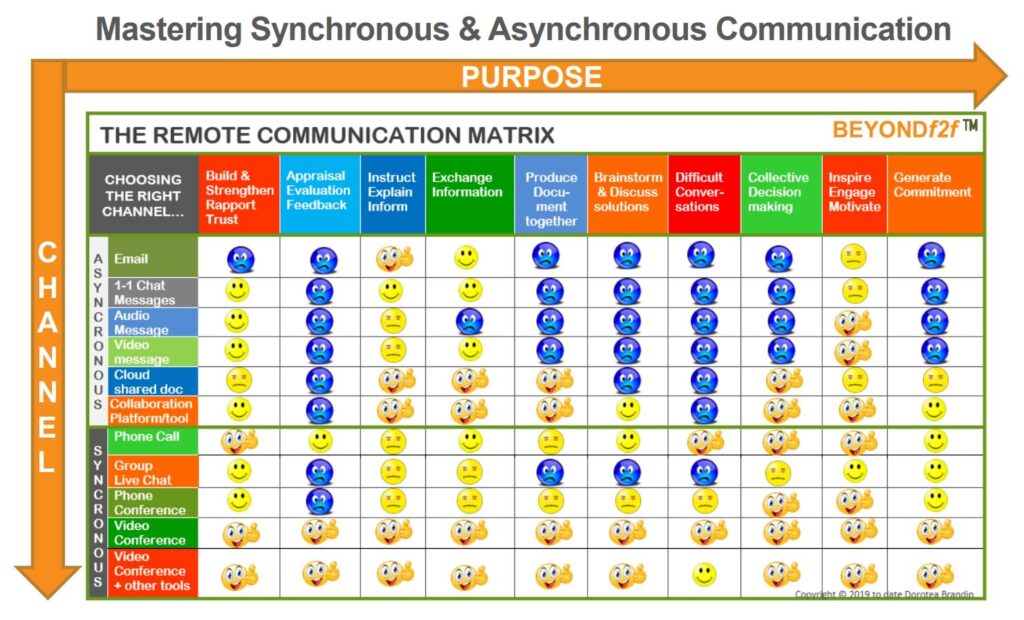
(Click here to access a printable large-format copy.)

Considering a career transition? Begin by identifying your unique values and strengths. Sophi Hazi and Arturo Pasquel guide you through the process....

Of the many biases humans are prey to – such as anchoring bias, loss-aversion bias, status quo bias, and recency bias – confirmation bias can be most evident in the boardroom. But...

As workforces age, organizations must confront a critical question: how will extended lifespans reshape leadership, organizational strategy, and the very concept of a career? Anna Erat identifies four focus areas to sustain...

To transition into the boardroom, you need a brand, a unique board proposition, and a governance mindset - but you also need to consider the value you add and the cultural fit...
Explore first person business intelligence from top minds curated for a global executive audience