I by IMD Book Club

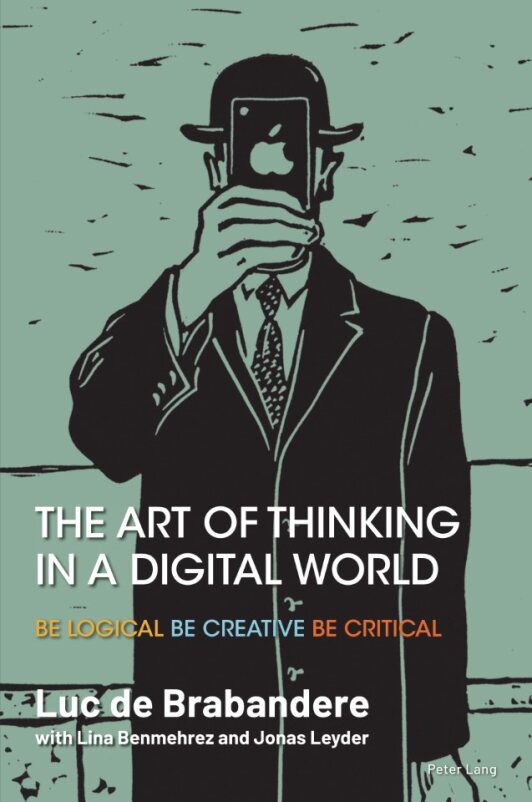
The art of thinking in a digital world: Be logical, be creative, be critical
March 2, 2026 • by Knut Haanaes, Luc de Brabandere in I by IMD Book Club
IMD’s Professor Knut Haanaes was joined by friend and former Boston Consulting Group colleague, Luc de Brabandere, corporate philosopher and senior advisor at BCG, to discuss his book ‘The Art of Thinking...
IMD’s Professor Knut Haanaes was joined by friend and former Boston Consulting Group colleague Luc de Brabandere, corporate philosopher and senior advisor at BCG, to discuss his book The Art of Thinking in a Digital World – a synthesis of a career spent teaching leaders to think with greater rigor, creativity, and courage.
What makes a thinker truly useful in this age of advancing artificial intelligence?
For Luc de Brabandere, the answer lies not in the AI tools themselves, but in the minds that use them. His book, co-authored with Lina Benmehrez and Jonas Leyder, is described by its author as a philosophical and practical guide to making sense of the modern digital era. Its central argument is that while technology has fundamentally changed how we live and work, it must be accompanied by new mental models – not merely a new set of tools.
The book emerges from more than five decades of professional life as a mathematician, engineer, Boston Consulting Group partner, executive educator, and philosopher. “It is my legacy,” de Brabandere says. Structured around three pillars – be logical, be creative, be critical – it mirrors the arc of his own career: two decades in engineering and banking, a long partnership at BCG where he became the firm’s creative conscience, and a final chapter as teacher and grandfather.
The instruction to ride only as fast as you can still hold a conversation, however, is philosophy – rigorous, actionable, and free of numbers.
The corporate philosopher
Before exploring the book’s ideas, it helps to understand the unusual professional identity from which they spring. For de Brabandere, corporate philosophy addresses a fundamental gap inside every organization. On one side sits the world of numbers – accounting, data, measurable outputs. On the other lies a parallel world of language, values, and strategy, where precision matters just as much but cannot be captured in a spreadsheet. “How are you rigorous when you don’t have numbers?” he asks. “This is what I call corporate philosophy.”
His tools are definitions and criteria – precise distinctions that allow leaders to act without the safety net of quantification. The example he offers is disarmingly simple: a doctor who tells a cyclist not to ride too fast – or not exceeding 145 heartbeats per minute – offers nothing useful. The instruction to ride only as fast as you can still hold a conversation, however, is philosophy – rigorous, actionable, and free of numbers.
You will never imitate thinking with an algorithm. We have to become the artists of thinking.- Luc de Brabandere
Why AI is a reason to think more, not less
The book’s title stakes an immediate claim to the most pressing anxiety of our moment. With AI reshaping how knowledge is processed and communicated, there is widespread fear that human thinking will degrade – that we will outsource cognition and become passive consumers of machine-generated answers.
De Brabandere rejects this framing entirely. “What’s happening now with AI is a reason to think more, and definitely not to think less,” he argues. “You will never imitate thinking with an algorithm. We have to become the artists of thinking.”
This rests on a careful distinction about the two fundamental limits of artificial intelligence. The first is creativity: a machine cannot escape its own programming. It can connect patterns and generate options, but it cannot make the leap that requires abandoning current assumptions entirely. The second limit is responsibility – and where the creative limitation is not technical, this one is philosophical. “I don’t want to assign a machine some responsibilities. A CEO who commits to a new strategy knowing it cannot be guaranteed is exercising a form of judgment that no algorithm can replicate. It becomes good when you, as a human being, decide this is a good idea: ‘I take the risk. I know this is not 100% guaranteed, but that’s what I choose to do,’” explained de Brabandere.
To change is to change twice
One of the book’s most practically useful insights emerges from the author’s lifelong preoccupation with creativity. Innovation, in his framework, is the capacity to change things. Creativity is the capacity to change the way we look at things. Real change – lasting, organizational change – requires the second before the first.
“To change is to change twice,” he explains. His illustration is vivid: imagine someone who is always late. The practical fix – going faster, scheduling fewer meetings – addresses the reality. But it is not enough unless the person also changes their relationship to punctuality itself. Both changes are necessary; neither alone is sufficient.
The same dynamic plays out in corporate mergers. Companies A and B combine to form Company C. But as long as people think of themselves as “ex-A” or “ex-B,” Company C does not truly exist. The organizational change is incomplete without the mental one. This principle, de Brabandere noted, unlocks everything.
Why AI is a reason to think more, not less
The book’s title stakes an immediate claim to the most pressing anxiety of our moment. With AI reshaping how knowledge is processed and communicated, there is widespread fear that human thinking will degrade – that we will outsource cognition and become passive consumers of machine-generated answers.
De Brabandere rejects this framing entirely. “What’s happening now with AI is a reason to think more, and definitely not to think less,” he argues. “You will never imitate thinking with an algorithm. We have to become the artists of thinking.”
This rests on a careful distinction about the two fundamental limits of artificial intelligence. The first is creativity: a machine cannot escape its own programming. It can connect patterns and generate options, but it cannot make the leap that requires abandoning current assumptions entirely. The second limit is responsibility – and where the creative limitation is not technical, this one is philosophical. “I don’t want to assign a machine some responsibilities. A CEO who commits to a new strategy knowing it cannot be guaranteed is exercising a form of judgment that no algorithm can replicate. It becomes good when you, as a human being, decide this is a good idea: ‘I take the risk. I know this is not 100% guaranteed, but that’s what I choose to do,’” explained de Brabandere.
The trap of thinking
Thinking, de Brabandere is careful to note, is not automatically a virtue. The same cognitive structures that allow humans to process a complex world efficiently also lock us into mental boxes that are difficult to escape. Drawing on Daniel Kahneman’s landmark work on fast and slow thinking, he makes the point that most people are simply unaware of how many shortcuts they rely on. “You’re not as rational as you think. Cognitive bias is the price we pay for speed.”
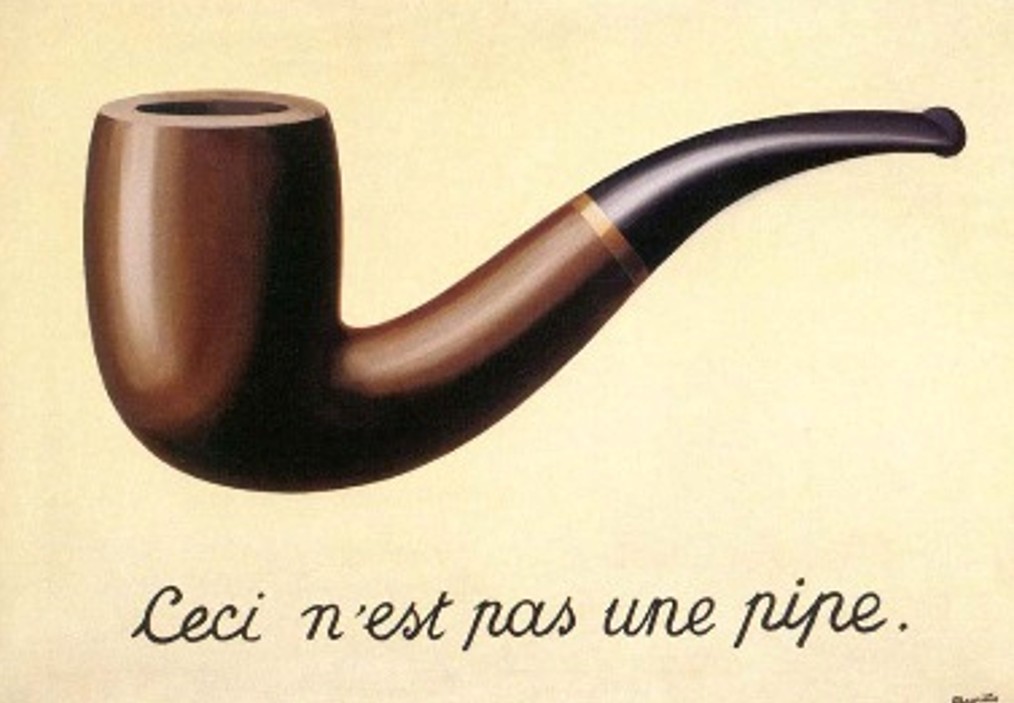
He illustrates this with an insight borrowed from the surrealist painter René Magritte – who famously inscribed “Ceci n’est pas une pipe” (“This is not a pipe.”) beneath a painting of a pipe – to argue that every mental model is a simplification, and simplifications are never fully true. They are working hypotheses. “If you open your mind, you only have simplifications of everything. Everything here is a hypothesis.”
For de Brabandere, this is the central insight of his career. Market segmentations are not markets. Accounting is not finance. Strategy documents are not strategy. We see the world through simplified pictures of it, and the danger comes when we forget that distinction. This is not cause for despair, but an invitation to hold ideas lightly while still committing to them – to act decisively on a strategy while remaining open to revising the underlying assumptions when reality pushes back.
Simplicity as a deliberate act
Among the book’s more counterintuitive arguments is its treatment of simplicity. De Brabandere argues that simplicity is always a conscious decision, never a given. His example is the Google homepage: to most users, it looks simple, yet behind it lies extraordinary complexity. The simplicity is not inherent – it is a choice that someone made and defended against all the forces that tend toward clutter.
The implication for business leaders is significant. Clarity of strategy, communication, and purpose is not something that emerges naturally from good thinking. It must be fought for, deliberately, and repeatedly. “The role of the philosopher in business is to clarify,” de Brabandere explains, recalling a day spent with a CEO overwhelmed and paralyzed by competing AI priorities. At the end of the session, the CEO said: “I’m happy. We are still nowhere, but now I know where I’m going to start.” For leaders drowning in digital noise, that kind of clarity is no small achievement.
Rather than forecasting precisely what AI will do to human cognition, de Brabandere counsels preparation over prediction.
The enduring human advantage
Where does this leave the professional working in a world being reshaped by AI? De Brabandere’s answer is neither triumphant nor anxious. It is philosophical in the most practical sense.
The best way to have a good idea is to have many ideas – and AI is genuinely useful for generating the volume from which humans then select. His illustration is concrete: a writer finishes a 300-page novel and asks ChatGPT to suggest a title. The machine connects patterns and surfaces options the writer might never have considered. But the final choice requires something else entirely. “The last mile is to give up rationality,” de Brabandere explains. “You cannot choose a title for a novel with 100% rational reasoning.” That final step – intuitive, contextual, personal – is where the human begins.
Rather than forecasting precisely what AI will do to human cognition, de Brabandere counsels preparation over prediction. “Don’t try to spend too much time on forecasting. Try to be better prepared for a future.” His life philosophy, offered in response to the final question of the session, captures the restlessness and equanimity of a lifelong thinker: “To have a project which is impossible to achieve. The joy of climbing a mountain with no tops.”
For contemporary business leaders, the book offers a framework at once intellectually challenging and immediately applicable. The leaders who will thrive in the digital era most effectively are not those who adopt the most powerful tools, but those who bring the clearest thinking to bear on the right questions. As de Brabandere concludes: “The rule is never stop thinking.”
Authors
Knut Haanaes
Professor of Strategy
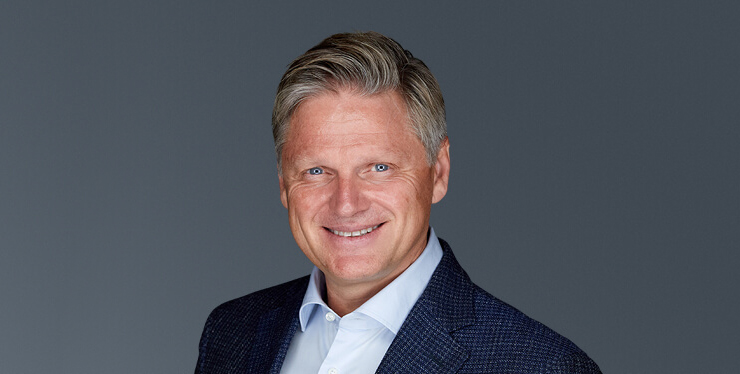
Knut Haanaes is Professor of Strategy at IMD. He is the former Dean of the Global Leadership Institute at the World Economic Forum. He was previously a Senior Partner at the Boston Consulting Group and founded their first sustainability practice. At IMD he teaches in many of the key programs, including the MBA, and is Co-Director of the Leading Sustainable Business Transformation program (LSBT) and the Driving Sustainability from the Boardroom (DSB) program. His research interests are related to strategy, digital transformation, and sustainability.
Luc de Brabandere
Corporate philosopher
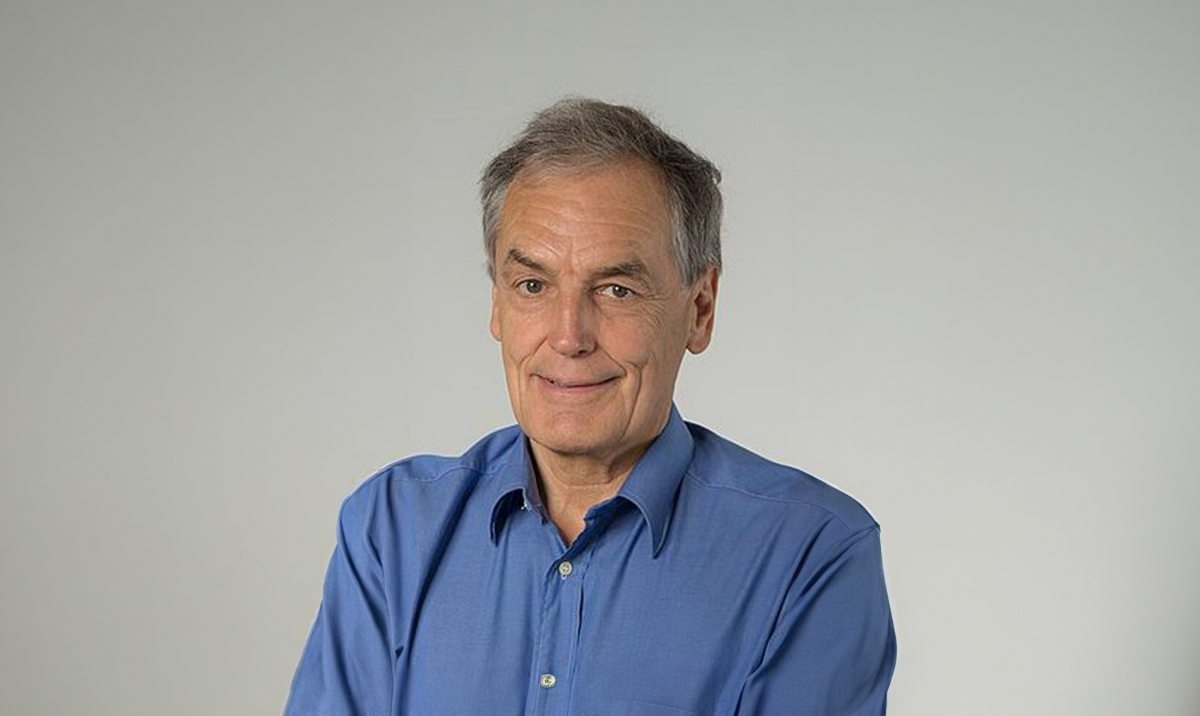
Luc de Brabandere is a distinguished Belgian corporate philosopher and polymath who has spent his career bridging the gap between the rigorous world of mathematics and the fluid realm of human creativity. Originally trained in applied mathematics, he later earned a PhD in philosophy, a duality that defines his unique intellectual perspective.
A Senior Advisor at the Boston Consulting Group, de Brabandere has served as a strategic guide for global leaders, teaching them to “think in new boxes” rather than simply trying to think outside them. He is a prolific author of more than 20 books and a co-founder of Cartoonbase, an agency that uses visual storytelling to simplify complex ideas. Whether lecturing at world-class universities like the Louvain School of Management or analyzing the ethical implications of AI, he remains dedicated to the “zigzag” of thought – the essential movement between logic, creativity, and critical judgment.