Introducing AI to the C-suite: Three opportunities, three risks
Senior leaders can leverage AI to boost creativity, guide decisions, and optimize talent, while balancing risks like bias and overreliance....

by I by IMD Published March 19, 2026 in Artificial Intelligence • 5 min read
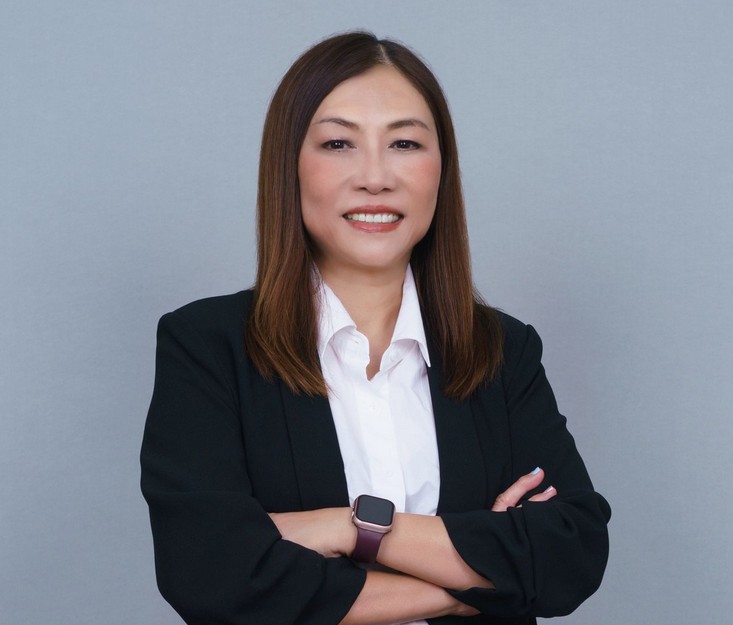
As organizations adapt to the AI era, what should be the priorities of the HR function? Jaclyn Lee, CHRO at Certis, the global security and integrated services company headquartered in Singapore, has a clear view on this: “First and foremost, the CHRO’s role is to drive business transformation.”
At Certis, which is wholly owned by Temasek, Singapore’s state-owned investment firm, change has been Lee’s primary focus. “We’re going through a big digital transformation of all our major business highways, as well as key functional systems like HR, finance, and procurement,” she says.
For HR, this means overhauling the entire employee experience “from hire to exit.” But the CHRO’s role is emphatically not confined to HR. “The CHRO cannot be purely functional anymore,” Lee explains. “We need to be multi-dimensional and multi-disciplinary.”
The first priority of the forward-thinking CHRO, Lee says, is to gain a clear sense of the direction in which the business is going. “We need to understand the business and what it’s going to look like in the future. If you don’t, it’s going to be very hard to do your job.” She advises learning from other executives, internally and via industry events: “Take the initiative to talk to business leaders and ask them, ‘What keeps you awake at night?’”
Financial acumen, in particular, has become a vital aspect of the role. “I would encourage everybody to ramp up their finance literacy; otherwise, you can’t work with the CFO,” she says. “You need to be able to read a balance sheet.”

Lee explains that cultural reorientation is central to Certis’ AI transformation, built around innovation, trust, and collaboration.
To drive innovation, Certis has established a platform empowering employees to suggest improvements in work processes. Hackathons, sponsored by the Group CEO, bring teams together to develop AI solutions. And a new knowledge repository, incorporating sources such as case studies on successful projects, gives employees support in managing ongoing innovation initiatives.
Amid persistent employee wariness around AI’s growing role, cultivating trust is a key element of the CHRO role. “Your colleague is going to be a robot or an AI agent, or you could be reporting to a team leader who’s an AI agent. That’s a very big mindset shift,” admits Lee.
Lee believes that a key part of building trust is developing a framework of high standards for how employees work. Certis’ values-led SHINE (Support, Harmony, Identity, Nurture and Equity) framework sets out the company’s expectations of how its employees should approach their work. “It’s about what it means to work in Certis. We embrace SHINE as a way of life,” says Lee.
This cultural pivot isn’t merely a nice-to-have. Rather, it’s directly linked to successful transformation. “It’s like an orchestra. Everyone has their place. We have to work in harmony,” explains Lee. “So, we have to build inclusivity and psychological safety.”
Of course, leaders set the tone. Building trust is one of Certis’s six leadership competencies. Beyond performance reviews, accountability is brought to life through innovative measures such as the Alive Charter for meetings. Meeting participants are reminded of key principles, and employees can offer feedback on how managers run the meetings – for example, on whether everyone was included, or if one person was allowed to dominate. “We use the charter in most of our main meetings,” says Lee.
The focus on trust extends to the very top. “I worked with the Chairman and Group CEO and said, ‘I think we could go a step further to build trust between management and the board,’” explains Lee. “So, we developed trust workshops.” The lesson: trust is critical to high-performing teams at all levels of the business.

At company level, the CHRO leads the planning for future talent needs.
As AI transformation accelerates, CHROs must also consider the implications for employee development. Mass upskilling is essential, says Lee. “We work with institutes of higher learning to put all employees through custom-built basic AI training,” she explains.
A grounding in productivity tools such as Copilot and Canva can lead to training in design thinking, natural language processing (NLP), and chatbot development.
The training also shows employees the opportunities that lie in working with AI. Employees have gone on to use their newly acquired skills to develop tools that help with day-to-day tasks in the business. “My advice is, don’t focus on losing your job. Focus on how you can improve yourself and prepare for the future of work,” says Lee.
At the company level, the CHRO leads the planning for future talent needs. Certis is looking five years ahead, explains Lee. “Which skillsets are going to be needed to drive the organization forward?” she asks. Where a role has been taken over by AI, companies should explore the options in terms of where talent can be repurposed. “Can I reskill and retool this person to fit into another part of the organization? It’s both about upskilling and doing a lot of change management communication,” she notes.
While CHROs face a raft of internal challenges as AI transformations accelerate, Lee is a strong advocate for facing outward.
While CHROs face a raft of internal challenges as AI transformations accelerate, Lee is a strong advocate for facing outward. In particular, she believes the People function should engage with policymakers. “A good CHRO needs to be able to influence legislation and public policy,” she argues. Lee believes this principle holds true for CHROs in Europe or the US, as well as Singapore.
To that end, she has established a strategic partnership office linking Certis’s corporate university with both research institutes and key governmental bodies. It provides an early sight of relevant policy developments and gives Certis the chance to propose solutions. “For me, this is an essential part of the role,” says Lee.
Lee paints a picture of the CHRO as a vital integrator in the age of AI: “Machines, AI, and humans – and the board, the leadership team, and employees – they all need to be integrated.”

Chief Human Resources Officer, Certis

March 17, 2026 • by Michael R. Wade in Artificial Intelligence
Senior leaders can leverage AI to boost creativity, guide decisions, and optimize talent, while balancing risks like bias and overreliance....

March 16, 2026 • by Michael R. Wade, Konstantinos Trantopoulos in Artificial Intelligence
IMD’s AI Safety Clock shows tension between rapidly expanding artificial intelligence capabilities and lack of meaningful oversight, raising risk. ...

March 13, 2026 • by Carlos Cordon, Konstantinos Trantopoulos , Michael R. Wade in Artificial Intelligence
Artificial intelligence is reshaping the COO role from operational executor to architect of predictive, intelligent, and resilient enterprise systems....

March 11, 2026 • by Heather Cairns-Lee in Artificial Intelligence
AI may become one of the most significant leadership opportunities for women in decades. Its impact will depend on how capability, governance, and leadership are built around it....
Explore first person business intelligence from top minds curated for a global executive audience