Share
Facebook Facebook icon Twitter Twitter icon LinkedIn LinkedIn icon Email

CEO Dialogue Series

Creating a smoke-free future: How PMI is stubbing out cigarettes

December 11, 2025 • by Jean-François Manzoni in CEO Dialogue Series

PMI CEO Jacek Olczak shares how the company’s bold shift to smoke-free products is reshaping its business, culture, and purpose for the future...

Philip Morris International CEO Jacek Olczak discusses the triumphs and challenges of a bold business transformation with Jean-François Manzoni.

When Philip Morris International (PMI) set out to replace its core product, few believed it could succeed. Yet under CEO Jacek Olczak, the world’s largest cigarette maker is turning its smoke-free vision into one of the most ambitious business transformations of the decade, reshaping its portfolio, culture, and purpose along the way.

When PMI declared in 2016 that it aimed to deliver a smoke-free future, the statement reverberated far beyond the tobacco industry. The world’s largest cigarette manufacturer – which owns five of the 15 best-selling international brands, including Marlboro – had set out to gradually replace its core product with less harmful, scientifically developed alternatives.

Less than a decade later, the company, which employs more than 80,000 people, has made remarkable progress. In 2024, PMI generated net revenues of around $38bn and operating income of more than $13bn, with a market capitalization surpassing $200bn – placing it among the world’s largest consumer goods companies.

As of 30 June, 2025, more than 40% of the company’s total net revenues come from smoke-free products (SFPs), up from almost zero 10 years ago. In over 20 markets, SFPs (which include heated tobacco, nicotine pouches, and e-vapor products) already account for more than half of net revenues. The company’s flagship smoke-free product, IQOS, has surpassed 32 million users worldwide as of the end of 2024 (with more than 70% having fully switched from cigarettes) and generates more revenues than the number one brand Marlboro.

“The reality is that despite all the public health information and restrictions directed at them, many smokers continue smoking,” said Olczak. “Our position is that the best solution for them is to quit smoking. For those who don’t quit, we have developed better alternatives that offer similar satisfaction as cigarettes with significantly less exposure to the harmful substances that are present in cigarette smoke.”

PMI now operates three interconnected lines of business, which Olczak described thus: “The first is the combustible business, from which we are reallocating resources to accelerate our smoke-free transition. The second is the smoke-free products business, which is growing very fast. The third leverages the capabilities we have developed in life sciences to develop wellness and healthcare products.”

The company’s ambition is to increase the share of smoke-free revenues to over two-thirds by 2030, continuing its shift from a traditional tobacco manufacturer to a science and technology-driven consumer goods company. “The more we accelerate this transition, the faster we deliver on our purpose: a smoke-free future,” said Olczak.

When you are doing something new and sizeable, there is a degree of pain. You have more unknowns and a lot of assumptions. You need to have courage. And in moments like this, the company is as strong as its leadership.

A purpose years in the making

PMI’s decision to embark on this transformation began in the mid-2010s, when its leadership team, led by then-CEO André Calantzopoulos and Olczak, who was CFO at the time, began reimagining the company’s future.

The decision to pursue a smoke-free business was not taken lightly. It reflected a desire to give adults who smoke a different choice – one that carried significantly less risk than continued cigarette use. “The idea was in our minds for a few years,” said Olczak. “These announcements required quite a few months of weighing every word and the structure, and each part of the statement had meaning.”

The shift required courage, vision, and what Olczak describes as “a capacity to suffer”. Turning away from a highly profitable legacy business meant betting on new technologies, challenging entrenched mindsets, and accepting short-term pain in pursuit of long-term impact.

“When you are doing something new and sizeable, there is a degree of pain,” said Olczak. “You have more unknowns and a lot of assumptions. You need to have courage. And in moments like this, the company is as strong as its leadership.

“Somebody at that time told me that there is essentially zero risk of over-communication. I thought that this was a ‘blah-blah’ statement, but I learned the hard way that there is a significant risk of under-communication. So we spent a lot of time keeping our 80,000 employees on board.”

As it turns out, SFPs tend to generate higher margins for PMI than the traditional cigarette business. One reason is the risk-proportionate tax treatment of these products. Another reason is the massive scale advantage that PMI has been able to develop in this area.

Indeed, a defining feature of PMI’s transformation has been its operational scale. “In the last 10 years, we haven’t built a single new cigarette factory,” Olczak said. “But we have opened 16 manufacturing centers for smoke-free products, many of them on the back of existing combustible tobacco product sites. That has meant reskilling, retraining, and repurposing thousands of employees.”

Internally, PMI also had to reinvent itself, shifting from a traditional B2B model to a consumer-centric organization. “Owning the relationship with the consumer, not necessarily every transaction, but the relationship, allows us to continuously feed the innovation machine,” said Olczak.

For a company long defined by distribution and regulation, this was a seismic change – one that required not only new capabilities but also new ways of thinking about innovation and value creation.

“Culture is how people think and act, you can’t impose it from above. You listen to how people describe what makes the company great, and you build on that.”
When transformation becomes culture

By 2023, PMI declared the initial phase of its transformation complete and began embedding it within the company’s DNA. “The word ‘transformation’ sounds temporary,” Olczak noted. “It has a beginning and an end. In reality, it never ends – it becomes culture.” Together with Chief People and Culture Officer Frédéric Patitucci, he helped distill that culture into three pillars: We care. We are better together. We are game changers. These values reflect PMI’s aspiration to remain in a state of continuous reinvention.

For Olczak, culture is not something that can be mandated. “Culture is how people think and act,” he explained. “You can’t impose it from above. You listen to how people describe what makes the company great, and you build on that.”

Looking beyond nicotine

As its smoke-free portfolio matures, PMI is already looking beyond nicotine. These activities are consolidated under Aspeya, a subsidiary focusing on consumer health (with an initial focus on “purposeful energy”), medical cannabinoids and inhaled therapeutics, marking an early step in what PMI sees as the next phase of its evolution.

“We always try to repurpose our capabilities as we go, playing into our strengths rather than our weaknesses,” Olczak said. “We are not trying to add a business which could be characterized as classical pharma. This is not our aspiration. But we can add a lot in the broad world of wellness, therapeutics, etc.”

The journey has not been without setbacks. PMI’s 2021 acquisition of UK-based asthma-inhaler maker Vectura, intended to develop its drug-delivery-through-inhalation capabilities, provoked intense criticism.

“This turned out to be a classic example of irrationality versus rationality,” said Olczak. “We were using tobacco money to invest in non-tobacco, non-nicotine products, yet faced pushback that ultimately forced us to divest.”

The experience underscored how difficult it remains for a company with PMI’s heritage to be accepted as a credible player in this space. For Olczak, rebuilding trust – and more generally, building solid new businesses – is a long-term effort. “If you want to build any great business, history shows you that you need 10 plus years,” he said. “So, my thinking is that if something of a big nature takes 10 years, the only way to get there quicker is to start earlier.”

Money you can re-earn – time you can’t. So you must spend it on what truly matters.

Leadership forged in change

Olczak’s own story sheds light on his leadership philosophy. Born and educated in communist Poland, he began his career in a system that, in his view, encouraged resourcefulness.

“If you live under a regime like that, you quickly learn that you’re on your own,” he said. “You can’t rely on institutions. It’s your thinking, your skill, your hard work. Either you do it, or nobody will.”

That mindset instilled a deep sense of personal responsibility and entrepreneurial drive. It also shaped his view of leadership as an ongoing process of learning. “I have learned one thing: that I still have to learn,” he noted.

Olczak believes leaders must remain open-minded, recognizing that what worked last year may not work today. Effective leadership, he argues, lies in the ability to revisit assumptions and evolve. He is equally candid about the discipline of time, a leader’s most finite resource. “Money you can re-earn – time you can’t. So you must spend it on what truly matters: work that creates value, your family, and your passions. The time you waste is the only resource you never get back.”

Few CEOs face as complex a leadership challenge as Olczak. He is tasked not only with steering a multinational through one of the most significant strategic pivots in modern business but also with redefining how society perceives his company.

His approach combines conviction with pragmatism. “If your mindset is, ‘I focus on the threats first,’ by definition, you’ll not go into opportunities,” Olczak said. “I think we should start with opportunities.”


Expert

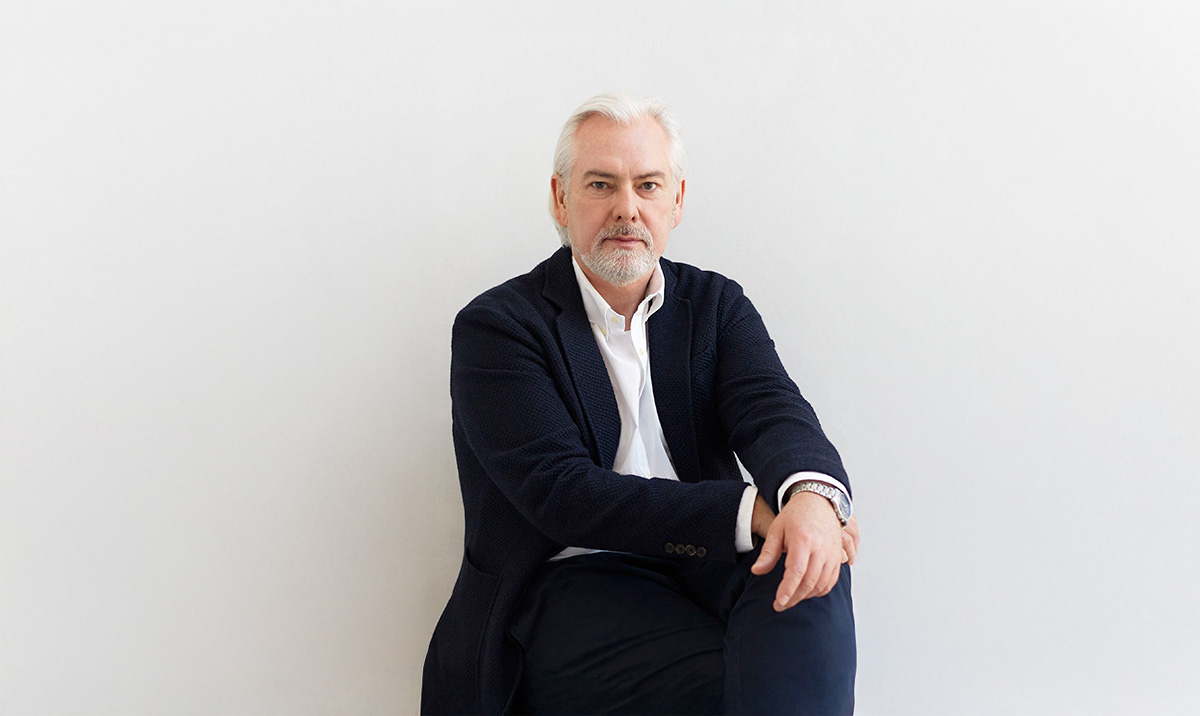
Jacek Olczak

CEO, Philip Morris International (PMI)

Jacek Olczak is the CEO of Philip Morris International (PMI), leading the company’s transformation toward a smoke-free future. With a career spanning over 25 years at PMI, he has held key leadership roles across Europe and Asia, driving innovation, operational excellence, and strategic growth in the global tobacco and nicotine alternatives market.

Authors

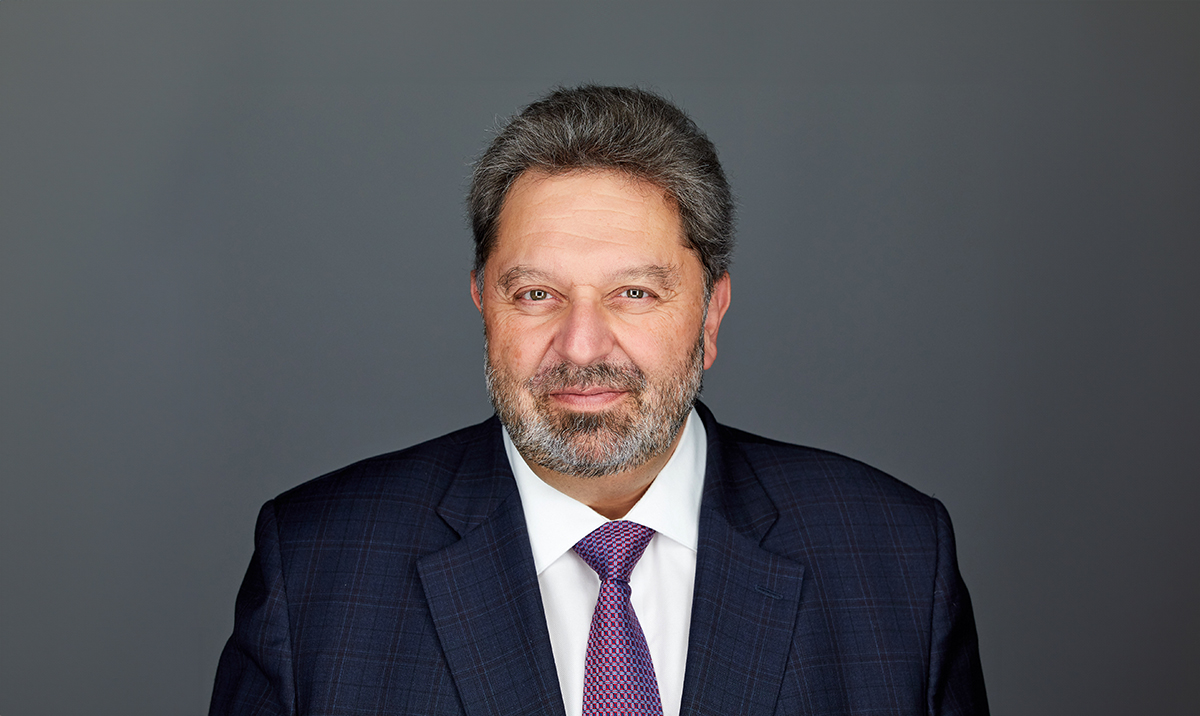
Jean-François Manzoni

Jean-François Manzoni

Professor of Leadership and Organizational Development at IMD

Jean-François Manzoni (JFM) is Professor of Leadership, Organizational Development and Corporate Governance at IMD, where he served as President and Nestlé Professor from 2017 to 2024. His research, teaching, and consulting activities are focused on leadership, the development of high-performance organizations and corporate governance. In recent years JFM has also been increasingly focused on finding ways to ensure leadership development interventions have lasting impact, particularly through the use of technology-mediated approaches, and on closing the growing managerial “knowing-doing gap”, i.e., the gap between what managers kind of know they should be doing and the extent to which they actually behave that way in practice.

More to explore

Learn Brain Circuits

Join us for daily exercises focusing on issues from team building to developing an actionable sustainability plan to personal development. Go on - they only take five minutes.
 
Read more 

Explore Leadership

What makes a great leader? Do you need charisma? How do you inspire your team? Our experts offer actionable insights through first-person narratives, behind-the-scenes interviews and The Help Desk.
 
Read more

Join Membership

Log in here to join in the conversation with the I by IMD community. Your subscription grants you access to the quarterly magazine plus daily articles, videos, podcasts and learning exercises.
 
Sign up
X

Log in or register to enjoy the full experience

Explore first person business intelligence from top minds curated for a global executive audience