
The AI productivity illusion
Confusing efficiency with productivity is to mistake speed for direction, and execution for value. Hamilton Mann explains how to avoid the pitfalls in your AI transformation...
 Audio available

by Heather Cairns-Lee, Eugene Sadler-Smith Published October 30, 2025 in Leadership • 11 min read •  Audio available
In an age dominated by data, it would be easy to dismiss human intuition as soft, vague, or irrational. Research by the Economist Intelligence Unit in 2014 into how C-suite executives make important decisions revealed a different picture. There was roughly a three-way split between intuition and experience (30%), data and analytics (29%), and advice from others (28%). In our work with executives, we find a similar pattern.
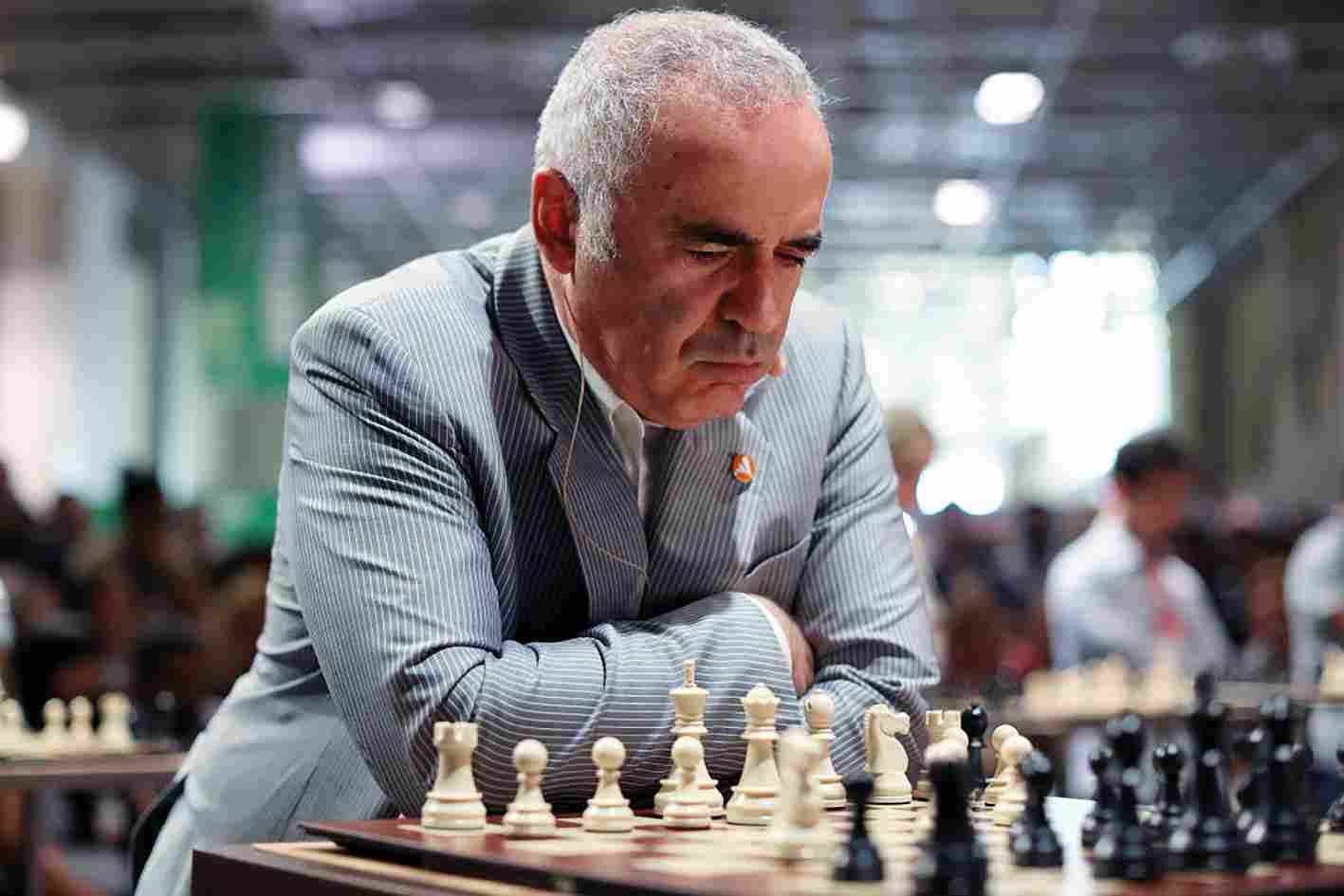
It’s not just in business that intuition comes to the fore. The former world chess champion Garry Kasparov said, “Intuition is the bedrock of our decision-making, especially in the quick-fire decisions that make up our daily lives.” And even at the highest level of human achievement, researchers have found that Nobel Prize-winning scientists rely on intuition to guide their work. As one laureate put it, “the intuition comes first; the logic comes after to explain it.”
Business decisions are often made in environments that are volatile, uncertain, complex, and ambiguous, and where the data on which AI needs to be built is incomplete, contradictory, or backward-looking. In these moments, the best leaders aren’t frozen by “analysis paralysis” or tempted to hand over their decision-making to AI. Instead, like chess grandmasters and Nobel laureates, they use their intuitive intelligence to act decisively.
But what is intuition? Should you trust it? How can it be developed to aid your leadership and decision-making? And is the power of human intuition under threat from the hyper-efficiency of generative AI?
Intuition is a “gut feeling” or a “hunch”. To make your gut feelings more accessible, and therefore discussable, ask yourself what happens when you intuit, and complete the statement: “When I intuit…” We asked 127 managers for the words they would use to answer this question. Responses show a consistent picture, and people often use metaphors, like alarm, beacon, inkling, radar, siren, and sensor.
Getting your intuitions out into the open is important because building intuitive intelligence starts by making sense of your own and other people’s gut feelings. To do so, you have to articulate them, and it’s helpful to do so by using images (for example, as a magnet that’s attracting/repelling an object, situation, or person) or metaphors (for example, “my inner GPS is telling me…”). This helps you interpret what your gut is telling you and decide what to do about it. So use metaphors and images to get your gut feelings onto the table.
The science of intuition defines it as a quick, automatic judgment based on unconscious processing of information and the recognition of patterns. It’s a product of learning and experience, unlike an instinct, which is hard-wired and doesn’t need to be learned.
One of the simplest definitions for intuition in the literature is “knowing what to do without knowing how or why you know”. It’s an ability, built up over many years, to be able to recognize situations and “just know” how to respond. This is because your intuitive mind is a consummate pattern recognition system.
The science behind this goes back many decades, when it was discovered that chess grandmasters don’t play the game analytically as we might expect. Instead, they play intuitively by seeing the arrangement of the pieces on the board as a whole pattern and not as individual pieces. Then, they unconsciously match the pattern in front of them to patterns that they’ve come across many times before. It’s been estimated that a chess grandmaster can have as many as 50,000 patterns stored in long-term memory. When they find a match, they intuitively make the right move. In a television interview following a rare defeat, the chess champion Magnus Carlsen remarked ruefully that he missed a lot of chances in the game because he ignored his intuition.
Grandmasters like Carlsen rely on their “intuitive expertise”. Attaining this level of performance is the final stage in a journey from unconscious incompetence (“naive”), via conscious incompetence and conscious competence, to the ultimate level of unconscious competence (“expert”). Estimates vary, but it takes approximately 10,000 hours to become an intuitive expert.
Many top business leaders have championed intuition as an indispensable leadership tool. Steve Jobs said, “Have the courage to follow your heart and intuition. They somehow already know what you truly want to become. Everything else is secondary.” Burberry’s Dame Angela Ahrendts stated, “Intuition is a form of wisdom, the gift of knowing without reasoning. When you’re not forced to overthink things, it’s amazing the clarity that emerges.”
Oprah Winfrey has spoken persuasively about the role of intuition in her life. In 2021, she commented that every big decision she’s made “came down to what feels right [and] what feels like the next best step”, not being unduly influenced by what others say but listening to the quiet internal voice that she calls her “inner GPS”, which guides her to her “true north”.
The best-selling book Thinking, Fast and Slow by Nobel Prize-winning psychologist Daniel Kahneman makes a fundamental distinction between two complementary systems of thought: System 1 represents the faster-thinking “intuitive mind” while System 2 represents the slower-thinking “analytical mind” (see chart below). Understanding this symbiosis can help us harness these different systems most effectively.
According to Kahneman’s model, the best results come from the intuitive mind and the analytical mind working in tandem. This could mean using intuition to generate ideas and analysis to validate them; for example, when a hiring manager has a gut feeling that a candidate is a good fit (System 1) but uses the analytical mind (System 2) to carry out a structured interview, verify qualifications, and check references. Using both “minds” gives a more balanced decision and counteracts any prejudicial tendencies that the intuitive mind might have.

How do you know when your intuition is a decision-making friend or foe? When does it help or hinder you as a leader? That all depends on two factors: you and the situation.
The ‘you’: Your intuition can be a powerful decision-making tool when you’ve the experience to back it up and you can work in pattern-recognition mode. But intuition has downsides that must be managed carefully. For example, the intuitive mind’s prodigious pattern recognition capabilities can sometimes see patterns and connections where they don’t exist. This is one reason we can be duped into judging people based on stereotypes that are a root cause of unconscious biases. You can guard against this through techniques such as “devil’s advocacy” (appointing a skeptic to challenge your gut feeling) or “pre-mortems” (imagining you’ve gone with your gut, the result has been a fiasco, and you unpick what went wrong and why).
The ‘situation’: The most consequential business decisions often have to be taken in situations of uncertainty – conditions where data is incomplete or precedent does not exist. In these situations, intuition can be a game-changer. In an interview at the Economic Club of Washington in 2018, Jeff Bezos spoke about how Amazon had been searching for a loyalty scheme for some time when, out of the blue, a junior software engineer came up with the idea of fast, free shipping. When the finance team modeled the concept, the results “weren’t pretty” because people love free shipping, and the risk was they’d buy lots of items that cost less than the shipping fee. The situation was unique and uncertain because there weren’t any loyalty programs for internet shopping, so there were no prior probabilities of success to go on. As a result, the decision was taken under conditions of uncertainty (odds of success not calculable) rather than of risk (odds calculable).
In this situation, Bezos trusted his gut and went with the idea because, in his own words, “If you can make a decision with analysis, you should do so. But it turns out in life that your most important decisions are always made with instinct and intuition, taste, and heart.” Time has proven Bezos’s gut feeling to be right about Amazon Prime.
Bezos, and other visionary leaders like him, are experienced enough to know that when you move into uncharted territory, you need a “compass” because there are no “maps” – precedent and data are scarce or non-existent. It’s in these situations where your informed intuition can give an invaluable sense of direction.
The ability to use your “intuitive compass” depends on at least two things: first, you need to have sufficient experience to be able to justify going with your gut; second, you need to recognize that going with your gut is a judgment, which, like any judgment, comes with the possibility of being wrong.
If you have enough data to make a decision with analysis, you should do so. However, more often than not – in business and life – important decisions have to be taken when there’s incomplete information or you don’t have time to gather all the necessary facts. It’s in these uncertain situations where informed intuition, based on learning and experience, comes to the fore.

The rise of generative AI, with its capability to recognize patterns and deliver quick, analytical decisions based on vast amounts of data, raises big questions about the role of human intuition. We’ve known for decades that algorithms can match and even outperform even the most expert human. Yet, while AI can process data much faster than us, our intuition remains a powerful, under-appreciated asset.
Research reveals a complex interplay between how people interpret AI-generated recommendations and how their intuition influences their decisions (Chen et al, 2025). A key finding is that people don’t rely on AI in a rational way: they interpret AI advice through the lens of their own intuitions, even when detailed explanations are available. For leaders navigating the tension between automation and autonomy, the challenge is knowing when to rely on AI and when to trust their gut.
AI excels when the data is abundant, clean, and relevant, and the cost of error is low and reversible. In these situations, AI can amplify efficiency and effectiveness, often spotting patterns that are opaque to people. Yet even in these cases, AI’s advantage and the validity of its output rely on understanding the context of the situation in which the decision has to be taken. For example, in e-commerce, AI excels at generating product recommendations using abundant, clean data. The risk of error is low, so it can boost efficiency by spotting patterns we might miss. However, its effectiveness depends on how well it understands the context. For example, is the user shopping for themselves or buying a gift?
Human intuition plays an invaluable role when:

Here are four actionable insights based on recent research that leaders can use to calibrate their intuition with AI in decision-making.
1. Use intuition as a diagnostic filter. Don’t accept or reject AI recommendations indiscriminately. Use your intuition as a litmus test. If something doesn’t feel right, go find out why. Allow your gut feeling to trigger deeper investigation.
2. Train yourself and your team to evaluate explanations, not just outputs. Teach yourself and your team to ask, “Does this explanation make sense in our context?” rather than “Do I like this answer?”
3. Create safe spaces for disagreement with AI. Intuition often manifests as hesitation or discomfort. Normalize the idea that it’s OK to question AI outputs, especially when explanations don’t feel satisfying. This avoids both blind trust and reactive dismissal.
4. Document when intuition conflicts with AI and learn from it. Humans often get it right when they question AI with good cause. Encourage teams to log and analyze instances where intuitive disagreement with AI led to better decisions – and build those patterns into future system design or training.
The “traffic light” model (see illustration above) summarizes some tactics for managing situations when humans and AI agree or disagree.
The pattern recognition and analytical capabilities of AI are prodigious, but they don’t render human intuition meaningless. The things that AI struggles with currently but which come naturally to people with a well-developed intuitive intelligence include empathy and social relationships, moral judgment and ethics, foresight and visioning, creativity, invention and innovation, and taking decisions in data-poor and time-pressured situations.
The future of intelligence will likely be hybrid, a best of both worlds, where the two forms of human intelligence (System 2, analytical intelligence, and System 1, intuitive intelligence) work in partnership with AI.
Even in the age of AI, intuitive intelligence will give us an edge and enable us to continue to add value. Leaders who know when to trust their gut, when to interrogate AI, and how to balance both intelligences will be better equipped to lead in a future where decision-making is based on human inputs and machine outputs.
To dive deeper: Read more about how to develop your intuitive intelligence in Eugene Sadler-Smith’s latest book, Trust Your Gut: Go with intuition and make better choices (Pearson, 2024).

Affiliate Professor of Leadership and Communication
Heather Cairns-Lee is Affiliate Professor of Leadership and Communication at IMD. She is a member of IMD’s Equity, Inclusion and Diversity Council and an experienced executive coach. She works to develop reflective and responsible leaders and caring inclusive cultures in organizations and society.

Professor of Organizational Behaviour at Surrey Business School
Eugene Sadler-Smith, Professor of Organizational Behaviour at Surrey Business School brings his deep expertise in leadership development and intuitive intelligence to the conversation, offering unique insights and actionable strategies for leaders, entrepreneurs, and professionals.
January 26, 2026 • by Hamilton Mann in Audio articles
Confusing efficiency with productivity is to mistake speed for direction, and execution for value. Hamilton Mann explains how to avoid the pitfalls in your AI transformation...
Audio available
January 22, 2026 • by Shelley Zalis in Audio articles
Multigenerational teams bring competitive advantages. It’s vital to tap into the wisdom and experience of older workers, urges Shelley Zalis....
Audio available
January 21, 2026 • by Rupa Dash in Audio articles
As women live longer, society must rethink careers and leadership to unlock a longevity-equality dividend that enables women to contribute and lead at every life stage....
Audio available
January 16, 2026 • by Jørgen Vig Knudstorp in Audio articles
Real influence in the boardroom comes not from power or persuasion, but from humility, clarity, and the courage to disagree, says Jørgen Vig Knudstorp...
Audio availableExplore first person business intelligence from top minds curated for a global executive audience