
Purposeful Third Acts
We’re living through a longevity revolution where, for some people, the traditional concept of retirement is becoming obsolete, says Zabeen Hirji...

by Gerd Gigerenzer Published October 1, 2026 in Leadership • 6 min read
Most modern courses on management, leadership, and finance teach aspiring managers that rational decision-making means choosing the alternative with the highest expected utility.
Most modern courses on management, leadership, and finance teach aspiring managers that rational decision-making means choosing the alternative with the highest expected utility. This requires foreseeing all the possible consequences of each potential option. Good managers, so the story goes, search for all relevant options, carefully analyze all the possible consequences, weigh the value (the “utility”) of each possible outcome by its probability, and calculate which option maximizes the expected utility. “More is better” has become an article of faith: more data, more information processing, and more analysis are all assumed to improve decision making.
Maximizing expected utility can be a useful guide in stable, well-defined situations, where the range of possible outcomes is reasonably predictable. However, executives are operating in an increasingly volatile, uncertain, complex, and ambiguous (VUCA) world. In this environment, the advice to collect all information, consider all options, and anticipate all the possible consequences and their associated probabilities is of little use.
To make business decisions aboutwho to hire, when to terminate a contract, or whether to acquire another company in a world where we can’t anticipate all possible consequences, executives often rely on a set of tools referred to as “heuristics.” A heuristic is essentially a rule of thumb – a simple way of making a decision without trying to analyze every possible option and outcome. Surprisingly, business schools rarely instruct their students on how to use these powerful tools to make intelligent decisions. Instead, if heuristics are mentioned at all, they are portrayed as something to avoid in favor of more complex decision strategies. But in times of uncertainty, they are often the best you can do.

Develop key leadership capabilities and accelerate your impact as a leader
After decades of holding fast to the assumption that all risks can be foreseen, managed quantitatively, and controlled, an appreciation of the reality of uncertainty is re-entering corporate and government offices.
In my most recent book, Smart Management: How Simple Heuristics Help Leaders Make Good Decisions in an Uncertain World, my co-authors Jochen Reb, Shenghua Luan and I give uncertainty the attention it deserves, and consequently we take heuristics seriously.
A simple example to explain a heuristic is the 1/N rule, famously used by Nobel laureate Harry Markowitz. He won the Nobel Memorial Prize in Economic Sciences in 1990 for his work on modern portfolio theory, a mathematical approach to choosing investments by balancing risk and expected return. When it came to investing his own retirement savings, you would expect him to have used it. He did not. He used a simple heuristic called 1/N. N is the number of assets or alternatives. If there are two, you split 50-50. If there are three, a third each. It is very simple. It works because it needs no data. The optimization method he was famous for requires vast amounts of reliable data to estimate its parameters correctly. Today many funds which run on something close to 1/N, like ETFs, do better in many situations than optimization.
Another useful heuristic in situations of uncertainty is satisficing, a term coined by my mentor, Herbert Simon. Satisficing means finding a solution that is good enough when you cannot find the best one. This can, for example, be applied to hiring, deal-making, or vendor selection; it means stopping once you find a person or solution that meets your requirements rather than exhaustively searching for the optimal one. If we did not apply this to finding the right partner, for example, we might die before we meet that person.
An example of a company that relies on several heuristics as part of its corporate culture is 3M, and these appear to play a key role in its success. Founded in 1902 as the Minnesota Mining and Manufacturing Company, 3M has maintained a high level of successful innovation ever since. Its product line contains over 60,000 products, including global household brands such as Scotch Tape, Post-it Notes, and Scotch-Brite. One of these heuristics is the 15% rule. Dating back to around 1948, this rule allowed 3M scientists and engineers to spend around 15% of their work time following their own insights in pursuit of problem-solving, with no requirement that it led anywhere. In a small world of calculable risk, time and money could be saved by only allowing some of its most creative employees to do this. But in reality, 3M operates in a world where nobody can predict who will have the next breakthrough idea. Many of the company’s most valuable patents, including the Post-it Note itself, came out of 15% time. The 15% rule has been imitated by several other highly innovative companies such as Hewlett-Packard and Google.
“Imitate the successful” is another successful heuristic that people are far less comfortable admitting they use. All too often we think of innovation as a flash of genius, but it rarely works that way. Innovation often happens by copying what already exists and works and then adding one step. Apple, among countless other companies, was heavily inspired by the design principles of Dieter Rams, longtime head of design at the German consumer products company Braun. Apple applied the heuristic to design the iPod, closely imitating Braun’s T3 transistor. Facebook copied the algorithms that underpin its entire business model.
In my own organization, the Max Planck Institute for Human Development, that I have directed for many years, I use another simple heuristic to ensure that I do not get stuck inside my own ideas. I always hire at least one contrarian. A contrarian is someone who, without fear of authority or group pressure, asks critical questions, respectfully, but persistently. As a director, I want to be challenged in order to innovate and not stagnate.
Executives routinely use heuristics, and yet the misplaced association of heuristics with errors makes them mostly hesitant to admit to it.
Executives routinely use heuristics, and yet the misplaced association of heuristics with errors makes them mostly hesitant to admit to it. This hesitancy is generally weaker in family and entrepreneurial businesses, where intuition is more acceptable, and stronger in large corporations and public administrations, where the ideology of optimization dominates.
As a result, instead of standing by their heuristic decisions, executives routinely attempt to hide the actual heuristic decision-making process by creating the appearance that the decision was reached following an exhaustive, quantitative analysis.
Consider a typical case: An executive makes a decision based on gut feeling, as no clear favorite emerges after considerable deliberation. Being afraid to take responsibility for the intuitive decision, the executive instead hires an expensive consulting firm for the purpose of justifying a decision that has already been made with the help of an impressive array of numbers and analytics.
How frequently does that happen in large corporations? When I asked the principal of one of the largest consulting firms worldwide how many of the firm’s projects involved justifying decisions that had already been made, the response (given on condition of anonymity) was that it was over 50%.
My co-authors and I believe that the time is ripe to revise the image of heuristics in management and business from being biased to being smart.
Consider how much wasted money, time, and effort could be avoided if organizations took heuristics seriously and studied how and when they work. As a result, they would not have to hide the fact that they regularly used them. Instead, they could feel good about making competent decisions in a world of uncertainty.
To put this into practice, leaders should ask three questions before making a decision:
If the answer is no, don’t be afraid to trust your gut. Shift away from a focus on optimization and make use of smart heuristics instead.
Gerd Gigerenzer will speak at the 2026 Global Peter Drucker Forum, taking place in Vienna on 4–5 November. This year’s theme is Next Gen Innovation: When Everything Depends on Human Ingenuity.
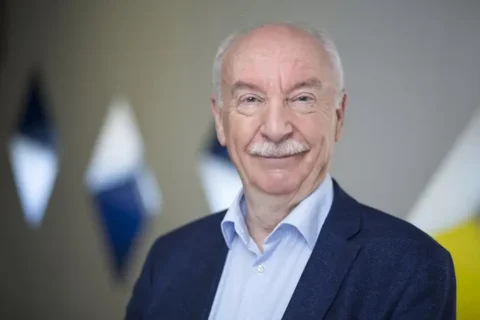
Director of the Harding Center for Risk Literacy at the University of Potsdam
Gerd Gigerenzer, long-time director at the Max Planck Institute for Human Development, is currently Director of the Harding Center for Risk Literacy at the University of Potsdam, Faculty of Health Sciences Brandenburg, and a partner at Simply Rational -The Decision Institute. An internationally renowned psychologist, he is known for his research on decision-making under uncertainty, heuristics, and risk literacy. He is the author of several award-winning books, including Risk Savvy: How to Make Good Decisions and How to Stay Smart in a Smart World: Why Human Intelligence Still Beats Algorithms.
September 19, 2025 • by Zabeen Hirji in Global Peter Drucker Forum
We’re living through a longevity revolution where, for some people, the traditional concept of retirement is becoming obsolete, says Zabeen Hirji...
Explore first person business intelligence from top minds curated for a global executive audience