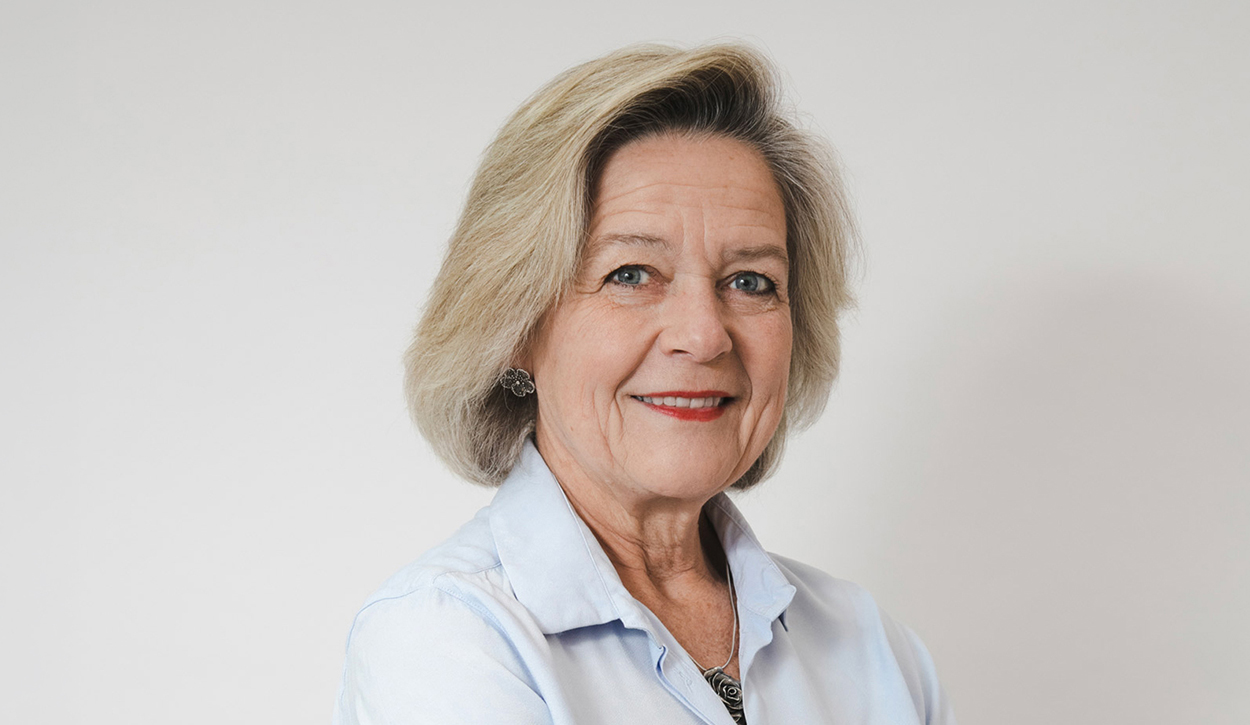
Katarina Bonde: Are you scaling, or just burning cash?
Tech executive Katarina Bonde on scaling responsibly, navigating investor tensions, and staying pragmatic in the current AI bubble....
by Jim Pulcrano Published April 17, 2024 in Innovation • 15 min read
How do we pick winning startups? Honestly, I don’t know.
Over the past 25 years of running the IMD Startup Competition, we’ve had a relatively high level of success with the ventures and entrepreneurs we’ve chosen. Many of them have gone on to receive significant funding, including medtech company Volumina, MeduSoil, a manufacturer of biomaterials, chemical recycling firm Depoly, and, most recently, solar tile manufacturer FreeSuns.
Others have gone public, such as HeiQ, a maker of durable and high-performance textiles, which was listed on the London Stock Exchange in 2020, and biotech AC Immune, which floated on the Nasdaq in 2016. There have also been high-profile acquisitions: Swiss pharma giant Roche snapped up biotech Glycart in 2015, Apple acquired Faceshift, a maker of a technology that allows users to drive characters with their facial expressions, and in the same year Intel bought Lemoptix, a maker of micro-opto-electromechanical systems. I hope this year’s crop of Startup Competition winners will go on to enjoy similar levels of success
But whenever I’m asked how we pick winners, in other words, the 602 ventures that have collaborated with us since 1999, I’m never sure how to answer, so in this article, I’ll try to explain why I think we’ve been successful.
In my opinion, six things are critical to picking winners:
Our team and network — getting diverse perspectives
Pattern recognition — experience over time
Asking the right questions and an ability to “read between the lines”
Understanding markets — financial and normal
Understanding the fundamentals of entrepreneurship — academic and real-world
Being aware of our personal biases
“Part of the magic is the arguments that we have about the startups we select.”
For most of the past years, I’ve chosen the ventures together with my dear colleague, Benoit Leleux. I consider this essential. Benoit and I move in different circles, have had different careers, and simply see the world differently. Having that diversity is essential to dissecting and synthesizing the information we receive. Part of the magic is the arguments that we have about the startups we select — something that venture capital firm Greylock, which famously backed Facebook, LinkedIn, Instagram, and Airbnb, among others, has also spoken about. When Benoit and I agree wholeheartedly, it feels good, but when we disagree, I think there is a better chance we’ll make a good decision.
Though we make the final decisions, Benoit and I have never been alone in this endeavor. Partnering with Verve Ventures, a leading pan-European VC firm, Innosuisse, the Swiss Innovation Agency, and VentureLab, which provides training and support to startups, provides us with different perspectives. In addition to these Swiss institutions, there are our personal contacts. I know nothing about DNA digital data storage, but I know three people in Silicon Valley who do. I admit I don’t understand Bitcoin and blockchain, but thankfully, Benoit and several IMD colleagues are experts.
When I see someone listed as an advisor to a startup, I email them to get their opinion on the firm and the founder. If I know a competitor in the same space, I’ll call them to see what they think of their potential rival. If I feel a firm is not ready to go to market, I call a potential customer to see at what stage they would take the product seriously. Connecting the dots from the network and triangulating the varied inputs allows me to paint a fairly good picture of the venture and the team.
It’s an admission of age, but Benoit and I have been involved with startups for over 60 years between us. We’ve seen thousands of pitches and business plans and met as many entrepreneurs. We’ve seen (and made) a lot of mistakes. We’ve witnessed the entire startup lifecycle over and over again. We’ve seen the fruits of our decisions, good and bad. This creates certain heuristics that permit us to move beyond the text in an executive summary quickly and get into deeper-level questions about the viability of a firm or the motivation of the founders.
What are the insights needed to ask the right questions?— Bruce MacGregor, Partner at IDEO
These days, most pitches and executive summaries contain the right and same information. This is helpful, and with pattern recognition, one can quickly leap to the questions that haven’t been answered. Some of them follow a simple Western logic of “how.” How will you get those first five customers on board? How does the purchasing agent make her decisions? How does your technology integrate into the customer’s way of doing things today, and are there enough skeuomorphs — objects or features that imitate the design of older objects — to make something new feel familiar to them?
Other questions are more the Eastern dialectical “whys,” trying to understand why this opportunity is good now, why this team is the right one to do it, and why the contradictions in the market can be lived with as the firm gets traction. But at times, you need a dialogue with the entrepreneur or someone who knows the technology or the market to find out, as my friend Bruce MacGregor of California-based design and consulting firm IDEO says, “What are the insights needed to ask the right questions?”
Equally, when reading a venture’s executive summary or looking at the website, we often need to read between the lines. When they say they have acquired five customers, does that mean they saw their photos on LinkedIn, had a conversation, made a proposal, or already sold products to those five customers? When they say, “We are in stealth mode,” does that mean we don’t have a clue what we’re doing yet, or we have something interesting that could easily be copied in a crowded field, or we’re focusing right now and don’t want distractions?

“IMD provides us with a great platform to understand global firms and consumers.”
Even with everything I’ve written so far, we couldn’t choose winners if we weren’t immersed on a day-to-day basis in the local and global markets that decide what is hot from an investment perspective and what customers are likely to buy. IMD provides us with a great platform to understand global firms and consumers. Listening to the markets, following the blogs, and observing what people do — all of this is needed to know whether this opportunity is right.
Entrepreneurs are different. Startups are not just small or young multinationals. Understanding this world both from a pragmatic, feet-on-the-ground, been there, done that, know-how-it-feels-as-a-founder perspective, as well as the cold-eyed clinician’s analysis of data and proving or disproving of hypotheses, gives us, in effect, two brains each with which to analyze each venture.

When making our decisions, we must also be aware of possible biases and assure ourselves that we are making the right decisions for the right reasons.
Are we choosing this firm because it will make us or IMD look good? Are we choosing this venture because I want to invest? The obvious conflicts of interest are typically on the surface, but worse are rationalizations that we, as decision-makers, may not be aware of.
Earlier, I argued that our long experience allows us to make mental shortcuts in evaluating a firm, but this can also create blind spots. When examining something we like, we tend to minimize its risk and cost; when evaluating something we dislike, we do the opposite. All we can do is be self-aware, and when that like or dislike feeling arises before we’ve even looked at all the data, force ourselves to look deeper.
When I am on a VentureKick jury or any group evaluating an entrepreneur’s pitch, there is a natural desire to go along with the group; few of us like to be seen as the outlier. Especially when there is a strong individual on the panel and everyone starts to fall in behind him or her. Worse is when there is a charismatic individual with an extreme view that you might sort of agree with; to keep your standing in the group, you’ll exaggerate your views in order to maintain your status, even though the charismatic leader’s view may be far off yours. The only way to avoid groupthink, if the group doesn’t have enough diversity, is to think for oneself and have the courage to express your views. A cool trick that works: Ask everyone to write down their opinion of the startup before the discussion begins. Even better, ask them to write down their marks, say 1-5, on product-market fit, founder and team, market size, and so on.
“These guys are just like that one we looked at five years ago, and you remember what happened to them, don’t you?” Salience is how noticeable, observable, or memorable something is. We tend to emphasize the most salient information when explaining the causes of behaviors or situations. Is this really the same situation? Is this venture really like the one we turned down in 2013?
We see what we want to see. This is our unconscious tendency to attach more weight than we should to information consistent with our beliefs, hypotheses, and recent experiences and to discount information that contradicts them.
Some entrepreneurs are very good at this. They offer an amazing fact or piece of data in the first lines of their pitch that then guides us unconsciously toward where they want us to go. This is where asking good questions comes in. Where does the data come from? Which parts are extrapolations, and extrapolations of what? Have guesses now been transformed into estimates? What is the frame of reference that the entrepreneur is trying to keep me in? Stepping back for a minute and asking if this is too good to be true, and then asking the questions that haven’t been asked (because everyone else is anchored), or, as Franck Riboud, former chairman of Danone, said in a workshop a few years ago, asking the questions that surprise people.
It is also known as the "What is beautiful is good" principle. Whether it is a picture of the entrepreneur himself or his beautiful gadget, we tend to attribute a firm’s success or failure to the personality or looks of the leader or the sexiness of the firm’s device, as I learned from my colleague Phil Rosenweig, who wrote the book The Halo Effect1. Try to remove false inferences.
Are we choosing this startup because it is the hot “item” this year? Or do we have to have one startup in our portfolio from this field because everyone is talking about it? Several years ago, it was 3D printing. Then, it was drones. Now, of course, it’s GenAI.
The local media are full of articles about this startup, so it must be good. I have access to lots of information about them, so it’s easier to think they’re good. We are all guilty of using the data we have at hand, and our thinking is strongly influenced by what is personally most recent, dramatic, often heard, or close at hand. This is where the reference checks become vital. The media may be right, but then again, they may just be selling advertising space.
Do we clearly understand the downside of our decisions, or do we push that out of our minds so that we remain confident and support our positive self-image? With every decision on every startup that we choose for the IMD Startup Competition, especially for the EMBAs, I project myself to that week in Silicon Valley with the class and the entrepreneurs, and try to imagine how the entrepreneur will work with the participants, how the students will perceive the startup and how the venture capitalists to whom we pitch will react to these ventures. If I don’t feel good about that, I go back to the data and the references.
What I’ve written here could be applied to most business decisions. But one thing to keep in mind is that Benoit and I aren’t picking “winners” in the way that a venture capitalist might. We’re choosing companies that we hope will provide a great learning opportunity to our MBA and EMBA participants, for whom they’ll provide tremendous management value and eventually bring their product or service to market and improve our lives. And perhaps there, anecdotally, is one of the most important parts of our ability to choose winners: We’re looking for committed entrepreneurs we can learn from and who are open to learning themselves.
Parse that sentence, and we have the answer for how to pick winning startups, even as an investor.

Adjunct Professor of Entrepreneurship and Management
Jim Pulcrano is an IMD Adjunct Professor of Entrepreneurship and Management. His current projects include teaching in Lausanne, London and Silicon Valley, research on disruption, and various strategy, networking, customer-centricity, and innovation mandates with multinationals in Europe, Asia, and the US. At IMD, He is Director of the Venture Capital Asset Management (VCAM) program and teaches on the Executive MBA (EMBA), Orchestrating Winning Performance (OWP), and full-time MBA programs.
March 4, 2026 • by Michael R. Wade in Startups
Tech executive Katarina Bonde on scaling responsibly, navigating investor tensions, and staying pragmatic in the current AI bubble....

February 13, 2026 • by David Sluss, Katie Badura, Yufei Zhong in Startups
Passion for the product is vital to launch a startup, but it’s not enough to lead a scaling enterprise. David Sluss, Katie Badura, and Yufei Zhong share a two-step approach to...
 Audio available
November 26, 2025 • by Milda Mitkute in Startups
From clearing out her wardrobe to building Lithuania’s first tech unicorn, Vinted founder Milda Mitkute reflects on what it takes to grow responsibly...

November 13, 2025 • by Jim Pulcrano in Startups
Matthew Lapinski, CEO of Clee Medical, shares how the Swiss startup is making brain surgery safer, faster, and more precise....
Explore first person business intelligence from top minds curated for a global executive audience