
IMD AI Safety Clock moves closer to midnight
IMD’s AI Safety Clock shows tension between rapidly expanding artificial intelligence capabilities and lack of meaningful oversight, raising risk. ...
by Julia Binder, Manuel Braun Published December 12, 2025 in Sustainability • 13 min read
Nestled in the foothills of southern Germany in the Allgäu region, Baufritz has quietly built a reputation as a pioneer in sustainable living. Its homes are made with 85% timber, prefabricated in energy-efficient facilities, and insulated using HOIZ, a patented material made from recycled wood shavings. Every detail, from shielded wiring to electrosmog protection and smart ventilation, reflects a commitment to well-being, environmental impact, and craftsmanship.
But this is not a boutique operation. With a vertically integrated model, a growing international footprint, and a fully modular and prefabricated building system, Baufritz is showing that ecological building can scale and set new benchmarks for performance along the way.
For Dagmar Fritz-Kramer, the company’s CEO, this is also a personal quest. An architect and interior designer by training, she grew with the business and has spent the past two decades expanding its sustainability ambitions. Under her leadership, the company has won some of Germany’s highest environmental awards, including the Umweltpreis 2023, awarded by the German president.
To be sure, for Fritz-Kramer, the bigger goal is sustainable system transformation in the built environment. Her focus is on building sustainable, healthy, modular homes made almost entirely from wood, and to make these practices the new standard in an industry still dominated by concrete, waste, and compromise.
“Good for people and nature. No compromises. This is our conviction and philosophy,” she says. “We build homes that are healthy to live in and make responsible use of nature’s resources.”
As Europe’s construction industry grapples with economic downturn, rising material costs, and intensifying pressure to cut carbon, Baufritz finds itself grappling with a bigger question: How do you scale circular solutions in a system that was not designed to support them?
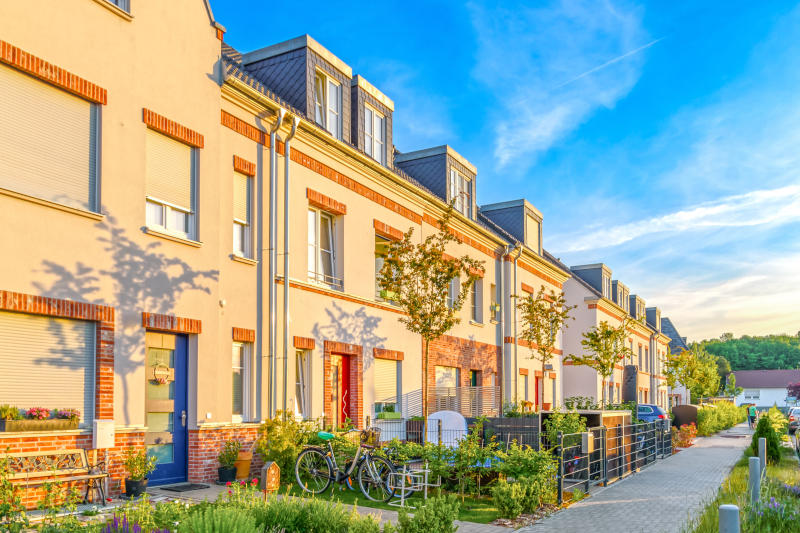
By 2023, Baufritz had built a strong reputation across Germany, Austria, Switzerland, and the UK. Its timber homes were carbon-storing, health-focused, and beautifully designed. Its production was vertically integrated, and its craftsmanship uncompromising. The culture embedded a deep sense of purpose, shown by a high degree of workforce loyalty. But even as the company was winning environmental awards and growing steadily, pressure was mounting.
The construction sector across Europe was in trouble. High interest rates, rising inflation, and supply chain disruptions were hurting companies. In Germany alone, the industry entered its fifth year of recession. At the same time, the goal of turning 21 million buildings in Germany climate-neutral by 2045, while meeting Europe’s objective of climate-neutral buildings and construction by 2050, would require creativity and meaningful change in the sector.
Baufritz was in a strong market position, but the dynamics had clearly shifted. “We had to regularly reinvent ourselves,” says Fritz-Kramer, reflecting on the long history of the company. “This time, we could see that staying still would not be enough.”
The built environment has moved to the center of the climate debate. Buildings are responsible for more than a third of Europe’s emissions, and nearly the same share of its waste and material use. Most of the housing stock is inefficient, and the renovation rate remains too slow to meet national climate goals. Policy across the European Union was pushing for the “Renovation Wave,” reducing energy consumption and doubling renovation rates. Policymakers were calling for compact, energy-efficient, low-impact construction – and at the same time, governments were under pressure to develop affordable living spaces. The path forward was riddled with complexity.
For a company like Baufritz, the tradeoffs were real. Entering new markets meant adapting to entirely different economic models. Expanding into apartment buildings challenged its premium positioning. Developing solutions for brownfield redevelopment or serial renovation meant facing new approaches towards design and production, while navigating risk-averse municipalities. These were markets defined not by margin, but by complexity.
Fritz-Kramer and her leadership team had to ask themselves hard questions. How could they maintain their commitment to quality and sustainability while competing on cost in large-scale developments? How could they scale and push the boundaries in new geographic markets, but not overload the organization? How could they apply their prefabricated timber model to retrofit buildings that were never designed to accommodate it? How could they take what had made them distinct and make it work in systems that weren’t built for it or required new types of partners?
“We’re not trying to be the biggest,” she explained. “We’re trying to be the best and prove what’s possible.” But that required more than technical expertise. It meant new alliances, new ways of working, new experiments, and a willingness to take calculated risks in uncertain terrain.
What made it even more urgent was the fact that the system around them wasn’t moving fast enough. The gap between ambition and reality was widening, and waiting for regulations or the market to catch up was no longer an option. If Baufritz was serious about enabling a more circular and regenerative future, it would have to start building that future itself, one project at a time.
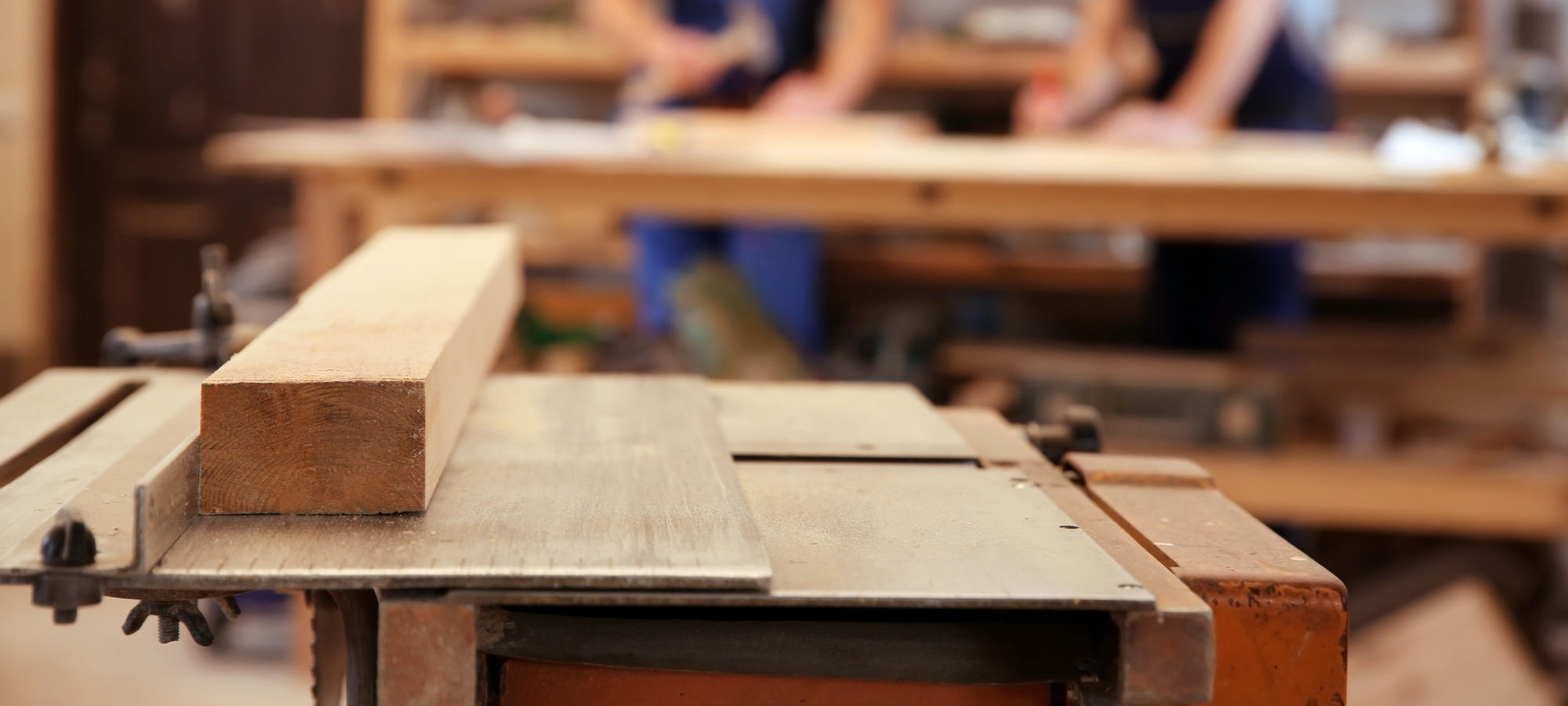
“The company started as a carpenter’s workshop in 1896 by Sylvester Fritz.”
Over its 125-year history, the company has had to reinvent itself several times. Adaptation and reinvention are part of its DNA, which speaks to the nature of a family business. Baufritz is typically an early mover that successfully masters challenges and captures new business opportunities.
The company started as a carpenter’s workshop in 1896 by Sylvester Fritz. In the 1930s, Johann Fritz started the serial production of wooden modules. In 1975, Hubert Fritz shifted the direction of the company towards sustainability, aiming to use only natural materials. He invested in a new R&D department, developed partnerships with universities, and was able to patent the world’s first ecological insulation material.
At the helm since 2004, Dagmar Fritz-Kramer is now the company’s fourth-generation leader, challenging it to embrace modern designs, with the link to nature in mind, and doubling down on sustainability. Her focus has been on energy-efficient houses, optimizing resource use through healthy and bio-based materials, and emphasizing quality, durability, modularity, and repairability.
The company has also successfully entered the United Kingdom, expanding beyond Germany, Austria, and Switzerland. A digital smart-home configurator was launched to give customers a creative way to plan. Internally, Fritz-Kramer decided to invest in a more modern, family-friendly workplace and employee well-being, including setting up an internal nursery, supporting diversity programs, bike-to-work programs, yoga sessions, remote work options, and job-sharing opportunities.
If Baufritz wants to shape the future of construction again, it has to break the boundaries of its own walls and step beyond single-family homes to reimagine what timber-based, circular building could look like at scale.
“The evolution of the European construction industry towards material-efficient, prefabricated, low-impact construction presents a major economic opportunity for the built environment value chain,” a 2024 report from the Ellen MacArthur Foundation, Systemiq, and Arup concluded. For Baufritz, it affirms a path they had already begun to follow.
That means entering entirely new markets, developing new products, and building new ecosystems. Apartment buildings, modular extensions, brownfield redevelopment, and even full neighborhood projects are now on the horizon. This requires working with new stakeholders, new partners, and new customer segments. For a company deeply rooted in craftsmanship and health-focused design, this was unfamiliar ground. But the moment demanded it. “We had to make a choice,” recalls Fritz-Kramer. “Either stay in our comfort zone or lean into the bigger role we could play.”
The transformation began with multi-family housing and larger projects. Urban policy across Europe was shifting. Cities were calling for denser, more efficient developments, but few solutions met the challenge without compromising environmental impact. Baufritz responded by extending its modular system to accommodate apartment buildings and shared housing concepts. It also increasingly developed commercial buildings (e.g., schools, kindergartens, modern office buildings, or medical practices). The same principles applied: all components were prefabricated in-house, from wall segments and staircases to sanitary installations and energy systems. These structures maintained the same precision, energy performance, and material integrity as the company’s well-known single-family homes. But now they have brought those values into new urban contexts.

With over 75% of Europe’s buildings still performing poorly on energy, the need for large-scale retrofitting is clear. Baufritz began applying its expertise to this challenge. Prefabricated timber construction worked extremely well for renovations, for example, insulating and converting attics, extensions, or adding floors. In one pilot project, the company developed a fully assembled façade module that could be installed directly onto existing buildings. Complete with integrated windows, insulation, and solar shading, the shell drastically reduced renovation time while improving energy efficiency and comfort.
“We, together, must bring a great deal of innovation and courage to build within existing structures,” says Fritz-Kramer. “At Baufritz, this means densification, extensions, additions, and serial renovation.”
Internally, the company’s engineering team continued to push the boundaries of product innovation, further evolving the modular design system and degree of prefabrication and vertical integration. For example, one recent innovation was a prefabricated technical engineering room, delivered to the site as a single unit. The module contained all the required systems for power, heating, and water, and could be dropped into the building during assembly, minimizing construction complexity and accelerating delivery.
Baufritz was also experimenting with regenerative innovation at the material level. In partnership with research institutions and ecological organizations, the team began testing construction components made from peatland plants. The approach offered dual benefits: creating bio-based, low-impact materials while contributing to the restoration of carbon-rich landscapes.
Baufritz no longer simply delivers homes. It enables circular living. This means influencing systems beyond the building itself, including energy infrastructure, renovation finance, regulatory environments, and material supply chains. Perhaps the most significant transformation is building new forms of strategic collaboration and shaping the new ecosystems in the built environment.
Winning in new growth market segments requires more complex stakeholder alignment between contractors, architects, engineers, suppliers, and policymakers. Transforming larger projects to wood-based construction and renovating at scale can mean complete district solutions and neighborhood development. The Baufritz team assesses different niche market segments, for example, specialized solutions for multigenerational homes, offering neighborhoods an alternative solution to underutilized single-family homes.
Baufritz also began building closer relationships with urban designers and renewable energy providers to deliver more integrated offerings. A partnership with Octopus Energy, for example, introduced the Zero Energy Bill concept for Baufritz clients who install solar panels, heat pumps, and battery storage, and don’t pay energy bills for five to 10 years.
It’s a compelling proposition that aligns sustainability with financial certainty. The company takes an active role in shaping policy and sustainability standards, joining platforms like the Alliance of Pioneers to drive peatland restoration. In doing so, Fritz-Kramer contributes her expertise in the business–policy interface and helps shape industry dialogue (e.g., around the topic of cradle-to-cradle).
The shift is reinforced from within. Fritz-Kramer introduced a more agile leadership model that empowered a second line of decision-makers and created a culture of open, often intense strategic debate. “We’re building homes that won’t just run longer,” she explains. “They’ll run smarter, with less waste and more value, over decades.”
Fritz-Kramer and her team understood that enabling change meant stepping outside the boundaries of construction.
Baufritz’s story is not just about sustainable construction. It is a case study in how businesses push the boundaries of circular innovation and lead in new ecosystems. By shaping circular ecosystems that regenerate resources, connect value chains, and unlock new forms of collaboration, Baufritz shows how companies can drive transformation well beyond their immediate product or industry. Under Fritz-Kramer’s leadership, Baufritz has evolved from a housebuilder into a systems shaper, proving that long-term purpose and practical innovation can reinforce one another.
These lessons hold far beyond the construction industry.
Baufritz is investing heavily in modular systems that are designed for future change.
For Baufritz, the next chapter is not only about scaling more homes. It is about reshaping how buildings, cities, and ecosystems interact. The company has already shown what is possible on an individual level: homes that store carbon, generate their own energy, and promote well-being. Now, the goal is to move beyond isolated projects and help transform the larger systems in which they exist.
This means expanding into new layers of the built environment. Mastering prefabricated modularity. Apartment buildings. Renovated districts. Mixed-use developments. Public spaces that integrate timber, nature, and energy intelligence from the beginning. The ambition is to grow the business and redefine the default logic of construction itself. Circularity must become the baseline, not the exception.
Baufritz is investing heavily in modular systems that are designed for future change. Buildings that can evolve, not just age. Structures that are made to be repaired, extended, disassembled, and reused without waste. The company is already prototyping solutions that integrate renewable energy, digital building intelligence, and prefabricated retrofitting into a seamless system. These are homes and buildings that fit into a regenerative loop across materials, energy, and function.
But scaling this model will not be simple. The company knows that the system it operates in is not yet ready for circular thinking at scale. Regulations often conflict. Financing models still reward short-term efficiency over long-term performance. The ecosystem needs to consider local characteristics. It takes time to build trusted relationships with craftsmen within and across regions. Most critically, the construction industry remains deeply fragmented, with few incentives for shared innovation.
Still, the momentum is shifting. Public policy is evolving. Cities are searching for scalable renovation approaches and affordable living strategies. Citizens are demanding healthier, more climate-resilient spaces to live. New actors—startups, utilities, investors—are entering the conversation with fresh perspectives and urgency. Baufritz is positioning itself as an ecosystem connector in this space. A company with a proven model, a strong track record, a premium brand, and the ability to bridge between worlds that often speak different languages.
At the heart of it all is a belief in practical, scalable change. “We, together, must bring a great deal of innovation and courage to build within existing structures,” says Fritz-Kramer. And perhaps more importantly, to imagine new ones. The work ahead will test everything Baufritz has built so far. Its model, its partnerships, and its willingness to lead where the industry still resists change. But this is no longer about proving what is possible; it is about setting a new standard. Baufritz is not waiting for the future of construction. It is building it.

Professor of Business Transformation at IMD
Julia Katharina Binder, Professor of Business Transformation, is a renowned thought leader recognized on the 2022 Thinkers50 Radar list for her work at the intersection of sustainability and innovation. As Director of IMD’s Center for Sustainable and Inclusive Business, Binder is dedicated to leveraging IMD’s diverse expertise on sustainability topics to guide business leaders in discovering innovative solutions to contemporary challenges. At IMD, Binder serves as Program Director for Creating Value in the Circular Economy and teaches in key open programs including Transition to Business Leadership (TBL), and Leading Sustainable Business Transformation (LSBT). She is involved in the school’s EMBA and MBA programs, and contributes to IMD’s custom programs, crafting transformative learning journeys for clients globally.
Entrepreneur & Author
Manuel Braun is a leading expert in the domain of sustainability and resource productivity. After eight years at McKinsey, he played a leading role in building up Systemiq Ltd, a global think tank focused on sustainable systems change. He co-authored the book The Circular Business Revolution and is a lecturer in the Creating Value in the Circular Economy course at IMD. He partners with pioneering companies, investors and entrepreneurs to drive change at the interface of sustainability and innovation. Manuel holds a PhD from the Technical University of Munich and is a nature enthusiast in the professional realm and beyond.
March 16, 2026 • by Michael R. Wade, Konstantinos Trantopoulos in Industrials
IMD’s AI Safety Clock shows tension between rapidly expanding artificial intelligence capabilities and lack of meaningful oversight, raising risk. ...

November 18, 2025 • by Miljan Gutovic in Industrials
Growing demand for building materials requires novel approaches to construction. Holcim CEO Miljan Gutovic shows how his company has adopted circularity as a new way to grow the business....
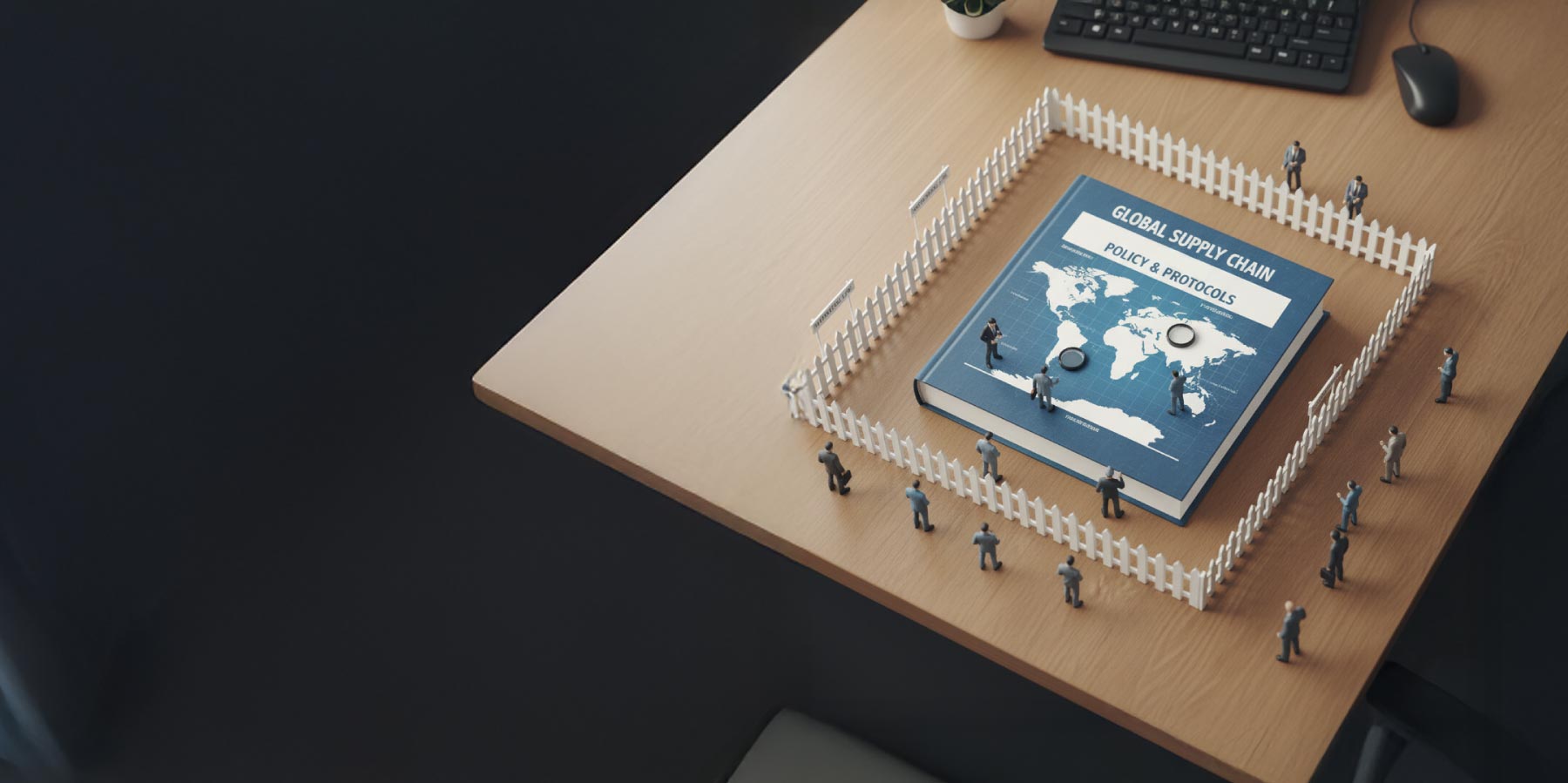
November 13, 2025 • by Simon J. Evenett, Fernando Martín Espejo in Industrials
Industrial policy is reshaping global competitiveness, strategy, and innovation as governments pursue resilience, security, and growth....
September 16, 2025 • by Jean-François Manzoni in Industrials
Morten Wierod, President and CEO of ABB tells Jean-François Manzoni how a leaner-and-cleaner mission, decentralized discipline, and a culture of speed are driving its transformation for the road ahead....
Explore first person business intelligence from top minds curated for a global executive audience