What I got wrong about board leadership– and how I learned to get it right
Real influence in the boardroom comes not from power or persuasion, but from humility, clarity, and the courage to disagree, says Jørgen Vig Knudstorp...
Audio available

by Rupa Dash Published January 21, 2026 in Audio articles • 7 min read • Audio available
Two global trends are converging, with major implications for the future roles of women in the workforce, and for the overall future of our societies and economies. The first is that, after decades of gradual progress, the growth of women in leadership roles has slowed dramatically during recent years. In some cases, the growth rates have stalled entirely or even reversed. This is true for women holding executive positions in business, according to a 2025 report from LinkedIn’s economic research arm, and it’s also true in governments and nonprofits. One problem is that nearly one in three women exits the workforce for extended periods in mid-career. Often this is for childbirth and child-rearing, though other forms of unpaid caregiving also pull women away. The result is that a fast-track career is interrupted, and momentum is lost.
Now consider the second trend: people are living longer. Reaching 100 is becoming more common, especially among women. In Japan, where the number of centenarians had grown from a few hundred in 1970 to nearly 68,000, the government formed the Council for Designing a 100-Year Life Society in 2017. A key thrust of that move (and others like it) has been to look at prolonged aging as an opportunity, not just a burden. While many people need elaborate care in later life, many stay physically active and mentally sharp, long past the usual retirement age. So, the question is: How can their wisdom be tapped? Can we create systems to let our elders contribute more than they currently do?
We need to lift our thinking to a higher level on both of these trends. We’re at a crucial turning point in history: an age of polycrisis, when factors from climate change to the rise of AI have left us with two choices: either we handle these developments creatively, innovating our way into a brighter future, or we stumble along, backsliding into the chaos that has already started to fester.
The better path will require visionary leadership, including from the too-often neglected female half of the population. We must reinvent the socioeconomic structures and patterns that dictate how women are able to participate in leading us forward. These new structures should enable women to contribute fully, at every stage of life, from young adulthood through midlife sabbaticals and into their increasingly fruitful golden years.

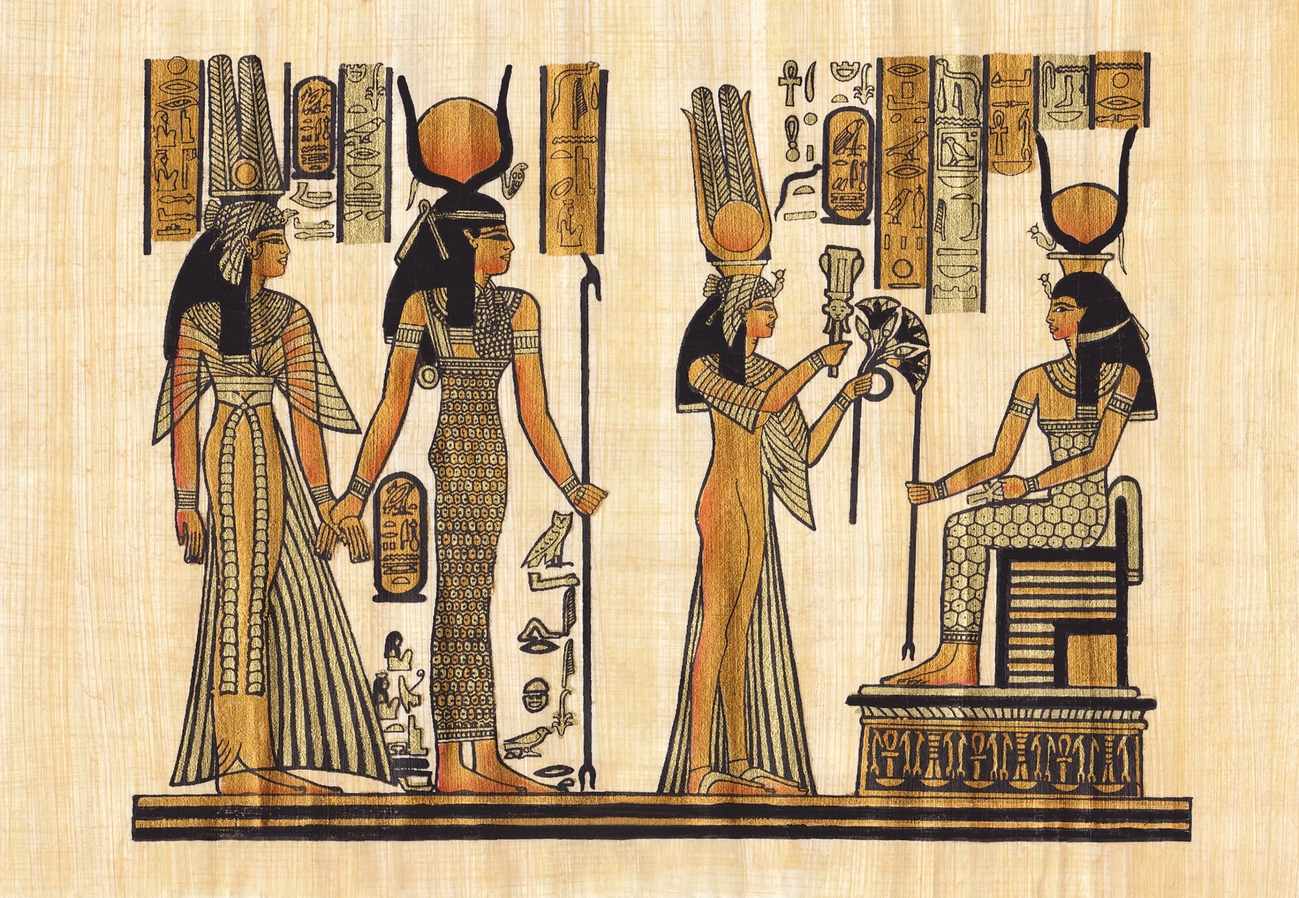
Women were the backbone of early civilizations. In ancient Egypt, they managed estates, led merchant caravans, practiced medicine, and held priestly authority. Across Mesopotamia and the Indus Valley, temple inscriptions and clay tablets depict women as scribes, merchants, and community leaders. At Çatalhöyük, in present-day Turkey, a Neolithic settlement now regarded as one of the world’s early cities, archaeologists have found many relics that support the same conclusion.
Our first civilizations flourished and served as springboards for those to come by tapping into women’s creativity and leadership. But then, over the centuries in one society after another, women were gradually nudged back into more limited roles. Powerful female rulers like Elizabeth I of England became rare exceptions to the uber-male norm. Laws and customs restricted a woman’s right to own property and conduct transactions. Female writers and artists often worked anonymously, or under male pseudonyms. The greatest gender schism of all came with the Industrial Revolution.
A new reality is taking shape, with individuals moving through cycles of learning, working, pausing, caregiving, and returning.
The Industrial Revolution reorganized everything: how we worked, how families functioned, and how time itself was structured. This led to a shift in gender norms not just in upper society, but across all ranks. Factories relied on strict schedules and uninterrupted labor, pulling people (mostly men) into paid work, while relegating women to unpaid domestic roles. What emerged was a division of labor that appeared natural but was, in fact, historically unprecedented.
We still live in the shadow of that disruption. According to the International Labour Organization (ILO), unpaid care work, done mainly by women, would amount to roughly 9% of global GDP, or about $11tn, if accurately measured. The ILO has reported that over 600 million women worldwide are out of the labor force due to care responsibilities, representing one of the largest reservoirs of untapped talent in human history.
The consequences ripple far and wide. When women step away, businesses lose more than a pair of hands; they lose experience, institutional memory, conflict resolution skills, emotional intelligence, and leadership capacity built over decades. Economies racing to stay globally competitive also suffer. This is no longer merely a gender issue; it is a productivity crisis.
A core cause of the crisis is that the modern workplace remains built around a template designed for uninterrupted, full-time participation. This template has never reflected the lived realities of women. A model shaped by industrial constraints does not serve a world in which people, especially women, live much longer than in the 1800s and move through multiple life chapters.
To unlock the full potential of women, we must begin reaping what I call the Longevity-Equality Dividend. This dividend consists of the economic and societal returns we will enjoy when women’s careers can extend and thrive across a long, dynamic life. Linear careers no longer make sense. Instead, a new reality is taking shape, with individuals moving through cycles of learning, working, pausing, caregiving, and returning.
Some countries and companies already understand this. Nordic nations invest in parental leave, flexible schedules, and care infrastructure that support long-term participation. Companies like Vodafone operate structured “returnship” programs to help women re-enter the workforce with training, mentorship, and a clear pathway back into leadership. These approaches flip the script. Career breaks are no longer black holes or signs of diminished ambition. Instead, they are recognized as phases of growth and life experience that deepen leadership potential. It’s time to build on these kinds of steps, making them universal, and even moving beyond them.
Imagine a world where a human life story routinely extends across multiple chapters over a century or more. Futurists such as Barbara Marx Hubbard argue that societies must align economic systems, social structures, and learning ecosystems accordingly. Historian Yuval Noah Harari reminds us that our biological evolution and historical patterns demand a rethinking of leadership, meaning, and purpose.
In this future, leadership will no longer be a ladder but a web. Value will be placed on interpersonal skills, adaptability, creativity, and cross-sector experience. Women, shaped by lifetimes of multitasking, caregiving, crisis navigation, and community leadership, are uniquely equipped for this model. Rather than being shunted aside in mid-career, they will remain integral to innovation, cultural stewardship, and ethical governance.
In their later years, they will go on contributing. This desire is fundamental: we want to see our knowledge and ideas making a difference to others, we want to know that our lives matter in the grand scheme of things. In this future, women will have careers lasting longer than an entire average human lifespan once did. By their later years, they’ll have a great many insights to share. However they do it – through full or part-time work, in exchange for a salary or for other valued forms of remuneration – we’ll need mechanisms to enable that sharing. This will take us to the heart of the Longevity-Equality Dividend: the full flowering of human potential across a long life, with women at the center of the transformations our societies now need.
Capturing the Longevity-Equality Dividend requires intentional design. Governments must invest in care infrastructure, including affordable childcare and elder care. Policies must support flexible work arrangements, lifelong learning, and reentry pathways that
treat career breaks as assets rather than liabilities.
Organizations must adapt their leadership models to value life experience, reshape performance systems to recognize nonlinear contributions, and create mentorship networks that support talent across generations. This is not simply social policy; it is economic strategy.
Here are a few ideas for carrying out the strategy:

Co-Founder and CEO of the World Woman Foundation
Rupa Dash is Founder and CEO of the World Woman Foundation. A media entrepreneur and futurist, she is leading the foundation’s global mission to invest in one million women by 2050. Dash also created World Woman Hour, a digital storytelling platform that reaches 42 million people and is recognized by the NYSE and UN Women. A Clinton Global Initiative Fellow and award-winning innovator, she has advised global leaders, pioneered mobile content for 40,000 Indian villages, and champions gender equality in the media.

January 16, 2026 • by Jørgen Vig Knudstorp in Audio articles
Real influence in the boardroom comes not from power or persuasion, but from humility, clarity, and the courage to disagree, says Jørgen Vig Knudstorp...

January 12, 2026 • by Iana Kouris, Mark Abraham in Audio articles
Research by the Boston Consulting Group exposes an inconvenient truth about longevity: awareness has never been higher, but action lags far behind. Here's how to turn aspirations into reality....

January 9, 2026 • by Jerry Davis in Audio articles
The US President is gouging out chunks of America’s long-established economic data apparatus because he doesn’t like what he sees. It’s unlikely to end well....

January 6, 2026 • by Kayla Barnes-Lentz in Audio articles
Understanding what makes your brain and body perform at their optimum is the foundation for long-term performance....
Explore first person business intelligence from top minds curated for a global executive audience