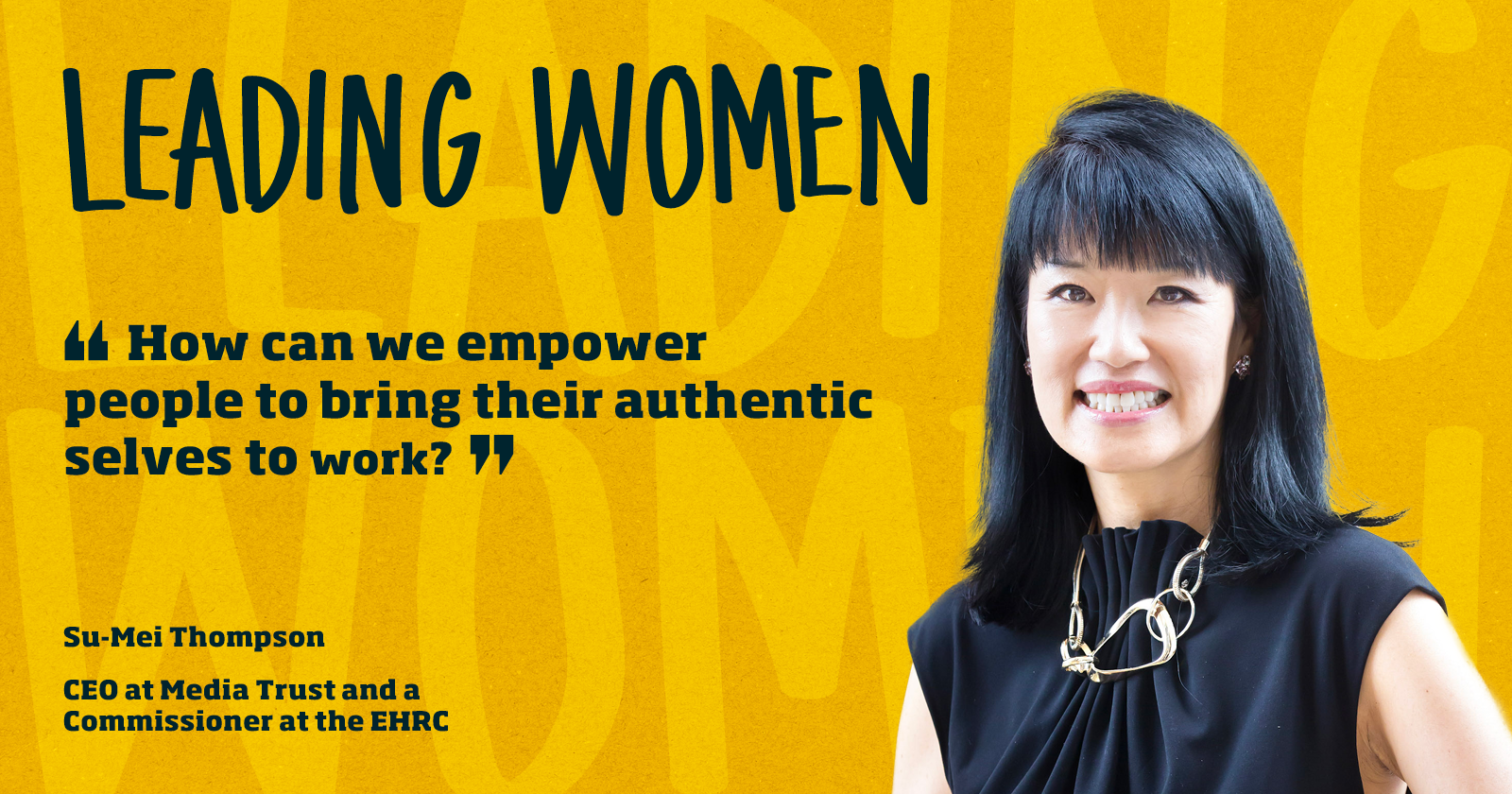
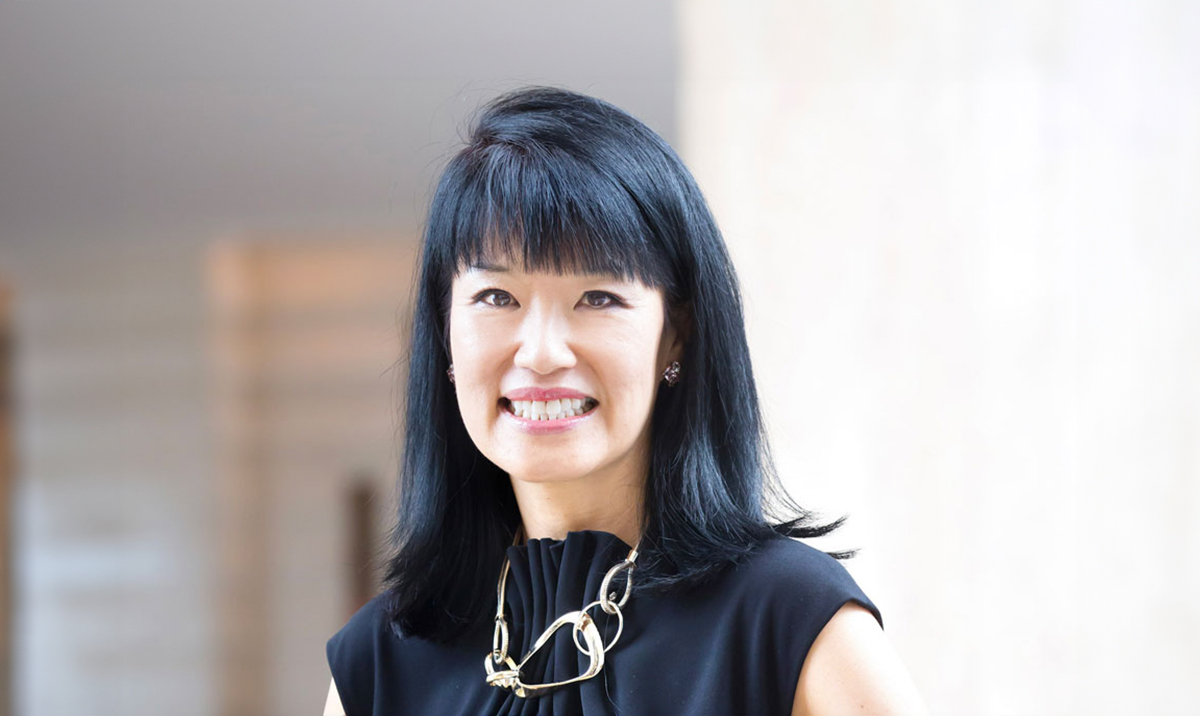
Su-Mei Thompson, CEO at Media Trust and a commissioner at the UK’s equality and human rights regulator, theEHRC, explores how leaders can take meaningful steps to foster a more inclusive organization.
Getting inclusion right can feel like a minefield in today’s polarized environment but leaders who are reluctant to engage with inclusion – whether it’s because they dismiss it as “woke” or for other reasons – are missing out on business opportunities for new markets and greater productivity, as are leaders at the other end of the spectrum who engage in virtue signaling about diversity, equality, and inclusion but fail to change their organizational strategies and processes to achieve better outcomes.
We’ve seen how consumers are choosing products and services, and talent is choosing where to work, based on whether the business or brand has a purpose that resonates with their values and whether the business is giving back or otherwise engaging with wider society.
At the same time, it’s not enough to merely comply with regulations on issues like board diversity and equal pay. Organizations need to be transparent and proactive about setting targets for the future if they want to create workplaces where all talent can thrive.
At Media Trust, we work with the media and creative industries to improve the representation of marginalized groups and to give charities and young people a stronger voice. We also help our media industry partners to recognize and tackle their blind spots through training and outreach. Here are some suggestions for leaders looking to make their organization more inclusive:
Inclusion should drive product and service design and delivery
Organizations that only “talk the talk” are at huge risk of being called out for empty virtue signaling. There needs to be substance behind the fanfare with inclusion informing and driving product and service design and delivery. When Pantene ran an advertising campaign in 2021 featuring blind influencer Lucy Edwards, it also partnered with tech firm NaviLens to make its product range more accessible, adding braille to its packaging. This is a great example of how diversity-inspired campaigns can and should go beyond the hype. Similarly, even though a lot of IKEA’s furniture and products are already accessible, IKEA Israel launched itsThisAbles projectin 2019, aimed at bridging the gap between existing IKEA products and the special needs of disabled people. Rather than redesigning existing products and expecting disabled people to buy replacement items, IKEA designed 13 add-ons for its most popular products, like bigger handles to attach to cupboards and elevating legs for sofas to make them easier to get up from.
Enable your people to walk in the shoes of others
Business leaders should encourage and enable more of their teams to use their skills to give back through volunteering with charities. This doesn’t just benefit the charities: it will also provide your workforce with diverse perspectives and valuable insights into grassroots communities – and potential influencers and consumers – they wouldn’t normally be in contact with. At Media Trust, we are all about matching good skills with good causes – we connect charities looking for pro bono communications support with media industry professionals looking to give back – and we’ve witnessed the huge personal and professional growth our volunteers experience. On World Environment Day in 2021, we launched a new partnership with media agency, MG OMD, which mobilized almost 500 staff volunteers to support environmental charities with their strategic communications. As Natalie Bell, CEO of MG OMD UK, put it: “The project gave our teams the ability to apply their media and comms knowledge to the wide range of challenges that climate organizations face and provided us with invaluable and actionable insights that have proven to be invaluable and have really stuck.”
Be more personal and authentic in how you communicate
As the pandemic showed, it’s the leaders and organizations who are communicating with employees or the public on a more direct and personal level who are winning hearts and minds. For most of us, Zoom and Microsoft Teams have generated a more intimate relationship with our colleagues as we’ve been given a close-up view of people’s homes and often, if inadvertently, their families and pets. Boundaries have come down and we’re seeing people much more fully than before. This has had a huge impact on what authentic communication now looks and feels like. Leaders need to embrace more informal, more personal, and less scripted communication styles that are more conversational, equalizing, and interactive. The benefits of this approach are clear in the way it encourages authenticity and fosters inclusion by giving everyone permission to be themselves and to share personal and professional challenges so accommodations can be arranged where needed that allow them to be their best selves at work.
Champion flexibility and difference in the way people work
Building on my last point, the pandemic also forced everyone to embrace flexible working, and we’ve seen that it’s the organizations that have been able to do this effectively that emerged from the crisis the best – in some cases, they’re even stronger now than before COVID-19. Flexible working and a more empathic approach to management also allows everyone, regardless of their personal circumstances, to feel welcome and valued at work.
Authors
Su-Mei Thompson
CEO at Media Trust, Member of the IMD Supervisory Board
Su-Mei Thompson is CEO at Media Trust, a UK based non profit organization that works with the media and tech sectors to further their CSR and DEI goals. After senior management roles with Disney, the Financial Times, and Christie’s, her career in the non-profit sector began in 2007 when she became CEO of The Women’s Foundation in Hong Kong, a leading NGO known for its impactful Girls Go Tech and mentoring programs for women. She has spear-headed Media Trust’s initiatives to boost the digital capabilities of charities in partnership with Google, Meta, and TikTok, including providing free AI essentials training for charities and talent from under-represented groups. Besides running Media Trust, Thompson has been a Commissioner of both the HK and UK equalities regulators and serves on a number of boards including the Supervisory Board at IMD.
As women live longer, society must rethink careers and leadership to unlock a longevity-equality dividend that enables women to contribute and lead at every life stage....
When talk of diversity triggers backlash, leaders face a paradox: how to advance inclusion goals while choosing language that keeps dialogue alive in hostile environments....
X
Log in or register to enjoy the full experience
Explore first person business intelligence from top minds curated for a global executive audience

 Audio available