Share
Facebook Facebook icon Twitter Twitter icon LinkedIn LinkedIn icon Email

Artificial Intelligence

Danger of the diamond: Don’t drain the pool of future leaders

Published March 11, 2026 in Artificial Intelligence • 6 min read

Stanford University’s Erik Brynjolfsson warns that employers who focus on AI and automation at the expense of entry-level roles may be shooting themselves in the foot.

Organizations rushing to take advantage of the efficiencies that AI can bring may be storing trouble for the future. Such tools can deliver a welcome short-term boost to profitability but technologists and HR professionals are increasingly concerned that AI is undermining traditional labor market models.

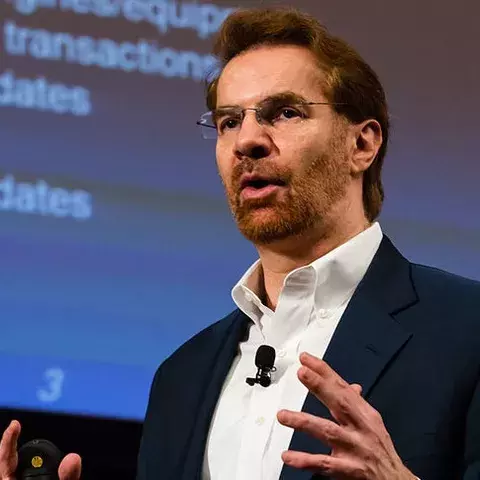
Erik Brynjolfsson, Professor and Senior Fellow at the Stanford Institute for Human-Centered AI and Director of the Stanford Digital Economy Lab, is among those who are worried.

“There has always been an implicit contract between young people and employers, with junior staff taking on simple, routine work and then stepping into more senior roles as they gain experience and expertise,” he says. “But at organizations handing off more of that routine work to AI, there are fewer roles for those junior staff. In which case, in the longer term, where do the organization’s senior people come from?”

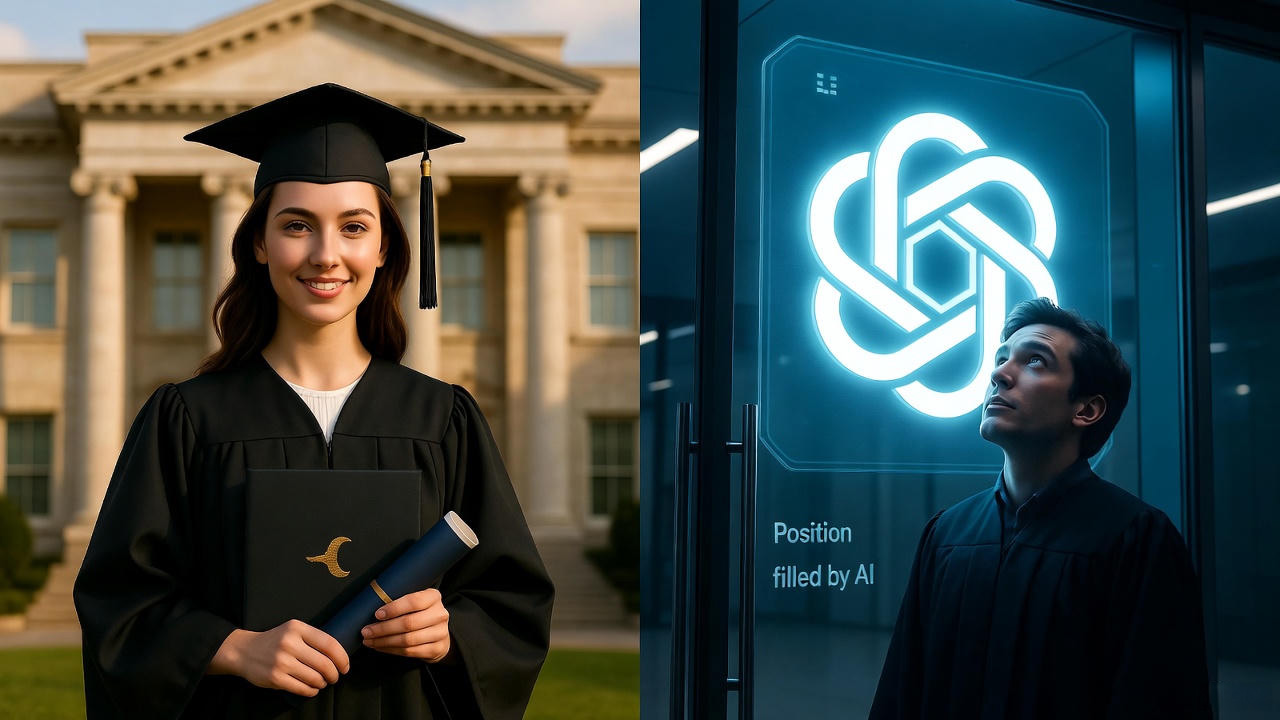
Brynjolfsson is describing a shift away from the traditionally pyramid-shaped workforce, where high performers from a large base of more junior employees subsequently filter upward into a smaller number of senior roles. AI – and particularly generative AI (GenAI) – means that, in the short term, that base no longer needs to be so broad. Consequently, the workforce begins to look much more like a diamond.

“When the pyramid becomes a diamond, you’re in for trouble downstream,” Brynjolfsson warns. “It may be productive in the short run, but it will deplete your organization’s stock of future leaders.”

Since the widespread adoption of GenAI, there has been a 13% relative decline in employment for early-career workers in the most AI-exposed occupations

Entry-level roles are going to AI

Many employers may already be at risk of falling into this trap. While some business commentators have blamed a challenging economic environment for the tough conditions facing graduates and other young people, Brynjolfsson is convinced that warnings about the impact of AI on entry-level roles are not overstated. In a recent paper co-authored with fellow Stanford academics Bharat Chandar and Ruyu Chen, he suggests that, if anything, such warnings may understate what is happening.

Using data from ADP, the US’s largest payroll software provider, Brynjolfsson and his colleagues analyzed millions of roles across tens of thousands of US employers. Their most striking finding was that, since the widespread adoption of GenAI, there has been a 13% relative decline in employment for early-career workers in the most AI-exposed occupations, including software developers and customer service representatives.

More senior roles in those occupations have seen no corresponding drop-off in employment levels. Furthermore, the data also shows employment for workers infields less exposed to AI has remained stable or continued to grow since October 2022.

The conclusion is that, in professions where employers are most easily able to exploit advances in AI, they are doing so at scale. These organizations are hiring significantly fewer graduates and early-career workers than even just three years ago.

But is this a blip – a temporary deviation that might self-correct once the novelty value of GenAI starts to wear off? Brynjolfsson thinks not. “Our study initially analyzed data up to August 2025, but we’ve had more data come in since then and these effects appear to be getting stronger with every month.”

New technologies eliminate certain jobs but that doesn’t mean everyone becomes unemployed.

Preserving the pyramid

Brynjolfsson does not argue that organizations should abandon AI for tasks where it offers obvious business advantages. The genie, after all is out of the bottle and businesses should take the benefits as they will have to deal with the repercussions. Rather, he urges employers to think harder about what their future workforce will need to look like.

“Historically, we’ve seen this pattern time and again. New technologies eliminate certain jobs but that doesn’t mean everyone becomes unemployed because new occupations emerge,” he says. “A forward-looking employer should be trying to anticipate what those new roles are going to be and to prepare their workforces for them.”

That means focusing on the type of work where humans are likely to continue to outperform. Brynjolfsson argues that most tasks can be broken down into three parts: defining the task by asking the right questions; executing the task; and then verifying the results and iterating if they weren’t what was wanted. “Traditionally, humans have done all three parts,” he says. “Now, machines are starting to do a very good job of the middle part, but humans retain a comparative advantage at the first and third parts.”

Smart employers will recognize that, while they need fewer young workers for task execution, they should focus on recruitment of strategically minded and analytical staff. While these employers will require greater investment in terms of training and support, the ultimate dividends will also be greater. Not only will there be less erosion of the base of the workforce pyramid, but it will consist of skilled workers who will form the backbone of the company for years to come.

There is some evidence that this is beginning to happen. The Stanford research makes a distinction between the exploitation of AI to make quick improvements in KPIs, and where the technology complements and augments employee efforts, enhancing the overall outcome. In the latter cases, Brynjolfsson and his colleagues have tracked rises in employment over the past three years, with examples from nursing to information systems analysts.

“Intellectually, it’s easier to look at a task and think about whether a machine could do the same thing,” he argues. “The more valuable applications of AI are going to be those where you’re using the technology to do new things. That will lead to more widely shared prosperity and the creation of new opportunities.”

There is an opportunity for employers to build meaningful relationships with young recruits, winning their loyalty and positioning them for more senior positions

AI as innovation catalyst

To date, relatively few organizations have offset the replacement of roles through AI-driven automation by increasing recruitment for roles supported by AI augmentation. But the clock is ticking, says Brynjolfsson. “One of the biggest mistakes many businesses make is they try to freeze in place what has worked in the past,” he says. “It’s a natural defensive instinct, but it’s a terrible one.”

In other words, AI should not simply provide a means for organizations to do what they’ve always done, but at lower cost. Rather, the great opportunity it brings is to innovate and create new value.

Employers who embrace this mindset will continue to recruit workers early in their careers, but, rather than put them in a corner with a high-volume, repetitive task that no-one else wants to do, will train them up based on their potential for future strategic roles. Employers with such a forward-thinking attitude, when other organizations are perceived as shunning new graduates in favor of automated cost-cutting, will also be a point of difference to attract the best young talent.

“Organizational culture is a critical element of the traditional contract between employers and workers,” Brynjolfsson points out. “Young people develop deep loyalties and connections to their employer. They stay because they believe in the mission.”

That’s not to suggest all recruits will want – or be able – to remain with the first organization they work for. That career model has gone. But there is an opportunity for employers to build meaningful relationships with young recruits, winning their loyalty and positioning them for more senior positions. Organizations can remain agile in terms of the different skillsets they recruit for, provided they are recruiting individuals of drive and potential.

Brynjolfsson recalls Pablo Picasso’s famously skeptical remark about “useless” computers that “can only give you answers,” rather than thinking creatively. “We’re going to need more humans who can ask the right questions,” he argues. If employers recognize the need to recruit accordingly, the pyramid may prove solid after all.

Author

Erik Brynjolfsson

Professor at Stanford and Director of the Stanford Digital Economy Lab

Erik Brynjolfsson is a leading scholar on the economics of technology, artificial intelligence, and digital transformation. He is the Jerry Yang and Akiko Yamazaki Professor and Senior Fellow at Stanford’s Institute for Human-Centered AI, Director of the Stanford Digital Economy Lab, and Ralph Landau Senior Fellow at the Stanford Institute for Economic Policy Research (SIEPR).

Related

Learn Brain Circuits

Join us for daily exercises focusing on issues from team building to developing an actionable sustainability plan to personal development. Go on - they only take five minutes.
 
Read more 

Explore Leadership

What makes a great leader? Do you need charisma? How do you inspire your team? Our experts offer actionable insights through first-person narratives, behind-the-scenes interviews and The Help Desk.
 
Read more

Join Membership

Log in here to join in the conversation with the I by IMD community. Your subscription grants you access to the quarterly magazine plus daily articles, videos, podcasts and learning exercises.
 
Sign up
X

Log in or register to enjoy the full experience

Explore first person business intelligence from top minds curated for a global executive audience