Supply chain leadership in an age of upheaval
Volatility, technology, and talent are reshaping supply chain management....
by I by IMD Published August 24, 2026 in Supply chain • 5 min read
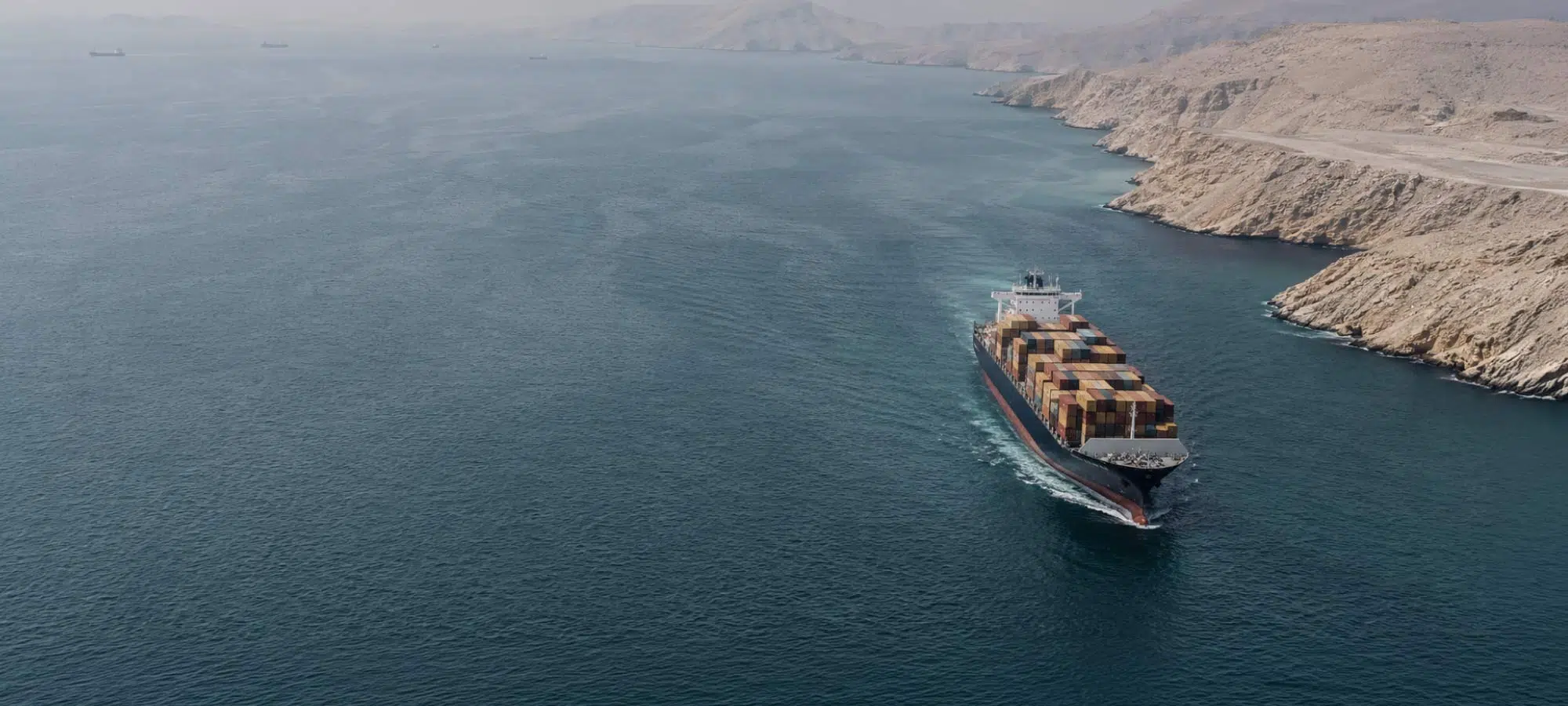
Few waterways matter more to global trade than the Strait of Hormuz. It is the world’s most important energy chokepoint and a critical artery for international shipping. But it has effectively been closed off since Iran declared it off limits to commercial traffic. The United States subsequently blockaded the Strait as well. That standoff continues. Â
The disruption raises several strategic questions: which trade routes can still be trusted, which suppliers have become liabilities, and where the next bottleneck could emerge. These questions were explored during a Peterson Institute for International Economics Trade Winds discussion on the long-term implications of the Strait’s closure.Â
Trade has proved resilient, yet some critical commodities have been hit hard, said panelist Simon J Evenett, Professor of Geopolitics and Strategy at IMD. The closure triggered a sharp, if temporary, spike in fertilizer prices. But, he added, “We haven’t seen a broad-based reduction in global trade this year at all.”
Still, the conclusion is difficult to escape: the premium on business continuity planning and execution has soared, a return to “normal” is no longer assured, and the trade-off between cost minimization and adaptability has become even greater.
On a normal day before the conflict erupted, there were around 100, 120, 130 passages a day. Now these are single digits, meaning the passages in the Strait of Hormuz dropped more than- Dorota Lost-Siemińska
90%.
Since Iran closed the Strait, maritime traffic has collapsed, hundreds of ships – and thousands of seafarers – have been stranded, and attacks on commercial vessels have occurred with increasing regularity.
Dorota Lost-Siemińska, Director of Legal Affairs and External Relations at the International Maritime Organization, said in the Trade Winds discussion, “On a normal day before the conflict erupted, there were around 100, 120, 130 passages a day. Now these are single digits, meaning the passages in the Strait of Hormuz dropped more than 90%.”
The repercussions are being keenly felt. “This whole conflict is reshaping the global shipping industry across every financial and operational dimension. So, it’s also container prices, the trust in shipping quotes, the insurance availability: simply the basic economics of moving goods,” added Lost-SiemiĹ„ska.
The latest crisis is unlikely to be the last, and executives should plan accordingly.
As a result, ships are now rerouting via the Cape of Good Hope on Africa’s southern tip. The diversion typically lengthens voyages between Asia and Europe by at least two weeks, adding millions of dollars in additional fuel costs.
Getting trade moving again will be a slow process, added Lost-SiemiĹ„ska. “o be back to normal, if at all possible, will take months in the very optimistic scenario… to get the trade flowing in the Persian Gulf and through the Strait of Hormuz.”
The latest crisis is unlikely to be the last, and executives should plan accordingly. They should also expect different policy responses: governments should think less about trade barriers and more about keeping goods moving, said Evenett.
“There will be more attention given to continuity of supply,” he told the Trade Winds audience. “Countries can’t produce everything themselves. They are dependent on cross-border supply, so why not think about how to stabilize that supply, not just get tariffs down?”
Evenett also said governments will pay much closer attention to whether supply chains depend on vulnerable trade routes, in turn putting pressure on businesses to rethink where they source goods.
“Geopolitics reshuffles which geographies are seen as more or less problematic,” he added. “Geographies where they have to go through choke points will get a black mark against them whereas other places that we did not source much from in the past may come into focus.”
Optimize strategy.
Mobilize stakeholders.
Lead with clarity
Businesses are already responding: Evenett said he expected companies to redesign trade routes rather than simply wait for the crisis to pass.
“We’ll see the development of new overland options for transporting goods, or overland transporting to new ports,” he said. “I suspect we will see a shift toward moving some shipping away from the Strait of Hormuz. The size of the fee will be the key factor.”
Evenett added that after years of relatively subdued orders, shipping companies have placed significant orders for new vessels, suggesting that “someone has confidence in global trade growing in the future.” Yet because they can take up to three years to build, the current disruption could continue to ripple through the industry for some time, kicking off the search for fresh trade routes.
Some of those new routes may emerge in unexpected places: the Arctic is now being considered as a potential shipping route between Europe and Asia, as melting sea ice creates an alternative trade corridor.
But Evenett said expectations should remain grounded.
“These are very early days for that sea lane to open up,” he said. “It’s pretty clear there is an opening, but how big an opening it is and whether it will become a major alternative, we will see. One or two ships getting through the Arctic doesn’t make it a trade route.”
The Strait of Hormuz closure is only the latest in a succession of shocks that have tested supply chains: piracy in the Gulf of Aden, the COVID-19 pandemic, the Suez Canal blockage, and Houthi attacks in the Red Sea, as well as climate-related disruption.
None brought global trade to a halt, though. “Trade is like water,” said Cecilia Malmström, Non-resident Senior Fellow at the Peterson Institute for International Economics. “It always finds new routes.”
Director of Legal Affairs and External Relations at the International Maritime Organization
Dorota Lost-Siemińska is the Director of Legal Affairs and External Relations at the International Maritime Organization, where she leads work on various complex and topical subjects of international maritime law and treaty law and oversees the development of tools for the enhancement of the organization’s legal and external relations work. Before joining the IMO, Lost-Siemińska led the Polish delegation to the IMO Legal Committee, was a delegate to other IMO meetings, and was Vice President of the HNS Diplomatic Conference.
Professor of Geopolitics and Strategy at IMD
Simon J. Evenett is Professor of Geopolitics and Strategy at IMD and a leading expert on trade, investment, and global business dynamics. With nearly 30 years of experience, he has advised executives and guided students in navigating significant shifts in the global economy. In 2023, he was appointed Co-Chair of the World Economic Forum’s Global Future Council on Trade and Investment.
Evenett founded the St Gallen Endowment for Prosperity Through Trade, which oversees key initiatives like the Global Trade Alert and Digital Policy Alert. His research focuses on trade policy, geopolitical rivalry, and industrial policy, with over 250 publications. He has held academic positions at the University of St. Gallen, Oxford University, and Johns Hopkins University.
June 2, 2026 • by Ralf Seifert in Supply chain
Volatility, technology, and talent are reshaping supply chain management....
April 15, 2026 • by Ralf Seifert, Katrin Siebenbürger Hacki in Supply chain
Faced with a growing supply chain agenda and continuous volatility, Dirk Holbach, Chief Supply Chain Officer at Henkel Consumer Brands, discusses how to build an adaptable supply chain system....
January 8, 2026 • by David Bach, Felix Zeltner in Supply chain
In this episode of Leaders Unplugged, IMD President David Bach speaks with Rolf Habben Jansen, CEO of Hapag-Lloyd, about leading a global shipping giant through geopolitical tension, climate pressure, and permanent uncertainty,...
November 19, 2025 • by Christos Cabolis in Supply chain
New models of economic development are emerging from global trade fragmentation. Supply chain executives must now weigh far more complex trade-offs, says Christos Cabolis ...
Explore first person business intelligence from top minds curated for a global executive audience