Share
Facebook Facebook icon Twitter Twitter icon LinkedIn LinkedIn icon Email
Disrupted-Supply-Chain-Featured

Supply chain

Leading supply chains through continuous disruption: Dirk Holbach

Published April 15, 2026 in Supply chain • 8 min read

Faced with a growing supply chain agenda and continuous volatility, Dirk Holbach, Chief Supply Chain Officer at Henkel Consumer Brands, discusses how to build an adaptable supply chain system.

Rapid read:

  • Agility beats planning: new priorities, unexpected disruption, and even M&A are continuously resetting supply chain requirements. Leaders should focus on building an adaptable supply chain system rather than thinking about flows.
  • Supply chain resilience is both structural and behavioral. Organizations need trade intelligence systems and teams that can make decisions with incomplete information and maintain energy levels amid continuous volatility.
  • Organizations can build supply chain talent through cross-functional exposure across different roles that help leaders progress to the next level.

In our 2025 IMD Global Supply Chain Survey, we highlighted the specific challenges leaders face when transforming supply chains today. To complement the 2025 survey, we interviewed leaders in the field to get their insights on best practices in a complex and changing environment.

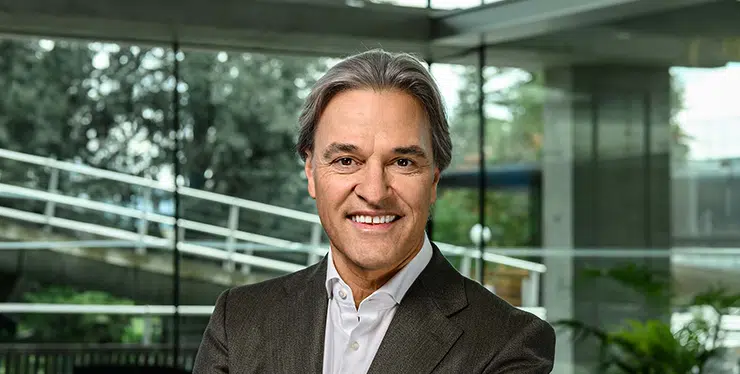
Dirk Holbach, Chief Supply Chain Officer of Henkel Consumer Brands, leads a global end-to-end supply network spanning more than €10bn ($11.54bn) in revenue, over 30 factories and around 85 logistics centers. With nearly three decades at Henkel across purchasing, production, and global operations, he has shaped large-scale transformation programs and navigated multiple cycles of disruption.

If you are not able to think in systems, you will always be caught off guard.

Supply chain as a system

Holbach observes that heightened board-level awareness of supply chain has not been matched by a deeper understanding. “Awareness [of supply chain topics] has increased significantly – but so has complexity. Whether organizations have truly moved forward in relative terms is still an open question.”

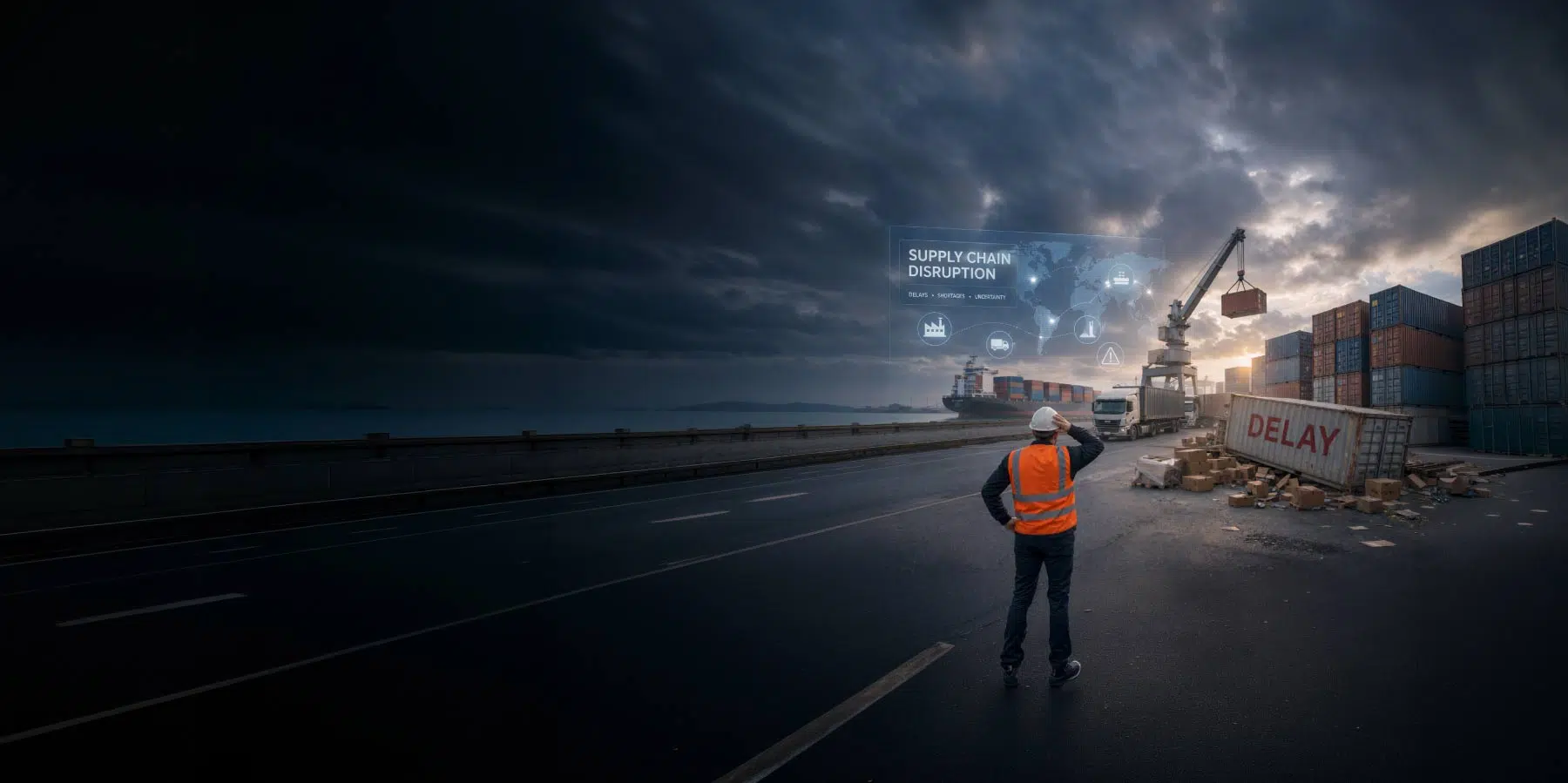
Recent disruptions have done most of the teaching, but selectively. He points to the kind of systemic thinking that mainstream commentary routinely misses. While headlines focus on energy prices when a major waterway like the Strait of Hormuz is under threat, the more consequential risk lies elsewhere: Around 31% of global fertilizer production and close to 50% of key precursor materials in this industry transits this single chokepoint. Unlike crude oil, which can rebalance within months, disruptions to agricultural inputs must be connected to harvest cycles. “If people cannot grow enough food in 2027 and 2028, that is a far bigger problem than a temporary rise in fuel prices.”

Examples like this illustrate his broader argument: Supply chains are interdependent global systems, and the leaders who manage them must be capable of thinking in systems – not just in flows.

“If you are not able to think in systems, you will always be caught off guard.”

Project planning software for modish business project management
For years, the dominant paradigm in supply chain management has been planning sophistication – more granular scenarios, better forecasting, deeper visibility

From planning to preparedness

For years, the dominant paradigm in supply chain management has been planning sophistication – more granular scenarios, better forecasting, deeper visibility. Holbach does not disregard this, but he sees its limits clearly: the events that cause the most damage are precisely those that no plan anticipates.

Henkel’s own experience illustrates the point. COVID-19 triggered a sequence of disruptions that took until 2023 to be fully absorbed – demand shocks first, supply constraints later, with recovery timelines running three to five times the length of the original disruption. More recently, the acceleration of trade tensions tested a different kind of preparedness – a multi-year investment in global trade flow visibility meant that Henkel’s teams could assess tariff-related P&L impacts quickly and identify where to focus. Our trade colleagues were able to push a few buttons and have a decent picture of the hot spots. But that only worked because we had built that capability years in advance.”

Resilience, in Holbach’s framing, has two distinct dimensions. The first is structural: mapping multi-tier supply networks, reducing single-source dependencies, building trade intelligence systems. The second is behavioral: developing teams that can respond under incomplete information, reframe disruption as an opportunity, and sustain performance without becoming exhausted by continuous volatility.

Managing complexity: Trade-offs, standardization, and the limits of technology

Holbach is direct about the challenge facing supply chain leaders today: the agenda keeps expanding while resources do not. Digitalization, resilience, sustainability, and organizational integration all compete for attention simultaneously. “The list of priorities is not only getting longer – everything is becoming more important. That is not manageable without disciplined trade-offs.”

A less visible but equally powerful driver of supply chain complexity is corporate strategy itself. Holbach points to the acceleration of M&A activity across industries – driven by low multiples, strong balance sheets, and the rising cost of organic growth – as a force that continuously resets supply chain requirements. Verticalization, portfolio consolidation, and scaling decisions all impose immediate operational consequences. “You have to continuously review and align your supply chain strategy and your system setup – where you produce, how you distribute,” says Holbach. Henkel itself recently announced a major acquisition in its adhesives business, a reminder that physical supply networks take years to reconfigure regardless of how quickly the deal closes. This is why supply chain integration with business strategy consistently ranks as the top concern in the IMD survey: “It is not a static design problem, but a moving target.”

Henkel’s response is to build for adaptability rather than optimize for any single configuration, operationalized through a limited set of enterprise-wide transformation programs spanning plan, source, make, and deliver – with defined checkpoints to recalibrate. Platform-based architecture supports scale without sacrificing flexibility. A single cloud-based global Manufacturing Execution System (MES) backbone enforces standardization and deployment speed, and mandatory capabilities set a performance baseline; optional modules allow local teams to capture incremental value. Holbach calls this “freedom within a frame.”

On technology, his position is measured. Current AI applications focus on targeted use cases: manufacturing problem-solving, cost-to-serve analytics, and selective decision support. Large-scale automation in planning or customer service is less compelling than it might appear. With 60% of Henkel’s customer service and planning teams already located in lower-cost locations, the incremental efficiency gain from replacing those roles with AI is limited. “We are still in the hype cycle. There is value – but not yet at scale.” The priority is architecture and data readiness, not deployment for its own sake.

He also highlights cybersecurity as a structurally underweighted risk, organizing it across three domains: information and data security, manufacturing site continuity, and upstream supply security. Each requires distinct governance, and few organizations have addressed all three with equal rigor.

The assessment framework he applies is straightforward: content mastery is the entry requirement; mindset and behavioral capability are the differentiators.

Talent and culture: Exposure over career design

For supply chain transformation, Holbach places as much emphasis on the human system as on the technical one. The assessment framework he applies is straightforward: content mastery is the entry requirement; mindset and behavioral capability are the differentiators. “You cannot lead a supply chain without understanding its mechanics. But understanding the mechanics is not enough,” he says.

Career development in Henkel’s supply chain unit reflects a deliberate philosophy following the example set by Werner Bauer, former COO at Nestlé, who once said, We don’t decide people’s careers; we define career exposures they should have had to go to the next level.” In today’s volatile environment, this is not just a cultural value but a strategic necessity. Systems-thinking capability is non-negotiable in senior roles, built through cross-functional rotations across engineering, marketing, planning, and production. Formal structures are complemented by informal engagement: he conducted over 400 informal one-on-one “coffee connect” conversations across the organization in five years, focused on where people want to go and how to help them dare to move.

The most pressing question from Henkel’s board is no longer resilience and continuity alone – it is how the supply chain is designed to support dynamic and sometimes erratic growth. Demand spikes driven by external triggers – influencer-driven markets in cosmetics, for example – expose supply chains built to avoid downside risk but never designed to capture upside volatility quickly. “Supply chain is often seen as the problem in those moments. It should be seen as an opportunity.”

Holbach’s perspective captures a broader shift in what supply chain leadership requires.

Reflections for supply chain leaders

Drawing on his experience leading supply chain transformation at scale, Holbach highlights four priorities for current and future leaders:

  • Strengthen the fundamentals first. Operational excellence in quality, efficiency, and continuous improvement is not optional. A well-run Continuous Improvement (CI) program creates a halo effect that enables everything else. If the basics are failing, transformation will stall.
  • Focus on a few high-impact initiatives. Identify the pockets of value in your specific context and concentrate transformation resources there. Breadth of ambition is less important than depth of execution on what actually matters.
  • Integrate technology in cycles, rather than continuously. Adopt new capabilities in defined intervals that allow the organization to absorb change, validate returns, and maintain stability in core operations. The goal is a coherent platform – not a permanent state of disruption.
  • Invest in your people’s careers, not just their competencies. Systems-thinking capability is built through cross-functional exposure over time – but today’s talent is less willing to wait ten to fifteen years to reach senior maturity. Start exploring early, when lateral moves are still low-cost, and always have a view of what comes after the next assignment.

Holbach’s perspective captures a broader shift in what supply chain leadership requires. The function is no longer defined by cost efficiency or operational execution alone. It is defined by the ability to navigate complexity, build organizational readiness, and position the supply chain as a driver of both resilience and growth. “Agility beats planning – but you still need both. The question is whether your organization is ready to respond when things go wrong, and ready to move when they go right.”

Expert

Dirk Holbach

Global Chief Supply Chain Officer

Dirk Holbach, is the Global Chief Supply Chain Officer of Henkel Consumer Brands. He leads a global end-to-end supply network spanning more than €10bn ($11.54bn) in revenue, over 30 factories and around 85 logistics centers. With nearly three decades at Henkel across purchasing, production, and global operations, he has shaped large-scale transformation programs and navigated multiple cycles of disruption.

Authors

Ralf Seifert - IMD Professor

Ralf W. Seifert

Professor of Operations Management at IMD

Ralf W. Seifert is Professor of Operations Management at IMD and co-author of The Digital Supply Chain Challenge: Breaking Through. He directs IMD’s Strategic Supply Chain Leadership (SSCL) program, which addresses both traditional supply chain strategy and implementation issues as well as digitalization trends and the impact of new technologies.

Katrin Siebenbürger Hacki

Katrin Siebenbürger Hacki

Independent research associate

Katrin Siebenbürger Hacki supports IMD as an independent research associate. Before founding her consultancy, she worked in the EMEA divisions of Medtronic, Intuitive Surgical, and Honeywell, focusing on sales force excellence, analytics, and commercial execution. She holds an MBA from IMD.

Related

The Future of Supply Chain

The Future of Supply Chain

October 6, 2025 in Supply chain

To help set the agenda for supply chain leaders beyond 2025, this guide examines the industry priorities and outlines five strategic areas of focus for supply chain transformation....

Learn Brain Circuits

Join us for daily exercises focusing on issues from team building to developing an actionable sustainability plan to personal development. Go on - they only take five minutes.
 
Read more 

Explore Leadership

What makes a great leader? Do you need charisma? How do you inspire your team? Our experts offer actionable insights through first-person narratives, behind-the-scenes interviews and The Help Desk.
 
Read more

Join Membership

Log in here to join in the conversation with the I by IMD community. Your subscription grants you access to the quarterly magazine plus daily articles, videos, podcasts and learning exercises.
 
Sign up
X

Log in or register to enjoy the full experience

Explore first person business intelligence from top minds curated for a global executive audience