
IMD AI Safety Clock moves closer to midnight
IMD’s AI Safety Clock shows tension between rapidly expanding artificial intelligence capabilities and lack of meaningful oversight, raising risk. ...

Published January 3, 2022 in Innovation • 4 min read
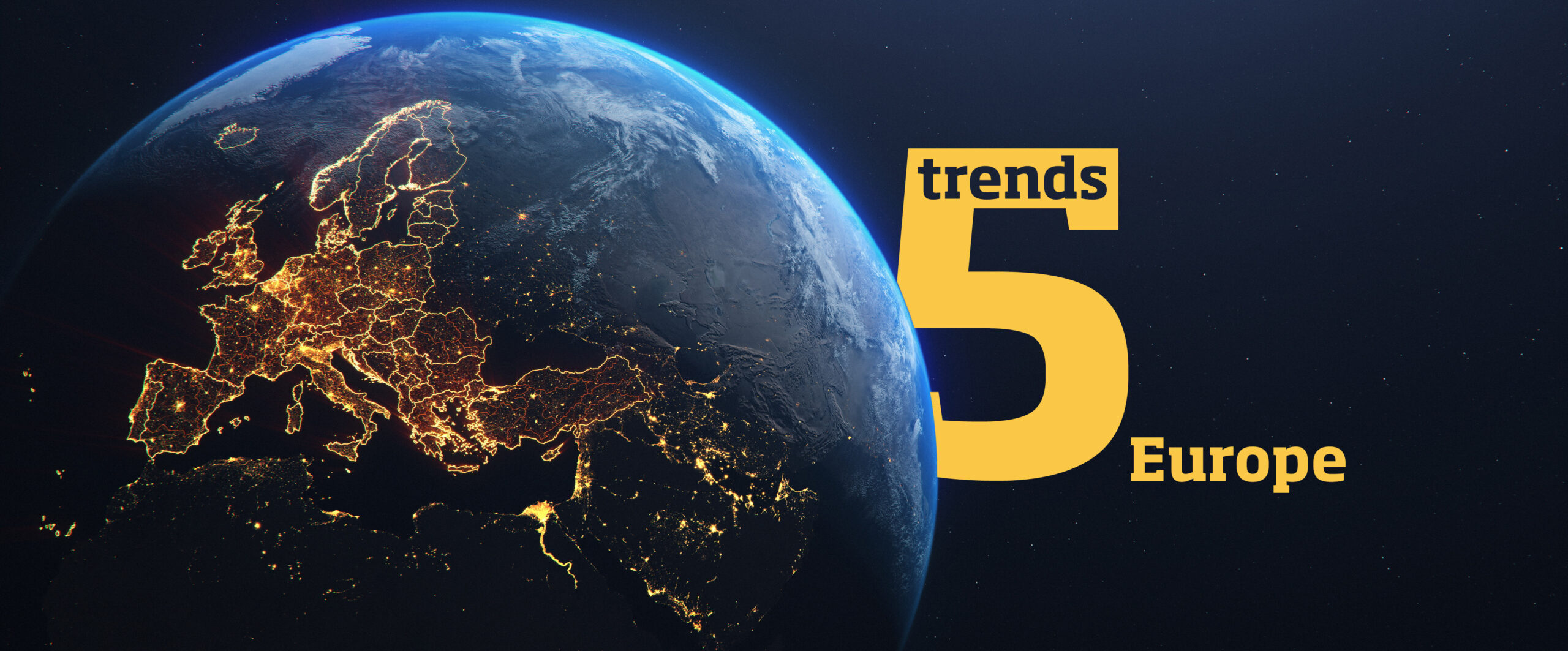
Europe is about to tighten sustainability disclosure requirements, and governments will need to see the cost of carbon rise to encourage investment in greener technologies, according to premonitions offered by IMD experts.
As we head into the New Year, professors thought that more EU member states would make COVID vaccines mandatory, and shortages of supplies and labor would continue into 2022, slowing down growth and prolonging elevated inflation — prompting central banks to raise rates next year.
Though Europe may seem ever more unpredictable, forecasts are no woolly exercise. The practice of scenario planning can inform long-term strategy and near-term decisions, and help executives to deal more effectively with the unexpected.
The exercise suggests that the geopolitics of COVID will shape many business risks in Europe. Mandatory vaccinations will create tensions. Some EU member states are pushing holdouts to get jabs. More will likely follow. “There is a real chance that societies begin to fray as the vaccinated point the finger at the unvaccinated and everybody blames governments for either doing too little or too much,” said political economy expert David Bach.
Add to that the presidential election in France next year, and the Hungarian parliamentary elections, the EU’s standoff with Poland, tensions with Russia, and the post-Brexit saga, and all the ingredients are in place for a rocky 2022. “Strategic agility and a clear corporate purpose will be key as leaders will have to make quick decisions under close scrutiny,” said Bach.

Another area of significant focus was sustainability, which reflects the growing pressure that businesses are under to accelerate climate action. At the COP26 climate conference, the body that develops international accounting standards (IFRS Foundation) said it would create a new board for sustainability disclosure requirements (ISSB). IMD experts expect that firms will face more rules on ESG reporting in 2022.
In addition, after COP26, European carbon prices spiked to a record high above €66 a ton. IMD professors predict the after-effect of the COP talks, while not as strong as some had hoped, will lead to the cost of carbon rising as governments look to green the European economy. “The price of carbon will rise further,” predicted Karl Schmedders, Professor of Finance at IMD.
One way to stay ahead of compliance requirements is to embed sustainability into core business strategy and operations. “Firms will revamp their supply chains, embrace new forms of sustainable financing, and reinvent products and services to ensure they are accountable for their ESG performance,” suggested Natalia Olynec, Head of Sustainability at IMD.

Our experts anticipated that shortages of supplies and labor would continue into 2022, which risk slowing down growth and prolonging elevated inflation. With materials costs and international freight rates soaring, inflation is now seen as more “baked in” instead of transitory. The price increases and component availability risk dragging the supply chain crisis into 2022 and beyond.
“The bullwhip effect is in full swing,” said Carlos Cordon, Professor of Strategy and Supply Chain Management, referring to the situation when changes in consumer demand cause fluctuations in orders and inventory levels, stressing supply chains. He cited the global chip shortage, which threatens the supply of consumer electronics and cars for at least another year.
One way to overcome the bottlenecks would be to shift production methods depending on component availability, like how the chip shortage has forced carmakers to strip out high-tech features to keep production going. Consumers may have to get used to reduced product availability in the year ahead.
IMD professors expect central banks in Europe to raise inflation forecasts yet again. They also expect monetary policymakers to quell fast-rising prices by raising rates next year. “The central banks will have the mandate to keep economies growing but prevent them from overheating,” said Patrick Reinmoeller, Professor of Strategy and Innovation at IMD.
He said companies will need to “reduce their dependence on cheap money” and like most long-lived companies rely more on cash flow than credit to fuel their growth in the year ahead.

March 16, 2026 • by Michael R. Wade, Konstantinos Trantopoulos in Innovation
IMD’s AI Safety Clock shows tension between rapidly expanding artificial intelligence capabilities and lack of meaningful oversight, raising risk. ...

March 11, 2026 • by Heather Cairns-Lee in Innovation
AI may become one of the most significant leadership opportunities for women in decades. Its impact will depend on how capability, governance, and leadership are built around it....

March 3, 2026 • by Julia Binder, Manuel Braun in Innovation
Circularity has evolved from a waste reduction tactic into a strategic driver of business value, helping companies secure resources, manage risk, and deliver superior customer outcomes in an increasingly volatile world.” ...
February 26, 2026 • by Ivan Miroshnychenko, Knut Haanaes, Julia Binder in Innovation
Environmental policy doesn’t drive green innovation equally everywhere. Our research shows it falters in advanced economies, accelerates innovation in emerging ones, and relies on informal networks where formal institutions fall short....
Explore first person business intelligence from top minds curated for a global executive audience