
Connecting every corner of South Africa
South Africa is building a national digital highway to close the divide—bringing affordable, reliable broadband to underserved communities and every citizen by 2030....
by I by IMD Published April 2, 2026 in Featured content • 5 min read
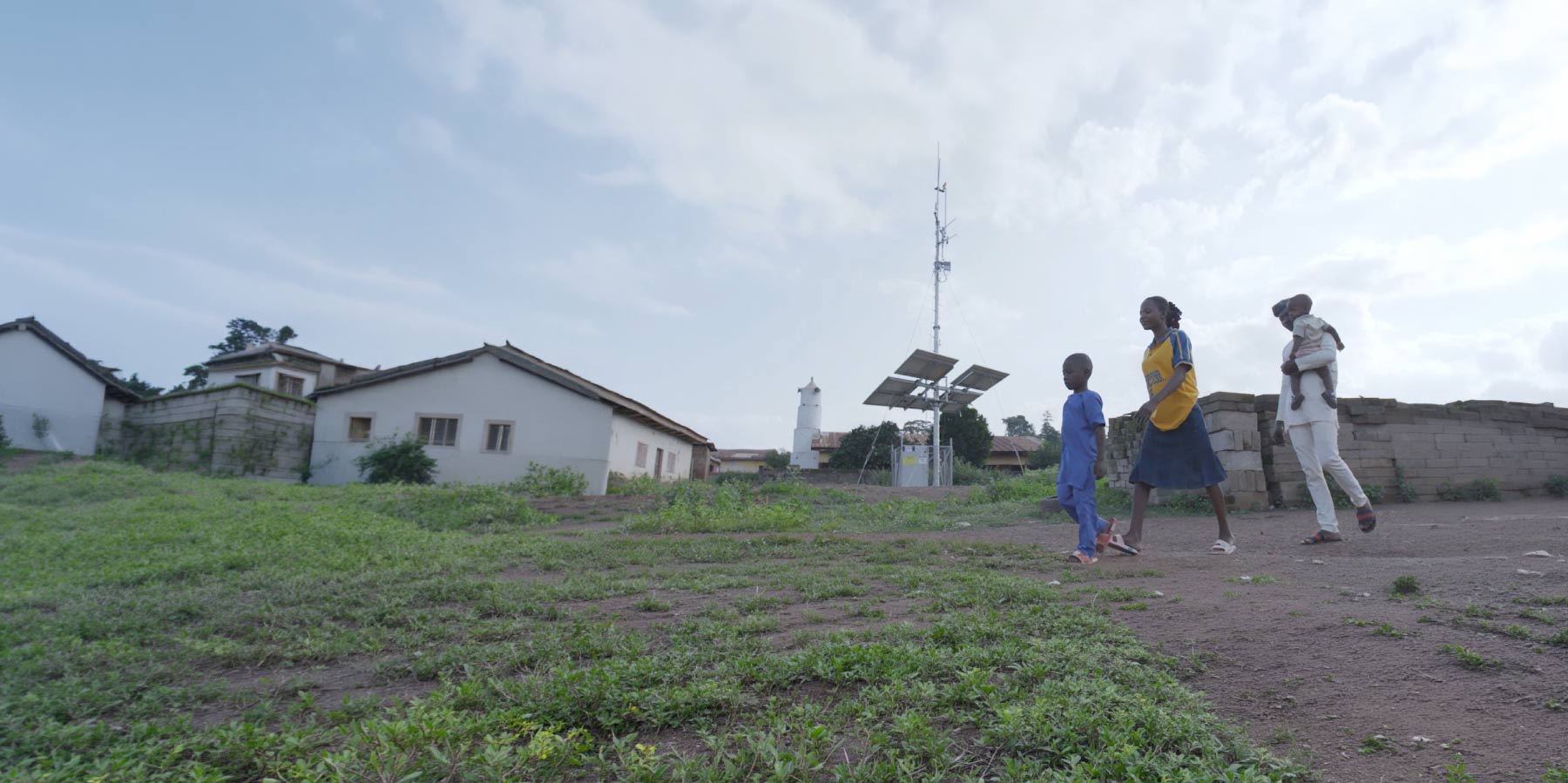
Amara is a subsistence farmer in rural Mali. She has never accessed a weather forecast online, checked a commodity price, or received a digital payment. Living 40km from the nearest town, she has no access to a mobile network. Each season, she plants by instinct and sells at whatever price the local trader offers because she has no means of checking the market or negotiating on equal terms.
Her situation is not unique. Hundreds of millions of people are technically within range of a signal, but lack the devices, data plans, or basic digital skills to make use of it. For them, the internet – and everything it enables – remains out of reach.
The consequences are measured in missed medical appointments, lost income, interrupted education, and constrained lives. These are some of the issues Huawei is seeking to address through its digital inclusion efforts under the ITU Partner2Connect (P2C) Digital Coalition – a global effort involving governments, companies, and civil society to connect the hardest-to-reach communities before the rollout of AI makes the divide permanent.
In 2022, Huawei pledged to connect 120 million people in remote areas by 2025. At the TECH Cares Forum in Barcelona, Yang Chaobin, CEO of the firm’s ICT Business Group, announced the target had been surpassed, saying, “By the end of 2025, we had worked with our customers to help 170 million people in the remote regions of more than 80 countries connect to the digital world.”
Connecting the unconnected requires innovative business models, community engagement, and sustained investment in local capacity.- Cosmas Zavazava, Director, ITU Telecommunication Development Bureau
The relationship between digital connectivity and development is well established. Research shows that a 10% increase in mobile broadband penetration produces an average GDP –per capita gain of 1.5–2.5% in developing nations. Every direct job created in the high-tech sector generates a further 4.3 jobs across the wider local economy, according to World Bank studies.
For individuals, the stakes are equally real. In many low-income countries, a smartphone is often their first and only bank branch. More than 1.75 billion mobile money accounts are now active worldwide, enabling people to set up their own businesses, receive wages, pay school fees, and build savings for the first time. And during crises, connected communities receive government social safety-net payments up to 30% faster than those relying on cash.
Healthcare tells a similar story. Connected communities have recorded a 40% higher uptake in maternal health services, driven by mobile reminders and remote consultations. In education, connecting a school to the internet produces a 20% improvement in student literacy and numeracy rates over five years, according to the ITU-UNICEF Giga initiative. And closing the digital gender gap – women in low-income countries are still roughly 15% less likely to use mobile internet than men – could add an estimated $700bn to the global economy by 2030.

Access to a network is a precondition – but not, by itself, the solution. Even in Europe, 44% of people lack the basic digital skills needed to take advantage of being connected. In sub-Saharan Africa, the figure sits at around 10%, and in most countries across Africa, it remains below 25%.
These are not statistics about technology. They represent people – elderly residents who cannot book a medical appointment online, young people in rural areas with no digital work skills, and parents unable to support children whose learning now depends on remote access.
Addressing the TECH Cares Forum in Barcelona, Jeff Wang, President of Huawei Public Affairs and Communications, framed the challenge directly: “Universal and affordable connectivity is the foundation of a sustainable digital society. Digital skills are the key for ordinary people to enter the digital world. Without these, even the most convenient digital services cannot truly reach everyone.”
Huawei’s response has been to pursue digital inclusion on two tracks: building the infrastructure that makes connectivity physically and financially viable, and equipping people with the skills to use it. Its Skills on Wheels program – mobile classrooms taken into underserved communities – has trained over 130,000 people across 21 countries since 2019.
The engineering challenge of connecting remote populations is formidable. Conventional mobile infrastructure is designed for density. In sparsely populated rural areas, the economics rarely work and the terrain can be a major barrier to connectivity. Huawei has spent more than a decade developing two solutions designed specifically for these conditions.
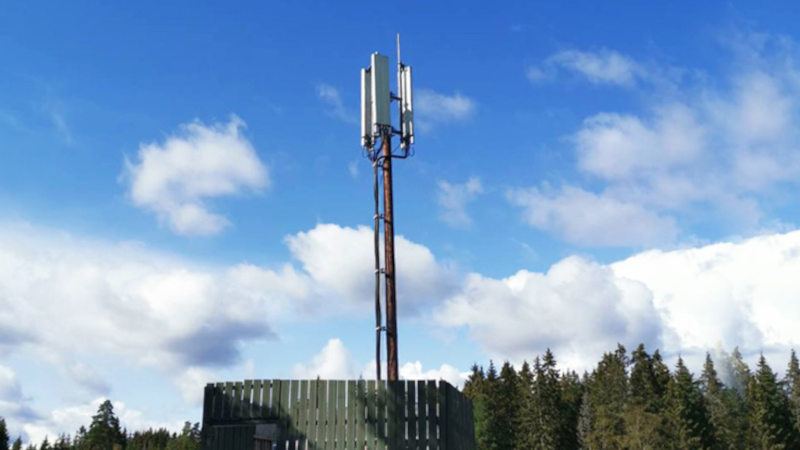
Huawei’s RuralStar is a specialized base station designed for remote communities where traditional infrastructure is physically or financially unviable. By replacing steel towers with simple poles and solar panels, it dramatically lowers costs for mobile operators, delivering mobile connectivity – and with it, access to market data, remote healthcare, and educational resources – to villages previously beyond reach.
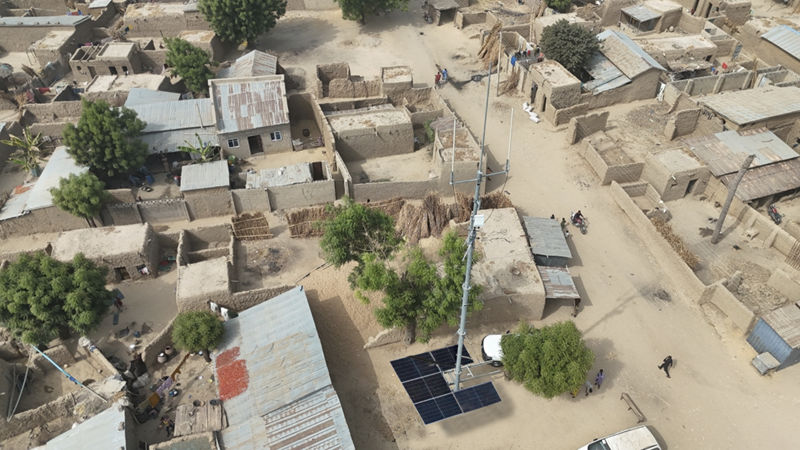
Launched in November 2025 with MTN Nigeria, RuralCow is an ultra-compact, all-in-one site engineered for settlements of around 1,500 residents. Its one-box design can be transported by motorcycle and installed in under 24 hours, providing first-time mobile connectivity – including mobile money access – to some of the world’s smallest and most isolated communities.
That connectivity is already translating into measurable change, as two examples illustrate – bringing inclusive finance to rural communities in Bangladesh, and linking remote villages in Argentina to healthcare through mobile medical centers.
AI offers incredibly powerful tools that, combined with great digital networks, are completely transformative for social inclusion and economic advancement.- Jeffrey Sachs, Professor, Columbia University; President, UN Sustainable Development Solutions Network
If the digital divide was already a pressing problem, the rapid emergence of artificial intelligence is making it urgent. AI is not simply another technology the unconnected are missing – it is a productivity multiplier that will widen the gap between those who can access and apply it and those who cannot.
Economies with strong digital infrastructure will deploy AI across healthcare, agriculture, finance, and education in ways that accelerate growth. Those without that foundation will not. Individuals with digital literacy will use AI tools to enhance their work and livelihoods. Those without basic skills will be locked out entirely.
Yang Chaobin put the stakes plainly: “High-speed networks and robust computing facilities are essential foundations for an inclusive and sustainable AI era.”
The AI era does not change the fundamentals of what needs to be done. It intensifies the urgency of doing it. The infrastructure must come first. The skills must follow. And the people historically hardest to reach must be the explicit focus – not an afterthought.
Returning to Amara in Mali, a mobile signal would mean knowing tomorrow’s weather before she plants, checking the market price before she sells, and one day her children learning online and her community participating in a digital economy that currently exists without them.
That is what is at stake – and with the adoption of AI accelerating fast, the moment to act is now.
This article is part of a series of featured content in partnership with Huawei.
December 19, 2025 in Featured content
South Africa is building a national digital highway to close the divide—bringing affordable, reliable broadband to underserved communities and every citizen by 2030....
Explore first person business intelligence from top minds curated for a global executive audience