Supply chains need more than a tariff calculator
New models of economic development are emerging from global trade fragmentation. Supply chain executives must now weigh far more complex trade-offs, says Christos Cabolis ...
by Arturo Bris, Aline Ballaman-Garibian, Alistair Packer Published November 24, 2025 in Competitiveness • 6 min read
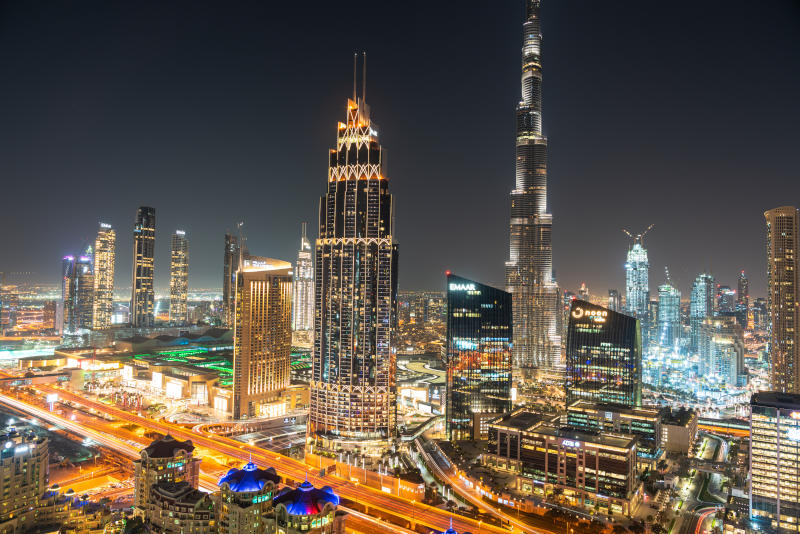
Many of the Middle Eastern cities featured in the annual IMD Smart City Index – a global ranking of 146 cities – are steadily moving up the table.
Economic diversification, government efficiency, and the right kind of leadership are part of the story. Another key facet is the often-forgotten fact that a city’s “smartness” is defined by its ability to turn “intelligence” into a better quality of life for all, and not by sensors or apps.
Understanding the issues citizens face daily is the cog that drives this mechanism. What would make their lives easier? Of course, tech features in many of the answers. But it only really counts if it is aligned with governance, inclusion, and the everyday needs of people.
The planning of our recent book, The Smart City Playbook, did not see us merely stumble upon the Middle East; instead, the region – specifically Qatar, Saudi Arabia, Bahrain, and Oman – lent itself to fruitful smart city analysis because the concept of urban transformation has been executed there with such clarity.
Despite many Middle Eastern cities being as ancient as civilization itself, their smart-city journeys are remarkably young.
Policymakers began with a blank slate and were fortunate enough not to carry the burden of nostalgia for “how things used to work,” nor the burden of disenchantment over things that hadn’t been updated for years. After all, such “things” didn’t use to work at all.
The Middle East moves at a speed that makes other regions seem glacial by comparison. Visit Doha, the capital city of Qatar, or Al Khobar today, and they won’t feel like the same places you saw four years ago. What takes decades elsewhere happens here in years.
And yet, the dilemmas these cities face are uncannily familiar to those living in many metropolises worldwide: urban sprawl, housing, mobility, water, waste, and governance.
From Zurich to São Paulo, Nairobi to Seoul, mayors, ministers, and urban planners confront the same imperative: to build cities that are competitive yet humane, innovative yet inclusive. The Middle East provides some blueprints that other cities can adapt to their own realities.
True, the Gulf doesn’t face the same budget constraints that paralyze innovation in many other parts of the world. As such, there is one small caveat: translating optimal policy design into budget-constrained municipalities isn’t usually possible without first mastering the art of creative financing.
“Transparent communication of how information is collected and used strengthens trust.”
Some universal laws shape the policy design of certain Middle Eastern cities. Here are three:
In Madinah, the Al Madinah Region Development Authority acts as a single interface connecting public services, data platforms, and urban planning. In Al Khobar, the Sharqia Development Authority ensures that initiatives in transport, housing, and environment operate under one vision.
In Qatar, Doha’s coordination during the World Cup revealed the value of inter-ministerial collaboration and left behind an institutional legacy. In Saudi Arabia, the Royal Commission for AlUla (RCU) represents a hybrid model, combining public accountability with private-sector agility.
Governance maturity depends on clarity of roles, transparency of objectives, and continuity across political cycles. Where mayors or ministers rotate frequently, a permanent urban observatory or smart-city authority can safeguard institutional memory.
In Copenhagen, Barcelona, and Singapore, such bodies have allowed policy to survive leadership change.
Many cities now collect more information than they can interpret. Building analytical capacity (urban observatories, decision-support centers, partnerships with universities) is essential. This is how raw data becomes collective intelligence.
AlUla’s digital dashboards on heritage and environment, or Manama’s performance metrics in governance, show how evidence can replace speculation in policymaking.
At the same time, digital governance raises questions around privacy and security. The citizen must remain sovereign over personal data. Transparent communication of how information is collected and used strengthens trust. Ethical frameworks, cybersecurity strategies, and clear data-protection laws are no longer optional.
Cities that codify them early (such as Helsinki, Seoul, and Singapore) build reputational capital that attracts investment and talent.
Madinah’s ISO triple certification, Al Khobar’s green initiatives, and AlUla’s extensive conservation zones each demonstrate that environmental planning can coexist with economic ambition. Doha’s renewable-energy and waste-to-energy programs reveal how large events can accelerate green infrastructure.
Muscat’s measured approach, grounded in Oman Vision 2040, links renewable energy to fiscal prudence and water security.
But environmental performance can’t be pursued through isolated projects; an integrated approach is needed. Transport design must reduce emissions; land-use planning must preserve biodiversity; building codes must reward efficiency; procurement policies must favor circularity.
Cities like Stockholm and Vancouver have already adopted carbon budgets that guide every department.

In the past, national governments were the undisputed actors of economic policy; today, the balance of power is shifting toward the local level. The 21st century has transformed cities into laboratories of innovation, arenas of experimentation, and engines of prosperity. As such, cities’ performances now determine their respective nations’ trajectories.
Understanding how cities can be both smart and competitive is, therefore, a matter of global importance.
Introduced in 2019, the World Competitiveness Center’s citizen-based approach to understanding smart cities has reshaped how governments evaluate urban performance and how leaders design smart-city strategies; real value can now be delivered to residents. The Smart City Playbook aims to extend that mission.In the broader context of global competitiveness, the conversation has moved from technology to governance, from infrastructure to institutions. The new frontier of competitiveness lies not in having the fastest networks or the tallest skylines, but in cultivating coherence – the ability to align economic performance, social inclusion, and environmental responsibility.
The cities that will lead the future will be those that balance innovation with identity and speed with stability – not those who believe that technology alone will solve all their problems. Beyond technology, the most advanced cities won’t be those with the most devices, but those where every resident is meaningfully connected.
Whether governing a megacity or a municipality, the challenge is to transform data into decisions and technology into value for people.
While national strategies set the direction, the great global transitions – digital, energy, and demographic – will all be implemented at the city level. The coming decade will decide which cities will succeed in this transformation. Competitiveness in the future will be measured by how well urban leadership manages complexity, attracts talent, and maintains social cohesion while embracing innovation.
Whether governing a megacity or a municipality, the challenge is to transform data into decisions and technology into value for people. Smart cities collect information, while wise ones interpret it with empathy.
“Smartness” should be seen as a collective good, nurtured by education, and governed with humility. Together, the six cities of Madinah, Doha, Al Khobar, Manama, AlUla, and Muscat show how distinct political, cultural, and geographic contexts can converge toward a shared goal of human-centered development.
The 2026 IMD Smart City Index will be published on 31 March 2026.
The Smart City Playbook is available for purchase on Amazon.
Professor of Finance at IMD
Arturo Bris is Douglas Geertz IMEDE 1988 Professor in Geopolitics and Business and Professor of Finance at IMD. Since January 2014, he has led the world-renowned IMD World Competitiveness Center. At IMD, Bris directs the Boards and Risks program and Blockchain and the Future of Finance program. He also previously directed the flagship Advanced Strategic Management program between 2009 and 2013.
Board member at the Swiss Chinese Chamber of Commerce
Aline (Ballaman) Garibian is a board member of three Swiss foundations and a committee member of the Swiss Circle of Women Directors, which promotes diversity in governance. She is also a researcher at the IMD World Competitiveness Center. A former director of the Swiss Centers China (2012–2021), she supported the establishment of Swiss companies in China. Her distinctions include being named to the Forum des 100 in Switzerland (2016) and recognized as an Impulse Giver at the Europa Forum (2021).
World Competitiveness Center Project Coordinator at IMD
Alistair Packer recently worked as a World Competitiveness Center Project Coordinator at IMD. He brings experience from previous roles at Military Asset Management and Patrimonium Asset Management. He holds a BS in International Business, Finance, and Economics from the University of Manchester.
November 19, 2025 • by Christos Cabolis in Competitiveness
New models of economic development are emerging from global trade fragmentation. Supply chain executives must now weigh far more complex trade-offs, says Christos Cabolis ...
November 5, 2025 • by Fabian Grimm in Competitiveness
The different ways that economies tackle digital competitiveness can make them at once resilient and vulnerable in today’s increasingly fragmented digital economy, says Fabian Grimm. ...
October 30, 2025 • by Christos Cabolis in Competitiveness
The fragmentation of the global trade system is leading to the rise of new trade coalitions and corridors, said economists in a joint IMD-Hinrich Foundation webinar. ...
September 29, 2025 • by David Bach in Competitiveness
For decades, efficiency and scale defined competitiveness. Today, resilience and trust matter more – and optimism is what unlocks both. IMD President David Bach explains why Europe’s leaders must combine realism about...
Explore first person business intelligence from top minds curated for a global executive audience